Uncrewed Aircraft Systems Operational Capabilities (2025)
Chapter: Research Activities by Task
Introduction
This project aims to provide State Departments of Transportation (DOTs) with insights and resources that will assist in maturing their use and operational capabilities of Unmanned Aircraft Systems (UAS). In addition, the project aims to help State DOTs gain a better understanding of Advanced Air Mobility (AAM) and its potential role in AAM integration. The Guide created for this project is intended primarily for State DOTs, but the information can be relevant to other transportation agencies seeking guidance for Uncrewed Aircraft System (UAS)- and AAM-related topics. Organizations and individuals can benefit from the Guide itself as it was designed to be read all the way through or to be used as a quick reference guide for specific topics. Tools and additional resources are provided within the body of the text and in the appendices.
This final report provides a conduct of research summarizing the various research and development activities over the 24-month project period. The project was completed through the successful execution of 12 project tasks outlined in the following sections.
Research Activities by Task
The research and development activities associated with each of the 12 project tasks are summarized in the following sections.
Task 0 – Kickoff Meeting and Amplified Workplan
On December 20, 2022, a virtual project kickoff meeting was held with the project team and the project panel. The Principal Investigator (PI), Paul Wheeler, presented an overview of the project goals, the research approach (the 12 tasks), and associated deliverables. There was a robust discussion throughout the presentation; the panel’s requested changes were noted and subsequently incorporated into the Amplified Workplan.
Task 1 – Literature Review
As identified in the Amplified Work Plan, a thorough review of the literature related to the integration of UAS and AAM technologies would be foundational to the project. To guide the extensive literature review efforts the research team developed the literary map illustrated on Figure 1.
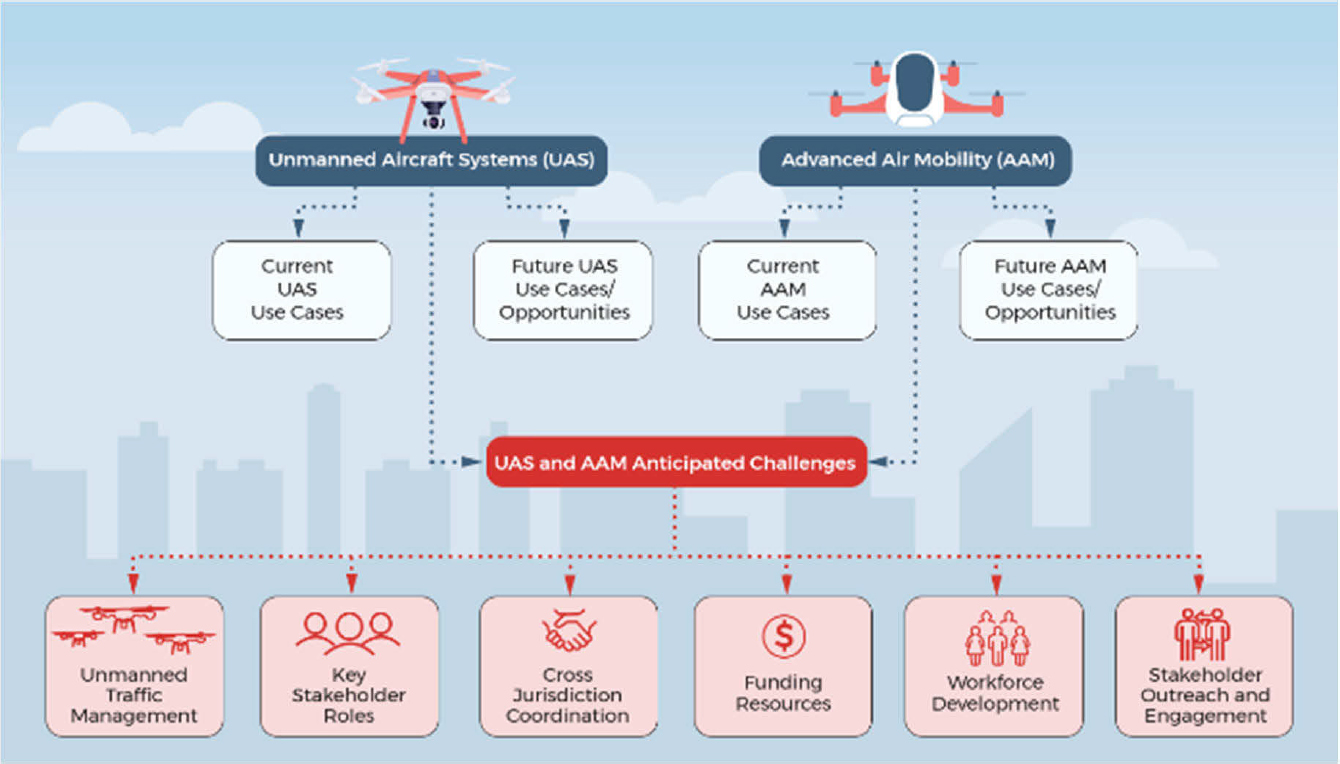
The literary map assisted in narrowing the broad scope by establishing key areas in which literature needed to be collected, analyzed, and then summarized. Utilizing various databases, the research team searched keywords such as “Uncrewed Aircraft Systems,” “UAS use cases,” “UAS potential uses,” “Advanced Air Mobility,” “Urban Air Mobility,” “Unmanned Traffic Management,” “AAM Funding,” “aviation workforce development,” and others. The research team used a reference management tool to organize the literature by category as it relates to the literary map.
An annotated bibliography was created to assist in summarizing the collected literature. The research team reviewed numerous categorically organized literature samples and summarized each article in the annotated bibliography. The literature review was focused on peer-reviewed literature and a thorough review of publications from industry trade associations, major press releases, news articles, and other non-peer-reviewed sources. Through a comprehensive review of these various sources combined with the research team’s industry expertise and first-hand knowledge from projects across the UAS/AAM industry, the current state of the industry and current knowledge gaps were identified.
The deliverables for Task 1 include a Technical Memorandum summarizing the literature review and the annotated bibliography, both are included in Appendix A.
Task 2 – Survey Stakeholders
Task 2 was dedicated to the first round of primary research in which stakeholders were surveyed. The survey questions, survey recipient distribution list, and overall engagement strategy were developed as part of this task. Survey questions for key stakeholder groups were created using the literature review. Questions were tailored to address specific areas of interest and gather information on the challenges and opportunities associated with UAS and AAM implementation. The survey questions aimed to fill in the knowledge gaps identified in the literature review and provide a deeper understanding of the perspectives of various stakeholders. By gathering data from a diverse range of stakeholders, including representatives from industry stakeholders, government agencies, and academia, the survey was able to provide greater insight into the current landscape and pave the way for more effective and responsible implementation of UAS and AAM technology.
The research team followed best practices and developed survey questions to ensure they were focused, unbiased, and patterned to avoid survey fatigue. To achieve focus, the team determined the specific goals and objectives of the survey, and then crafted questions that directly addressed those goals. To minimize bias, the team strived to avoid leading questions, double-barreled questions, and other common sources of bias. To avoid survey fatigue, the team kept the survey as short as possible for each stakeholder group and used clear and simple language.
The research team compiled a list of potential survey participant organizations, contacts, and contact information for survey distribution. It was anticipated that the survey would primarily be distributed through the following organizations:
- American Association of State Highway and Transportation Officials (AASHTO)
- National Association of State Aviation Officials (NASAO)
- Association of Metropolitan Planning Organizations
- University Aviation Association
- Association for Uncrewed Vehicle Systems Association
- Transportation Research Board Committees
The organizations and associations listed above distributed the survey to their respective members. In addition, the research team also compiled a list of industry representatives such as AAM Original Equipment Manufacturers (OEMs), UAS OEMs, and service providers.
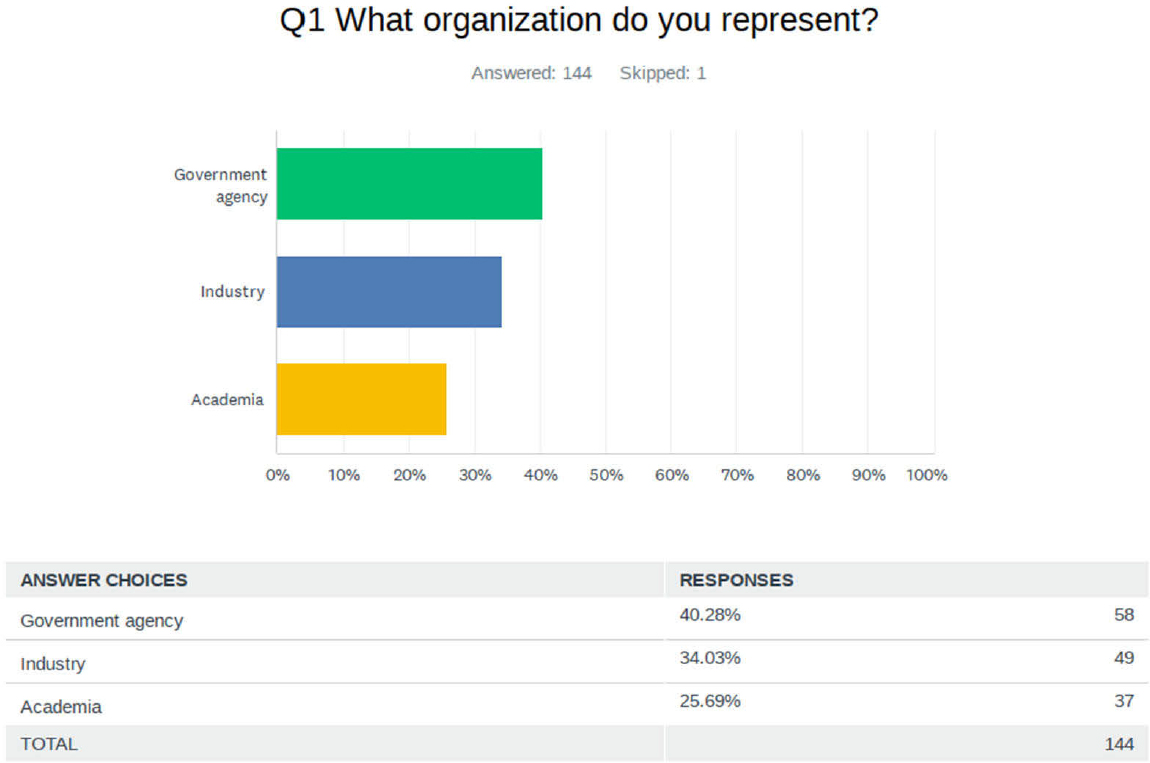
The engagement plan, survey, and participant distribution list were all finalized and delivered to the project panel for review. Upon receipt of the project panel’s feedback, the research team implemented the minor feedback to make updates to the survey and survey participant list. After final approval for dissemination was received, the survey was sent out and was open for the period of one week and received 144 responses, the breakdown of these responses by stakeholder group is shown on Figure 2.
The survey questions and survey analysis report are included in Appendix B.
Task 3 – Synthesize Information from Previous Tasks to Identify Knowledge Gaps
The purpose of this task was to analyze what knowledge gaps from the literature review were resolved from the collected survey data. The research team completed a thorough survey analysis that enabled the completion of the gap analysis to identify remaining knowledge gaps that still needed to be addressed to ensure the development of the Guide. The survey data provided valuable insights in addressing pieces of the knowledge gaps, but the data was inconclusive or highlighted additional existing gaps. The knowledge gaps identified in Task 3 are outlined below.
UAS Program Maturity Level
To better understand the maturity level of State DOT UAS programs, the survey questions asked about program age, establishment of policies and procedures, program funding, staffing, and internal training. The survey also asked industry stakeholders for their thoughts on what State DOTs could do to mature their programs. The leading suggestion was to invest in training and workforce development, followed by advanced operations such as flights over people or Beyond Visual Line of Sight (BVLOS) operations.
Identified gaps in this topic area are outlined in Table 1.
Table 1. UAS Program Maturity Gaps
| Collected Survey Data | Outstanding Gaps |
|---|---|
| 78% have established UAS policies and procedures; 38% are public facing | Are there advantages to having these public facing? How often are these updated? |
| 64% have a dedicated UAS program manager (PM) | How many are full time and dedicated only to the UAS program versus shared duties? If shared, does this restrict program maturity? |
| Of those who reported not currently having a UAS PM, 54% do not plan to hire a dedicated UAS PM | What are the reasons or constraints for not hiring a UAS PM? |
| 25% noted there is no internal or external UAS training program | What are the reasons or constraints for not having a UAS training program? |
| 66% reported having a dedicated UAS training manager | Are these UAS training managers dedicated to the UAS program full time versus shared duties? If shared, is it shared with the UAS PM? |
| 60% reported having internal training programs and 36% reported not having a practical flight training component | Do they have plans to have practical flight training? Or do they feel on-the-job flight training is sufficient? |
Government Agency Perspective on Roles and Responsibilities
Aside from internal transportation agency UAS programs, the survey aimed to collect data regarding the perspective of state and local government agencies concerning their role in UAS and AAM integration. The survey defined AAM as the use of electric or hybrid-electric aircraft to move people and freight (small and large), and the electrification of airports. Figure 3 outlines the responses to which categories government agencies perceive their organizations playing a role.
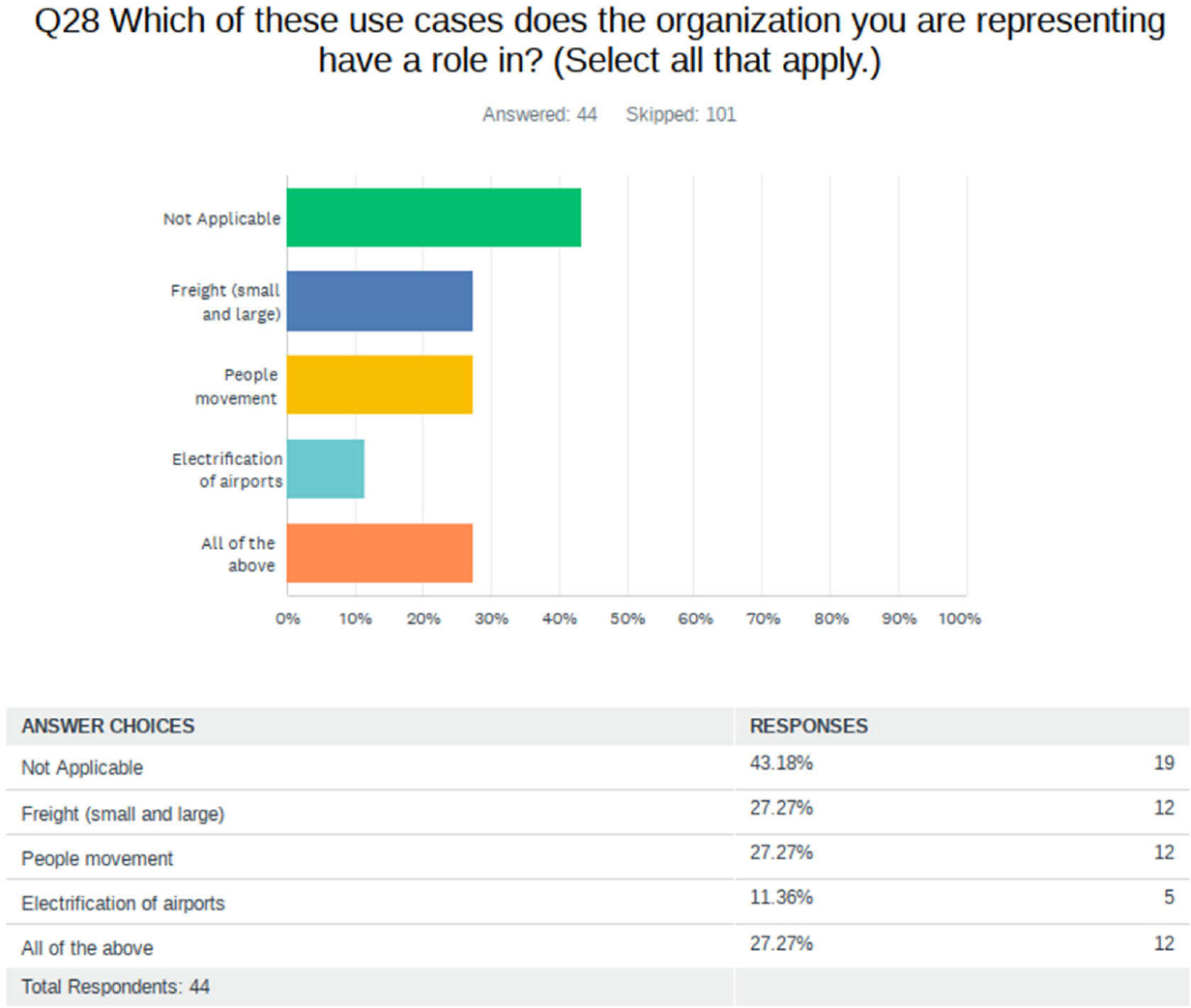
The total number of responses from the right-hand column in Figure 3 does not match the response rate of 44 respondents. This is due to the “select all that apply” function of the question, which makes the data potentially unclear. For example, 19 respondents selecting “not applicable” would insinuate they think no role should be played in any of these categories. This would be insightful information, but the accuracy of the information was unclear and needed to be investigated further through the proposed methodology.
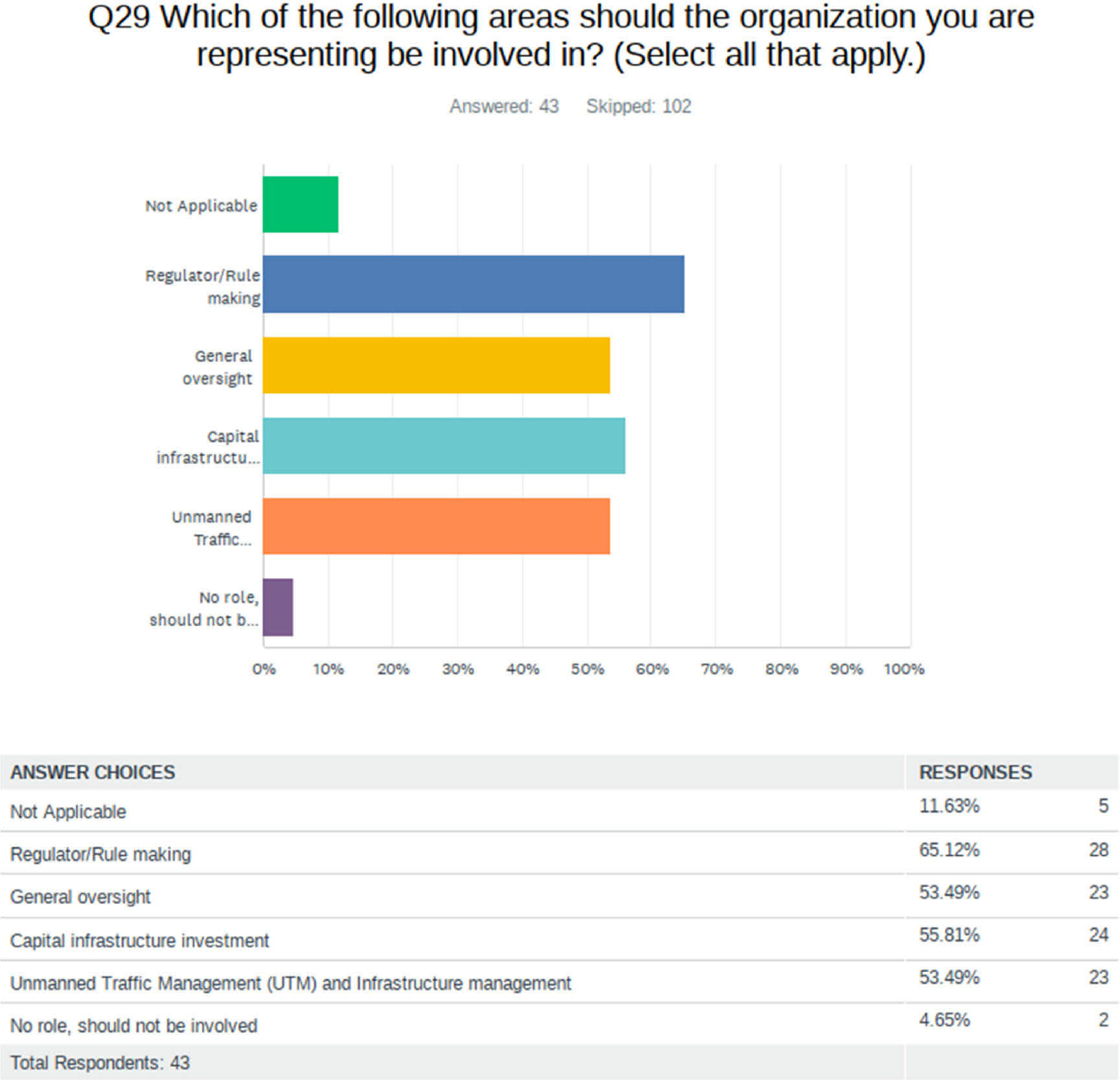
The same situation existed with the following survey question when government agencies were asked about any specifics regarding roles and responsibilities (see Figure 4). Similar to the previous question, two respondents selected “no role” and five selected “not applicable.” The results indicated that not all government agencies foresee active participation in AAM integration. The leading response regarding specific roles was 65% reported they should participate in rule making and be the regulator.
Outstanding gaps include:
- What specific actions are State DOTs, state Divisions of Aeronautics, or local planning organizations currently taking or plan to take concerning these roles and responsibilities?
- The survey was not designed to differentiate between State DOTs and State Divisions of Aeronautics; not all State DOTs house a Division of Aeronautics because they are separate agencies in many states. What roles belong to the State DOT versus a state aeronautics agency? How can the two organizations work together on UAS/AAM integration?
Industry Perspective on Roles and Responsibilities
Participants from industry could select one of four categories that best represented their organization. Figure 5 provides the breakdown of industry stakeholder participation.
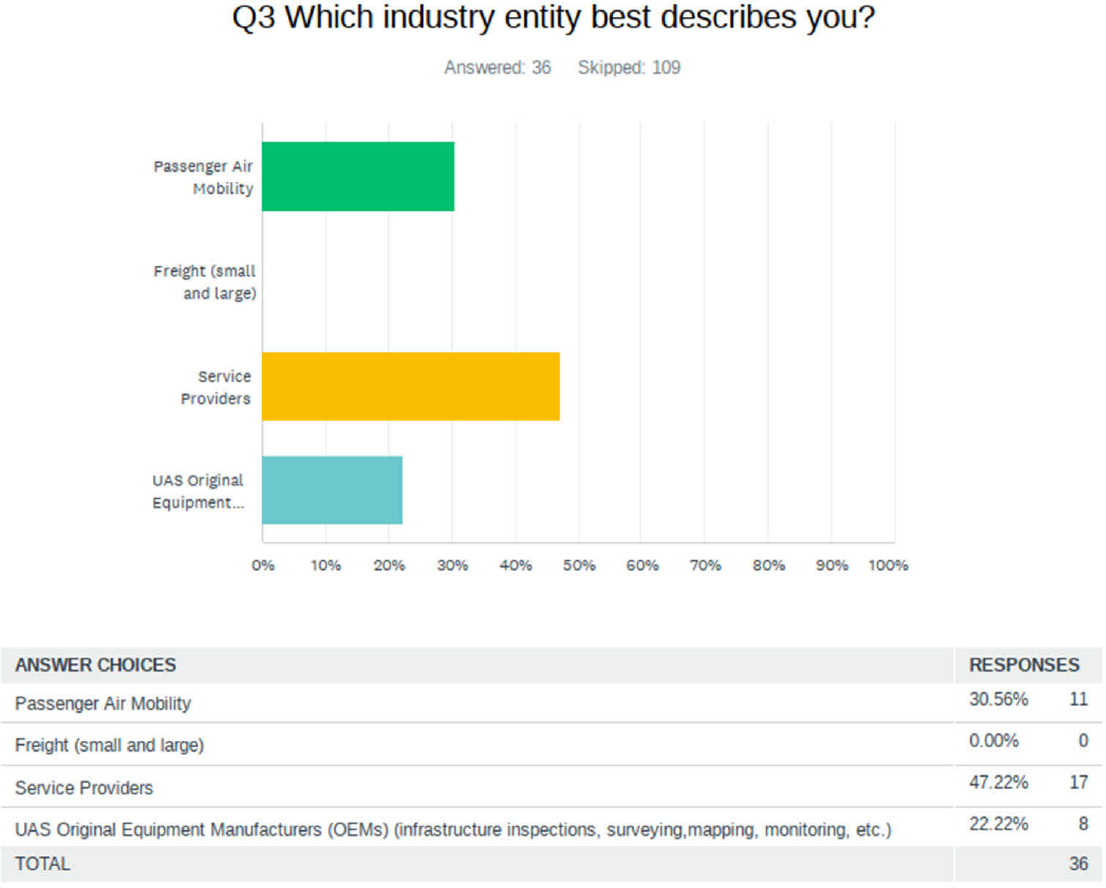
The majority (65% or higher) of passenger air mobility providers self-reported their role as assisting with vertiport development; maintaining the aircraft; and coordinating with federal, state, and local agencies on creating policies and regulations. 44% reported having a role in Unmanned Aircraft System (UAS) Traffic Management (UTM). These trends held true when compared to the responses from service providers.
All nine of the passenger air mobility survey participants reported interest and support in public-private partnerships and 77% reported plans to integrate into multimodal transportation hubs. Data from other survey questions also support industry’s view of roles, responsibilities, and goals with the majority indicating ongoing collaboration with a variety of stakeholders. Industry stakeholders reported working relationships with multimodal transportation agencies, utility companies, transportation planning organizations, economic development agencies, State DOTs, and other industry partners.
In addition to surveying industry stakeholders about their role, participants were also asked about the role they think State DOTs should have in the integration of AAM/UAS technologies. All 100% of passenger air mobility, UAS OEMs, and service providers indicated State DOTs had a role to play, no respondents selected “no role.” The leading selected role from UAS OEMs and passenger air mobility was “capital infrastructure investment,” followed by providing general oversight and regulations. The service providers ranked regulation, rulemaking, and oversight as the top roles for State DOTs, followed by infrastructure investment. The lowest-ranked role for State DOTs in each industry stakeholder group was participating in Unmanned Aircraft System Traffic Management (UTM), although it was still high among the service providers at 54% and 40% of UAS OEMs.
The survey data offered understanding on the perceptions of industry stakeholders regarding their roles and how industry views the role of state agencies. The research team will explore additional details and
specific activities within these roles using the proposed methodology outlined in detail in the following section.
Cross-jurisdictional Collaboration
One of the keys to successfully maturing UAS programs and widely integrating UAS/AAM technologies is cross-agency and cross-jurisdictional collaboration. Sixty percent of State DOTs indicated they have a UAS working group, but 20% have an AAM working group. Figure 6 shows the breakdown of the various stakeholder participation in AAM working groups.
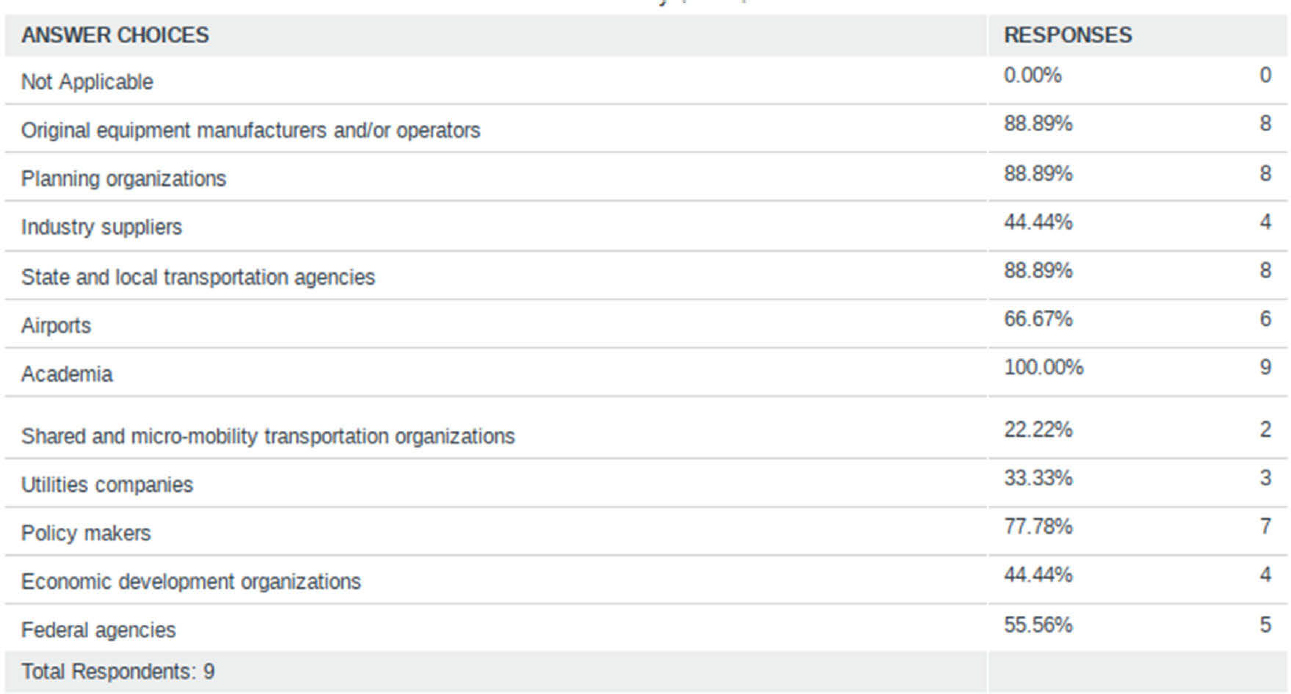
Some preliminary data about UAS or AAM working groups with multiple stakeholders was collected during the survey, but more detailed data was needed to develop best practices on cross-jurisdictional collaboration for the Guide. The outstanding knowledge gaps are outlined in Table 2.
Table 2. Cross-Jurisdictional Collaboration Gaps
| Collected Survey Data | Outstanding Gaps |
|---|---|
| 60% reported having a UAS working group that the majority meets monthly or quarterly; 20% reported having an AAM working group | Which stakeholders participate in these UAS working groups? What have been the advantages or disadvantages of these working groups? |
| 66% of passengers air mobility companies reported performing community outreach in target markets (66% using news, 66% using in-person community events, and 50% using social media) | What insights or lessons learned may come from industry stakeholders regarding working with various jurisdictions? |
Funding Strategies
34% of State DOTs reported receiving ongoing UAS program funding; more details are needed to understand how the ongoing funds were secured so other State DOTs can hopefully follow a similar process. Thirty-eight percent of State DOTs reported that they did not have a dedicated UAS budget.
Through the proposed methodology, the research team will seek to understand the biggest obstacles to securing a dedicated UAS budget. Despite State DOTs’ self-reporting roles and responsibilities for broader UAS adoption and AAM integration, 49% reported AAM funding sources were “not applicable.” The existing gap related to this issue is that additional details regarding State DOT roles and activities within these roles is needed to understand funding needs. These gaps are listed in Table 3.
Table 3. Funding Strategies Gaps
| Collected Survey Data | Outstanding Gaps |
|---|---|
| 34% of State DOTs noted ongoing UAS program funding; of the ongoing funding, 83% is state funding and 50% reported federal funding | How was ongoing funding secured? What federal funding is used for ongoing UAS program support? |
| 38% of State DOTs do not have a dedicated UAS budget | What are the biggest obstacles to securing a dedicated UAS budget? |
| 49% of State DOTs noted that funding for AAM was “not applicable” | More details surrounding State DOTs roles and activities needed to understand if there are funding needs. |
Workforce Development
Recruiting and retaining a qualified workforce is one of the leading obstacles many State DOTs face throughout their organizations, but especially associated with UAS programs. 36% of the State DOT survey respondents reported having a working relationship with educational institutions to develop a workforce pipeline. The outstanding gaps for State DOT workforce development are as follows:
- How can relationships between State DOTs and academia be increased to support a workforce pipeline?
- Are strong relationships with academic institutions a successful recruitment method?
- What other methods do State DOTs use to develop strong workforce pipelines, especially for UAS-related activities?
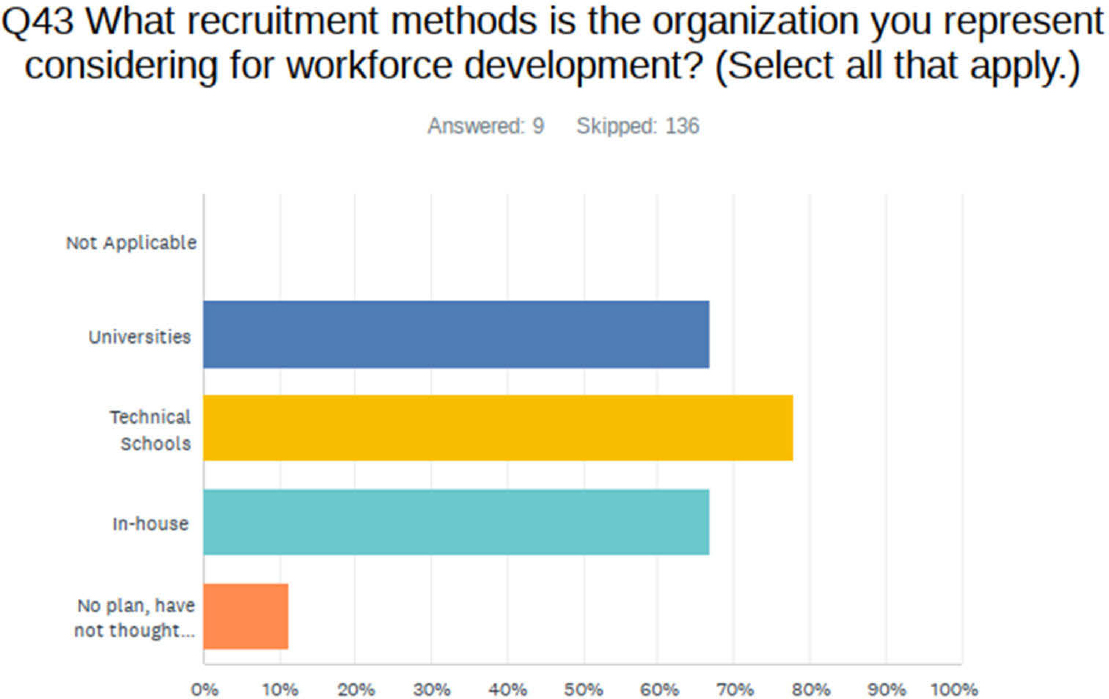
The survey also questioned industry stakeholders from the UAS OEM and passenger air mobility sectors regarding workforce development. From the UAS OEM participants, which was a sample size of five respondents, academic institutions accounted for 20% of their workforce development efforts. When passenger air mobility participants were asked the same question, 78% reported technical schools followed by 67% reporting universities and 67% in-house (see Figure 7). The nature of the relationship between these companies and academic institutions is unknown.
Questions regarding the nature of relationships are as follows:
- Is the industry investing in the development of UAS or AAM programs?
- Are the relationships strictly research partnerships?
- Are relationships purely a recruitment method through attending events such as career fairs?
UAS and AAM Academic Programs
The academic portion of the survey targeted four-year universities, two-year community colleges, and trade schools that may have traditional aviation programs or UAS curricula. Out of the 36 academic responses, 64% were four-year universities, 31% were two-year colleges, and two participants selected “other” noting they represented a think tank and postdoctoral research. The outstanding gaps are outlined in Table 4.
Table 4. UAS and AAM Academic Program Gaps
| Collected Survey Data | Outstanding Gaps |
|---|---|
| 57% reported having UAS programs | How many of the graduates go on to work in UAS field? Where are they going? Any to State DOTs? |
| 14% reported having AAM-related curriculum (to be expected, industry is infancy) | What should academic institutions implement now or prepare for now to help fill the growing workforce deficit? |
| 65% reported having leadership support to continue to grow or to develop UAS/AAM-related curriculum, but 21.7% reported having a budget to do so | What potential funding pools are there for educational institutions to access to develop programs or hire faculty to prepare the future workforce? |
State and Federal Collaboration Gap
Another research gap identified following the completion of Tasks 1 and 2 was about the level of collaboration between federal and state agencies on maturing UAS and AAM operations. In October 2022, the AAM Coordination and Leadership Act was signed into law. This new law directed the Secretary of Transportation to create an AAM Interagency Working Group (AAM IWG). In March 2023, the AAM IWG held its inaugural meeting with 22 members from 19 different federal departments (U.S. Department of Transportation, 2023). The purpose of this working group is to establish ongoing collaboration at the federal level, which will enable the development of a consistent national AAM
strategy. The formation of the AAM IWG builds upon the ongoing efforts of federal agencies such as the Federal Aviation Administration (FAA), Federal Highway Administration (FHWA), and National Aeronautics and Space Administration (NASA) concerning UAS and AAM integration.
Individual Agency Efforts
The FAA initiated its work in AAM through the UAS Integrated Pilot Project (IPP). This project was a series of flight tests of both hardware and software required to successfully achieve drone package delivery and aerial taxi operations. The project had 10 initial members, although one dropped from the program very early. Flight tests were conducted over a three-year period and culminated in a final data report. IPP state and local government partners did not receive any funding from the FAA. The project demonstrated a way to provide a functional approval via waiver to operate experiments and share data. The project culminated in the FAA’s final report as well as the FAA Concept of Operations v1.0.
After the UAS IPP program concluded, the FAA initiated BEYOND, which the agency describes as a new program to address remaining challenges and continue the partnerships and progress made under the IPP. BEYOND includes the same lead participants from the IPP but operates differently under suggested “rules” rather than operational waivers. There is no funding associated with BEYOND, and the program has not been as widely publicized by the FAA or any of the lead participants as the previous program was.
The FAA continues to provide resources to UAS operators from recreational flyers to state, local, and tribal government UAS programs. These resources are available at www.faa.gov/uas, along with information about UAS webinars and events, such as the annual Drone Safety Day or FAA Drone Symposium. In addition to hosting these events, representatives from the FAA actively participate in industry conferences and the efforts of sister agencies, such as the FHWA and NASA.
NASA’s Advanced Air Mobility National Campaign is a substantial AAM program, under which participants work together to achieve a variety of goals. The national campaign is an extensive collaboration with industry partners of all sizes to demonstrate flight components, two-way communications networks, simulated vehicle operational contingencies, and dynamic traffic avoidance. NASA has also established four critical working groups: (1) Aircraft developers, (2) Airspace design, (3) Community integration, and (4) Crosscutting between NASA and the FAA. These working groups focus on their specific element and skill set to help make AAM a reality.
Other entities also work to stimulate collaboration among state agencies. The NASAO, AASHTO, and the American Association of Airport Executives each initiated working groups for their respective members to discuss UAS and AAM efforts. Other industry associations, such as the National Business Aviation Association, Aircraft Owners and Pilots Association, Helicopter Association International, and General Aviation Manufacturers Association, each formed working groups to organize collaboration between industry partners.
Significant horizontal collaboration is already happening between federal agencies, state agencies, and industry, but the missing element is vertical collaboration.
The Missing Element
The remaining gap is effective vertical collaboration between the federal government and state governments. This gap likely persists for several reasons, but one issue, for example, is airspace. The FAA declares authority over all airspace from the top of a blade of grass to the moon. The U.S. Congress derives this authority since most commercial air travel crosses state boundaries and, therefore, falls under
the federal regulatory authority provided for in Article 1, Section 8, of the U.S. Constitution. This gives Congress and, by delegation, the FAA authority to regulate air commerce between states.
Because of this, most state agencies simply defer all aviation regulations to the FAA. In the case of UAS and AAM it is important to note that flight operations in many locations will be intrastate, therefore, these flight operations would not be subject to the commerce clause in the U.S. Constitution. This brings up the scenario of states having an increased responsibility to regulate UAS and AAM operations in airspace within their boundaries, along with the infrastructure associated with those operations.
The industry has advocated against a “patchwork quilt” of 50 different aviation regulations across the country as this approach could create a barrier to entry for many markets. Furthermore, federal air traffic controllers often feel they neither have the capacity nor the capability to manage local UAS activity on top of their current duties. Therefore, elements of UAS and AAM regulation, and even management, could move to the states. Yet, no discussion on this issue or on UAS and AAM integration occurs between the state governments and the federal government.
Creating a framework for federal and state collaboration is outside the scope of this project, but this key gap was considered throughout the development of the Guide.
Task 4 – Propose Methodology for Guide Development
Once the research team had completed a thorough gap analysis from the Literature Review and Survey results, the team was able to develop and propose a methodology to address these identified gaps and develop the Guide. The methodological approach is outlined below. (Please note all in-text citations within this section are included in Appendix C: Technical Memorandum on Methodology).
The proposed methodology to address the outstanding research gaps and enable the development of the Guide is a mixed-method approach including focus groups and supplemental interviews. The use of focus groups and interviews are both long-established and proven qualitative research methods (Morgan and Spanish, 1984; Mashuri et al., 2022). As with any research methodology, there are strengths and limitations. The advantages of using focus groups and interviews are that they are time- and cost-efficient ways to collect data. Focus group discussions can create a group synergy that can enable the group to work together and share profound insights into complicated topics (Advantages of Focus Groups, 2021). When properly designed, focus groups and interviews can produce rich qualitative data sets for analysis. Focus groups can serve as a valuable platform for understanding how something should change or progress (Gibbs, 1997). In the context of this project, focus groups and supplemental interviews are the best methodologies to collect the necessary data to develop the Guide for maturing UAS and AAM capabilities.
Potential limitations to these methods include a lack of anonymity among participants, which could potentially influence their responses. A similar challenge is that the moderator can have a strong impact on the overall feeling of the focus group and can, therefore, influence participants’ responses. The third potential limitation is assembling enough people to establish a representative sample of the larger population group. The research team will implement mitigation strategies to reduce or remove the negative impacts of these potential limitations.
The first two noted limitations can be mitigated with the same overall strategy. The research team and focus group moderators will establish an inclusive and open environment to foster sharing of diverse thoughts and opinions. Every effort will be made to ensure a balanced power dynamic in each focus group. Each moderator will be knowledgeable on the topic and will approach the focus group recognizing that each member has valuable contributions to make. The moderator will strive to remain unbiased while leading the discussion of predetermined questions to draw out the views of each participant. For the third noted potential limitation, the research team will seek the participation
of people with varying experience across each stakeholder group (e.g., participation from well-established State DOT UAS programs and from newer, less-established State DOT UAS programs).
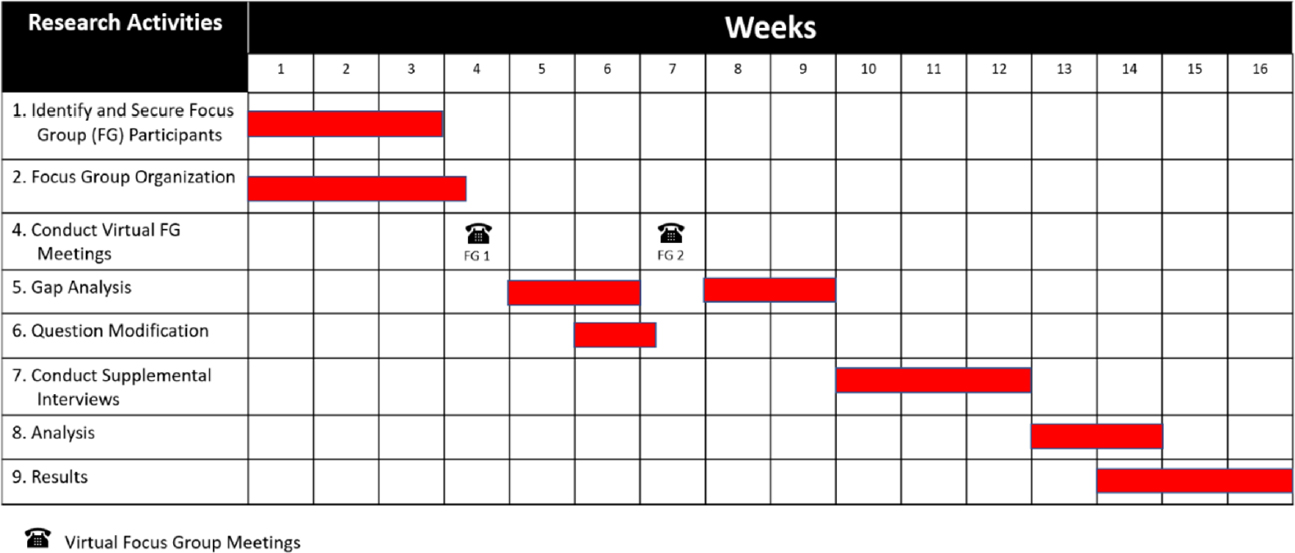
The proposed methodology and associated research activities will be executed over 16 weeks as depicted on Figure 8.
Focus Group Participants
The first research activity for the proposed methodology is to select focus group participants. The participants for the focus group will be chosen primarily from the established survey participant list from Task 2. The identified stakeholder groups developed for the survey distribution will also be the foundation for individual focus groups. These stakeholder groups include:
- State DOTs and local transportation agencies
- State Divisions of Aeronautics
- Multimodal Transportation Planning
- UAS OEMs
- Passenger Air Mobility OEMs
- UAS/AAM Service Providers
Equal representation from each stakeholder group will be the goal when seeking representation for participation in the focus group. When using focus groups as a research methodology, it is best practice to invite more participants than the established goal because participants may need to withdraw for various reasons. The research team anticipates inviting five people per stakeholder group and will contact potential participants one by one to explain the scope and goals of the focus group and secure commitments for the anticipated two meetings.
Focus Group Organization
Simultaneously with the first research activity, the focus group meeting dates will be selected and scheduled using a scheduling tool to ensure the best date and time is selected for the maximum number of participants. Once dates are selected, focus group invitations and details will be sent to confirmed participants. The meeting agenda will also be developed and finalized. It was anticipated that each focus group meeting last 2 hours (Table 5 lists the agenda items for the preliminary meeting). The time
dedicated for introductions in the first meeting will no longer be needed in the second meeting and will allow for more discussion time. Table 5 presents the proposed agenda for the focus group meetings.
Table 5. Proposed Agenda for Focus Group Meetings
| Agenda Item | Estimated Time |
|---|---|
| Welcome Remarks – Overview of project, focus group scope and goals | 15 minutes |
| Participant Introductions – Brief 1-to-2-minute introductions | 15 minutes |
| Discussion Topics, UAS Program Maturity, State Use Cases, Roles and Responsibilities, Policy, and Procedures | 80 minutes |
| Next Focus Group Meeting Coordination | 10 minutes |
The focus group meeting will start with welcoming the participants and providing an overview of the project, the research goals, and, specifically, the scope for meeting. Each participant will be given time to briefly introduce themselves and share their names and current role. After introductions, the focus group will have an interactive discussion with polls, whiteboards, and collaborative communication to better understand key issues for the specific topics of UAS program maturity, state use cases, roles and responsibilities, policy, and procedures. The moderator will start the group discussion with prepared questions. The WSP USA, Inc. (WSP) team will record the interactions as well as document key points for discussion in the second focus group meeting where topics such as coordination frameworks, funding, workforce development, and training will be discussed.
Another part of this research activity that will be key to the success of the focus group meetings is the development of the semi-structured questions to be used in each focus group meeting. The previously identified gaps from the Task 3 Gap Analysis will serve as the base for these questions. Semi-structured questions are written in an open-ended format and designed to encourage participants to freely share their thoughts. Semi-structured questions allow for focused questioning, while allowing the focus group moderator the flexibility to dive deeper into relevant topics that come up in the discussion (Adeoye-Olatunde and Olenik, 2021). The semi-structured method is ideal for exploring the participants' thoughts on complex open-ended questions, leading to a rich data set.
The questions will be designed in an unbiased way, avoiding the use of leading questions. The neutral questions will be developed to target the identified research gaps and extract data from the focus group to address these gaps. Focus group best practice is to use engagement, exploration, and exit questions; the moderator will use this approach to questioning. Engagement questions are used to establish the baseline topic and warm up the participants. Exploration questions are designed to be core questions for the focus groups and is where most of the focus group’s time will be spent. The exit questions are used to check if anything was missed and to provide an opportunity for participants to share last-minute thoughts.
Conduct Focus Group Meetings
The focus group meetings will be held virtually using Zoom. This virtual meeting platform allows for the use of collaborative tools such as poll questions and whiteboards. The meeting will be recorded to assist with post-meeting analysis. Although focus group moderators will take notes throughout the meeting, the recordings will serve as the primary data capture tool for future in-depth analysis. It is anticipated that the first focus group meeting will be held in the fourth week, and the second focus group meeting will be held in the seventh week of the proposed methodology timeline.
Gap Analysis
Task 3 identified outstanding knowledge gaps following the Literature Review and Survey. The goal of the focus groups is to collect data to be used to address these gaps. It often takes more than one focus group meeting to produce valid data and results, which is why the research team will schedule two focus group meetings and supplemental interviews to support or validate as needed. Following the first focus group meeting, the research team will compare notes, review the recordings, and perform a gap analysis of the qualitative data. The outstanding gaps will be identified, and the original focus group questions will be modified, or new questions developed to prepare for the second meeting. This gap analysis process will repeat itself following the second meeting and the research team will determine the need for supplemental interviews.
Supplemental Interviews
If gaps still exist following the second focus group meeting, or the focus group findings need additional validation, the research team will employ the use of another proven qualitative research method—conduct interviews. The interview participants will be determined based on where the knowledge gaps still reside. It is anticipated these interviews would range from 30 to 60 minutes and follow the semi-structured questioning. Each interview will be conducted virtually and recorded. These supplemental interviews will be used to seek clarity on outstanding questions, extract additional data, and verify or validate the findings from the two focus group meetings.
Analysis
Following the completion of the potential supplemental interviews, the data from the focus group meetings and interviews will be thoroughly analyzed. The recordings from both focus group meetings and the recordings from every interview will be transcribed using transcription software. Thematic analysis will be used to analyze the transcripts. This approach would entail thoroughly reading the transcripts, assigning codes, and extracting themes throughout the data.
Qualitative data coding of transcripts can be done in a variety of ways. Coding can refer to numbers assigned to various words or phrases, a system of abbreviations, or using words and short phrases to describe bits of data. There are two categories of qualitative code: a priori codes and empirical codes. A priori codes are codes that are defined before conducting any data collection, typically related to categories that the researcher expects to have confirmed. Empirical codes are codes created after data collection during data set analysis (Gibson and Brown, 2009).
The proposed use of empirical codes with an inductive approach will ensure that themes can be derived from the participants and the collected data. A deductive approach would mean approaching the data with a predetermined framework and seeking confirmation within the data. It is important to note that because the themes are data-driven, they may not necessarily always directly relate to the original focus group meeting or interview questions. For example, if the participants expound on an answer to one of the previously developed focus group questions, this will then lead to additional discussion on new topics (Kiger and Varpio, 2020).
Results
The analysis will produce results related to the outlined gaps and objectives; results that will provide the information needed to develop a comprehensive Guide. These objectives or aims are detailed in the following section.
Research Topics and Objectives
The above-proposed methodology will address, at a minimum, the following research topics. Each of these topics has been framed as problem statements with the associated research objectives.
Future UAS integration through UTM, AAM, and Urban Air Mobility (UAM)
UAS integration continues to mature as State DOTs adopt the technologies into traditional workflows. UAS package deliveries have started in a variety of locations throughout the United States, and additional opportunities and future use cases using UAS and AAM aircraft are being explored. There are still many unknowns regarding the integration of these future use cases, but this project aims to understand the systems needed (e.g., ground infrastructure and UTM) to enable the integration of UAS and AAM into the National Airspace System and existing transportation and cargo ecosystems.
Identification of the roles and responsibilities among State DOTs, federal and local agencies, including areas of overlap and gaps in responsibilities
The FAA has clearly defined its role in UAS and AAM integration and has organized its work in five key areas: aircraft, airspace, operations, infrastructure, and community (FAA, 2022a). The overarching role and responsibility of the FAA across these areas is to ensure UAS and AAM integration maintains the highest levels of safety that have been established and solidified in modern-day aviation (FAA, 2022b). Although the roles and responsibilities of the FAA are clearly defined, many State DOTs and local agencies may be unsure of their role in this new era of transportation. An objective of this project is to identify the roles and responsibilities at the federal, state, and local levels and to identify the potential overlap and gaps that exist between these various stakeholder groups.
Identification of specific use cases that may become applicable to State DOTs (e.g., Air Cargo, passenger air mobility, Emergency Services)
Numerous potential use cases are being explored for smaller UAS and larger AAM aircraft. Although circumstances will vary from state to state, many of these use cases could become relevant to State DOTs. State DOTs may take on responsibilities at various levels for the oversight or management of UAS and AAM infrastructure. This project will identify specific use cases that may become applicable to State DOTs.
Framework for coordinating resources from State DOTs or local agencies with UAS integration programs
As UAS technology continues to advance and transportation applications continue to mature, there is a growing need to establish a framework for coordinating resources between State DOTs or local agencies and UAS programs. This framework should ensure that integrating UAS into transportation infrastructure is safe, effective, and efficient, and that resources are used appropriately to support this integration. Although State DOTs have opportunities to coordinate through industry associations and FHWA EDC UAS efforts, a potential gap is a framework for consistent coordination of resources. This project aims to confirm if this is indeed a gap, and to then develop a framework that could be instituted to enable ongoing State DOT collaboration and coordination of resources.
Outreach strategies for coordinating UAS integration between multiple jurisdictions and engaging with private stakeholders
UAS and AAM integration will not succeed if done in a silo. For actual integration to take place, the coordinated efforts of countless agencies and organizations across local, state, and federal jurisdictions will be required. This project aims to identify historically successful strategies, best practices, and lessons learned from the surface transportation and legacy aviation industries regarding stakeholder engagement and cross-jurisdictional coordination.
Funding resources available for State DOTs or local agencies for the implementation of UAS (including AAM/UAM) operational capabilities
Securing initial and, perhaps more importantly, ongoing funding is often a leading concern for State DOTs starting or maturing a UAS program. Understanding potential funding resources available to State
DOTs and how to acquire a dedicated UAS/AAM budget is essential to a program’s long-term success. This research aims to identify funding resources.
Requirements of workforce qualifications and training programs
Recruiting, training, and retaining a qualified workforce is a challenge faced by many State DOTs and throughout the UAS and AAM industries. Understanding what qualifications should be required for emerging use cases and any potential responsibilities State DOTs may take on is largely unknown. Best practices regarding UAS training programs continue to evolve, and necessary components of future AAM-related training programs are yet to be determined.
The requirements for implementing the UAS operational capabilities by State DOTs, including information technology (IT) infrastructure and security, data retention policy, organization structure and workflow, and training
Several State DOTs have successfully implemented UAS technologies into their operations and have established robust programs with internal training programs, policies and procedures, organization structure, UAS integrated workflows, and UAS data management plans. Many other State DOTs are working toward maturing their UAS programs, but they are encountering challenges. These challenges range from simply not having quality guidance to a lack of workforce to cover all current responsibilities. The objective here is to work closely with the State DOTs that have mature and established UAS programs to understand and identify best practices and requirements for maturing the implementation of UAS operational capabilities.
The outlined proposed methodology for addressing the identified gaps and developing the workbook was submitted to the project panel for review and approval.
Task 5 – Outline for Proposed Guide
The defined and approved proposed methodology enabled the research team to develop a comprehensive Guide that will provide utility for state and local transportation agencies seeking to increase UAS and AAM operational capabilities. The Guide was based on the following proposed outline, which was subject to refinement from project panel feedback and research findings from the executed methodology. The following outline was delivered to the panel as part of Task 5.
Industry and Technology Trends
The first section of the Guide will outline the history of UAS and AAM to provide the necessary context and foundation for the rest of the document. A review of UAS and AAM technologies, the adoption of these technologies, and current and future trends will be thoroughly reviewed.
Use Cases and Applications for UAS and AAM
Building on the review of technology and trends, this section will provide a detailed State of the Practice. The existing State DOTs use cases and applications of UAS in infrastructure inspections, incident management, and throughout the construction life cycle will be presented. The solidified associated benefits of utilizing UAS, such as increased safety, time savings, and cost savings, will also be presented. Emerging UAS use cases within State DOTs that will be enabled by regulation will also be explored.
A review of current and emerging UAS applications, such as package delivery, and AAM aircraft applications across regional and urban environments will be explored.
Impact and Opportunity Evaluation
As UAS and AAM technologies continue to mature, State DOTs and transportation organizations will need to continually evaluate the impacts of these technologies and thoroughly understand the associated opportunities. This section of the Guide will outline the various opportunities that UAS have already provided to State DOTs, as well as potential future opportunities. It will also explore the potential impacts of these existing and emerging technologies, considering both the impacts of adoption and rejection of the technology.
Framework and Tools for Coordinating Resources
This section will provide a framework and tools for resource coordination that state and local transportation agencies can put into practice, along with best practices and lessons learned for internal department coordination. On a larger scale, this project aims to develop a framework and tools that all State DOTs can use to regularly communicate, coordinate, and collaborate. The framework will also include steps that states can take to increase coordination with federal agencies. This comprehensive framework and corresponding tools will allow local, state, and federal stakeholders to truly collaborate and to help one another mature UAS and AAM operational capabilities.
Funding Considerations
A lack of funding is often one of the issues State DOTs encounter when starting a UAS program or trying to grow and mature its UAS program capabilities. The Guide will provide information regarding the various funding considerations that transportation agencies can access. Many State DOTs have provided some internal funding toward UAS program efforts, but often these are not ongoing funding resources. Many State DOT personnel have turned to federal resources; for example, the FHWA State Transportation Innovation Council grant program is often a way State DOTs have accessed up to $100,000 (Federal Highway Administration, 2022).
The Bipartisan Infrastructure Law, signed into law in the fall of 2021, included over $1 trillion in transportation and infrastructure funding. Funding is filtering down through the U.S. Department of Transportation to its modal agencies such as FHWA and FAA. Another source of potential funding will be through the FAA reauthorization, this FAA reauthorization bill was debated in the spring and summer of 2023; the research team will follow the eventual outcome closely and update the Guide as needed. These potential funding opportunities for UAS and AAM initiatives will be thoroughly explored and presented as resources within the Guide.
Outreach and Collaboration Strategies
Stakeholder engagement is a key component of the continued success of UAS integration and advancing AAM capabilities. Many State DOTs use UAS stakeholder working groups, which bring together representatives from different organizations including industry, government, academia, and nonprofits, to collaborate on key issues. The public is another key stakeholder, and State DOTs will need to consider how to engage the public and what type of forums can be provided in which the public can come together to express thoughts and concerns. Best practices and lessons learned from these working groups, public outreach efforts, and the legacy surface transportation and aviation industries will be thoroughly reviewed through the outlined research activities. These will be presented in the context of UAS and AAM stakeholder outreach and collaboration.
Roles and Responsibilities
State DOTs’ roles and responsibilities regarding legacy transportation infrastructure are well defined, but this does not yet hold true for UAS and AAM infrastructure. Stakeholders have expressed diverse opinions concerning the potential roles of State DOTs. In many cases, the roles and responsibilities of transportation agencies and various stakeholders at the federal, state, and local level are still unknown. This project aims to address this gap and, through the proposed methodology, primarily define the
potential roles and responsibilities of State DOTs, paying attention to the roles of other stakeholders in UAS and AAM infrastructure and operations.
Workforce Qualifications and Training
The workforce responsible for UAS operations must possess the appropriate qualifications and training to operate the technology safely and effectively. Typically, this includes obtaining a remote pilot certificate from the FAA and completing additional training from a State DOT specific to UAS operations within a state. The FAA remote pilot certificate is a baseline requirement for UAS operations and is obtained by passing a knowledge test that covers topics such as regulations, airspace, and safety. In addition to this, many State DOTs developed internal training programs that provide UAS operators with the knowledge and skills specific to their state’s transportation infrastructure and UAS applications.
State DOTs must ensure that their UAS workforce is adequately trained and qualified to operate UAS in compliance with FAA regulations and state laws to maximize the safety and efficiency of transportation infrastructure management. State DOTs have taken various approaches to the qualifications and training required of their workforces. The Guide will provide an overview of these different approaches and provide best practices to ensure a qualified and well-trained workforce. This section will also present UAS workforce recruitment considerations.
Knowledge Gaps
This project will address many existing knowledge gaps, with the overarching goal of developing a Guide that is as robust and comprehensive as possible to address the needs of State DOTs and local transportation agencies as they enter an area that is in constant flux. UAS and AAM technologies continue to rapidly evolve, as does the industry itself. As a result, many complex problems will remain unsolved. The last section of the Guide will outline outstanding knowledge gaps that could lead to future research.
Task 6 – Interim Report and Presentation
Task 6 was a dedicated mid-point check-in with the project panel. The research team compiled the Interim Report that included all work performed on Tasks 1 through 5. The Interim Report was delivered to the project panel for review and comments on May 12, 2023. The project panel provided three comments combined into one formal written comment that the research team has addressed. On June 20, 2023, the project PI, Paul Wheeler, presented the Interim Report and research progress to date to the project panel. In the meeting members of the project panel provided additional thoughts on the presented methodology including strategies for conducting the proposed focus groups. The panel members also suggested additional people to include on the focus group invitation. The research team incorporated this feedback as it prepared to execute the methodology.
Task 7 – Execute Methodology Development
For Task 7, the research team executed the proposed and approved methodology. The deliverable for this task was entitled: Technical Memorandum on Methodology (see Appendix C).
Task 8 – Draft Guide Development
This task was dedicated to writing the Draft Guide, which was completed in February 2024. The panel reviewed the Draft Guide and provided 37 comments to the research team. The research team was grateful for the constructive feedback and incorporated the changes needed based on the panel’s comments.
Task 9 – Develop Plan for Stakeholder Workshop
Task 9 involved the research team developing a plan for the May 2024 stakeholder workshop. The stakeholder workshop was an in-person workshop that allowed constructive feedback to be gathered on the Draft Guide from various stakeholder groups. The deliverable for this task was the Stakeholder Feedback Workshop Plan, which was submitted and approved by the panel (see Appendix D).
Task 10 – Interim Report 2 Development
Task 10 provided an overview of Tasks 7 through 9, including the methodology development, the Draft Guide, and the stakeholder workshop plan. The research team provided Interim Report 2 for the panel for continued feedback and guidance as the project approached the final stages.
Task 11 – Conduct Workshop
In preparation for the in-person stakeholder feedback workshop preliminary outreach and coordination for travel for workshop participants was conducted. The project team developed presentation slides that were used to guide the workshop and met internally to finalize the slides and workshop agenda. The project team also developed an internal run-of-show document that facilitated an effective workshop for the collection of feedback on the Draft Guide. Other efforts that were finalized prior to the workshop included:
- Printing of name badges
- Printing sign-in sheet
- Printing and binding hard copies of the Draft Guide
- Developing templates for notetaking and collecting feedback
- Coordinating the catering order
On Tuesday, May 21, 2024, the research team successfully conducted the stakeholder feedback workshop with 21 participants representing 16 State DOTs and other expert industry stakeholder perspectives. Figure 9 provides some photos from the workshop.


