Evaluating Traffic Safety Campaigns: A Guide (2025)
Chapter: 2 Focus Groups and Interviews

CHAPTER 2
Focus Groups and Interviews
Focus groups and interviews can be used for both formative and summative evaluation, and the process for implementation is the same. However, although there is considerable overlap in the level of effort between the two types of evaluation using qualitative data-collection methods like focus groups and interviews, there may be some additional effort needed for formative evaluation. This additional effort focuses less on evaluations of effectiveness and more on gathering data that will contribute to the development of the campaign, its material, and messages, which in turn may contribute to effectiveness. This chapter describes the steps for focus groups and details key differences between how focus groups and interviews should be implemented. The quick reference guide for using the focus group costing tool is available in BTSCRP Web-Only Document 7.
Staffing
Ideally, staffing for focus groups will require three team members. However, as the number of focus groups increases, additional team members with the same characteristics as two of those team members may be added to reduce the overall burden on them, especially if multiple focus groups need to be conducted in a short amount of time. These team members include the following:
- A senior subject matter expert provides guidance on content/metrics to be studied, sampling, and recruitment approach. This person has significant experience leading similar campaigns and is knowledgeable about the risk and outcomes of the traffic behavior that the campaign is seeking to change, and/or the alternatives to that behavior.
- A focus group lead/moderator develops the research plan, including sampling, recruiting, data collection, and instruments like a moderator guide and screener; provides guidance to the coordinator on recruitment, logistics, incentives, and transcription; leads coding, analysis, and report writing. Depending on the number of focus groups or interviews, moderation, and coding/analysis duties may be split with additional team members. This person has some experience conducting qualitative research and/or management experience. They should also be outgoing and capable of engaging participants in the conversation and have the experience and judgment to know when to follow the moderatorʼs guide and when to delve deeper if a participantʼs response warrants further discussion.
- A coordinator is responsible for supporting the other two team members in study development, coding, analysis, and reporting as well as managing recruitment, logistics, scheduling, notetaking, incentives, and transcription. Depending on the size of the study, notetaking, incentive, and coding/analysis duties may be split with additional team members. This person should be detail-oriented to ensure that they monitor how many participants have been recruited, document participantsʼ contact information for follow-up, if necessary, stay on top of scheduling, track incentives disbursed to participants, record focus groups and/or take comprehensive notes, send recordings out for transcription, and follow up to ensure delivery.
Long Description.
The tab reads focus group costing tool.
Long Description.
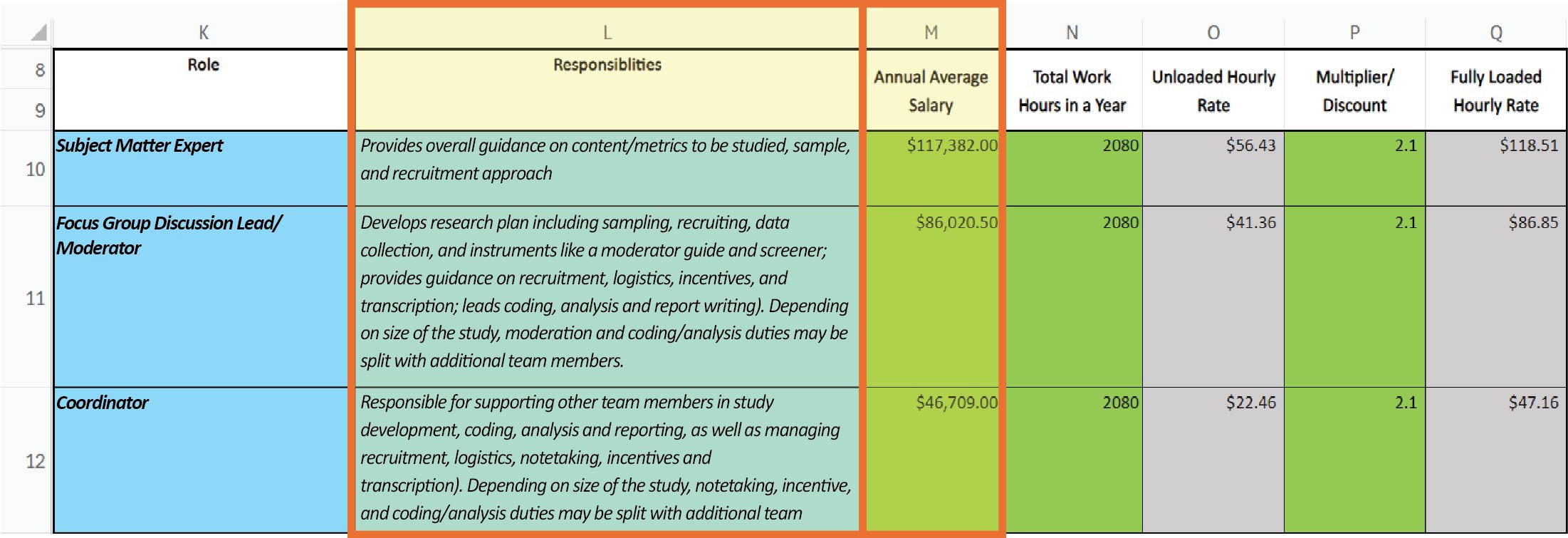
The headers from columns K to Q are role, responsibilities, annual average salary, total work hours in a year, unloaded hourly rate, multiplier or discount, and fully loaded hourly rate. The column L and M are highlighted.
If focus groups are going to be conducted virtually, this person will also act as a technical lead and needs to know how to use teleconferencing systems like Zoom, Webex, or MS Teams, to set up meetings/calls on these platforms, manage participantsʼ entry to those spaces, and record them as necessary. The coordinator role is a vital one.
Appendix A, Tab 1, Focus Group Costing Tool (Exhibit 2.1) provides further information on the responsibilities for these positions (Cells L10–L12) as well as typical salaries for individuals in these roles based on Department of Labor statistics (Cells M10–M12) (Exhibit 2.2). The research team recommends that SHSOs using this tool research annual salaries in their jurisdictions that are realistic for these roles and input them into the green cells in Column M. Formulas in Columns N and O will calculate a basic hourly rate based on how many hours a given person is expected to work in a year.
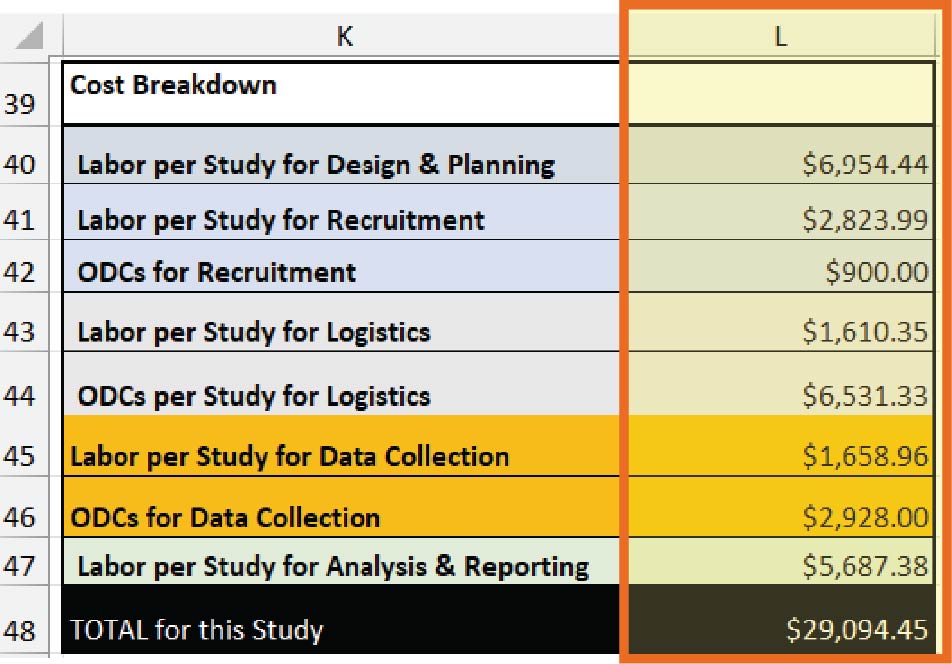
This rate can then be adjusted (or loaded) to include fringe benefits and overhead rates per organization by inputting an appropriate figure into Column P. These hourly rates are then used to calculate labor totals per step in Cells L41, L43, L44, L46, L47, and L49 (Exhibit 2.3).
Other Direct Costs
When planning a focus group, it is essential to consider ODCs that can influence the overall budget. This can include costs associated with recruiting participants, hosting the focus groups (e.g., virtual or in person), and recording transcription. Recruitment costs can depend on whether the focus groups will be held virtually or in person. Additionally, targeting specific demographics, such as certain age groups or individuals who speak languages other than English, can incur additional fees. For in-person focus groups, logistic costs include the provision of refreshments such as beverages, snacks, or meals, which, although not mandatory, are generally recommended
Long Description.
The spreadsheet shows the cost breakdown with the cost type on row K and the cost on row L. The cost on row L is highlighted. The total for this study is 19,301.94 dollars.

Long Description.
Tab reads 1A Focus group logistics costs.
to enhance participant comfort and engagement. Moreover, the rental cost of the facility to host the focus groups (if needed) and associated parking fees should be factored in. Conversely, if focus groups are conducted virtually, different costs must be considered. Ensuring the functionality of technology and having support ready to address potential technical issues is crucial. The choice of a web conferencing platform is another consideration, which can vary depending on whether existing software suffices or new software must be purchased to support the focus groups. Recording the sessions, often done for notetaking purposes with participant consent, introduces another layer of cost. The expenses for transcription services can differ, usually charged per minute or per hour of recorded content. These transcription costs should be accounted for in the budget.
Appendix A, Tab 1A, Focus Group Logistics Costs (Exhibit 2.4) offers additional information on the services and associated costs for organizing focus groups. This section provides examples of expenses related to recruitment fees across different age demographics and language preferences (e.g., English, Spanish). Additionally, it outlines the various costs involved in hosting both in-person and virtual meetings. The research team recommends that SHSOs use this tool to gain a general understanding of the potential direct costs that may arise when hosting focus groups. These costs are described in further detail in the Conduct section.
Travel
Several factors contribute to the overall travel expenses associated with conducting in-person focus groups, including lodging costs, ground transportation, number of team members traveling, duration of the trip, and flight expenses. The number of focus group sessions scheduled each day in each location is a key factor of travel costs, as each session needs travel arrangements for participants and facilitators. For example, hosting multiple sessions over several days increases the total travel expenses due to repeated travel requirements. Scheduling multiple focus groups on one day in one location can help mitigate travel costs, but scheduling these should allow time for preparation and debriefing in between sessions. Likewise, scheduling concurrent focus
groups can also help limit travel costs, but does increase labor for the team as two sets of facilitators and notetakers are needed. If the number and duration of focus groups in a given location require more than 1 day, necessitating an overnight stay, a larger team requires more accommodations and transportation arrangements, contributing to higher overall expenses.
Finally, the distance to be traveled could also influence travel costs. It may be more efficient to drive between multiple locations within a state, but those journeys also require labor hours that will not be spent conducting focus groups. Therefore, for longer distances, it may be worthwhile to fly from one side of the state to the other. Therefore, flight costs are another important factor in budgeting for in-person focus groups. Depending on the distance traveled, the availability of flights, and the number of team members flying to the location, flight expenses can vary significantly. Organizers should consider booking flights in advance to secure lower rates and allocate sufficient budget for air travel.
Steps for Conducting Focus Groups
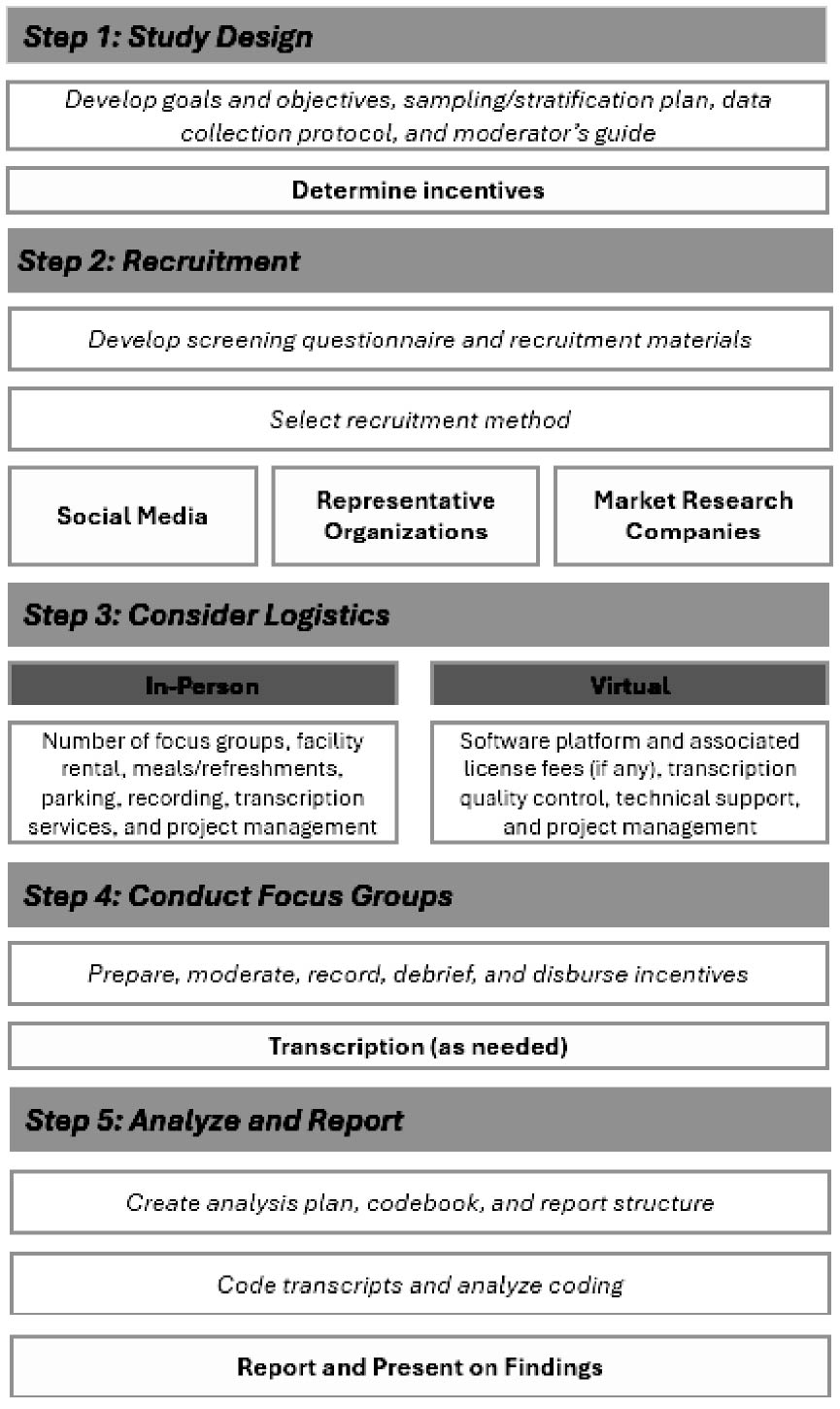
Several steps should be followed in using focus groups to measure the effectiveness of traffic safety messaging campaigns, beginning with designing the study and obtaining clearance to collect data from human subjects, then recruiting for focus groups and arranging the logistics for those groups. The next step focuses on conducting the focus groups, after which the data collected from the groups is analyzed, and a report is drafted and finalized. These steps are described in Exhibit 2.5.
Long Description.
The steps are as follows: Step 1: Study Design. Step 2: Recruitment. Step 3: Consider Logistics. Step 4: Conduct Focus Grous. Step 5: Analysis and Reporting.
Step 1. Design Study
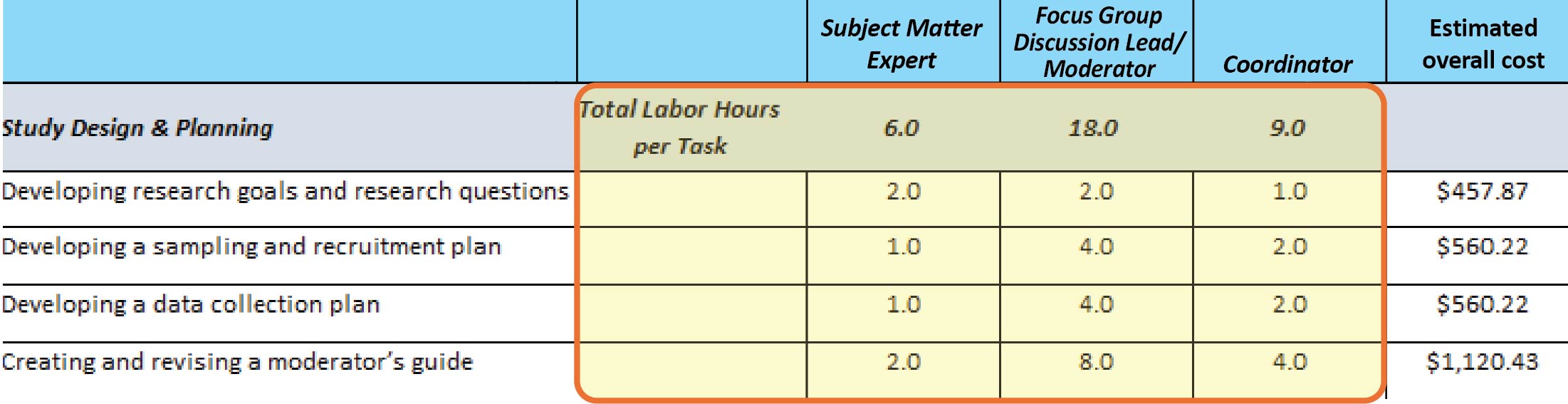
Assessing traffic safety messaging campaign effectiveness using focus groups requires developing research goals and research questions for the study, creating a sampling and recruitment plan, drafting a data-collection plan, and creating and revising a moderatorʼs guide. Projected labor hours for each role for this step are reflected in Tab 1, Focus Group Costing Tool, in Appendix A (Exhibit 2.6). These hours do not change depending on the number of focus groups, interviews, or participants/interviewees. Still, they may increase for formative evaluations if gathering information to help develop the campaign is one of the goals (Exhibit 2.6).
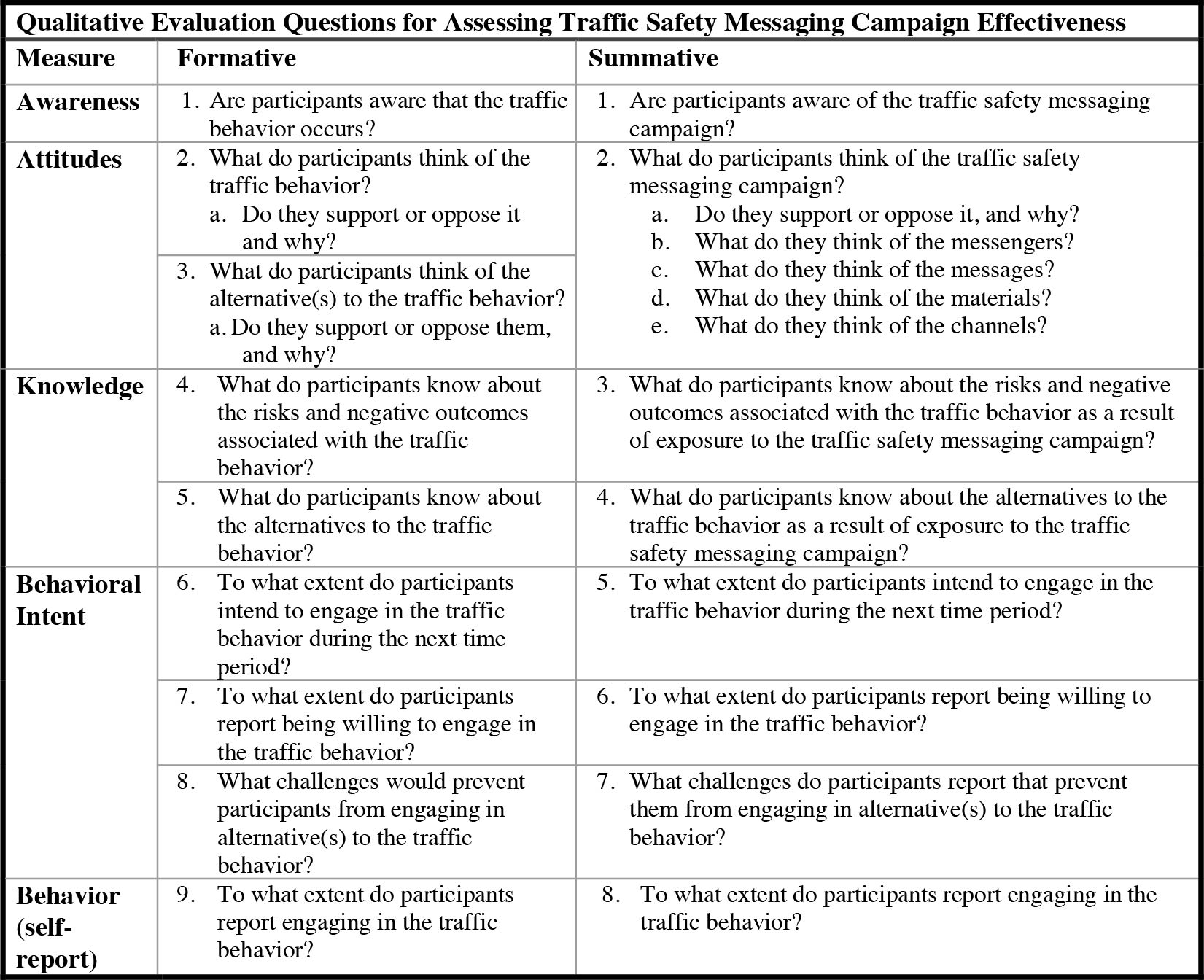
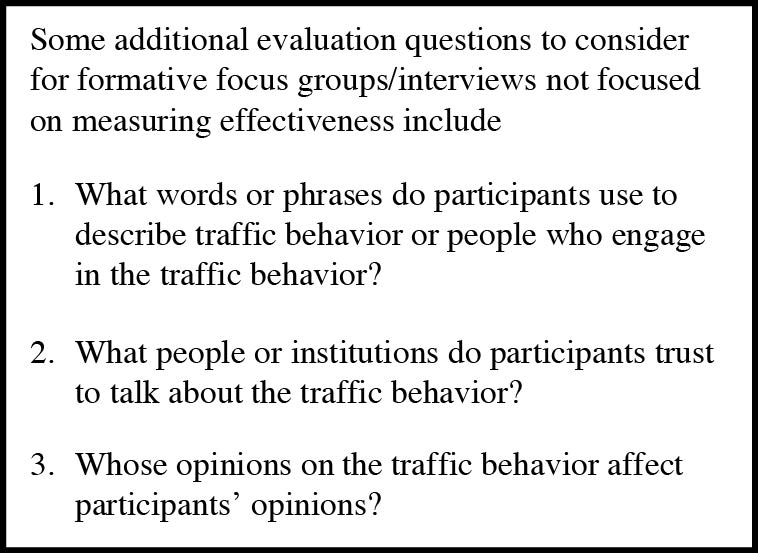
Developing research goals and questions to evaluate the effectiveness of a traffic safety messaging campaign does not need to take a long time, as the goals and questions should focus on effectiveness. Common evaluation questions used to guide formative and summative evaluations using focus groups are presented in Exhibit 2.7, with some additional evaluation questions to consider for formative focus groups/interviews not focused on measuring effectiveness in Exhibit 2.8.
The sampling plan will describe how many participants should be recruited. If the traffic safety messaging campaign is intended to change the behavior of the public in general, the sampling plan (also called a segmentation plan when discussing focus groups) should focus on ensuring that the participants included in the focus groups and interviews represent the audiences that the campaign seeks to reach in terms demographics like age, race/ethnicity, and gender. Therefore, sampling should take into account the demographic makeup of the area in which the campaign is being implemented and include similar proportions of respondents based on their demographics.
However, if the traffic safety messaging campaign is intended to reach multiple audiences or specific groups or the intent of the evaluation is to understand how different groups of people, based on their locations, or modes of transportation as well as demographics, will or do respond to the campaign differently, the sampling plan should ensure that the appropriate proportions of each group are representing among the participants or interviewees. For example, if the campaign is trying to change the behavior of teen drivers in urban areas, the sample should comprise mostly teen drivers who live in urban areas. However, if the campaign focuses on pedestrians in general, the sample should include all ages, racial/ethnic groups, and genders, regardless of location, in proportions that match those in the areas where the campaign is being implemented. Thus, if it is a statewide campaign and the population of the state is 51.2% female, 59.4% white, and 33% African American, with 76.6% of the population older than 18 years and 14.7% older than 65 years, then your participants should reflect the same proportions. In terms of numbers, the
Long Description.
The spreadsheet shows an example of total labor hours per task for subject matter expert, FGD Lead or moderator, coordinator, and the estimated overall cost. For study design and planning, the tasks are Developing research goals and research questions; developing a sampling and recruitment plan; developing a data collection plan; and creating and revising a moderator's guide.
Long Description.
The table is titled 'Qualitative Evaluation Questions for Assessing Traffic Safety Messaging Campaign Effectiveness.' The column headers of the table are Measure, Formative, and Summative. Each row has sub-rows. The data given in the table row-wise are as follows: Row 1: Awareness: 1. Are participants aware that Traffic Behavior occurs?; 1. Are participants aware of the Traffic Safety Messaging Campaign? Row 2: Attitudes: 2. What do participants think of Traffic Behavior?; a. Do they support or oppose it and why?; 2. What do participants think of the Traffic Safety Messaging Campaign? a. Do they support or oppose it and why? b. What do they think of the messengers? c. What do they think of the messages?; d. What do they think of the materials? e. What do they think of the channels? 3. What do participants think of the alternative(s) to Traffic Behavior? a. Do they support or oppose them and why? Row 3: Knowledge: 4. What do participants know about the risks and negative outcomes associated with Traffic Behavior?; 3. What do participants know about the risks and negative outcomes associated with Traffic Behavior as a result of exposure to the Traffic Safety Messaging Campaign? 5. What do participants know about the alternatives to Traffic Behavior? 4. What do participants know about the alternatives to Traffic Behavior as a result of exposure to the Traffic Safety Messaging Campaign? Row 4: Behavioral Intent: 6. To what extent do participants intend to engage in Traffic Behavior during the next Time Period?; 5. To what extent do participants intend to engage in Traffic Behavior during the next Time Period? 7. To what extent do participants report being willing to engage in Traffic Behavior? 6. To what extent do participants report being willing to engage in Traffic Behavior? 8. What challenges would prevent participants from engaging in alternative(s) to Traffic Behavior? 7. What challenges do participants report that prevent them from engaging in alternative(s) to Traffic Behavior? Row 5: Behavior (self-report): 9. To what extent do participants report engaging in Traffic Behavior?; 8. To what extent do participants report engaging in Traffic Behavior?
Long Description.
The data given in the table are as follows: Some additional evaluation questions to consider for formative focus groups or interviews not focused on measuring effectiveness include: 1. What words or phrases do participants use to describe the Traffic Behavior or people who engage in the Traffic Behavior?; 2. What people or institutions do participants trust to talk about the Traffic Behavior? 3. Whose opinions on the Traffic Behavior affect participants’ opinions?
research team recommends a minimum of three focus groups for a general population sample, and if the sample is segmented, a minimum of three focus groups per segment of the sample. The number of participants per focus group depends on the mode; the team recommends six to eight participants for virtual focus groups and eight to ten for in-person focus groups.
Next, a recruitment plan should be developed to recruit the participants identified in the sampling plan. The plan should include how the potential participants will be reached, how many attempts will be made to reach them, and how they will be screened to ensure that they are part of the group(s) needed for the focus groups. The recruitment plan should also describe how the number of participants for each segment will be tracked, who will contact them, what information will be gathered from them, what incentive they will be offered (tied to the duration of the focus group), and how and when that incentive will be provided. In addition, although the sampling plan should describe the ideal number of participants needed, there is the potential for participants to agree to participate but not show up, thus, the recruitment plan should assume some attrition and recruit beyond the numbers included in the sampling plan. The team recommends recruiting and scheduling at least two additional participants per focus group.
Likewise, a data-collection plan describing how data will be collected should also be created. This plan should describe when and how participants will participate, including the mode (virtual or in person), the platform (if virtual), procedures for obtaining consent, and preparations for the moderator and coordinator. Data from a focus group may include audio recordings of the discussion and/or notes on the discussion, which may be analyzed differently. The data-collection plan should also lay out what the procedures are for troubleshooting during the focus groups, roles and responsibilities for recordings, steps for disbursing incentives to participants, processes for having recordings transcribed (if applicable), and anticipated quality assurance approaches.
The next part of development focuses on the creation of a semi-structured discussion guide (see Appendix B for an example) that is used by the focus group moderator to guide conversations with focus group participants to elicit information from them about the campaign. The hours that need to be spent developing such an instrument depend on what you want to learn, in other words, your overarching evaluation questions, and whether the focus groups are being conducted for formative or summative reasons. If the intent of a formative focus group or interview is to gather information to inform the development of the campaign in addition to eventually measuring its effectiveness, the hours estimated for every activity included in the design phase in Appendix A should be at least doubled as the approach and instrument may be somewhat more complex and thus take more time.
Finally, as part of Step 1, it is helpful to develop an analysis plan that lays out how the data collected will be analyzed. The planned analysis may influence what type of data is collected during the focus groups and vice versa—the type of data collected may influence what types of analyses can be conducted. Common analysis approaches are described in Step 5.
Depending on the type of organization conducting the focus group, the sampling, recruitment, data collection, and analysis plans (which together may be thought of as a focus group protocol) may need to be reviewed by an institutional review board (IRB) as data will be collected from human beings and thus need to receive a human subjectsʼ research approval or exemption. Focus groups for campaign evaluation are often given an exemption because data is being collected about peopleʼs opinions, and no personally identifiable information or personal health information is being collected. While Appendix A includes hours for development of the plans that make up a focus group protocol, hours for IRB review cannot be estimated, given the considerable variation in how different organizations handle this aspect of evaluation.
Step 2. Recruit Participants
Once the focus group protocol has received the necessary human subject approval, the next step is to recruit participants. There are several different ways to recruit focus group participants, and thus all these methods are included in Tab 1, Focus Group Costing Tool, of Appendix A (Exhibit 2.9). These include the following:
- Posting advertisements online and recruiting using message boards or websites to share classified advertisements.
- Posting advertisements on social media platforms (or in social media groups) known to be widely used by potential participants.
- Paying market research companies to recruit participants, either from their existing pools of respondents that include members of the public who have agreed to participate in surveys or other data-collection activities, or new participants.
- Working with groups that represent particular types of audience members, for instance, industry associations or community-based organizations.
Costs for recruitment can range from a few hundred dollars to post advertisements on websites or social media platforms to over a hundred dollars per participant when working with market research companies or representative groups. Often, it is possible to offer representative groups a lump sum as an honorarium for recruiting a number of their members. Depending on their level of effort (e.g., whether they are sharing a recruitment flier with their members or actively recruiting and screening members), the total cost of this honorarium can be less than but is often comparable to, the total cost of recruiting the same number of participants via a market research firm. However, it can take additional time and labor for team members to screen potential participants who respond to online or social advertisements, to send email reminders or make reminder phone calls to ensure that participants show up, and to follow up to share incentives after conducting the focus groups. Market research companies are typically responsible for these activities, which are included in their per-person recruitment fees, and these activities may be conducted by representative groups for a higher honorarium. It is also possible to recruit participants via online panels, which, like market research companies, have a pool of respondents that include members of the public who have agreed to participate in surveys, but this can often be more costly and less efficient than the methods previously described.

Long Description.
The spreadsheet has example cost factors for Recruitment of Number of Social Media Ads ; Cost per social media ad for recruitment; per person costs for recruitment via market research firms; honorarium per representative organization for recruitment; number of representative organizations for recruitment. There are example notes for each cost factor that include costs and sample number of respondents.
Incentives
When planning focus group incentives, it is essential to consider the modality (in person versus virtual) and the duration of the session. For both modalities, a 1-hour session typically warrants a moderate incentive, balancing the duration of engagement with participant expectations. SHSOs should assume that incentives must be adjusted accordingly to ensure adequate participation and engagement, with higher incentives for in-person sessions and slightly lower ones for virtual settings. Additionally, SHSOs should consider the convenience factor and any associated costs when setting these incentives to ensure they reflect the actual value of participantsʼ time and effort.
For in-person focus groups, participants typically expect higher incentives due to the additional time commitment and potential travel requirements. This is especially relevant for sessions lasting around 1 hour, as participants need compensation for both their time and the inconvenience of attending in person. For focus group sessions lasting approximately 1 hour, incentive fees typically range from $100 to $200 (Exhibit 2.10). However, the complexity and burden of the focus group questions must also be factored in to ensure that participants are adequately compensated for their time and effort.
In contrast, virtual focus groups often involve lower incentive expectations since there is no need for travel, and participants can join from their preferred location. For example, incentive fees for virtual focus groups lasting approximately 1 hour may range from $75 to $125 (Exhibit 2.10). Again, the burden of the questions of the participants is another factor to consider when determining incentives.
Step 3. Consider Logistics
When organizing focus groups, both in-person and virtual modalities involve distinct logistic considerations that can affect overall cost and execution quality. Additionally, the number of focus groups and participants must be factored into planning, as it influences the logistic arrangements. For budgeting focus group logistics, direct costs reflected in Tab 1A, Focus Group Logistics Costs, Appendix A (Exhibit 2.4), have assumed focus groups that seek to recruit up to eight participants, but assume some attrition or missed appointments with six participants ultimately attending.
For in-person focus groups, key logistic components include facility rental, refreshments, parking, recording, and observation arrangements. The number of focus groups hosted (e.g., six groups of six people each) directly affects the scheduling and costs associated with these logistics. If multiple focus groups are planned, renting a facility for an extended period, such as an entire day, can be more cost-effective and convenient. Facilities often offer daily rental rates, which range from $200 to $2,500, depending on the location and amenities, and may include additional

Long Description.
The headers from columns B to K are setting, modality, Schlesinger group, plaza, Murray Hill national, Atkins research global, Nashville resource group, and Nichols research. The data for each header are given in rows 25 through 30.
services like setup and cleanup. Cells F17–K17 provide estimates from market research firms on facility rental cost per day, assuming six groups of six (Exhibit 2.11). This approach simplifies logistics by allowing multiple sessions within one day without the need to repeatedly set up and break down equipment and seating arrangements. However, while hosting multiple sessions in a single day can be cost-effective, it is important not to schedule sessions back-to-back, but to allow some time in between sessions for facilitators, notetakers, and observers to debrief, potentially adjust the wording of questions if they are not eliciting the right type of response, and for facilitators to spend some time preparing for the next session. In addition, having a break between sessions also allows participants from one session to leave the building and not encounter participants from the next session, and discuss their experiences with each other, thereby impacting the rigor of the focus group approach.
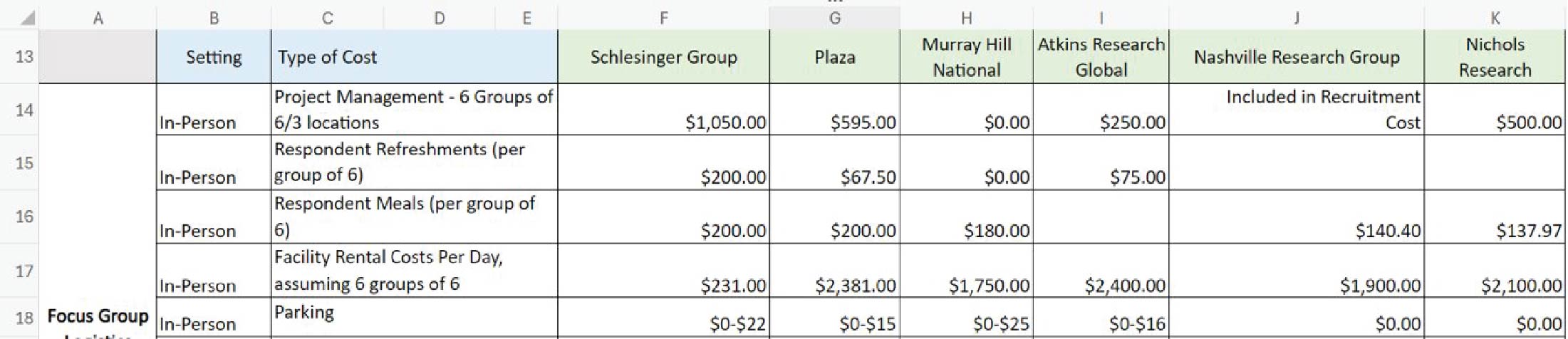
Refreshments and meals are another important consideration for in-person focus groups. While not mandatory, providing beverages, snacks, or meals is recommended to enhance participant comfort and engagement. For a group of six participants, the cost for refreshments can range from $68 to $200 per person, with meals potentially increasing this expense to $138 to $200 per group (Exhibit 2.4). The provision of food must also account for dietary restrictions and preferences. When hosting several focus groups in a day, bulk catering options may offer discounts and simplify planning. Parking can impact participant attendance and satisfaction. Depending on the facility, parking costs can range from $0 to $25 per participant (Exhibit 2.4). Offering validated parking or reimbursement can improve convenience and encourage participation.
Recording the sessions is essential for capturing data accurately. While some market research vendors offer video recording, this is not typically needed for focus groups, and instead, facilitators can rely on audio recording only. For audio recording, facilitators have the option of purchasing small digital recorders themselves that are often less costly than the audio recording fee that vendors may charge. In addition, these audio recorders can be used for multiple focus groups in different locations at different times, as well as for other qualitative data-collection activities. It is recommended that facilitators use two audio recorders for each focus group in case one fails to capture audio from all participants or runs out of battery partway through a session. Using digital audio recorders also allows recordings to be copied onto a laptop or uploaded to secure online storage to ensure that participantsʼ data is kept private. As described below, analysis of the data collected via focus groups can either focus on note-based analysis or coding of transcripts. If the former approach is used, the recordings can be reviewed against the notes to check the accuracy and/or add discussion points that notetakers were not able to capture during the focus groups because of fast-paced conversations or participants speaking over each other. If a transcript-based approach is chosen, the recordings need to be transcribed into text. While it may be possible to assign a team member to do this, it can be time-consuming, and it may be more efficient and cost-effective to use a transcription service. Transcription services typically charge either per minute or per hour of recorded content, with rates ranging from
Long Description.
The headers from columns B to K are setting, modality, Schlesinger group, plaza, Murray Hill national, Atkins research global, Nashville resource group, and Nichols research. The data for each header are given in rows 14 through 18.
$1 to $3 per minute, per speaker, or $90 to $165 per hour. These costs can vary based on the transcription service provider, the complexity of the recorded material, and the turnaround time required.
For virtual focus groups, the logistic focus shifts toward technology and participant management. Platform use is a primary consideration, with fees varying based on the softwareʼs capabilities and the number of participants supported. Market vendors often use specialized and robust web conferencing solutions, which can incur subscription fees ranging from $400 to $750 per day or per study, depending on required features like breakout rooms, recording, and participant management tools (Exhibit 2.12). In contrast, project teams may already use platforms like Zoom or Microsoft Teams (Teams) for regular operations, so the cost associated with these platforms might be minimal to nonexistent. An advantage to using these platforms is that they are familiar to team members and do not typically require additional expenses. For instance, Zoom and Teams are often included in enterprise software bundles, making them cost-effective options for virtual focus groups. Additionally, Zoom and Teams both provide recording options that can capture audio and video of focus group sessions. Depending on the focus groupʼs needs, teams can select either audio-only or audio and video recording options. For example, audio-only recording may be enough for transcription and can reduce the file size and simplify compliance with privacy regulations. However, teams should also be aware of state-level restrictions and organization policies on saving and recording to the cloud for both features. Some regions may have strict data protection laws that require data to be stored locally rather than on a cloud server. As noted, both Zoom and Teams offer built-in transcription services that can automatically generate text from the audio recording. However, the transcriptions may require quality control to ensure accuracy. Automatic transcriptions may misinterpret certain information (e.g., names) and can struggle with poor audio quality. Therefore, reviewing and editing the transcriptions is recommended.
Technological checks are crucial for ensuring smooth operation during virtual sessions, including pre-session testing of the platformʼs functionalities, and addressing potential issues such as audio-visual connectivity and internet stability. Engaging technical support typically incurs costs of $1,260 to $1,620 per session (Exhibit 2.12). However, certain platforms include technical support with subscription costs. When planning multiple virtual sessions, standardizing these checks across sessions can streamline the process and reduce overall technical support costs. One option for conducting technological checks is to use the organizationʼs internal information technology (IT) support team, if available. For example, project teams may already have in-house resources, such as IT support staff, which can be cost-effective since it avoids expenditures for external technical support. Internal IT staff are typically well-acquainted with the organizationʼs existing IT infrastructure and security protocols, which can facilitate the process. They can also provide testing before focus group sessions to address any technical issues that may arise during the sessions. However, teams must ensure that the IT staff has the availability to support the sessions.
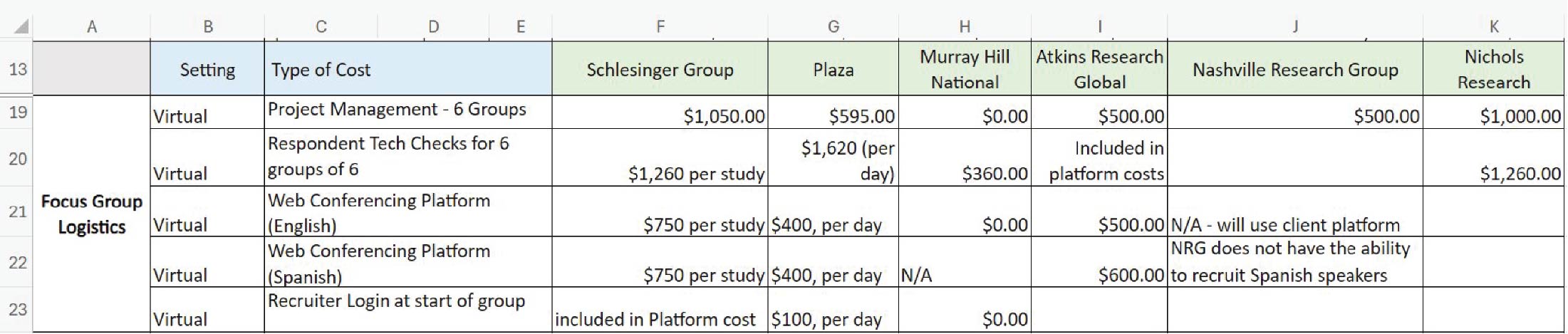
Long Description.
The headers from columns B to K are setting, modality, Schlesinger group, plaza, Murray Hill national, Atkins research global, Nashville resource group, and Nichols research. The data for each header are given in rows 19 through 23.
Another common approach is to designate specific project team members for conducting technological checks. This can be more practical and efficient, as it leverages internal resources familiar with the projectʼs objectives and participant needs, potentially avoiding additional costs associated with external support. Team members who are the most familiar with the virtual platform can conduct testing before the focus group sessions, manage technical setups, and help address issues that participants might encounter. Additionally, many web conferencing platforms offer their own support services as part of their subscriptions. Teams can engage vendor support services because they have in-depth knowledge about the platform and can ensure it is set up correctly for the sessions. Like internal IT support, these vendor services can include conducting technological checks before focus group sessions and providing troubleshooting assistance. Another option, though more costly, is hiring external IT consultants. This approach can be useful if the internal team lacks experience with a specific web conferencing tool and does not have internal IT support. While this option involves additional costs, it provides specialized expertise and can effectively address complex technical issues.
Project management for virtual focus groups involves coordinating various aspects such as scheduling, communication with participants, and overseeing the execution of sessions. Effective project management ensures that all sessions run smoothly and on time. This may include developing session agendas, managing participant lists, and handling logistics for each session. The cost for project management can vary based on the complexity and number of focus groups, typically ranging from $500 to $1,100 per day or per study (Exhibit 2.12).
Step 4. Conduct Focus Groups
To maximize the effectiveness of focus group sessions, careful preparation, skillful facilitation, and adept management of logistic challenges are important. Effective preparation is essential for the success of focus groups. It is recommended to start by clearly defining the objectives and desired outcomes of the focus group sessions. A detailed discussion guide that outlines key topics, questions, and activities to be covered will serve as a roadmap to ensure that all critical areas are addressed. It is also important to secure an accessible venue for in-person sessions or a reliable virtual platform for virtual sessions. Ensuring all necessary equipment, such as recording devices, is tested and ready for use is also vital. For virtual sessions, teams should also perform tech checks to confirm that the web conferencing software functions correctly and all participants can join without issue.
Assigning clear roles to team members contributes to the smooth operation of focus groups. Typically, roles include the facilitator, a notetaker or assistant, and a technical support person. The facilitator leads the discussion, the notetaker documents key points and participant interactions, and the technical support person manages equipment and resolves any technical difficulties. Clearly define these roles and responsibilities before the session to ensure each team member understands their tasks and how to contribute effectively.
Another key consideration for conducting focus groups is the role of facilitation. The facilitatorʼs role is to create a welcoming environment, encourage participation, and keep the conversation on track. Facilitators should employ techniques such as active listening, open-ended questioning, and summarizing key points to encourage dynamic discussions. Additionally, managing group dynamics by addressing dominant participants and drawing out quieter ones is essential for balanced input (see Exhibit 2.13).
Dealing with late arrivals and no-shows is a common challenge in focus group administration. To mitigate this, it is recommended to send timely reminders to participants, including details about the session and instructions for joining. Consider over-recruiting by a small
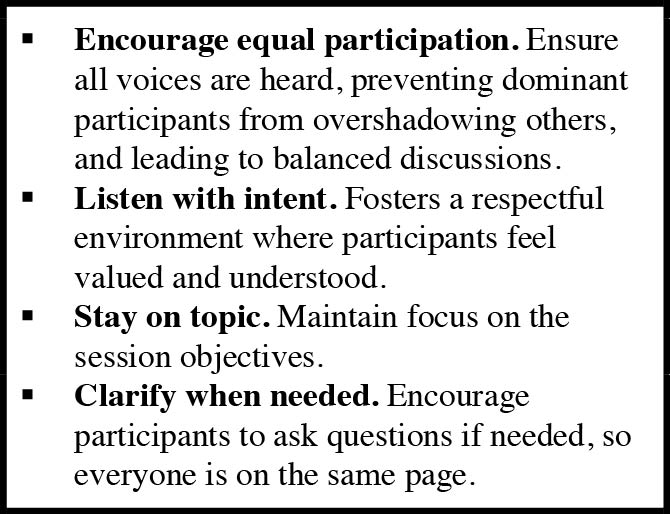
Long Description.
The data given in the table are as follows: Encourage equal participation- ensure all voices are heard, preventing dominant participants from overshadowing others, leading to balanced discussions; Listen with intent - fosters respectful environment where participants feel valued and understood; Stay on topic- help maintain focus on the session objectives; Clarify when needed- encourage participants to ask questions if needed so everyone is on the same page.
margin to account for potential no-shows without significantly inflating costs. It is also recommended to develop a contingency plan for integrating latecomers smoothly without disrupting the ongoing discussion. Communicate policies on late arrivals during the recruitment process to set expectations. These activities can be conducted by members of the SHSO team, or they may be included in the project management costs that market research vendors charge for focus groups.
Being prepared for technical or logistic issues is also a key consideration for maintaining focus group continuity. For in-person groups, it is recommended to have backups for critical equipment like recording devices and have a plan for unexpected venue issues. For virtual groups, it is recommended to establish a support protocol to address connectivity problems, software malfunctions, and participant troubleshooting needs. A technical support person can assist participants and resolve issues promptly. It is also recommended to create a troubleshooting checklist covering common problems and solutions to streamline the process (See Exhibit 2.14).
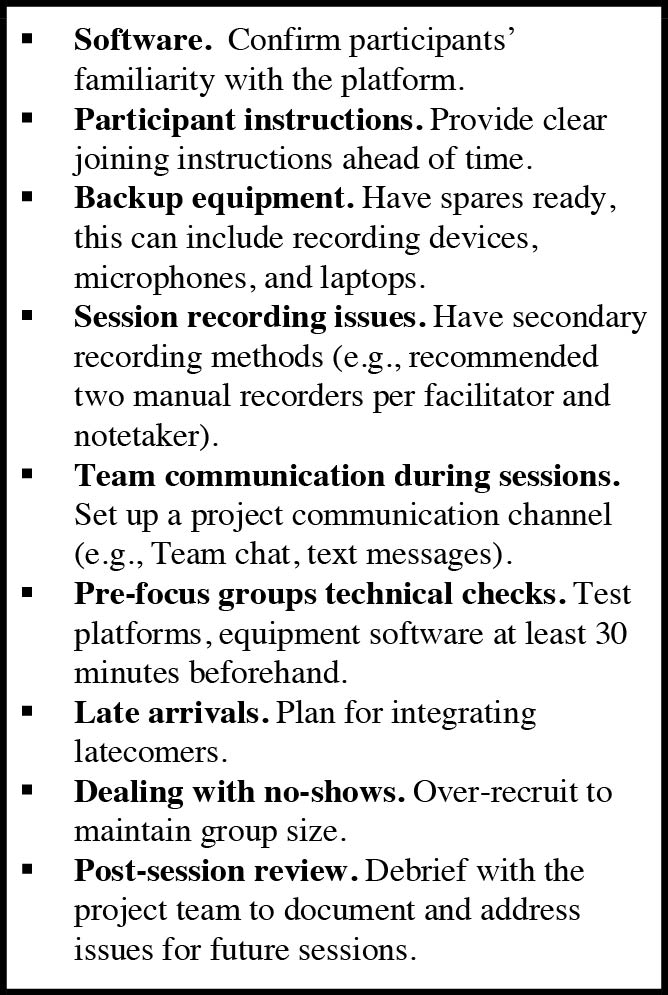
Long Description.
The data given in the table are as follows: Software – Confirm participants familiarity with the platform; Participant instructions – Provide clear joining instructions ahead of time; Backup equipment – Have spares ready, this can include recording devices, microphones, laptops; Session recording issues – Have secondary recording methods (e.g., recommended two manual recorders per facilitator and a notetaker); Team communication during sessions – Set up a project communication channel (e.g., Team chat, text messages); Pre-focus groups technical checks – Test platforms, equipment software at least 30 minutes before; Late arrivals – Plan for integrating latecomers; Dealing with no-shows – Over-recruit to maintain group size; Post-session review – Debrief with project team to document and address issues for future sessions.
Finally, accurate recording of focus group sessions is essential for data analysis and reporting. Use of high-quality audio or video recording equipment to capture the discussion is recommended. Facilitators must obtain informed consent from participants for recording and explain the purpose and use of the recordings.
Step 5. Analyze and Report
Analyze
At a minimum, notes on focus groups can be analyzed using a rapid thematic analysis that focuses on identifying key themes that emerge during each focus group and comparing those themes across groups. Rapid thematic analysis could use a simple spreadsheet (see Appendix A, Tab 1B, for an example based on Appendix B) to collect notes on participantsʼ responses to each question, with a summary of themes across focus groups. In this case, it is helpful to have notetakers/moderators compare their notes against the audio recordings of the focus groups to ensure that they are accurate. It is possible to conduct a deeper level of analysis to reveal links between themes that describe how the audience may view a given risk or protective behavior and differences between different types of audiences. These themes may help campaign planners understand what messages resonate better with which audiences or why a message and/or campaign may not have been as effective as anticipated. However, this deeper level of analysis takes more time and typically relies on (1) transcripts of the focus group recordings; (2) multiple team members coding the same transcripts (for greater objectivity); and (3) qualitative data analysis software.
In terms of transcription, while it may be possible for common teleconferencing software to both record and transcribe focus groups if they are conducted virtually, it is still recommended that teams take notes and compare the transcripts to those notes and the recorded audio and clean (i.e., correct) them. A more resource-intensive option, which may need to be applied when focus groups are conducted in person, is to have the recordings professionally transcribed. There is a cost attached to this. Tab 1A of Appendix A presents some sample costs for nationally available transcription services, which are often calculated using the length of the focus groups and the number of speakers (Exhibit 2.15). If this approach is taken, it is also important to factor in not only the cost of transcription but also the time. Some services can return transcripts in 24 hours, while others may take 2 to 3 weeks, depending on the volume of recordings to be transcribed.
Likewise, conducting a deeper level of analysis relies on coding of the transcripts by at least two team members (more may be needed as the number of focus groups increases) who attach
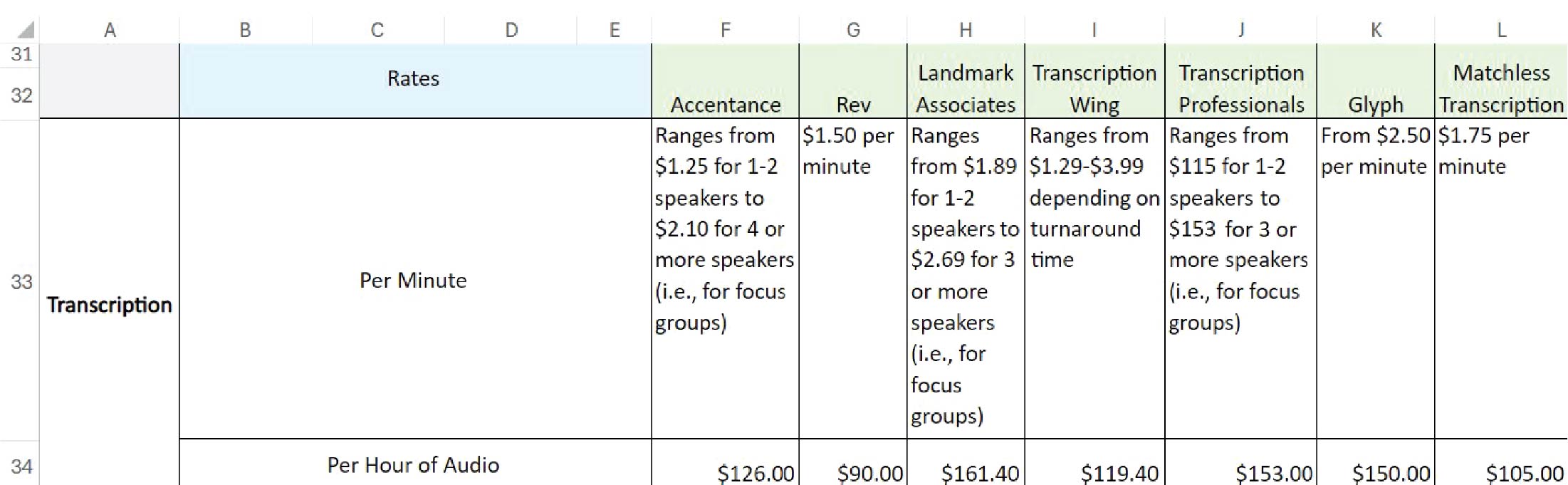
Long Description.
The headers from columns B to E are rates, and F to L list the names of transcription service providers: acceptance, rev, landmark associates, transcription wing, transcription professionals, glyph, and matchless transcription. The data for each header are given in rows 33 and 34.
specific codes in statements by participants that are rendered as blocks of text in the transcripts, and thus capture the themes within and across focus groups. These codes may be generated in a deductive fashion using the semi-structured focus group guide or evaluation questions to predefine anticipated themes, or in an inductive fashion, where coders name and establish new themes based on what the participants are saying. Often, teams use a hybrid approach that starts with deductive codes and then adds inductive codes as they emerge. Coding is time-consuming because it requires developing a common codebook, training on that codebook, refining codes, and a minimum of two team members reviewing and coding each transcript as well as regular progress meetings. Using an inductive coding approach increases the complexity of this process, as new codes need to be named, defined, shared, and applied across all transcripts by all team members, which also requires multiple meetings.
Coding can be streamlined somewhat by using qualitative data analysis (QDA) software, which often comes with an added cost and the need for training on the software. Common QDA software packages include NVIVO, MaxQDA, Atlas.ti, and Dedoose. The first three of these packages come with training and support resources as part of the subscription, and the latter is both free and supported via online user forums. However, given the potential cost of transcription, added labor hours, additional team members, and subscription costs for QDA packages, it may be best for teams to find research vendors who are already trained in using these approaches and have access to the software, or to apply the rapid thematic analysis approach described previously, which may be more suited to typical campaign evaluation and only requires spreadsheet and word processing (for reporting) software that is readily available to the average team at no additional cost. As a result, the activities included under analysis in Tab 1 of Appendix A assume the hours for applying a rapid thematic analysis with a straightforward coding approach, which does not include additional hours for training, coding, multiple coders, meetings, or software costs.
Report
In the reporting phase of focus group analysis, the goal is to translate data into meaningful insights that stakeholders can use to inform decisions. Two common approaches include a typical report structure and a topline report structure. In a typical report structure, the report begins with an introduction that provides the context and outlines the studyʼs objectives. It can provide background information to contextualize the findings from the focus groups. The methods section details how the focus groups were conducted, including recruitment strategies, participant demographics, and data-collection methods. In the findings section, key themes and insights derived from focus group discussions can be presented, supported by illustrative quotes. The conclusions and recommendations section summarizes the implications of the findings and proposes recommendations. In contrast, a topline report can provide a preliminary overview of initial insights and key findings from the focus groups. It is designed to provide stakeholders with a snapshot of the studyʼs progress and initial observations. Key components of a topline report can include a concise summary of key insights, highlighting major themes and preliminary findings. The report can also discuss the implications of these findings for decision-making processes and propose next steps or actions for further investigation or consideration. The preparation of a topline report can be relatively fast, typically taking a few days to a week.
Developing a final report involves synthesizing detailed analysis into a comprehensive document. The report can begin with an executive summary that encapsulates the entire report, summarizing objectives, methodology, and the most significant findings. The methodology section offers a thorough description of how the focus groups were conducted, participant demographics, recruitment strategies, and data-collection methods. The report can also include detailed findings, which can be organized by themes and include quotes to illustrate key points. The discussion section of the report can interpret the findings within the context of the research
objectives, drawing conclusions and implications. The report can conclude with recommendations, offering suggestions based on the studyʼs outcomes. Preparing a final report is often time-intensive, taking several weeks to a couple of months due to the need for comprehensive analysis, detailed writing, and iterative review and refinement.
A briefing session distills key findings into a concise format for stakeholders. Preparing a briefing session includes tailoring content to the audienceʼs needs, including focusing on clear key messages derived from findings, implications, and recommendations. It is recommended to include visual aids such as charts and graphs to improve understanding of the findings and promote discussion. A question and answer (Q&A) session encourages stakeholder interaction and provides clarification on specific aspects. Follow-up materials or additional resources may be provided. Preparing and presenting a briefing is moderate in time demand, typically taking a few days to a week, depending on the complexity of findings and the preparation required.
The chapter has described focus group discussions as the main way to qualitatively collect information for traffic safety messaging campaigns. It is also possible to conduct one-on-one interviews, but this may not be as efficient. Interviews require the same steps as focus groups in terms of study design, recruitment, incentives, logistics, conduct, and analysis. However, there are some key differences:
- Interviews focus less on encouraging participants to discuss shared or different perspectives and build off each otherʼs comments.
- Interviews allow participants to share more personally held beliefs that they may be reluctant to discuss with others.
- More interviews may need to be conducted to get the same type of information as a few focus groups. Hence, interviews can be more labor- and cost-intensive.
- It may be easier to schedule individual interviews than to coordinate schedules for multiple focus group participants.


