Previous Chapter: Index
Suggested Citation: "Plates." Julie Wakefield. 2005. Halley's Quest: A Selfless Genius and His Troubled Paramore. Washington, DC: Joseph Henry Press. doi: 10.17226/10751.

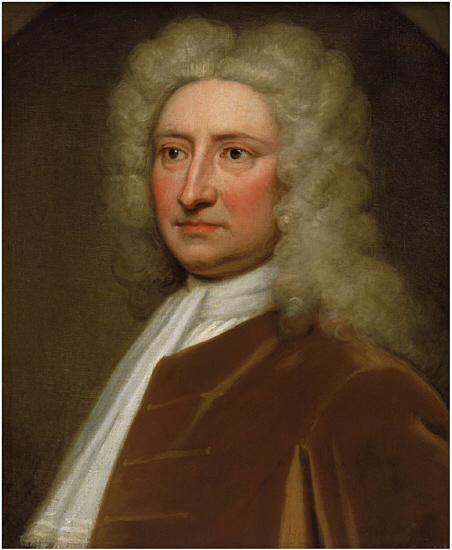
Portrait of Edmond Halley in a Royal Navy captain’s uniform was painted by Sir Godfrey Kneller when Halley was presumably in his early 40s, about the time he set sail aboard the Paramore. Source: National Maritime Museum, Greenwich.

Suggested Citation: "Plates." Julie Wakefield. 2005. Halley's Quest: A Selfless Genius and His Troubled Paramore. Washington, DC: Joseph Henry Press. doi: 10.17226/10751.

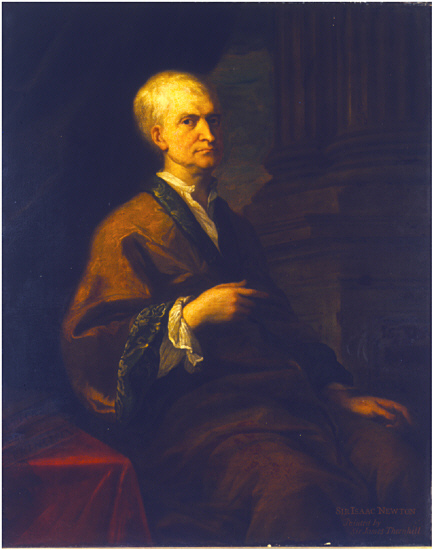
Portrait of Sir Isaac Newton painted by Sir James Thornhill in 1712. The unusual portrait, which shows Newton without his wig, is one of fourteen completed before his death in 1727 by various artists. Source: Courtesy of the Trustees of the Portsmouth Estate. Image by photographer Jeremy Whitaker.

Suggested Citation: "Plates." Julie Wakefield. 2005. Halley's Quest: A Selfless Genius and His Troubled Paramore. Washington, DC: Joseph Henry Press. doi: 10.17226/10751.

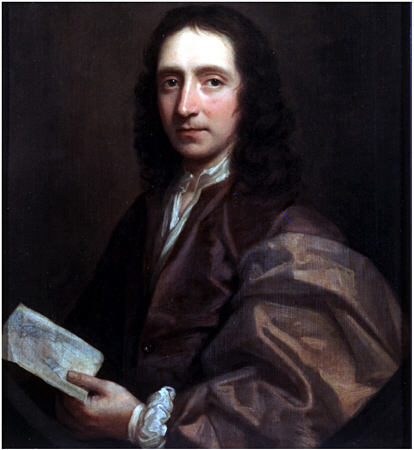
Portrait of Halley painted by Thomas Murray around 1687. Halley was about 30 years old at the time and was the clerk of the Royal Society. Source: The Royal Society.

Suggested Citation: "Plates." Julie Wakefield. 2005. Halley's Quest: A Selfless Genius and His Troubled Paramore. Washington, DC: Joseph Henry Press. doi: 10.17226/10751.

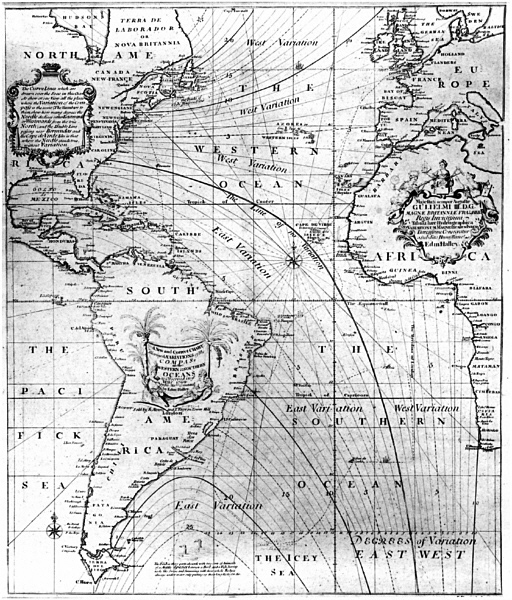
A 1701 version of Halley’s Atlantic sea chart depicting lines of equal magnetic variation of the compass. Halley added a written description to later editions of the chart that is reprinted in the Appendix. Source: Royal Astronomical Society.

Suggested Citation: "Plates." Julie Wakefield. 2005. Halley's Quest: A Selfless Genius and His Troubled Paramore. Washington, DC: Joseph Henry Press. doi: 10.17226/10751.

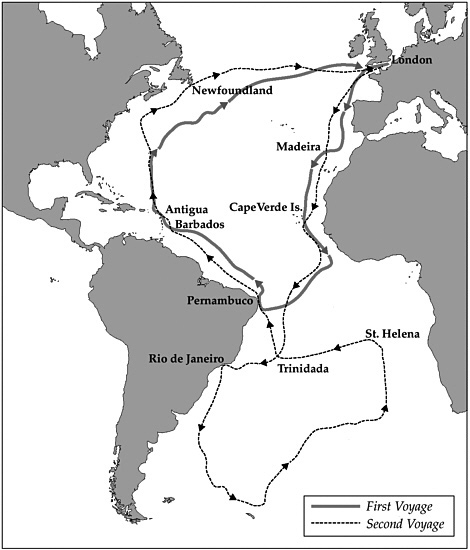
The routes of Halley’s first and second voyages on the Atlantic aboard the Paramore in 1698 and 1699-1700, respectively. Pernambuco is modern day Recife, and Trinidada is modern Trinidade, Brazil.

Suggested Citation: "Plates." Julie Wakefield. 2005. Halley's Quest: A Selfless Genius and His Troubled Paramore. Washington, DC: Joseph Henry Press. doi: 10.17226/10751.

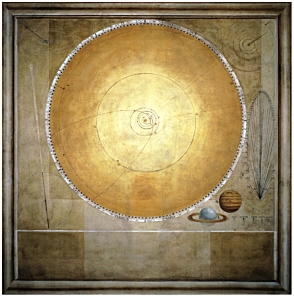
A fresco depicting the orbit of Halley’s Comet conveys a 1770 understanding of the solar system. Halley’s namesake reappeared in 1758 to the awe of the world but 16 years after his own death. Source: Meridian Room at the Museum La Specola in Padua, Italy.
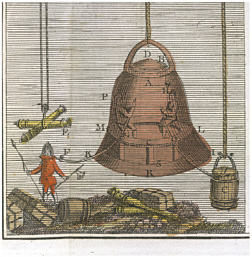
An engraving of Halley’s diving bell and helmet, one of a few surviving illustrations. Although he published a description of his invention in a 1689 edition of the Royal Society’s Philosophical Transactions, this image appeared in a more popular publication decades after his death. His underwater adventures are described in Chapter 8. Source: W. Hooper’s Rational Recreations, 1782, from the British Library collections.
Suggested Citation: "Plates." Julie Wakefield. 2005. Halley's Quest: A Selfless Genius and His Troubled Paramore. Washington, DC: Joseph Henry Press. doi: 10.17226/10751.

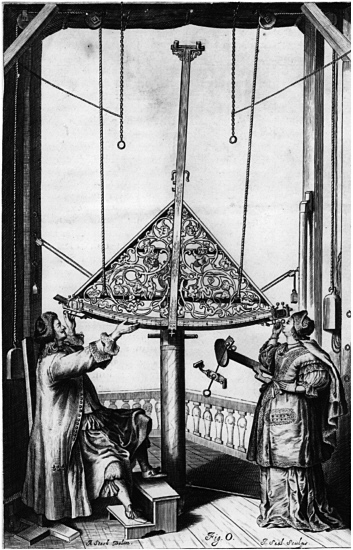
Danzig astronomer Johannes Hevelius and his wife Catherine Elisabeth observing with a sextant. The two-person instrument was likely the same one that Hevelius also used with Halley when he visited in 1679 as detailed in Chapter 7. Source: Hevelius’ 1673 Machina Coelestis at the Royal Astronomical Society.
Suggested Citation: "Plates." Julie Wakefield. 2005. Halley's Quest: A Selfless Genius and His Troubled Paramore. Washington, DC: Joseph Henry Press. doi: 10.17226/10751.

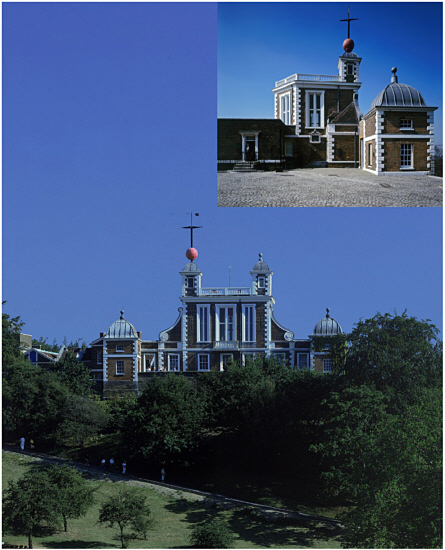
Photographs of the Royal Observatory, Greenwich, today. The core buildings, completed in 1675-1676, remain much as they were when Charles II built the facility for the first Astronomer Royal John Flamsteed. It is the site of the Prime Meridian and also where Halley’s capstone was relocated in 1845. Source: National Maritime Museum, Greenwich.

Subscribe to Email from the National Academies
Keep up with all of the activities, publications, and events by subscribing to free updates by email.