Halley's Quest: A Selfless Genius and His Troubled Paramore (2005)
Chapter: First Voyage 1698-1699: 1 Cast Off
CHAPTER 1
CAST OFF
You are to make the best of your way Southward of the equator, and there to observe on the East Coast of South America, and the West Coast of Africa, the variations of the Compass, with all the accuracy you can as also the true Situation both in Longitude and Latitude of the Ports where you arrive.
Edmond Halley knew every detail of the royal decree. Though not as extensive as he had originally hoped—there was no round-the-world expedition, no probing into Pacific waters as he initially envisioned—it did authorize an unprecedented voyage. Halley would take command of a newly built 52-foot ship for the sake of science. He would touch the shores of at least four continents in a new kind of expedition where the real treasure would be clusters of numbers. His friend Isaac Newton was the man of gravity. Halley would be, at the very least, the man of magnetism. And in the intense emotion of the times, his ultimate success could chart a course in favor of a more modern future.
It had not been easy. Winning the unique commission, which also made him a civilian captain in the Royal Navy, ranked as a coup de maitre for Halley. Her Majesty, Queen Mary II, then in her early 30s but frail after several miscarriages, had approved the plan five
years earlier—in 1693—while staring down a mystery illness and without the input of her husband, King William III. William had again ventured abroad, dodging cannon fire as the war of attrition against France waged on. The popular queen had accepted almost all of Halley’s recommendations in his royal petition. The orders Halley finally received were almost as if the scientist had penned them himself.
Halley had been contemplating such a voyage for years. His interest in magnetism and his earlier studies had convinced him that obtaining a large-scale perspective of Earth’s mysterious magnetic forces would somehow answer the longitude problem that had been plaguing sailors and wreaking havoc on the Royal Navy. Sovereignty over the seas was the chief lure for the Crown. Halley had tempted the powers behind the British monarchy to finance his ambitious quest, which required turning half the world into his laboratory.
The whole globe at the time seemed to be in transition. It was shrinking as knowledge was growing. Recent discoveries of science had seemed to overtake those of new landmasses. But the English Crown still had not lost its lust for potential geographic bounty. In addition to sponsoring grand scientific inquiries, the royal decree to Captain Halley explicitly mentioned the globe’s final frontier:
You are likewise to make the like observations at as many of the Islands in the Seas between the aforesaid Coasts as you can (without too much deviation) bring into your course: and if the Season of the Year permit, you are to stand so far into the South, till you discover the Coast of the Terra Incognita, supposed to lie between Magellan’s Straits and the Cape of Good Hope, which coast you are carefully to lay down in its true position.
Terra incognita had inspired countless mariners. Soon after classical geographers first reckoned that Earth might be a giant sphere, the possibility emerged of an unknown south land as vast as the continents in the Northern Hemisphere. Ancients like the famous Greek astronomer and geographer Ptolemy reasoned that the planet would
certainly tilt without its balancing effect. Such an expanse was sure to harbor riches beyond imagination.
The passing of centuries only burnished the myth. Venetian vagabond Marco Polo professed to have witnessed terra incognita’s gold-filled hills and bountiful wildlife from afar in the 13th century. In May 1606 the Spanish captain Pedro Fernandez de Queiros claimed to have set foot on the continent. In the ensuing decades, Dutch East India men purported to have periodically made landfall on its western coast on jaunts past the cape on the journey to the Spice Islands. Although such claims attracted skepticism, the world’s interest had been piqued.
By Halley’s day, mapping terra incognita had become equated with finding the Holy Grail. Countless men had died in the pursuit. Terra incognita had grown from a mere landmass to a symbol of the future’s magnificence. A place with untouched waters and treasures, never-tasted flavors and elixirs, and colors more vibrant than real life—a mystical Eden where open skies and endless possibilities still reigned. Near the 18th century, even the practical-minded Halley was not immune to its allure. Incognita’s inclusion in the English domain played to the queen’s fancies.
Halley had been more than willing to comply. At heart he was a great adventurer, passionate about all realms of discovery. But he was savvy enough to know that more than mere scientific merits were required to secure the queen’s approval. He had to win her personal interest. He also knew that fulfilling her ambitions could catapult him into even more powerful realms of London society, garnering him not only intellectual credentials unobtainable by sheer toil at the universities of Oxford or Cambridge but also social status beyond that of his birth right as the son of a wealthy merchant and property owner.
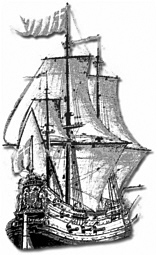
Halley, properly discreet to Her Majesty, had made little mention of the clever politicking behind the world’s first scientific mission. Almost every detail of his preparations, including the christening of his ship, the Paramore, a 52-foot pink, was working out as the methodical and analytical thinker had diligently planned.
Whether Halley met or corresponded personally with the queen, as he did with her father, King James II, several years earlier, is unrecorded. The scant diaries and letters of Queen Mary that survive do not mention Halley or the Paramore. But as coleader of an island empire, she showed an abiding respect for mariners. In a journal of 1692, she had believed that “the fate of England … depend[s] on our success at sea.” She added: “If our fleet was beaten, we knew there was an army ready to devour us from abroad.” When a petition for the unusual voyage, endorsed by Halley’s learned friends in the Royal Society of London, was laid before Mary in 1693, it was reported that “the Queen Her Majesty is graciously pleased to encourage the said undertaking.” She commanded, through the Admiralty, that a ship of about 80 tons be built in “their Majesty’s Yard at Deptford as soon as may be.” Deptford, on the south bank of the Thames west of Greenwich, was the nation’s main naval dockyard where food, rum, clothing, and other provisions were warehoused.
In a complementary task, the monarchy also directed Halley to the Caribbean Islands on his way home to determine the location of England’s tropical plantations. But the inclusion in the decree of his plan to survey unseen magnetism across the oceans made Halley most proud. His instructions specifically stated: “In all the Course of your Voyage, you must be careful to omit no opportunity of Noting the variation of the Compass, of which you are to keep a Record in your Journal.” The words gave official license to an indefatigable passion that had been burning inside Halley. His ideas on how Earth’s magnetism might solve navigational problems had so impressed the Royal Society that its patrons wasted no time in advancing his proposal. The monarchy had never backed a venture like this before, and Halley was fully conscious of the significance of the moment.
Halley had long been taken with magnetism, a phenomenon as equally puzzling and seemingly as universal as gravity. As the 18th century was dawning, this fickle force of attraction and repulsion still mystified the world’s finest minds. For a start, why did the quivering magnetic compass stray from aligning with the North Star at various
locales on the globe? The mystery contributed to the challenges of navigating at sea, which were many, and hindered the island kingdom’s prosperity. Whether by choice or not, one out of every hundred Londoners was a mariner. Solving this empire-enhancing conundrum comprised the largest part of Edmond Halley’s charge.
But before the journey could even begin, a smallpox epidemic, showing no deference to royal blood, claimed Halley’s benefactor in December of 1694. The devout queen had lived 32 years, long enough to see construction of the expedition’s vessel, the Paramore, completed and launched. Now Mary lay unmoving amid ermine and purple robes. It is likely that not even the sublime music that Henry Purcell wrote for the mourning of the great queen could soothe Halley’s doubts.
Although the scientist had already received his commission for the vessel, the new ship was shelved and the mission put on hold. (Of course, the term “scientist” wouldn’t be coined for more than a century at a meeting of the British Association for the Advancement of Science in 1834. In the 17th century, such men were known as “natural philosophers.”) Just three years before, Halley had been denied by religious authorities the prestigious Savilian Professorship of Astronomy at Oxford. Now, in an even greater setback, his most ambitious quest seemed as dead as its royal matron.
The queen’s Dutch husband, King William, had been indifferent to London, its politics, and frequently the queen herself. He’d once even said, “Let the Queen rule you, she is English, she understands what you want, I don’t.” A continental man who still spent long summers in Holland, the aloof—albeit-underrated—king was derisively nicknamed “Hooknose” by the English.
But William could not have shown more devotion to his wife’s memory. Long past the customary mourning period, he continued to wear, above his left elbow, a black ribbon tied to a golden ring that contained some of Mary’s rich brown hair. More importantly, he continued the queen’s grandest plans. Besides converting the royal residence at Greenwich into a naval hospital for injured seamen, he made
sure English America’s second college arose off the tidewater flats of Virginia and that it was designed—as the queen had desired—by no less an intellect than Sir Christopher Wren, another Halley confidant. In addition to presiding over the resurrection of London after the Great Fire, Wren had redesigned the Earl of Nottingham’s mansion, which would become known as Kensington Palace, for the royal couple soon after they came to power. (Their initial residence at Hampton Court Palace proved too far from London.) The new Virginia college, William and Mary, forever paired the king and queen, and was founded as Mary had intended—to train missionaries in the New World.
Yet questions soon arose as to whether King William would continue to pursue the queen’s main scientific interest. Or would this foreign ruler fall prey to traditionalists in British society? With elegant wit and caustic slogans, more conservative intellectuals were denigrating scientific reasoning and belittling the nation’s inclination into what they saw as a godless rush into the future.
Newton’s mathematical logic and similar radical papers by Halley and other Royal Society thinkers had provoked an academic backlash and a controversial “Battle of the Books,” over the extent to which modern discoveries had superseded classical learning. Sir William Temple, intimate of monarchs, led the opposition, along with the literary likes of Jonathan Swift. Swift called the Royal Society intellects “the Atheists of the Age.” This public outcry only added to Halley’s doubts about whether his idle Paramore would ever sail for the sake of science. It is easy to imagine Halley in his late 30s, wide-eyed, tossing at night over the thought of such stalwarts snipping his ambition for intellectual glory.
But Halley never abandoned all hope. Even some 16 months after the queen’s death, he felt possessive about the neglected ship. One Saturday in the spring of 1696, he postponed a call on Newton’s home, apologizing because he felt “obliged to go on board my frigate,” even though the Paramore was unsailable in wet dock. The next day, with prospects still bleak for the science voyage, Halley talked to Newton
about a job. Newton had recently arrived in London from Cambridge to become master of the mint. Would Halley like to be a deputy in Chester? Forced to face the prospects that his mission really might never happen, Halley accepted, even though the lucrative job, specializing in silver coinage, would put him more than 200 miles away from London’s vibrant mix of a half million souls.
Finally in 1698, nearly four years after Queen Mary’s death, King William revived the Paramore mission. It was probably the signing of the Peace of Ryswick in 1697 ending the war with France, then Europe’s most powerful country, that caused William to decide it was safe to allow the Paramore to set sail, as the English Channel and the Atlantic Ocean would no longer be infested with enemy warships. By early August the Paramore was being planked from the waterline down in a protective sheath to guard against the tunnelings of the teredo worm. All signs pointed to a long mission in blue waters.
IT WAS OCTOBER 15 WHEN THE monarchy at last tasked the unusual science voyage. For the first time, Captain Edmond Halley greeted his lieutenant and the 18 crew members who were to share the ship’s cramped quarters for untold months. It is a shame no one recorded the expressions on their faces. To Halley all but two of the men were complete strangers. Did these veteran sailors stifle their surprise at being led by a pale-skinned gentleman who looked more suited to parlor debates? The crew that would leave Deptford counted John Dunbar as midshipman, John Dodson as boatswain and gunner, and Thomas Price as carpenter. Halley found no objections to them, nor to the gunner’s mate Mathew Butts; the carpenter’s mate, William Dowty; or his own clerk, Caleb Harmon. The seven seamen—Peter Ingoldsby, John Thompson, James Glenn, David Wishard, Samuel Withers, Thomas Davis, and John Vinicot—were undoubtedly sound. And Halley didn’t gripe about the choice of the ship’s servants: Richard Pinfold for Halley, John Hodges for the boatswain, Robert Dampster for the carpenter, and Thomas Burton.
These crewmen were not the usual petty criminals or souses rounded up from local pubs, which was the recruitment method often favored by privateering outfits to supplement their numbers. Halley had given some careful thought to the Navy Board’s selection of his crew. Even for the most seasoned commanders, discipline could be challenging on a long voyage. To offset his dearth of experience and guard against mutiny, Halley had filed two requests: first, that the entire crew be paid from the king’s coffers, and next, that his second in command be a commissioned officer in the Royal Navy. On that last count, he would regret not being more specific.
The only shipmate Halley had personally requested by name was naval surgeon George Alfrey. Although small ships typically didn’t require or merit the distinction, Halley knew that the health of his lean crew was vital for this mission, expected to last 12 months.
As if the tension of being a gentleman captain were not enough, the second in command selected by the Navy was familiar by name to Halley: First Lieutenant Edward Harrison. Halley’s heart must have dropped. Edward Harrison was notorious to Halley for his scholarly pretense! With a sense of either pride or irony, someone probably in the Admiralty had selected the veteran sailor and one-time author to accompany Halley. It could have been totally innocent. Lieutenant Harrison had developed his own scientific ideas about the pressing problem of calculating longitude at sea. His ideas not only clashed with Halley’s but also set him at personal odds with his captain. Only two years before, Harrison had published a thin book in London titled Idea Longitudinis: Being, a Brief Definition of the Best Known Axioms for Finding the Longitude. In its pages he posited ways to solve the troublesome location problem. He wrote that he, as a sailor, “may prove to be a more Competent Artist in Navigation” than any gentleman mathematician. So highly had Harrison regarded his own findings, he had submitted them to the Admiralty, the Navy Board, and the Royal Society. But the reviews had come back uniformly poor. Standing tall among the critics had been none other than Edmond Halley.
Whether the Admiralty had appointed Harrison believing that one of the Navy’s own native intellects would be best suited for a gentleman captain from the Royal Society or whether it was a wry jest—akin to putting two cocks in the same cage—will never be known. Maybe it was a little of both.
For his part, Halley realized he could never compete with Harrison from stem to stern. He had even openly acknowledged his lack of nautical experience: “Perhaps I have not the whole Sea Dictionary so perfect as he.” But his admission had only fueled further resentment.
In the Restoration Navy of England, the world’s most powerful, two classes of senior officers were deeply entrenched. Experienced sailors, known as tarpaulins, had struggled their way up to command. Then there were those who had risen quickly despite their shaky sea legs: gentleman commanders. Historically, the two clashed like discordant waves. Gentleman seamen thought the tarpaulins rough and uncouth. The salty tarpaulins, in turn, scoffed at the lack of nautical know-how of such well-connected aristocrats. In his 1617 Discourse on Pirates, for example, Sir Henry Mainwaring contended that handling a ship with “discretion and judgment, to manage, handle, content and command the company, both in fear and love (without which no Commander is absolute)” exceeded a gentleman captain’s capacity.
Although sea captains had the absolute authority of a dictator at sea and Halley was renowned as a rising scientific star, his veteran crew seemed predisposed to dismiss the civilian Halley. His pallid and still mostly smooth skin, a far cry from the creased leather of most mariners, reeked of prissy amateurism. The polite manner that served him so well in society could prove a liability in rough seas.
THE UNPROVEN VESSEL moved out from its mooring among the dense groves of masts on the Thames around noon on October 20, 1698. This bulge downriver from the bridge, known as the Pool of London, boasted some 2,000 ships at the time of Halley’s departure, according
to Daniel Defoe, who would soon write that tale of a marooned mariner, Robinson Crusoe. Halley had stowed the royal decree securely in his cabin, just in case proof of his mission and authority would ever be needed.
Ahead loomed any variety of unknowns: raging seas, barbaric pirates, fickle winds. Behind trailed the still-perceptible wake forged by years of frustrating preparations and politics. At home he would leave a pregnant and dear wife of six years, Mary Tooke, and two daughters. If Halley harbored any reservations about leaving his young family for such a sojourn, he didn’t let them show. If nothing else, his ambition had curbed such concerns.
Several days passed before the Paramore had cleared the Thames and entered the English Channel. The channel provided the outbound crew with time to learn the ropes together before hitting wide-open water. Captain Halley had been tasked to improve navigation over much of the globe. The monarchy trusted him to venture south of the equator to observe the variations of the compass off the east coast of South America and the west coast of Africa and to find the latitude and longitude at each port he visited. But his anxious crew had a more pressing concern: Could this man more at ease in the society of powdered periwigs navigate this single 52-foot ship?
Whether his crew was aware of it or not, Halley at the turn of the century numbered among the world’s greatest navigational talents. When it came to deciphering a pathway from the positions of the stars and planets, he was first class. Some prominent contemporaries readily acknowledged that his scientific prowess exceeded that of any seaman at the time. London diarist Samuel Pepys, a Royal Society president, complimented Halley on his rare blend of gifts as the first Englishman—and possibly man of any origin—to be competent in both the “science and practice of navigation.” Even among the elite cadre of scientists of the time, practitioners of the so-called new philosophy, it was rare to find one who so mixed theory and experiment, civic-mindedness and pragmatism, and tied it to the real world, as the relatively selfless Halley did.
Long after his death, Halley would be popularly remembered for a far lesser feat, his astronomical acumen in applying Newton’s gravitational theory to predict the return of a lustrous comet. But at this time the 42-year-old Halley would need more than otherworldly smarts to complete his most challenging mission. The world’s first official voyage for science, this possible usher of society’s new faith in human ingenuity, on its face seemed a recipe for disaster.