Preparing Our Teachers: Opportunities for Better Reading Instruction (2002)
Chapter: 5. Anticipating Challenges: Assessment, Prevention, and Intervention
5
Anticipating Challenges
Assessment, Prevention, and Intervention
Today’s elementary school teachers can expect their jobs to be more challenging than ever. Students placed at risk of educational failure represent the fastest-growing segment of our school population. Children with varying degrees of learning disabilities receive instruction in regular classrooms under inclusion policies. Large percentages of children continue to live in poverty. Many children attend low-performing schools in poor neighborhoods. More students in American schools are learning English as a new language.
From infancy through age 5, children should not be characterized as having “reading problems,” but preschool teachers and day care providers can and must be powerful agents in identifying and helping those youngsters who are most likely to experience difficulties in the early primary grades. To do this, they must know how to observe language delays or hearing problems. They must keep their eyes out for the preschooler who still doesn’t understand how books “work” or the kindergartner who doesn’t recognize any letters. Teachers must move swiftly to arrange for enriched environments—stimulation for oral-language development, with books, songs, story times, phonemic awareness, emergent writing, and other pro-literacy activities. These sorts of prevention efforts can be absolutely critical in changing a child’s education future.
Once children are in elementary school, the best prevention is a well-conceived curriculum and good teaching in the primary grades. If children are identified as slipping behind or worse, failing in reading, they need interventions that quickly assess and zero in on their reading problems.
The essential resource for the child is the regular classroom teacher. Every elementary school teacher in America should know how to assess reading problems
|
Learning on the Job Mrs. Ryan is the reading specialist in the school where Marie teaches third grade. In her second year of teaching, Marie is full of enthusiasm for the job. She spends long hours preparing for class time and takes special pride in her many efforts to do well, such as bringing good literature into the classroom and assigning innovative writing projects. But still, she is anguished by several students in her class who are not doing well, despite her best efforts. Marie glances through several students’ folders as she waits to speak with Mrs. Ryan. Kevin is far behind his classmates in both reading and writing. Marie notices a comment she wrote after a recent reading lesson: “Kevin has so much difficulty with vocabulary that he loses control of the meaning of the story.” Leafing through his papers, she notes that his writing samples look more like those of a beginning first grader than a third grader. His struggle to get one or two sentences down is painfully obvious; almost all of the words are misspelled with few vowels included. Yet Kevin, like many of the others who are having difficulty, seems to be a smart, savvy kid. Kevin is a wonderful conversationalist who tells great jokes. He is interested in science. Marie admits that Kevin and the other struggling students like him are enigmas to her. There is Julie, who is smart and eager to learn but struggles tremendously because, despite constant practice, she still can’t remember the sounds the letters make when she sees them in new words. Iliana, a recent immigrant, does well in math and has rapidly gained an understanding of spoken English but still doesn’t speak very much. When she “sounds out” a word, too often she has nothing to match it to in her English vocabulary. Then there is Riki, who has a language disability and participates in an inclusion program, spending part of the day in the resource room and another part with Marie for language arts Instruction, but Marie isn’t sure it’s working well enough. |
and how to arrange swiftly for the right kind of supplemental help, usually with a school’s reading specialist.
It is essential for the classroom teacher to stay involved. Effective intervention for reading difficulty is not a matter of isolated occasional sessions between the child and a clinician. Instruction in the regular class must be tailored to support and sustain other intervention efforts, collaborating with specialists. Today children often attend after-school and summer programs that feature reading. A child may go to a private speech or language therapist who provides instruction relevant to reading. It’s up to the classroom teacher to forge the links with the child’s out-of-school life, communicating and collaborating with the child’s family, so reading improvement can be attained and sustained.
prepared to know when to intervene
For certain children, particularly those faced with multiple health and socioeconomic challenges from birth, it seems all too clear that learning to read will be an uphill struggle. Teachers should not wait until a child is in the second or third
|
How perplexing these children are! No matter how well Marie plane her literacy lessons, they never seem to pay full attention, they are frequently distracted, and they rarely understand the follow-up activities she assigns. As the majority of the class moves forward throughout the year, these children seem to fall further and further behind. Last week Mrs. Ryan told Marie she needs to organize her class time to offer more individualized instruction, but this is easier said than done. Marie tried to focus in on small groups and individuals while the rest of the class silently practiced reading, but many times her “silent” readers were anything but, growing boisterous and out of control. Today, Marie plans to ask Mrs. Ryan for more specific suggestions to manage her classroom so that all the children are working productively while she takes time to give individual attention. She also wants advice about the right assessment tools to determine exactly what these struggling students need. (She only learned a few techniques in college, and so far they aren’t working.) Marie knows she is doing the right thing by seeking out Mrs. Ryan’s help. To the credit of her school system, Mrs. Ryan, who has a master’s degree in reading and 15 years of experience, is available at regular times to meet with teachers, talk to them, share resources, and coach them through the rough parts. It’s not just finding out what works that Marie needs; it’s a matter of making it work in her own class with these kids. And that’s where Mrs. Ryan is always there to help Marie try and try again. Marie knows she is lucky to have the opportunity to collaborate with Mrs. Ryan and draw on her expertise to tackle tough classroom challenges. Not enough new teachers have that kind of support. Marie knows two classmates from college who are just about ready to give up on the teaching profession because they have been left on their own with a sense of failure and inadequacy. |
grade, well behind his or her peers, to intervene. And yet, all too often, this is exactly what happens.
Which children are most likely to be placed at risk of failure? When should “prevention” and “intervention” programs take place?
Colleges of education must ensure that every teacher arrives on the job with an understanding of risk factors, and how risk factors work, in connection with literacy and reading development. Much research has documented the risks associated with early childhood language delays, a family history of reading problems, limited proficiency in English, poor neighborhoods, and failing schools. It’s important to note that any single risk factor may not be significant on its own, nor do risk factors condemn to reading failure each child who is faced with them. However, a combination of these factors should act as a warning signal to teachers that a child may need extra help along the way—the earlier, the better.
Colleges of education must prepare teachers to intervene with individual children. When teachers get their first jobs, they are often overwhelmed by the wide variety of reading levels they encounter among students in the same class. They need to be better prepared to deal with the collection of individuals that make up a
class. They need practice noticing a child, thinking deeply about that child’s learning spurts and instructional needs, and paying attention to how the child changes over time. They need to practice the language needed to think and communicate about children’s reading with colleagues, specialists, and families.
|
WHY INTERVENE EARLY? A recently convened national panel, the Committee on Minority Representation in Special Education, investigated special education in the United States and reached a compelling conclusion: At the core of our study is an observation…. There is substantial evidence with regard to both behavior and achievement that early identification and intervention [are] more effective than later identification and intervention. This is true for children of any race or ethnic group, and children with or without an identifiable “within-child” problem [neurobiological factors, for example]. Yet the current special education identification process relies on a “wait-to-fail” principle that both increases the likelihood that children will fail because they do not receive early supports and decreases the effectiveness of supports once they are received…. While this principle applies to all students, the impact is likely to be greatest on students from disadvantaged backgrounds because (a) their experience outside the school prepares them less well for the demands of schooling, placing them at greater risk for failure and (b) the resources available to them in general education are more likely to be substandard. Early efforts to identify and intervene with children at risk for later failure will help all children who need additional supports. But we would expect a disproportionately large number of those students to be from disadvantaged backgrounds. The vision we offer in the report is one in which general and special education services are more tightly integrated; one in which no child is judged by the school to have a learning or emotional disability or to lack exceptional talent until efforts to provide high-quality instructional and behavioral support in the general education context have been tried without success. The “earlier is better” principle applies even before the K-12 years. The more effective we are at curtailing early biological harms and injuries and providing children with the supports for normal cognitive and behavioral development in the earliest years of life, the fewer children will arrive at school at risk for failure. In light of its study results, the committee made the following recommendation: Teacher Quality: General education teachers need significantly improved teacher preparation and professional development to prepare them to address the needs of students with significant underachievement or giftedness. SOURCE: National Research Council. 2002. Executive Summary: Minority Students in Special and Gifted Education, M.S.Donovan & C.T.Cross (Eds.). Washington, DC: National Academy Press. |
prepared to assess all aspects of skilled reading
Watching students fail at reading is a wrenching experience. Even the best teacher will have that experience from time to time. A dedicated, competent teacher may give individual instruction during class time, arrange for supplemental help during school hours, and enlist family support and tutoring programs and then still see a child continue to fall behind, despite hours of extra work.
As we have called for throughout this book, preservice teachers should learn that skilled reading is a complex process involving many parts:
-
Readers are able to decode printed words using sound-spelling connections, and they develop an extensive “sight word” repertoire.
-
They are able to use prior knowledge, vocabulary, and cognitive strategies to comprehend literal and inferred meanings.
-
They read with fluency, swiftly and accurately coordinating word identification with powerful comprehension, so that they read with ease and respond readily to the text.
Children fit lessons into complex backgrounds and daily lives, working their sometimes quirky and always busy minds to put it all together for growing up. Teachers must gather information in order to plan lessons that have a good chance to work with their ever-changing children and then, during lessons, gather more information to determine if the lesson is working for the particular children in it.
Teachers must be ready to examine materials and curriculum mandates in light of what a child is likely to bring to a learning task. They must be practiced at scrutinizing the bases for children’s questions and answers. They must learn both to react on the spot and to reflect after the fact on the day’s lesson in order to design follow-up lessons that clarify tasks and redirect any children headed down frustrating paths.
Such knowledge is essential to plan the year and the days that make it up, to choose and tailor materials and activities to fit the students. Teachers must be ready to find the ways out of blind alleys and through misconceptions that students may encounter.
When a child is struggling, a good teacher must take steps to find out exactly where the process has gone astray so that he or she can give the right sort of instruction and the materials that will prompt effective practice. It is important to note that individualized instruction does not necessarily mean giving the struggling child one-on-one help with the same lesson that the class is working on. On the contrary, it often means giving the child a different lesson.
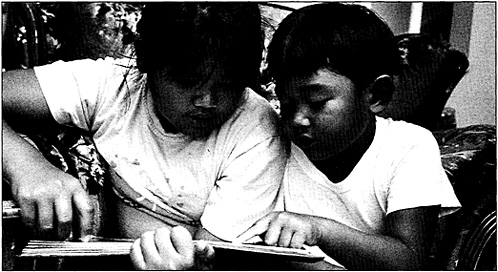
What lesson should that be? That depends. Does the student have difficulty comprehending what he or she has read? Does the problem diminish if the text is about certain topics? Does prior access to a table of contents and glossary lead to more success? Does the child recall the details but fail to put ideas together to get the main point? Do directions to ask questions, make summaries, or draw pictures help the child understand a passage?
Does the child have a decoding problem? Does it show in basic words like SAT and PAN or just in multisyllable words like SATIN or PANDEMONIUM? Is there more difficulty with consonant blends at the ends of words? Do vowel digraphs produce uncertainty? Are common words that have odd spellings the ones that stump the child?
Is it a fluency problem? Does the child take a long time to get through a paragraph and then find it hard to remember enough to pull together the meaning and give a response to it? Does the child read well-known passages with comfort but stumble and complain when given new ones?
The only way to know is through good assessment techniques. And yet most of today’s elementary school teachers don’t have sufficient time or expertise to assess children effectively. As a result, many schools leave assessments in the hands of reading specialists, usually called on after a child is already behind or failing. That’s not good enough.
We need to prepare classroom teachers to see more clearly and understand more deeply the learners in their charge. This is crucial not just for struggling students but also for children who accelerate ahead of grade level and need more challenging tasks.
Knowing how to zero in on the unique strengths, weaknesses, and needs is a career-long and complex challenge. But at the preservice level, teachers-to-be
should have hands-on experiences collecting data about individual children and contributing to decisions about their instruction. To be effective, they must learn not just a few assessment techniques but many—ranging from simply being a good observer of children to techniques for using more formal standardized tools.
Teachers should be comfortable administering and interpreting norm-referenced and criterion-referenced instruments to determine where their students are as readers. A general test-and-measurement course is helpful but not sufficient. The fate of struggling readers depends on teachers understanding the specifics of reading assessment. Finally, all teachers should be familiar with state and local standards and curriculum guides because of the implications for assessing student progress during the course of the school year.
prepared to provide interventions
Recent national studies and reports have shown a growing body of evidence regarding the most effective practices for teaching reading. However, many of these approaches have not gone the distance from university researchers to the field, nor to enough of the nation’s colleges of education. This is also true of intervention programs designed for struggling readers.
The nature, tone, and delivery of effective reading intervention programs vary greatly. Teachers should be aware that, according to research, successful intervention programs share certain essential elements:
-
The programs give failing readers and writers more time on task and feature materials that students will enjoy and can handle successfully.
-
They use a variety of activities, including rereading familiar texts, introduction of new texts, writing opportunities, and word study, including systematic phonics.
-
Good interventions frequently monitor individual progress and seek the involvement of families.
-
Extra training and support for aides, volunteers, and teachers characterize most effective practices.
Districts and schools should help teachers hone their skills as good managers and coordinators of the many players involved in interventions: speech therapists, reading specialists, volunteer tutors, social workers, and families.
Reading interventions take many shapes and forms. When people say “intervention” they often think only of pull-out “supplemental” or “remedial” programs, where a reading specialist works with individual or small groups of children who
are having difficulties learning to read. But for children struggling to learn to read, effective intervention must take many guises, not just a single supplemental program. In fact, the term should refer to a coordinated array of efforts.
The regular classroom teacher must manage a collaboration with supplemental programs. It is up to the teacher to provide instruction during class time that is well designed to support the lessons given by specialists.
Interventions may involve support from psychological, social, and health professionals, in or out of school. Besides that, paraprofessionals and volunteers are often assigned to intervene with struggling readers. Intensified help may take the form of a tutor in an after-school program. An aide may assist a child identified for special education who is served by inclusion in a multiple-abilities classroom.
Unless each encounter is well planned by a professional who is knowledgeable about reading instruction, and unless the aides, tutors, or volunteers are well prepared, coached, and supervised (often by a reading specialist), the time and money expended may have no payoff in terms of improving reading. But when well done and as part of a coordinated effort, they can be helpful.
Classroom teachers extend the power of the intervention as they guide and advise parents on how to help struggling children with homework, practice, and good literature. Families are key to sustained and effective intervention. Teachers need to learn from families about interventions that have been tried in the past but do not show up in the official records. Too many children have experienced a series of unconnected efforts that promised much and yielded little. A good intervention effort needs to confront and counter the cumulative effect that such a history has on the child and the family.
School systems should offer support and opportunities for teachers to work collaboratively with families and see them as partners in success. In Chapter 4 there is an extensive discussion about teachers connecting home and school efforts. For children experiencing reading difficulties, two-way communication and coordination are doubly—maybe 10-fold—important.
Unless someone is there to monitor and act as a communications liaison, interventions may become fragmented, inconsistent, contradictory, and even ineffective. In all cases the regular classroom teacher is in the best position to be a powerful force in rallying and coordinating all the agents at work.
instructional groupings in interventions
Teachers need preservice and ongoing professional development based on recent research that helps them make well-informed decisions about the programs and materials they choose. New approaches, however, may stretch a teacher’s classroom management skills. The standard class organization plan and the tried-and-true behavior management techniques may not fit with the best approach for struggling students.
It is difficult for a teacher to gear instruction to struggling readers if the classroom is always managed in a whole-group manner. If children do not get instruction tailored to their needs, it is highly unlikely they will improve on their own. The whole group will move further and further ahead, while slower readers are left behind, still struggling with what the others take for granted.
All teachers should know how to manage their classrooms so that they can provide instruction to different configurations of students, depending on the activity. Children may be assigned to groups that have the same range of abilities (homogeneous groups) or to groups that have a mix of ability levels (heterogeneous groups).
Sessions with the whole class call for preparation and moment-to-moment teacher actions that are quite specialized. A different strategy and tactics are needed to teach one small group while the other students are less directly supervised. A good teacher can accomplish lesson goals with a small group while coordinating a class with some students working in pairs or small peer groups and others working on their own.
computers in interventions
There are wonderful new technology applications for teaching. Computers are alluring to some students who would otherwise resist reading and writing. Computers can be excellent tools for testing and assessing students. Computers can also offer students valuable time to practice and apply what they have been taught.
For some the use of computers in reading instruction is associated with an image of worksheets—using monitors and keyboards instead of scratchy paper and number two pencils. But now there are computer applications with interesting stories and informational text that can provide a scaffold for a child’s developing abilities in comprehension, vocabulary, word identification, and fluency. Thanks to advanced hardware capabilities, some specialized software can even assist with correcting read-alouds, sounding out a new word, or stimulating the use of phonics or metacognitive strategies that have been introduced in the curriculum. In addition, there are special uses of more general computer applications—word processing, database, or publishing software—that can support reading and writing instruction. Collaborative projects using the Internet provide practice in reading and writing across the curriculum from science to geography and more. But
computers have their limitations, and teachers must avoid mindless practice devoid of challenge or purpose.
Teacher education and professional development should show how technology can be used to support and reinforce larger curricular goals and the individual needs of students. Time spent on a computer can and should be fun. But good teachers use technology for specific, rather than open-ended, purposes, with direct connections to the classroom reading instruction.
Because technology is constantly changing, school districts are in the best position to help keep teachers up to date with the most current software and learning applications. Onsite technology coaches should be routinely available
|
Coach the Teacher, Help the Children Bernadine Hansen, District Literacy Coordinator, Tyler Independent School District, Tyler, Texas 
1 coach 10 teachers, kindergarten through second grade. I give them classes at night—2 hours every other week, all year long. Then I am available on the elementary school campus for further direction, information, and guidance. In most other places, in-service training happens on a surface level. The teachers go back to their classrooms with one or two ideas to implement. Maybe the ideas don’t work, or maybe they do but don’t go much further. My whole purpose is to help teachers understand the theory behind the applications. That’s what we lack in our professional development and colleges of education. It’s a collaboration. I have a teacher’s salary. I get no extra pay. I’m not an administrator. I’m not an evaluator. I work side by side with the teachers. I do a lot of modeling for teachers, showing them how to use techniques, like shared writ ing experiences, in their classrooms. So many teachers are out there on their own. They’re in a four-wall cell, and they don’t get to communicate with one another. They’re handed down mandates that children must read at a certain level. But they often lack the theory of reading and writing they need to carry this out. Maybe they have six kids in their class who can’t read or write, and they are out there on a limb by themselves with no support. So the teachers really value having an expert to talk to—someone who knows something about the reading and writing process, a coach, right there on campus to consult with on a daily basis about children who are having difficulty. We use diagnostic tools to teach us where to go—like running record and independent writing samples. We go from what the child knows to what the child doesn’t know. We always look at the positive. What does the child have in place and where are we going to help that child next? |
and can and should lead infrequent but regular technology workshops to guide and support teachers.
The reading coach and the technology specialist must collaborate to help classroom teachers assess the array of possibilities that new technologies offer. Each new application has to be carefully considered. Does it fit the curriculum? Is it attuned to the goals and processes of reading instruction? Has it been shown to contribute to reading improvement? What grade and reading level is it good for? Where and when can it fit the school and class routines so that it has the best chance to help children? How can the teacher tell when it is working and when it needs to be changed to help a particular student?
In one important way the new information technologies are not all that different from any aspect of teaching reading. Everyone involved must keep their eyes on the prize; it is all about a particular child improving his or her reading power.
professional development and assessment
Teachers get a different view of the learning they work with every day when it is filtered through assessment procedures and analyses. They notice new things about the children and the academic subject, and they see relationships they hadn’t had a chance to notice before. Consulting with a peer or an expert about assessment results can be a form of professional development itself. But there are other links between assessment and professional development that make it an apt subject to close our book.
First, there are concerns about the role of assessment in the future of reading instruction. Will the prevalence of some types of assessment lead to a narrowing of the curriculum? Will we have a pseudosuccess if children learn to pass tests but the time taken to prepare for them robs children of some of the opportunities they need to become skilled readers? Well-prepared teachers will alert us when such problems appear.
There have been projects with researchers and teachers aimed at producing assessment instruments that would be unlikely to narrow the curriculum and produce pseudosuccesses. These are research and development projects. But a funny thing happens. Time and again, the participants notice that the work sessions are, in fact, high-quality professional development. Trying to design an assessment instrument or procedure leads to deep understandings about the instruction of reading as well as strong dispositions to improve instruction.
There is another important link between assessment and professional development. The consensus of researchers and practitioners is that assessment results are a cornerstone for high-quality professional development. When professional
|
QUALITY PROFESSIONAL DEVELOPMENT FOR TEACHERS The National Staff Development Council has produced a set of standards that reflect the research, policy, and practitioner consensus about the features that bring quality to professional development for teachers: Context standards—Staff development that improves the learning of all students:
Process standards—Staff development that improves the learning of all students:
Content Standards—Staff development that improves the learning of all students:
SOURCE: National Staff Development Council. 2001. NSDC Standards for Staff Development. Oxford, OH: Author. |
development addresses the specific content that assessment results show a teacher needs to work on in order to improve his or her own students’ achievement, it is valued by the teacher and is more likely to have an impact.
We and this book have a very small role in the whole endeavor of teacher education and professional development for improving reading instruction. We focus on the content knowledge for providing children the opportunities they need to become skilled readers. The final piece of content is about the research that content knowledge is based on.
Regarding research, teachers are the assessors. Teachers should be given opportunities to be involved with research—by keeping track of developments, evaluating new findings, considering how it matters to what they are doing and could do with their students, contributing to the knowledge base, and spreading the word about it. It is true that we have learned a great deal about beginning reading. It is also true that we have the opportunity and the need to build on it and that teachers are as important to future research as they are to the futures of their students.
Headlines say that teachers are expected to be accountable to parents, principals, school boards, and taxpayers. Teachers know this is a minuscule burden compared to the real challenge: They are responsible for the children. We echo teachers who ask for professional development in order to fulfill that responsibility.
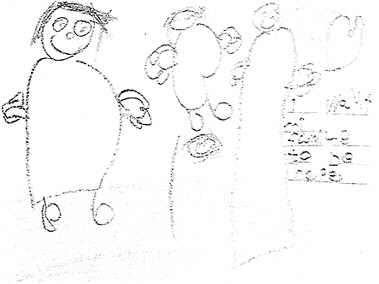
Tinesha now knows how to write and read her heart’s desire: I want my family to be happy.
Sample Activities for Teacher Learning
One of the Class
Even before internship or student teaching, preservice teacher education can prepare students to trace how children change over time and to recognize that any given elementary school classroom is likely to have children with diverse abilities. In this activity, spanning a full semester course, each teacher education student will trace a child throughout a simulation of the school year. (The activity is a small addition to the regular instruction in a course for which the materials described below are relevant.)
The preparation of materials for this activity begins a year before it is used for teacher education. A faculty member enlists the help of a classroom teacher and visits regularly to assemble records of children’s reading and writing performance throughout the year. By June there are writing samples, audiotapes of reading, teacher-made tests, and results of external testing.
|
|
Give each teacher education student responsibility to trace one child in the elementary school class. Put the materials on library or laboratory reserve, sorted by period: |
|
|
|
Period 1 |
School opening until the end of September |
|
Period 2 |
From October until the end of December |
|
|
Period 3 |
From January until the end of the school year |
|
|
|
Early in the course, introduce the materials collected from Period 1. Tell each student to look at or listen to all materials relevant for “your” elementary school child. In class, examine the children’s samples in the context of the group of children. Discuss the wide range of performance levels evident in the elementary classroom. Guide the students in using a rubric (scoring guide) to analyze their children’s materials for strengths and potential teaching points. |
|
|
|
About a month later introduce materials from Period 2. Again begin with a discussion of the diversity in the elementary classroom. Provide a rubric and have the students analyze the new material. Have the students look carefully at their children’s changes over time, preparing a |
|

|
|
letter for the family that explains where progress is being made and where weaknesses persist. Critique their letters for accuracy and appropriateness. |
|
|
|
About a month later distribute the rest of the materials. Have the students focus on the yearlong growth of the elementary student each is responsible for covering. Ask them to prepare a report for the reading specialist, recommending an instructional plan for the child’s next year. Critique their reports for accuracy and appropriateness. |
|
What Does the Child Need?
In-service teachers or interns often need to sharpen their skills for recognizing a reader’s strengths and weaknesses. This activity begins with group analysis of an adult simulation and moves to a careful critique of work with a child. Finally, the effort is related to the instruments that are mandated or available in the schools the teachers work in. There should be an experienced reading specialist as a leader for the activity.
-
Select a piece of dense text from a publication such as Science magazine or a computer programming manual. Be sure to select an excerpt that includes little-known technical terms, difficult-to-pronounce words, and challenging content. Make copies and distribute to the class, and then select a student who will stand up before the class and read aloud. (Select a student who can withstand the attention and set a tone that will avoid embarrassment.) Ask his or her classmates to do an assessment to figure out what problems the reader has. Ask them to note which words, exactly, are difficult to decode and why. At what point does the reader seem to lose the meaning? Which vocabulary words are baffling? This part of the activity should provide perspective on assessment and sensitivity to the many ways in which the reading process can go awry.
-
Next, ask each student to work with a child in the classrooms where they are teachers or student teachers. Help them choose an appropriately challenging piece of text for the child. Have them make a tape recording of the child reading the passage aloud and answering questions about its meaning. Have them transcribe the tape. Select a transcript to use with the entire class. Have the class read the transcript (and the original passage). Review the aspects of skilled reading and what can go awry (see pp. 151–152). Notice patterns of errors and evidence of strength. Have the class work together to suggest and discuss exactly what sorts of materials and instructions should be tailored to the child’s individual needs. Have each student analyze his or her own transcript and ask for advice where needed.
-
Next, assign small groups to study and report to the class about different informal and formal assessment techniques. In response to each, presentation, lead the group to consider how combinations of assessment instruments and techniques serve to help teachers decide about grouping and individual instruction.
Finding the Intervention
In a study group led by a reading specialist, teachers can increase their understanding of the features of effective interventions for reading. In the process, they will collaborate to produce a resource for local parents and teachers.
-
Devise a checklist to describe approaches to intervention for children experiencing difficulty learning to read. Include the features on p. 153. Make sure everyone has the same working definition of each item on the checklist by working on hypothetical examples. Add items for basic information about age, grade level, cost, timing, entry and exit criteria, evidence of effectiveness, and so forth.
-
As homework, gather lists of intervention programs and approaches for reading that are available in the local school district. Interview curriculum specialists, principals, and reading specialists. Check the phone book for private services. Ask about efforts by civic or church groups.
-
Divide up the list and divide the group into teams, so that each program or approach on the list is covered. The team should visit, interview, observe, and collect materials; it should do whatever it can to apply the checklist and describe each intervention on the list.
-
Discuss the descriptions and revise for clarity. Make categories in order to group the intervention approaches and programs in a directory.
-
Post the directory on the World Wide Web or make it available through a library. Include directions for people who will want to update it in the future.
Learning to Manage via Cross-Classroom Visits
Managing small groups is a challenge. Some teachers lose focus when more than one thing is going on at once. If a teacher is finding that small-group time means pandemonium, a “cross-classroom visitation” can be arranged to maximize learning from a nearby teacher who excels in classroom management of small reading groups.
The school’s reading specialist or a district curriculum coordinator is a key player in this professional development activity. Novice or resident teachers first visit an exemplary classroom for targeted observations and are later visited by coaches who help them implement the new practice, so that they, too, will soon be exemplary! To make this chain of events work well, the reading specialist or curriculum coordinator should take the following steps:
|
|
Before the observation, spend time with the teacher who wants help in order to discuss how and why small groups work and to give some tips about what to look for during the visit to the expert’s classroom. Further prepare the observer by examining the assessment procedures the teacher relied on to assign students to different groups. |
|
|
After the observation, meet again for a debriefing. Listen carefully to the problems the observing teacher noticed as well as to any problems he or she suspects might arise during an attempt to replicate what was observed. Provide practice for parts of the procedure; help plan a gradual phase-in. |
|
|
Visit the teacher during the reading period to coach and carry out the phase-in plan. Find out which kids are having trouble with comprehension strategies, such as following the plot, understanding the concept of a narrator, or identifying genres. Organize those children in a small group and provide a 10- or 15-minute lesson. Do the same with another group that is having decoding problems. Let the teacher observe while you work with his or her students in this way, while keeping the rest of the class well focused on other activities, such as silent reading or writing. At times, roam the class to provide individual attention to one or two students. Fit in a whole-group lesson—all during one language arts block. |
|
|
On succeeding days, hand over parts of the teaching to the classroom teacher. Stay nearby to render assistance but begin to focus on consultation and providing assistance to the teacher in assessing students for group placement. |
|
|
Six weeks after the first cross-classroom visitation, meet with the teacher again to find out if it was helpful and to answer any questions. If necessary, enter another coaching phase. |
resources
Basic reviews of the knowledge base relevant to this chapter can be found in the following recent publications:
Kamil, M.L., Mosenthal, P.B., Pearson, P.D., & Barr, R. (Eds.). 2000. Handbook of Reading Research: Volume III. Mahwah, NJ: Erlbaum. (See especially Shaywitz and colleagues on the neurobiology of dyslexia; Klenk and Kibby on remediation; Hiebert and Taylor on early intervention; and Anders, Hoffmann, and Duffy on teaching teachers.)
National Research Council. 1998. Preventing Reading Difficulties in Young Children, Committee on the Prevention of Reading Difficulties in Young Children. C.E.Snow, M.S.Burns, and P.Griffin (Eds.). Washington, DC: National Academy Press. (See especially Parts II and III, Chapters 5 and 8).
Neuman, S.B., & Dickinson, D.K. (Eds.). 2001. Handbook of Early Literacy Research. New York: Guilford Press. (See especially Barnett on the effects of preschool as a prevention/ intervention, Invernizzi on tutoring, McGill-Franzen and Goatley on Title I and special education, Johnston and Rogers on informed assessment, Salinger on assessment with multiple forms of evidence, Watson on implications of oral-language development, Scarborough on connections between early language and subsequent literacy, Vellutino and Scanlon on early interventions and individual differences, and Strickland on African American children considered to be at risk.)
Prepared to know when to intervene so children are not placed at more risk, examples of overviews and metanalyses:
Clay, M.M. 1989. The Early Detection of Reading Difficulties, 3rd ed. Hong Kong: Heinemann.
García, G.E. 1991. Factors influencing the English reading test performance of Spanish-speaking Hispanic children. Reading Research Quarterly, 26, 371–392.
La Paro, K.M., & Pianta, R.C. 2000. Predicting children’s competence in the early school years: A meta-analytic review. Review of Educational Research, 70(4), 443–484.
Leseman, P.P.M., & de Jong, P.F. 1998. Home literacy: Opportunity, instruction, cooperation and social-emotional quality predicting early reading achievement. Reading Research Quarterly, 33, 294–318.
Lombardino, L.J., Riccio, C.A., Hynd, G.W., & Pinheiro, S.B. 1997. Linguistic deficits in children with reading disabilities. American Journal of Speech-Language Pathology, 6, 71–78.
Pellegrini, A.D. 1991. A critique of the concept of at risk as applied to emergent literacy. Language Arts, 68, 380–385.
Scarborough, H.S. 1998. Early identification of children at risk for reading disabilities: Phonological awareness and some other promising predictors. Pp. 77–121 in B.K. Shapiro, P.J.Accardo, & A.J.Capute (Eds.), Specific Reading Disability: A View of the Spectrum. Timonium, MD: York Press.
Scarborough, H.S., Dobrich, W., & Hager, M. 1991. Preschool literacy experience and later reading achievement. Journal of Learning Disabilities, 24, 508–511.
Share, D., Jorm, A., Maclean, R., & Matthews, R. 1984. Sources of individual differences in reading acquisition. Journal of Educational Psychology, 76, 1309–1324.
Teisl, J.T., Mazzocco, M.M.M., & Myers, G.F. 2001. The utility of kindergarten teacher ratings for predicting low academic achievement in first grade. Journal of Learning Disabilities, 34, 286–293.
Torgesen, J.K. 1995. Phonological Awareness: A Critical Factor in Dyslexia. Baltimore: The Orton Dyslexia Society.
Prepared to know when to intervene, examples of more specific studies and reports:
Mantzicopoulos, P.Y., & Morrison, D. 1994. Early prediction of reading achievement: Exploring the relationship of cognitive and noncognitive measures to inaccurate classifications of at-risk status. Remedial and Special Education, 15, 244–251.
Normandeau, S., & Guay, F. 1998. Preschool behavior and first-grade school achievement: The mediational role of cognitive self-control. Journal of Educational Psychology, 90, 111–121.
Reese, L., Garnier, H., Gallimore, R., & Goldenberg, C. 2000. Longitudinal analysis of the antecedents of emergent Spanish literacy and middle-school English reading achievement of Spanish-speaking students. American Educational Research Journal, 37, 633–662.
Shankweiler, D., Lundquist, E., Katz, L., Stuebing, K.K., Fletcher, J.M., Brady, S., Fowler, A., Dreyer, L.G., Marchione, K.E., Shaywitz, S.E., & Shaywitz, B.A. 1999. Comprehension and decoding: Patterns of association in children with reading difficulties. Scientific Studies of Reading, 31, 24–53, 69–94.
Signorini, A. 1997. Word reading in Spanish: A comparison between skilled and less skilled beginning readers. Applied Psycholinguistics, 18, 319–344.
Stanovich, K.E., & Siegel, L.C. 1994. Phenotypic performance profile of children with reading disabilities: A regression-based test of the phonological-core variable-difference model. Journal of Educational Psychology, 86, 24–53.
Torgesen, J.K. 2000. Individual responses to early interventions in reading: The lingering problem of treatment resisters. Learning Disabilities Research & Practice, 15, 55–64.
Vellutino, F.R. 2001. Further analysis of the relationship between reading achievement and intelligence: Response to Naglieri. Journal of Learning Disabilities, 34, 306–310.
Williams, J.P. 1993. Comprehension of students with and without learning disabilities: Identification of narrative themes and idiosyncratic text representations. Journal of Educational Psychology, 85, 631–641.
Assessment, commentaries and overviews:
American Federation of Teachers, National Council on Measurement in Education, and National Education Association. 1990. Standards for Teacher Competence in Educational Assessment of Students. Washington, DC: American Federation of Teachers.
Black, P., & William, D. 1998. Inside the black box. Phi Delta Kappan, 80(2), 139–147.
Cooper, J.D., & Kiger, N. 2001. Literacy Assessment. New York: Houghton Mifflin.
Glazer, S.M. 1998. Assessment Is Instruction: Reading, Writing, Spelling, and Phonics for All Learners. Norwood, MA: Christopher-Gordon.
Goodwin, W.L., & Goodwin, L.D. 1997. Using standardized measures for evaluating young children’s learning. Pp. 92–107 in B.Spodek & O.Saracho (Eds.), Issues in Early Childhood Educational Assessment and Evaluation. New York: Teachers College Press.
Hargreaves, A., Earl, L., & Schmidt, M. 2002. Perspectives on alternative assessment reform. American Educational Research Journal, 39(1), 69–95.
International Reading Association. 1999. High-stakes assessments in reading: A position statement of the International Reading Association. Reading Teacher, 53, 257–263.
International Reading Association/National Council of Teachers of English Joint Task Force on Assessment. 1994. Standards for the Assessment of Reading and Writing. Newark, DE: Author.
Linn, R. 2000. Assessments and accountability. Educational Researcher, 29(2), 4–16.
Madaus, G.F. 1999. The influence of testing on the curriculum. Pp. 73–111 in M.M.Early & K.J.Rehage (Eds.), Ninety-Eighth Yearbook of the National Society for the Study of Education. Chicago: University of Chicago Press.
Popham, J. 1995. Classroom Assessment: What Teachers Need to Know. Needham Heights, MA: Allyn & Bacon.
Torgesen, J.K., & Wagner, R.K. 1998. Alternative diagnostic approaches for specific developmental reading disabilities. Learning Disabilities Research and Practice, 13, 220–232.
Winograd, P., & Arrington, H.J. 1999. Best practices in literacy assessment. Pp. 210–241 in L. B.Gambrell, L.M.Morrow, S.B.Neuman, & M.Pressley (Eds.), Best Practices in Literacy Instruction. New York: Guilford.
Assessment, examples of more specific studies, reports, and instruments:
Cairns, H., McDaniel, D., & McKee, C. (Eds.). 1996. Methods for Assessing Children’s Syntax. Cambridge, MA: MIT Press.
Harp, B., & Brewer, J. 2000. Assessing reading and writing in the early years. Pp. 154–167 in D.S.Strickland and L.M.Morrow (Eds.), Beginning Reading and Writing. New York: Teachers College Press and the International Reading Association.
Hresko, W.P., Peak, P.K., Herron, S.R., & Bridges, D.L. 2000. Young Children’s Achievement Test (YCAT): A Measure to Help Identify Preschool, Kindergarten, and First Grade Children Who Are at Risk for School Failure. Austin, TX: Pro-Ed.
Kapinus, B.A. 2002. Assessment of reading programs. Pp. 118–128 in S.B.Wepner, D.S. Strickland, J.T.Feeley (Eds.), The Administration and Supervision of Reading Programs. New York: Teachers College Press.
McMillan, J.H. 2001. Experts in Assessment: Essential Assessment Concepts for Teachers and Administrators. Thousand Oaks, CA: Corwin Press.
National Research Council. 2000. Assessment in early childhood education. Pp. 233–260 in Eager to Learn: Educating Our Preschoolers. Washington, DC: National Academy Press.
Paris, S. 2001. How Can I Assess Children’s Early Reading Achievement? Ann Arbor, MI: Center for the Improvement of Early Reading Achievement.
Plake, B.S., & Impara, J.C. 1997. Teacher assessment literacy: What do teachers know about assessment? Pp. 55–68 in G.D.Phye (Ed.), Handbook of Classroom Assessment: Learning, Adjusting and Achieving. New York: Academic Press.
Stecker, P.M., & Fuchs, L.S. 2000. Effecting superior achievement using curriculum-based measurement: The importance of individual progress monitoring. Learning Disabilities Research and Practice, 15, 128–134.
Torgesen, J.K., & Wagner, R.K. 1999. Comprehensive Tests of Phonological Processes. Austin, TX: Pro-Ed.
Yopp, H.K. 1995. A test for assessing phonemic awareness in young children. The Reading Teacher, 49, 20–29.
Preventing and intervening, examples of overviews, metanalyses, and comparisons:
Elbaum, B., Vaughn, S., Hughes, M.T., &. Moody, S.W. 2000. How effective are one-to-one tutoring programs in reading for elementary students at-risk for reading failure? A meta-analysis of the intervention research. Journal of Educational Psychology, 92, 605–619.
Johnston, P., & Allington, R.L. 1991. Remediation. Pp. 984–1012 in R.Barr, M.L.Kamil, P.B. Mosenthal, & P.D.Pearson (Eds.), Handbook of Reading Research, vol. 2. White Plains, NY: Longman.
McKenna, M.C. In press. Help for Struggling Readers: Strategies for Grades 3–8. New York: Guilford.
Pikulski, J.J. 1994. Preventing reading failure: A review of five effective programs. The Reading Teacher, 48, 30–39.
Pinnell, G.S., Lyons, C.A., DeFord, D.E., Bryk, A., & Seltzer, M. 1994. Comparing instructional models for the literacy education of high risk first graders. Reading Research Quarterly, 29, 8–39.
Strickland, D.S., Ganske, K., & Monroe, J.K. 2002. Supporting Struggling Readers and Writers: Strategies for Classroom Intervention 3–6. Portland, ME: Stenhouse.
Swanson, H.L. 1999. Reading research intervention for students with LD: A meta-analysis of intervention outcomes. Journal of Learning Disabilities, 32, 504–532.
Torgesen, J.K., Wagner, R.K., & Rashotte, C.A. 1997. Prevention and remediation of severe reading disabilities: Keeping the end in mind. Scientific Studies of Reading, 1, 217–234.
Troia, G.A. 1999. Phonological awareness intervention research: A critical review of the experimental methodology. Reading Research Quarterly, 34, 28–52.
Preventing and intervening, examples of more specific studies and reports:
Baker, S., Gersten, R., & Keating, T. 2000. When less may be more: A 2-year longitudinal evaluation of a volunteer tutoring program requiring minimal training. Reading Research Quarterly , 35, 494–519.
Blachman, B.A., Tangel, D.M., Ball, E.W., Black, R., & McGraw, C.K. 1999. Developing phonological awareness and word recognition skills: A two year intervention with low-income, inner-city children. Reading and Writing, 11, 239–273.
Boyle, J.R., & Weishaar, M. 1997. The effects of expert-generated versus student-generated cognitive organizers on the reading comprehension of students with learning disabilities. Learning Disabilities Research and Practice, 12(4), 228–235.
Brady, S., Fowler, A., Stone, B., & Winbury, N. 1994. Training phonological awareness: A study with inner-city kindergarten children. Annals of Dyslexia, 44, 26–59.
Brown, R., Pressley, M., Van Meter, P., & Schuder, T. 1996. A quasi-experimental validation of transactional strategies instruction with low-achieving second-grade readers. Journal of Educational Psychology, 88(1), 18–37.
Buntaine, R.L., & Costenbader, V.K. 1997. The effectiveness of a transitional prekindergarten program, on later academic achievement. Psychology in the Schools, 34, 41–50.
Campbell, F.A., & Ramey, C.T. 1994. Effects of early intervention on intellectual and academic achievement: A follow-up study of children from low-income families. Child Development, 65, 684–698.
Echevarria, J., & McDonough, R. 1995. An alternative reading approach: Instructional conversations in a bilingual special education setting. Learning Disabilities Research and Practice, 10(2), 108–119.
Foorman, B., Francis, D.J., Fletcher, J.M., Schatschneider, C., & Mehta, P. 1998. The role of instruction in learning to read: Preventing reading failure in at-risk children. Journal of Educational Psychology, 90, 37–55.
Fuchs, D., Fuchs, L.S., & Burish, P. 2000. Peer-assisted learning strategies: An evidence-based practice to promote reading achievement. Learning Disabilities Research and Practice, 15, 85–91.
Kreuger, E., & Townshend, N. 1997. Reading clubs boost second-language first graders’ reading achievement. Reading Teacher, 51, 122–127.
Martineu, G., Lamarche, P.A., Marcoux, S., & Bernard, P.M. 2001. The effect of early intervention on academic achievement of hearing-impaired children. Early Education and Development , 12, 275–289.
McGuinness, C., McGuinness, D., & McGuinness, G. 1996. Phonographix: A new method of remediating reading difficulties. Annals of Dyslexia, 46, 73–96.
Morris, D., Tyner, B., & Perney, J. 2000. Early steps: Replicating the effects of a first-grade reading intervention program. Journal of Educational Psychology, 92, 681–693.
Reynolds, A.J., & Temple, J.A. 1998. Extended early childhood intervention and school achievement: Age thirteen findings from the Chicago longitudinal study. Child Development, 69, 231–246.
Shanahan, T., & Barr, R. 1995. Reading Recovery: An independent evaluation of the effects of an early instructional intervention for at-risk learners. Reading Recovery Quarterly, 30, 958–996.
Slavin, R.E., & Madden, N. 1999. Effects of bilingual and English as a second language adaptations of Success for All on the reading achievement of students acquiring English. Journal of Education for Students Placed at Risk, 4, 393–416.
Stuart, M. 1999. Getting ready for reading: Early phoneme awareness and phonics teaching improves reading and spelling in inner-city second language learners. British Journal of Educational Psychology, 69, 587–605.
Torgesen, J.K., Alexander, A.W., Wagner, R.K., Rashotte, C.A., Voeller, K., Conway, T., & Rose, E. 2001. Intensive remedial instruction for children with severe reading disabilities: Immediate and long-term outcomes from two instructional approaches. Journal of Learning Disabilities, 34, 33–58.
Tzuriel, D., Kaniel, S., Kanner, E., & Haywood, H.C. 1999. Effects of the “Bright start” program in kindergarten on transfer and academic achievement. Early Childhood Research Quarterly, 14, 111–141.
Wilder, A.A., & Williams, J.P. 2001. Students with severe learning disabilities can learn higher order comprehension skills. Journal of Educational Psychology, 93, 268–277.
Williams, J. 1998. Improving the comprehension of disabled readers. Annals of Dyslexia, 48, 213–238.
Instructional grouping choices, examples of studies and reports:
Cunningham, P.M., Hall, D.P., & Defee, M. 1998. Nonability-grouped, multilevel instruction: Eight years later. The Reading Teacher, 51, 652–654.
Holloway, J.H. 2001. Grouping students for increased achievement. Educational Leadership, 59(3), 84–85.
Juel, C. 1990. Effects of reading group assignment on reading development in first and second grade. Journal of Reading Behavior, 22, 233–254.
Lou, Y., Abrami, P.C., & Spence, J.C. 2000. Effects of within-class grouping on student achievement: An exploratory model. Journal of Educational Research, 94, 101–112.
Lou, Y., Abrami, P.C., Spence, J.C., Paulsen, C., Chambers, B., & Apollonia, S. 1996. Within-class grouping: A meta-analysis. Review of Educational Research, 66, 423–458.
McDermott, R., & Varenne, H. 1995. Culture as disability. Anthropology & Education Quarterly, 26, 324–348.
Slavin, R.E. 1993. Ability grouping in the middle grades: Achievement effects and alternatives. Elementary School Journal, 93, 535–552.
Computers in interventions, examples of studies and reports:
Davidson, J., Elcock, J., & Noyes, P. 1996. A preliminary study of the effect of computer-assisted practice on reading attainment. Journal of Research in Reading, 19(2), 102–110.
Greenlee-Moore, M.E., & Smith, L.L. 1996. Interactive computer software: The effects on young children’s reading achievement. Reading Psychology, 17, 43–64.
Leu, D.J., Jr., 1997. Caity’s question: Literacy as deixis on the Internet. Reading Teacher, 51(1), 62–67.
Leu, D.J., Jr., & Leu, D.D. 1997. Teaching with the Internet: Lessons from the classroom. Norwood, MA: Christopher-Gordon.
Means, B. (Ed.) 1994. Technology and Education Reform: The Reality Behind the Promise. San Francisco: Jossey-Bass.
Means, B., & Olson, K. 1997. Studies of Education Reform: Technology and Education Reform. Washington, DC: Office of Educational Research and Improvement.
Pinkard, N. 2001. “Rappin’ Reader” and “Say Say Oh Playmate”: Using children’s childhood songs as literacy scaffolds in computer-based learning environments. Journal of Educational Computing Research, 25(1):17–34.
Reinking, D., Labbo, L., & McKenna, M. 1997. Navigating the changing landscape of literacy: Current theory and research in computer-based reading and writing. Pp. 77–92 in J. Flood, S.B.Heath, & D.Lapp (Eds.), Handbook of Research on Teaching Literacy Through the Communicative and Visual Arts. New York: Macmillan Library Reference.
Sharp, D.L.M., Bransford, J.D., Goldman, S.R., Risko, V.J., Kinzer, C.K., & Vye, N.J. 1995. Dynamic visual support for story comprehension and mental model building by young, at-risk children. Educational Technology Research and Development, 43, 25–42.
Professional development and assessment, examples of studies and reports:
DuFour, R. 1997. Functioning as learning communities enables schools to focus on student achievement. Journal of Staff Development, 18(2), 56–57.
Hoffman, J., & Pearson, P.D. 2000. Reading teacher education in the next millennium: What your grandmother’s teacher didn’t know that your granddaughter’s teacher should. Reading Research Quarterly, 35(1):28–44.
Noyce, P., Perda, D., & Traver, R. 2000. Creating data-driven schools. Educational Leadership, 57(5), 52–56.
Spalding, E. 2000. Performance assessment and the new standards project: A story of serendipitous success. Phi Delta Kappan, 8, 758–764.