Use of Sustainable Materials for Erosion and Sediment Control Practices (2025)
Chapter: 3 State of the Practice
CHAPTER 3
State of the Practice
3.1 Introduction
A survey was created using the Alchemer survey platform and distributed electronically to identified state DOT stormwater staff members. Respondents began the survey with a review of terms important for understanding the content of the survey and guidelines for sharing the survey with colleagues if additional expertise was needed. The results present the state of the practice to help agencies reduce or eliminate the use of plastics in stormwater ESC practices. Additionally, results presented can help guide state DOT agencies to develop programs and reduction policies if they do not exist.
The survey was first distributed on February 5, 2024, and responses were gathered through March 28, 2024. A total of 42 complete responses were received, yielding an 82% response rate. Participants were not required to answer every question to complete the survey, based on the survey’s logic and branching; thus, some questions have a lower response rate. This chapter reports on results from the survey questions. Results are presented in the following sections. N values represent the total number of responses received for a particular question. Key terms used throughout the discussion include “measure,” “materials,” and “product.” “ESC measure” refers to generic ESC practices that are often published by state DOTs or environmental agencies using standard drawings and specifications. “ESC materials” refers to components (e.g., geotextile or reinforcing wire) that are purchased by contractors to assemble ESCs. “ESC product” refers to manufactured systems (e.g., pre-fabricated silt fence system or ECB) that are purchased and installed by contractors (i.e., assembly not required).
3.2 Approved Products List/Qualified Products List
The first two questions of the survey captured basic contact information from each respondent and the state DOT in which they are employed. Following these initial questions, the survey broadly captured the state of the practice regarding the implementation of an APL/QPL (or its equivalent) for ESC products. As shown in Figure 3.1, the survey found that 69% (29 of 42) of responding state DOTs have an APL/QPL for both ESC products, and 22% (9 of 42) do not have an APL/QPL. Additionally, 2% (1 of 42) of those responding indicated that their state DOT has an APL/QPL only for sediment control products, and 7% (3 of 42) indicated their state DOT has an APL/QPL only for only erosion control products.
Table 3.1 outlines the distribution of state DOTs that do and do not utilize an APL/QPL.
Respondents who indicated that their state DOT did have an APL/QPL were also asked whether their state DOT had an evaluation process for products submitted for inclusion in the APL/QPL. Figure 3.2 illustrates that 82% (27 of 33) have an evaluation process established for both
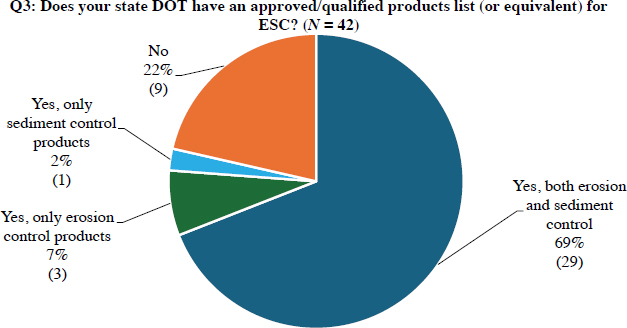
Table 3.1. Summary of State DOT APL/QPLs.
| State DOTs that have both an erosion control and sediment control APL/QPL (N = 29) | AL, CO, CT, DE, FL, GA, IA, ID, KY, ME, MN, MO, MS, NC, NE, NJ, NM, NY, OR, PA, SC, SD, TN, UT, VA, VT, WA, WI, WV |
| State DOTs that do not have an APL/QPL (N = 9) | CA, IN, MA, ND, NV, OH, OK, RI, WY |
| State DOTs that have only a sediment control APL/QPL (N = 1) | IL |
| State DOTs that have only an erosion control APL/QPL (N = 3) | AR, KS, MT |

Figure 3.2. State DOT evaluation of products included in APL/QPL.
ESC products, 6% (2 of 33) have an evaluation process for erosion control products only, 0% (0 of 33) have an evaluation process for sediment control products only, and 12 % (4 of 33) do not have an evaluation process.
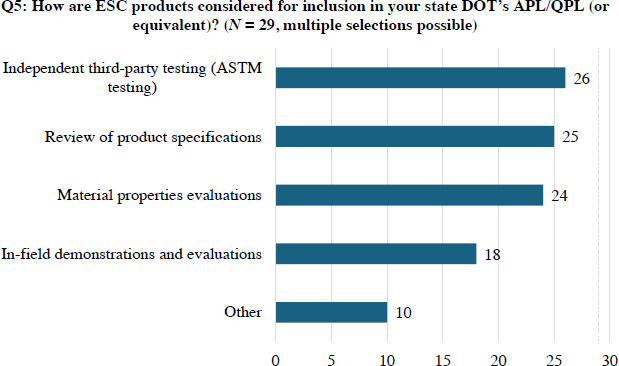
Next, the survey identified means by which state DOTs evaluate ESC products for inclusion in their APL/QPL. Results suggest that, among the responding state DOTs, multiple evaluation methods are utilized when considering a product for inclusion in their APL/QPL. As shown in Figure 3.3, 26 of the responding state DOTs rely on independent third-party testing, 25 conduct a review of published product specifications, 24 evaluate the material properties of the product under consideration, and 18 allow in-field demonstrations to evaluate the product. An additional strategy for evaluating products that was noted in the “Other” category was the AASHTO Product Evaluation and Audit Solutions program. This program eliminates duplicate testing efforts and provides cost-effective evaluations of materials, products, and devices of common interest among state DOTs.
3.3 Use of Plastic-Based Materials
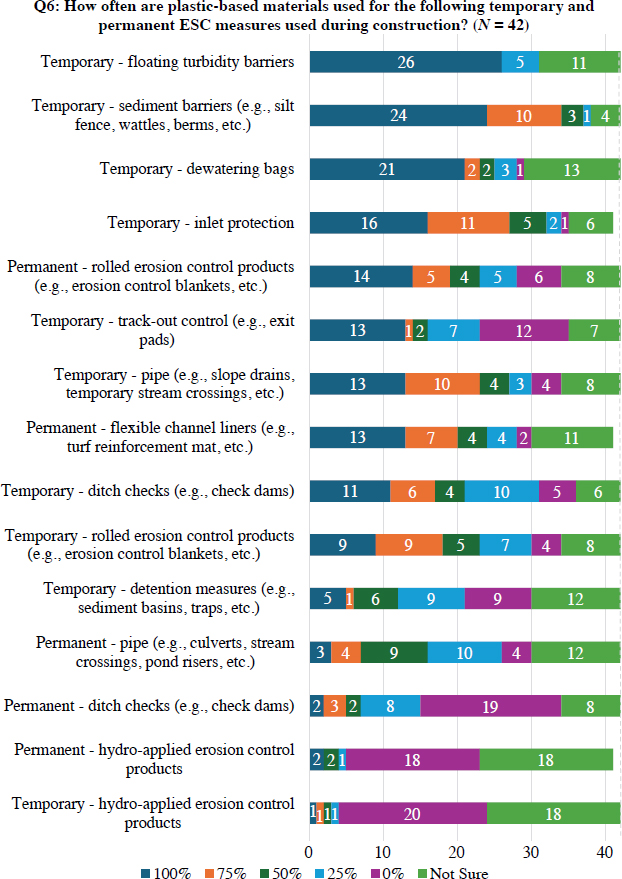
The second segment of survey questions gained insight into the use of plastic-based materials in temporary and permanent ESC measures. State DOT respondents were first asked to indicate the frequency (i.e., percentage of time) with which plastic-based materials were used in a wide variety of common temporary and permanent ESC measures. As shown in Figure 3.4, temporary floating turbidity barriers (26 of 42), sediment barriers (24 of 42), and dewatering bags (21 of 42) were noted as plastic-based measures frequently utilized by responding state DOTs, while permanent ditch checks (19 of 42) and hydraulically applied erosion control products (18 of 42) were noted as plastic-free measures frequently utilized by state DOTs.
State DOT respondents were also asked to identify alternatives to plastic-based ESC products their state has deployed. Figure 3.5 illustrates the top cited alternative as seeding, hydroseeding, and mulch stabilization (40 of 42) followed by alternative netting materials (35 of 42).
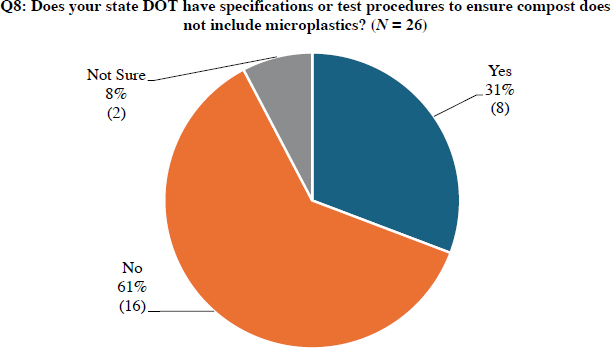
For state DOTs indicating compost as an alternative to plastic-based products, additional information was sought regarding quality control efforts to address microplastics within the compost. Figure 3.6 reveals the current state of these efforts, providing a clear picture of how
different state DOTs are approaching this issue. The data show that 31% (8 of 26) of responding state DOTs have established specifications or test procedures to account for microplastics in compost. This proactive approach signifies a growing recognition of the potential environmental impact of microplastics and a commitment to ensuring that compost used for ESC is free from these contaminants. Alternatively, 61% (16 of 26) of responding state DOTs do not have specifications or test procedures in place to monitor microplastics in compost, and 8% (2 of 26) were uncertain about their efforts concerning microplastics in compost.
Figure 3.7 provides an insightful overview of the responses regarding state DOT initiatives to minimize the use of plastics or imported materials in ESC products. As shown in the figure, 48% (20 of 42) of state DOTs are actively engaged in efforts to reduce the use of these products, which indicates that a substantial portion of responding state DOTs recognize the importance of sustainable practices and are taking steps to implement them. Conversely, 38% (16 of 42) are
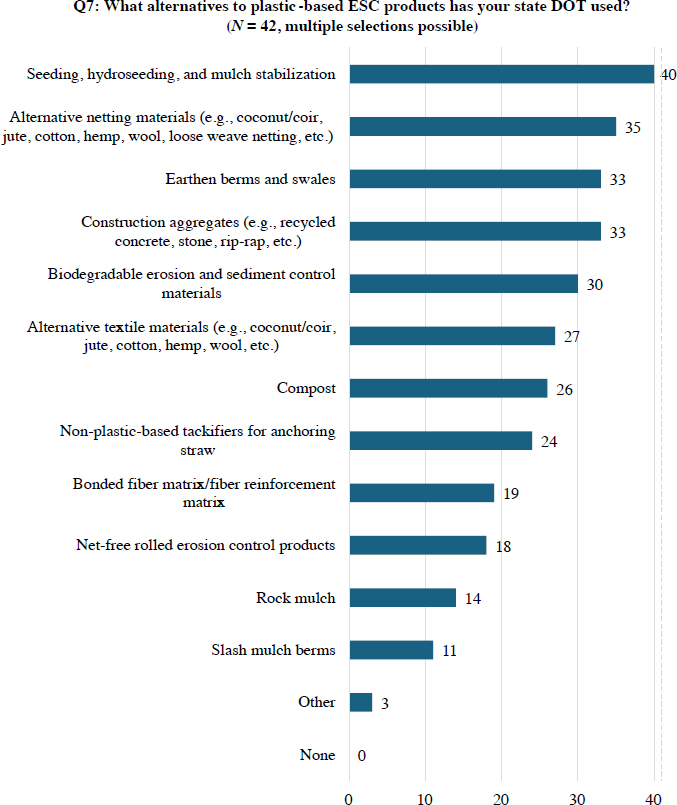
Figure 3.5. Alternatives to plastic-based ESC products used by state DOTs.
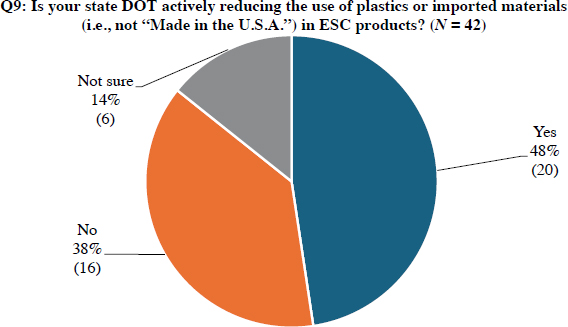
not currently pursuing active measures to decrease the use of plastics or imported materials, which suggests that, while a considerable number of state DOTs may acknowledge the issue, they either face barriers to implementation (e.g., costs, longevity concerns) or do not prioritize the issue within their current operational frameworks. Additionally, 14% (6 of 42) of responding state DOTs indicated uncertainty about their efforts in this area, which could reflect a lack of clear policy or communication within these organizations about their initiatives or a need for more information, training, education, and guidelines on how to effectively reduce the use of these products.
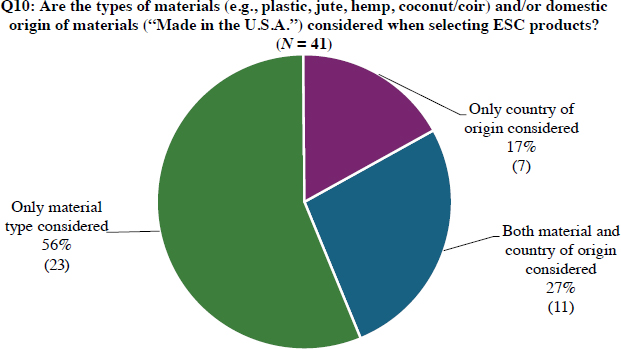
Next, the survey investigated whether state DOTs consider both the type of materials and their domestic origin when selecting products for ESC. According to the findings illustrated in Figure 3.8, 27% (11 of 41) of responding state DOTs consider both the type of materials and country of origin in their decision-making process. Meanwhile, 56% (23 of 41) focus solely on the type of materials without regard to their origin, and 17% (7 of 41) consider only country of origin.
Respondents were also asked whether their state DOT provides guidelines, initiatives, policies, or specifications for ESC materials used throughout the construction process. As shown in Figure 3.9, the survey revealed that responding state DOTs do not commonly offer any guidelines,
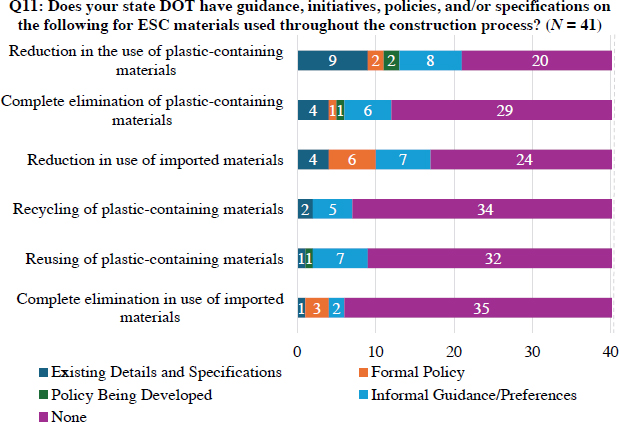
initiatives, policies, or specifications specifically aimed at reducing, eliminating, or recycling plastic-based materials or imported materials.
Numerous alternatives to plastic-based ESC materials have emerged within the marketplace to meet sustainability goals set by government agencies and other organizations. The survey identified ESC measures constructed using these alternative materials. As illustrated in Figure 3.10, alternative materials are implemented in many of the common ESC measures used by state DOTs, with considerable use noted in permanent and temporary ditch checks and RECPs. This trend could indicate that these particular ESC measures are practical to implement initially if a state DOT transitions to more environmentally friendly alternative materials.
3.4 Challenges and Motivation
The next segment of survey questions identified and quantified the challenges and motivations associated with using alternative materials in ESC measures. State DOT respondents were asked to rank each factor presented based on degree of challenge it posed (3 = very challenging, 2 = challenging, 1 = not a challenge, 0 = not applicable). It is important to note that responses to these questions were based primarily on the individual respondent’s experience and not necessarily based on data. Figure 3.11 illustrates the average degree of challenge for each factor, along with the upper and lower quartiles of the distribution. The responses suggest that “product evaluation/approval process” was the most challenging factor encountered by state DOTs. This finding highlights the complexities and rigorous standards involved in evaluating and approving new materials for use on state projects. Ensuring that alternative materials meet performance specifications, durability requirements, and environmental standards can be a time-consuming and resource-intensive process. Nonetheless, “regulatory restrictions” emerged as the least challenging factor, which suggests that current regulations may not significantly hinder the adoption of alternative materials. Nevertheless, this finding may also reflect a need for supportive policies and guidelines that facilitate the use of alternative materials without adding regulatory burdens.
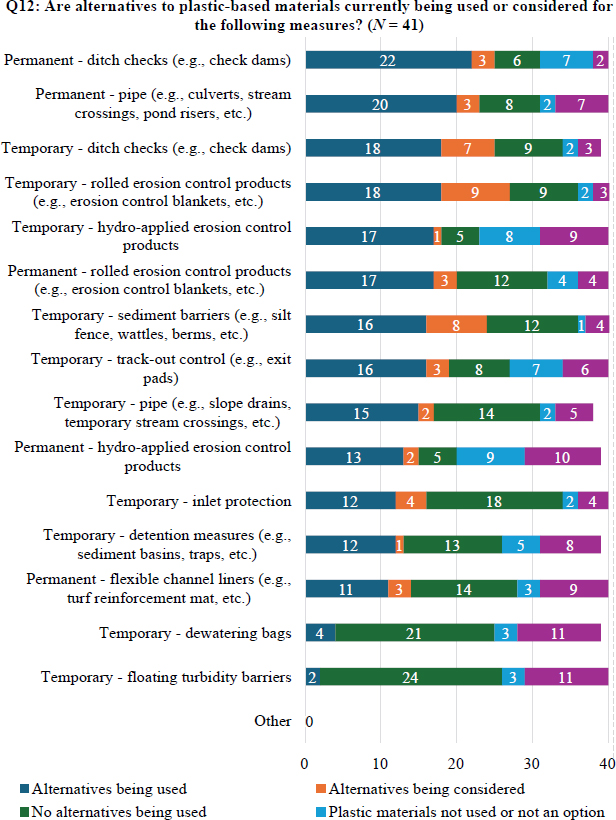
Figure 3.10. State DOT plastic-based alternative ESC products.
Respondents were also asked to rank their state DOT’s motivation for reducing the use of plastic-containing materials in ESC measures. Based on the literature, nine motivation factors were identified and presented. Respondents were asked to rank each factor from most motivating (i.e., highest ranking) to least/not motivating (i.e., lowest ranking). Individual responses were compiled and integrated into a tornado diagram, as shown in Figure 3.12. Results suggest that “wildlife concerns/entanglement” was the most motivating factor, and that “aesthetics” was the least motivating factor for reducing plastic-containing materials in ESC measures.
To promote the adoption of plastic-free alternatives in ESC materials and products, state DOTs can implement policies that encourage the use of sustainable materials without eliminating plastic-based options. This balanced approach allows for innovation and gradual transition while maintaining flexibility for contractors. Based on survey results, the current adoption of such policies is limited, with only 7% (3 out of 41) of responding state DOTs (Idaho, Montana, and New Jersey) requiring contractors to use certain amounts of non-plastic-based alternatives in these materials and products, as illustrated in Figure 3.13.
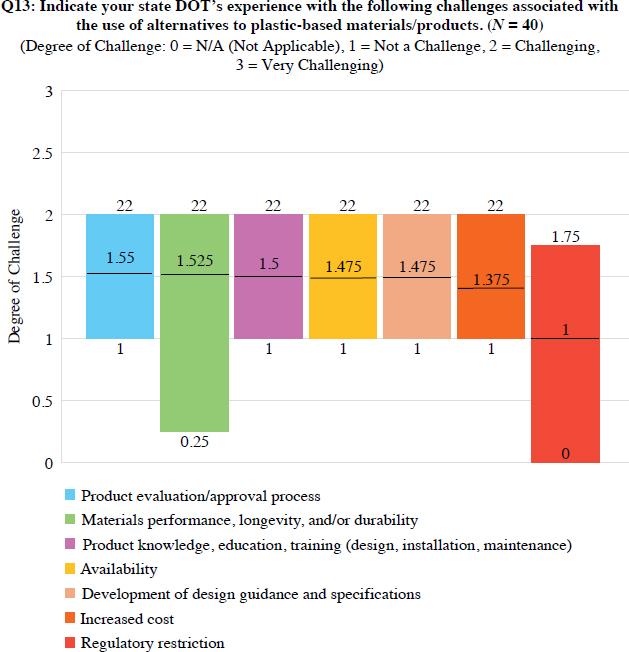
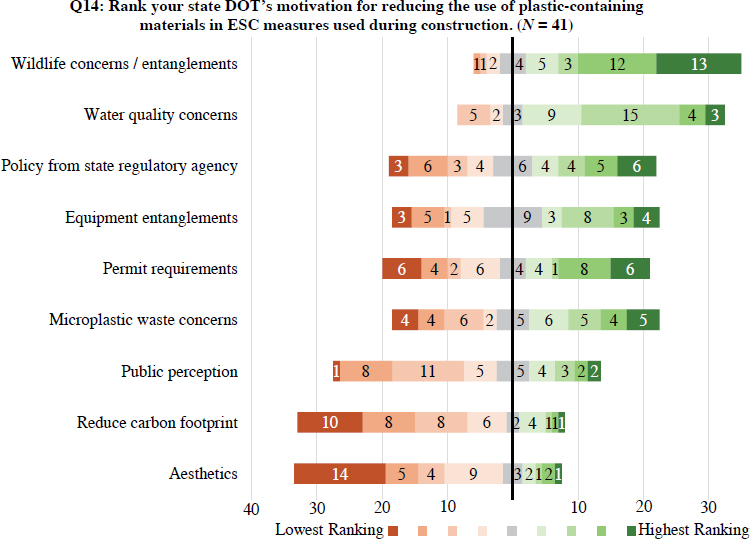
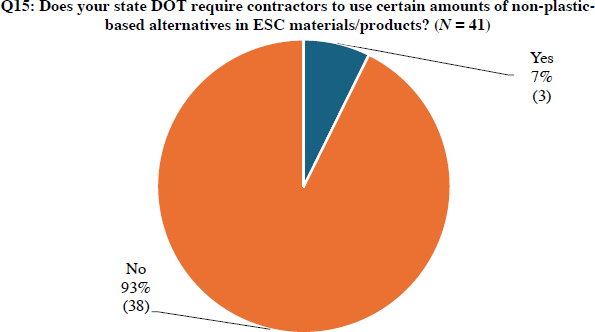
Figure 3.13. State DOT contractor requirements for non-plastic-based ESC materials/products.
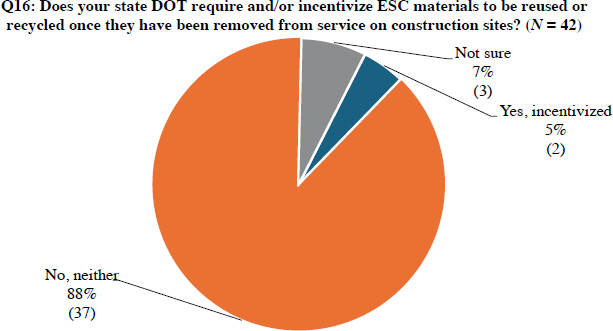
Recycling and reusing products and materials is one strategy for promoting sustainability within the construction industry. While many ESC materials and products available in the marketplace are designed for one-time use, opportunities exist to reuse or recycle (e.g., silt fence steel t-posts). Respondents were asked whether their state DOT requires or promotes the reuse or recycling of ESC materials and products. As shown in Figure 3.14, 88% (37 of 42) of responding state DOTs indicated that there were no requirements or incentives in place, and only 5% (2 of 42, Nebraska and Oregon) indicated there were incentives in place for contractors to reuse or recycle ESC materials and products.
Proper disposal of ESC materials and products is as important as reusing and recycling. Materials and products left on-site after final soil stabilization have been recognized as a source of microplastics as degradation occurs. State DOTs were asked whether they provide guidelines to contractors and construction personnel on the proper disposal practices of ESC materials and products. Results indicated that 14 responding state DOTs provide guidelines through specifications and
Yes, required, 0%, (0)
Yes, incentivized and required, 0%, (0)
Figure 3.14. State DOT requirements/incentives for reusing or recycling ESC materials.
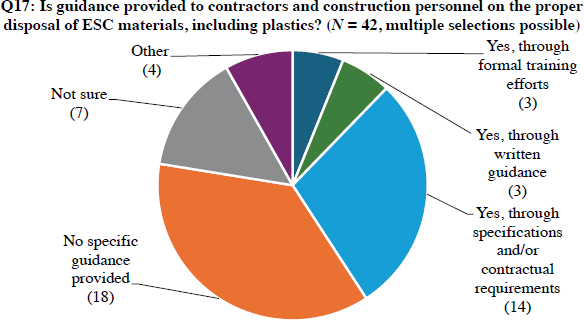
contractual requirements, 3 provide some form of written guidelines (Delaware, Kentucky, and Minnesota), 3 provide guidelines through formal training efforts (Delaware, Minnesota, and Utah), and 18 do not provide any guidelines. These findings are illustrated in Figure 3.15.
3.5 Funding and Research
Budgeting methodologies can vary widely among state DOTs based on the needs within the state and the goals set by the agency. Line-item allocations for stormwater management expenditures are often dwarfed in comparison to allocations for highway construction and maintenance expenditures. Respondents were asked whether their state DOT was currently allocating or planning to allocate additional funding to domestically source sustainable materials for ESC measures used during construction. Based on the responses shown in Figure 3.16, 62% (26 of 42) of responding state DOTs were not providing or planning to provide additional funding to domestically source products and materials.
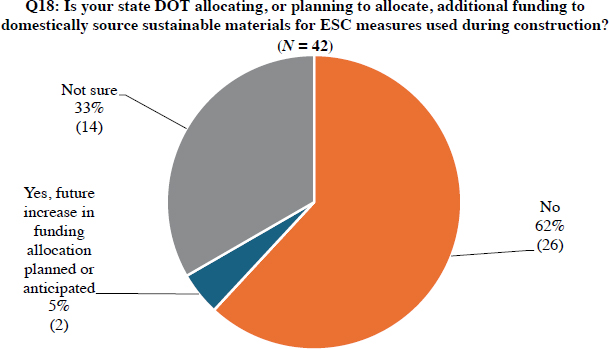
Figure 3.16. State DOT funding allocation for domestic and sustainable ESC products.
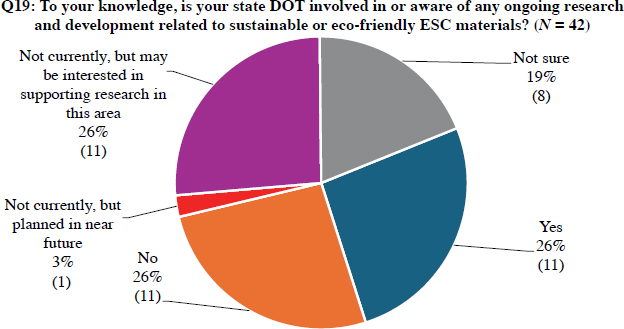
The final question of the survey pertaining to the use of sustainable materials used in ESC measures identified state DOTs that are funding or would like to fund research efforts to develop sustainable or eco-friendly ESC materials. Results indicated that 26% (11 of 42) of responding state DOTs are currently funding research efforts, and 26% (11 of 42) would be interested in supporting research efforts in this area in the future. This distribution is shown in Figure 3.17.
While tabulated survey results presented in this chapter provide insight into the state of the practice regarding the use of sustainable materials for ESC practices among state DOTs, additional insight can be gathered from state DOTs that have an advanced implementation program in place to reduce plastic-based materials and products through innovative means. Case example interviews provide an avenue to gather this information. Case examples conducted with such state DOTs provide unique perspectives that can aid other state DOTs in the development and implementation of an ESC program focused on the use of sustainable materials and products. While case examples could not be prepared for each state DOT responding to the survey, Chapter 4 provides a summary of six case example interviews that highlight drivers, motivation, alternative strategies, and challenges encountered when using sustainable materials and products in ESC measures.