Transporting Freight in Emergencies: A Guide on Special Permits and Weight Requirements (2024)
Chapter: 5 Best Practices for Coordination and Harmonization of Overweight CMV Special Permits During Emergencies and Disasters
CHAPTER 5
Best Practices for Coordination and Harmonization of Overweight CMV Special Permits During Emergencies and Disasters
Introduction
This chapter discusses best practices during and after an emergency that weave in the research findings.
Best Practices for Routing of Overweight CMVs During Emergencies
The Illinois Transportation Automated Permitting (ITAP) system has evolved into a successful in-house system that issues almost a quarter-million permits, and over 99 percent of permits are issued automatically. The ITAP system has many features, which are described in the following sections.
Routing System
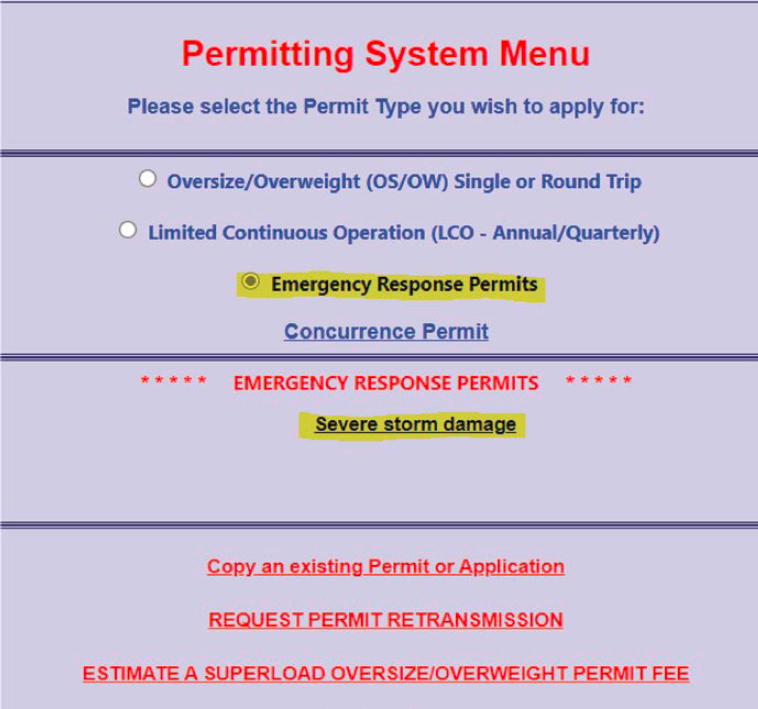
The ITAP system creates an emergency permit based on the declared emergency (see Figure 9), which can be state declared or from a nearby state or federal emergency. The system automatically selects routes based on declared emergencies, for example, for state declarations that allow travel on state routes versus federal declarations that can allow travel on federal routes. The system provides information needed for navigating local roads and relevant contacts.
QR Codes
One best practice in these automated permits is the usage of QR (quick response) codes on permits; this is because of the following key reasons:
- QR codes provide all information needed for routing.
- QR codes provide the contact information of local agencies that need to be contacted for permitting or coordination.
- QR codes can be used by enforcement officers to verify permit information and the time the permit was issued.
- QR codes provide an option for audible turn-by-turn directions.
Audible Route Guidance
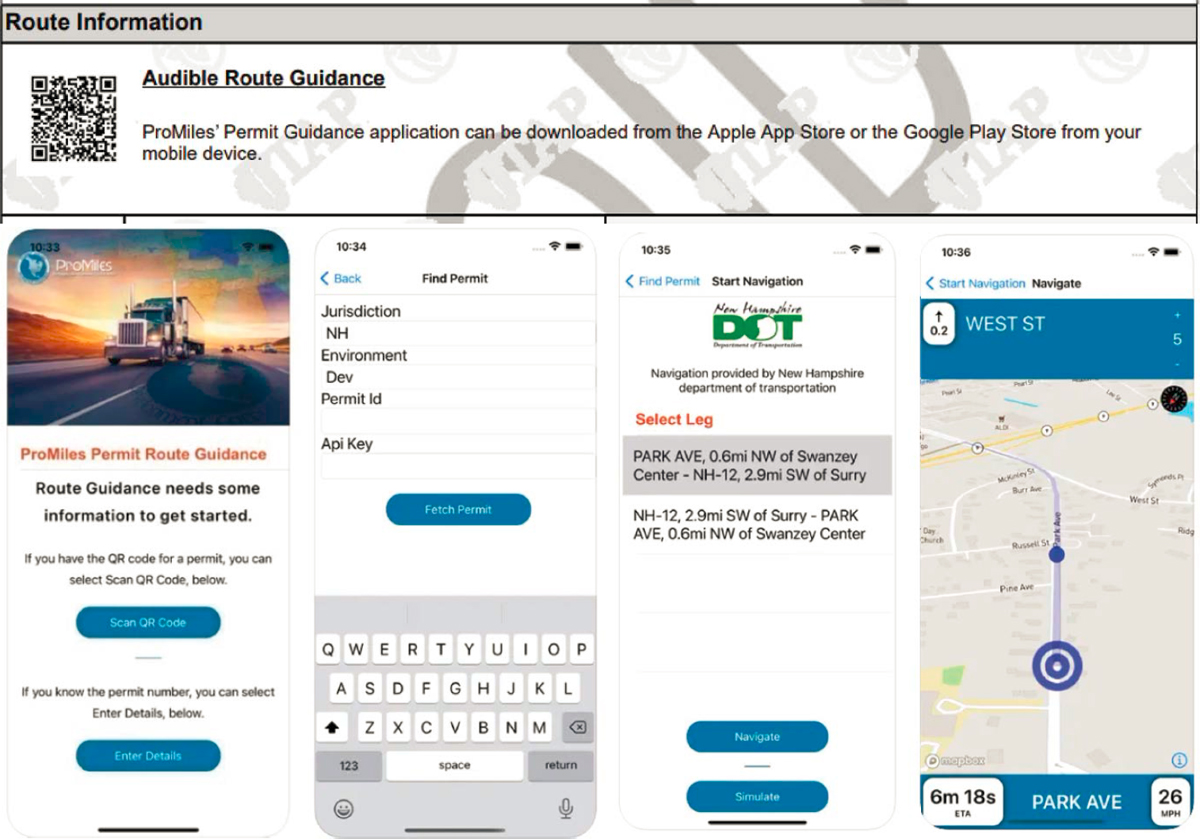
Another best practice that was observed was availability of audible route guidance by scanning a QR code in an app (as in Figure 10).
Communications and Coordination
Communication during emergencies is crucial, but informal channels may not be reliable when disaster strikes. Informal communication networks often rely on interpersonal relationships between neighboring states, agencies, and regular carriers. However, during emergencies, personnel and nontypical carriers may come from out of state, lacking experience or understanding of special permits, which can lead to confusion.
Currently, state and trucking associations use diverse communication methods for special permits during emergencies, often relying on informal networks. Furthermore, truck permit-issuing offices may not be aware of emergency management communications and NIMS, limiting their ability to coordinate with emergency management agencies during disasters.
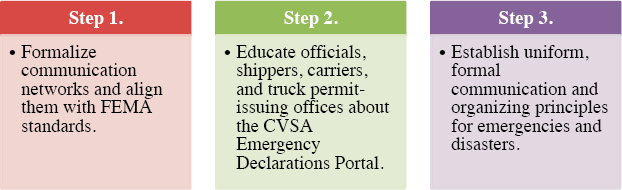
A potential solution is to formalize communication networks and align them with FEMA standards (Figure 11). This includes educating emergency management officials, shippers, carriers, and truck permit-issuing offices about the CVSA Emergency Declarations Portal and the importance of timely submissions. State agencies, state DOTs, and truck permit-issuing offices should establish uniform, formal communication and organizing principles for emergencies and disasters.
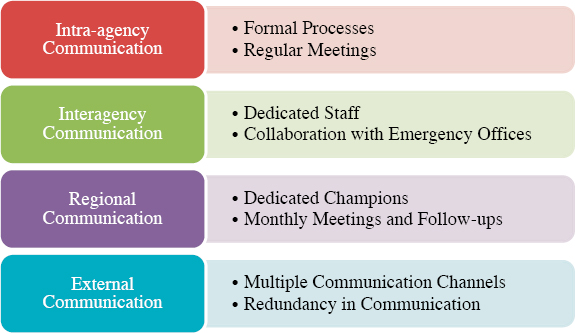
For efficient communication and coordination, the type of communication can be divided into four categories—intra-agency, interagency, regional, and external—and the following changes can be made, as listed in Figure 12.
- Intra-agency communication will benefit from formal processes and regular meetings by developing processes.
- Interagency communication will benefit from establishing a dedicated staff for coordinating with state agencies dealing with emergency and disaster.
- Regional communication will benefit from selecting dedicated champions who can lead monthly meetings.
- External communications will benefit from multiple communication channels, including social media, and redundancy in communication.
National trucking organizations, the National Governors Association, and FEMA may want to consider incorporating these procedures into NIMS and future emergency management documents. Additionally, they may want to collaborate with FEMA and the U.S. DOT to develop an independent study training course focused on emergency waivers of FMCSR and special permits for overweight emergency commodity shipments during declared disasters and other state emergencies and aimed at emergency management, transportation officials, CMV enforcement, and truck permit-issuing offices.
CVSA Emergency Declarations Portal
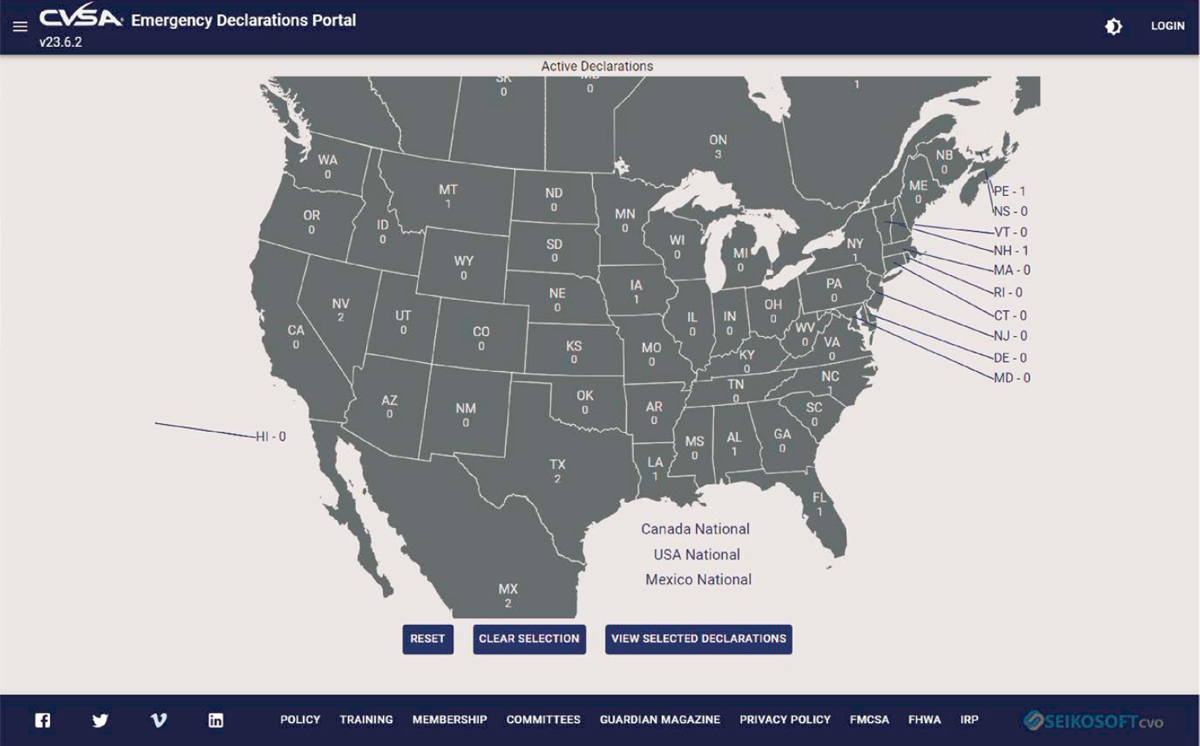
Amid the challenges posed by the COVID-19 pandemic, the development of the CVSA website (see Figure 13) emerged as a successful solution in facilitating the harmonization and coordination of special permits during emergency situations or disaster declarations. This innovative tool serves as a valuable resource, benefiting not only state truck permitting offices but also enforcement staff, who rely on it for verifying emergency declarations and ensuring their validity. However, the effectiveness of the CVSA website depends on the timeliness and accuracy of information provided by state permitting offices and the adherence to standardized language.
Benefits
Benefits of the CVSA website are as follows:
- Functionality: The CVSA website serves as a centralized hub for state truck permitting offices and enforcement staff to manage and verify special permits during emergency situations. Its core functionalities include the following:
- Permit verification: The website enables enforcement staff to validate the authenticity and compliance of emergency declarations by accessing a centralized database of permits.
- Coordination: The platform facilitates seamless coordination among state permitting offices, ensuring that standardized language and information-sharing practices are followed consistently.
- Timely updates: The CVSA website relies on state permitting offices to provide timely updates regarding emergency declarations and associated information.
- Benefits to stakeholders: The CVSA website has delivered significant benefits to various stakeholders involved in the management of special permits during emergencies.
- State truck permitting offices: State permitting offices can efficiently issue and manage permits, ensuring compliance with emergency regulations and harmonization of practices.
- Enforcement staff: Enforcement personnel can access real-time information on permits, enhancing their ability to enforce emergency declarations accurately.
- Harmonization and coordination: The platform promotes harmonization and coordination among different jurisdictions, reducing confusion and ensuring a unified response to emergencies.
Key Dependencies
The effectiveness of the CVSA website relies on three key dependencies:
- Timely information: State permitting offices must provide accurate and up-to-date information regarding emergency declarations and associated permits to maintain the system’s accuracy and relevance.
- Standardized language: Adherence to standardized language and information-sharing practices is essential to ensure seamless coordination and understanding among all users of the platform.
- Education programs: Programs are needed to instruct carriers and drivers on the specifics of permit authorization to improve compliance.
The CVSA website has emerged as a pivotal tool in the efficient management of special permits during emergencies and disaster declarations. Its success lies in its ability to harmonize and coordinate activities across various jurisdictions, benefiting state truck permitting offices and enforcement staff alike. To ensure its continued effectiveness, it is imperative that state permitting offices provide timely updates, adhere to standardized language and information-sharing practices, and provide education or training programs to drivers and carriers. Through the continued support of stakeholders and the commitment to maintaining these key dependencies, the CVSA website will continue to play a vital role in ensuring the smooth operation of special permits during times of crisis.


