1
Introduction
In September 2023, the Committee on Population (CPOP) at the National Academies of Sciences, Engineering, and Medicine held a workshop, Developing an Agenda for Population Aging and Social Research in Low- and Middle-Income Countries (LMICs). The idea for the workshop grew out of conversations between CPOP and the National Institute on Aging (NIA), which led to the statement of task for the activity: see Box 1-1. The goal was to assemble a group of experts to discuss the research agenda on aging, with an emphasis on LMICs. The explicit goal of the workshop was to identify the most promising directions for behavioral and social research and data infrastructure investments for studying life-course health, aging, and Alzheimer’s disease and Alzheimer’s disease and related dementias (AD/ADRD) in LMICs.
The workshop was arranged around three broad themes: inequality, family change, and climate change. The workshop agenda is in Appendix A; biographical sketches of the interdisciplinary planning committee that convened to organize the workshop are in Appendix B.
BACKGROUND
The planning committee chair, Rebeca Wong (University of Texas Medical Branch), opened the first session by describing the interactive process with the National Academies and NIA that led to the workshop. The workshop goal was to identify priorities for future research and data collection in order to strengthen the evidence base for policy making.
Amy Kelley (NIA) shared the perspective of NIA, noting that the agency is the part of the National Institutes of Health that leads the federal government in conducting and supporting research on the health and well-being of older people. Among other topics, she said, NIA funds research to study aging in different social, cultural, and economic contexts in order to support the identification of behavioral, social risk, and protective factors that are associated with aging and life-course outcomes, including those related to AD/ARD. There has been less research in LMICs than in high-income countries, thus the workshop’s focus on LMICs. One challenge for research in this area, said Kelley, is that there is limited availability of representative longitudinal data; one goal of the workshop is to identify and discuss poten-
tial research opportunities that would be possible with more representative longitudinal data. Funding this research, she said, will improve the health of older people in the United States and worldwide.
Kelley described some of the efforts in which NIA has invested in research in LMICs, including:
- the Health and Retirement Study (HRS) International Family of Studies: harmonized, cross-national research on the drivers of aging and dementia;
- the Gateway to Global Aging Data: free public resource designed to facilitate cross-national and longitudinal studies on aging; and
- the Harmonized Cognitive Assessment Protocol Network: international research collaboration aimed at measuring and understanding dementia risks within longitudinal studies of aging.
These types of studies can help systematically examine the social and economic determinants of health, and how these determinants can produce disparities in the trajectory of aging, health, and survival, said Kelley. In addition, there are a number of social science questions that can be uniquely addressed with cross-national comparative studies, as well as country-specific studies in LMICs. Kelley expressed her hope that this workshop would help to guide the research agenda in these areas for the coming years.
Lis Nielsen (NIA) followed up on her colleague’s remarks by highlighting a few additional areas of interest at the Division of Behavioral and Social Research (BSR) at NIA. In the last several years, said Nielsen, BSR has accelerated its efforts to develop research resources and tools in order to enable the rigorous study of how macro-level social factors shape the process of aging, both in the United States and globally. These BSR efforts were stimulated in part by recommendations from a committee of experts convened by the National Advisory Council on Aging, she said. The committee urged BSR to intensify research focused on the effects on aging of major social shifts, including:1
- changing family lives of older adults,
- the rising number of older adults living alone,
- the rapidly changing nature of work,
- growing income inequality,
- trends in ageism and discrimination,
- immigration,
- climate change, and
___________________
1 The committee’s report can be found at https://www.nia.nih.gov/sites/default/files/2020-02/2019-BSR-Review-Committee-Report-508.pdf
- the macro-social sources of worsening mental and physical health and mortality.
After this report’s release, Nielsen said, the COVID-19 pandemic and other global disruptions highlighted the fragility and the resilience of older populations around the globe, the interconnectedness of different societies, and the need to strengthen the collective search for innovative ways to meet the challenges and opportunities of global aging. She highlighted two recent publications that are the result of NIA’s partnership with CPOP: a consensus study on rising midlife mortality rates in the United States (National Academies, 2021) and a workshop summary on developing a research agenda on structural racism (National Academies, 2022). Nielsen said that she hoped that this workshop would help NIA formulate strategies for staying at the cutting edge of this work and building on the existing investments to develop high-value data infrastructure to meet the needs of the broader international aging research community.
Another NIA representative, Minki Chatterji, expanded on some of the projects that Nielsen and Kelley had mentioned. BSR, said Chatterji, engages the research community in order to help identify program priorities. For example, BSR is working toward achieving the implementation milestones for AD/ADRD that were recommended by the research community. BSR’s emphasis on global aging research addresses these types of community-identified priorities by examining how behavioral and social factors influence outcomes in varying social, cultural, and economic contexts. Chatterji explained that global and cross-national research can give clues about which policies or contexts lead to better outcomes, which can help people both in the United States and across the globe.
The HRS International Family of Studies are a major piece of this global research, said Chatterji.2 These studies use nationally representative samples and follow participants over time with a multidisciplinary focus. While the studies are not identical across countries, they are harmonized in order to be comparable. The data from this research are publicly available, she said. While these studies have been conducted in over 40 countries, they have not yet included many LMICs. It is important to study LMICs, Chatterji explained, because some aspects of the social, cultural, and economic contexts are very different in LMICs than in the United States, and these differences can help illuminate what factors lead to different outcomes. For example, the differences between older adults in sub-Saharan Africa and those in the United States, which might lead to different outcomes, include more rural living, more time in multigenerational households and caring for younger people, staying in the labor force longer, living in countries with
___________________
2 https://www.nia.nih.gov/research/dbsr/global-aging/hrs-international-family-studies-and-harmonized-cognitive-assessment-protocol
weak health systems and challenges accessing health care, and lower levels of life satisfaction and higher levels of depression.
Chatterji said that the NIA hopes to hear from experts at the workshop about what types of research the NIA should prioritize, particularly in the areas identified for focus: inequality, environmental exposures, and family change. In addition to future directions for research, Chatterji pointed out that there may be a need for investments in infrastructure in order to facilitate research in all areas.
SETTING THE STAGE
To lay a foundation for the rest of the workshop, the keynote presentation by Lisa Berkman (Harvard University) introduced the issues and identified areas of critical importance. She began by emphasizing the importance of focusing on successful aging societies. A successful society is one that facilitates and develops the capacity of people to age successfully. Research that looks at aging in a decontextualized way focuses only on the few individuals who have the resources to age successfully and leaves out the rest. She explained that a successful aging society is “not just about old people”; rather, it functions effectively on a societal level for people of all ages. Berkman shared a quote from work by the MacArthur Foundation Research Network on an Aging Society (Rowe, 2015, p. 5):
As America ages, policy-makers’ preoccupations with the future costs of Medicare and Socia Security grow. But neglected by this focus are critically important and broader societal issues such as intergenerational relations within society and the family, rising inequality and lack of opportunity, productivity in late life (work or volunteering), and human capital development (lifelong education and skills training). Equally important, there is almost no acknowledgment of the substantial benefits and potential of an aging society.
Based on this work, Berkman identified five hallmarks of a successful aging society:
- functions effectively at a societal level;
- addresses issues of transition to cohesive, productive, secure, and equitable aging society;
- requires adaptation of core societal institutions (e.g., education);
- identifies and builds on positive contributions of an aging society; and
- adopts a life-course perspective by looking at people across the age spectrum, as well as at intergenerational issues.
Berkman noted that research on successful aging societies requires the collection of contextual-level variables that are often readily available; it does not necessarily require asking more of an “already-burdened set of participants.” In choosing countries for focused research, Berkman said that some countries are ripe for studying aging right now, while others should be prioritized for investments in future research. For example, she said, between 2025 and 2050, Mexico will undergo the transition from a younger population to an older one: see Figure 1-1. In prioritizing countries for research on the transition to an aging society, Berkman said that the focus should be on countries that are “on the runway” by 2050.
There are numerous social and physical determinants of health that can be studied in relation to aging, said Berkman. She shared data and findings from selected studies on several of these determinants. The first study she discussed looked at the effects of the amount of education on child health and adult mortality (Pradhan et al., 2017). It found that education of females had an “enormous” impact on mortality, particularly in low-income countries: see Figure 1-2. Specifically, the study showed that “14 percent of reductions in overall under-five mortality, 30 percent of reductions in adult female mortality, and 31 percent of reductions in adult male mortality can be attributed to gains in female schooling” (Pradhan et al., 2017, p. 427).
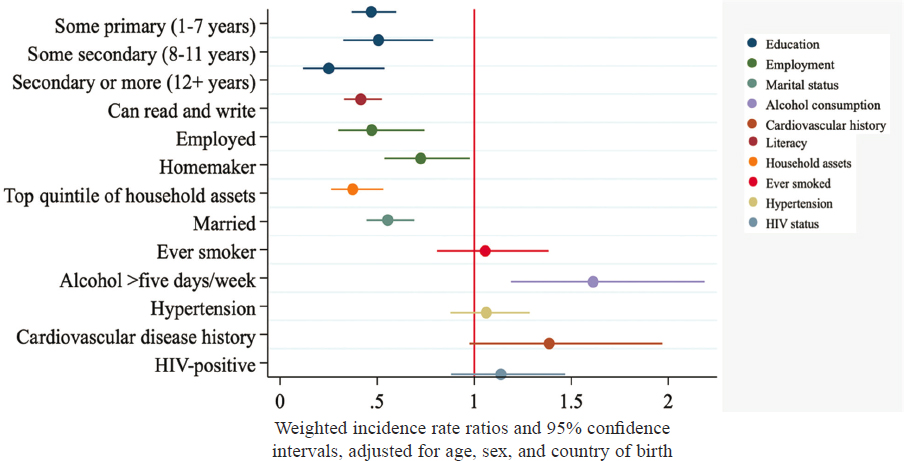
Another study used data from the Health and Aging in Africa: A Longitudinal Study in South Africa to look at the impact of multiple determinants—including education, employment, marital status, and health behaviors—on cognitive impairment (Kobayashi et al., 2021). This study found that education is “incredibly important,” as is literacy: see Figure 1-3, which shows those with education had the lowest relative incidence of cognitive impairment. These findings show the “lifelong impact of investing in education,” said Berkman.
Data from the Mexican Health and Aging Study have been used to look at how lifetime socioeconomic status (SES) affects trajectories of functional limitations and depressive symptoms in middle age: see Figures 1-4 and 1-5. Berkman said that these findings show that the effects of SES are “quite complicated,” and it can be challenging to tease out the separate effects of education, wealth, employment, and other factors.
Another important factor that has been studied as a determinant of health is adverse childhood experiences, said Berkman. A study from China found that each adverse experience contributes to an increasing risk of multimorbidity—the co-occurrence of two or more chronic conditions—(Lin et al., 2021): see Figure 1-6. She noted that there is a need to acknowledge the “huge number” of adverse events that people have experienced in many countries, including war, apartheid, famine, poverty, and disruption of family life and connections.
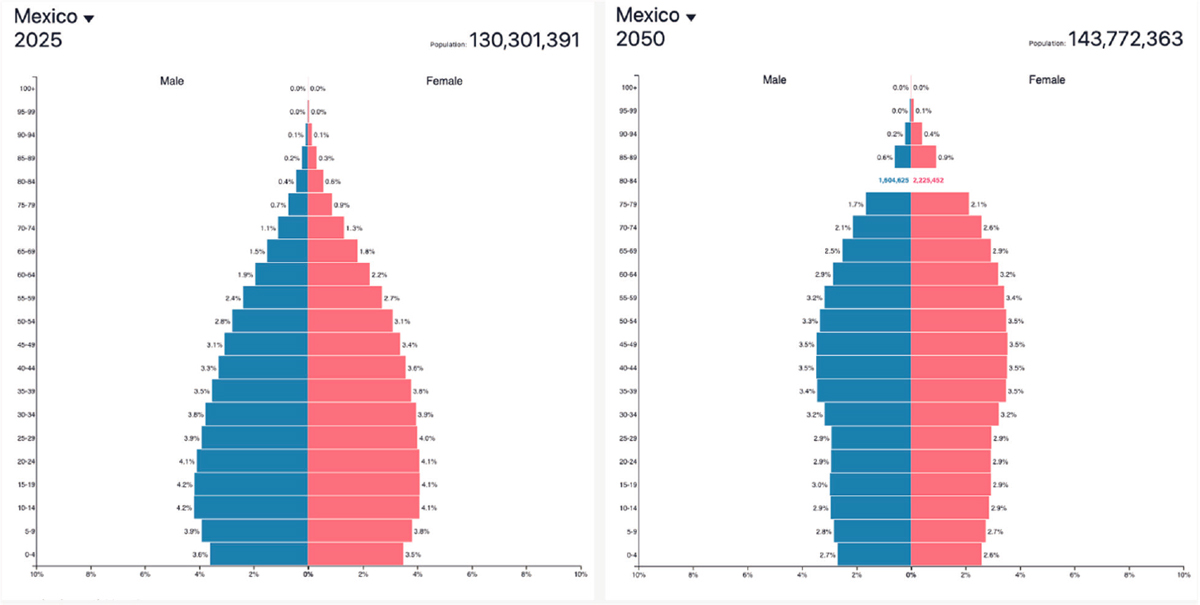
SOURCE: ©2023 by PopulationPyramid.net. Reprinted under Creative Commons license CC BY 3.0 IGO: http://creativecommons.org/licenses/by/3.0/igo/. Left panel: https://www.populationpyramid.net/mexico/2025/, right panel: https://www.populationpyramid.net/mexico/2050/
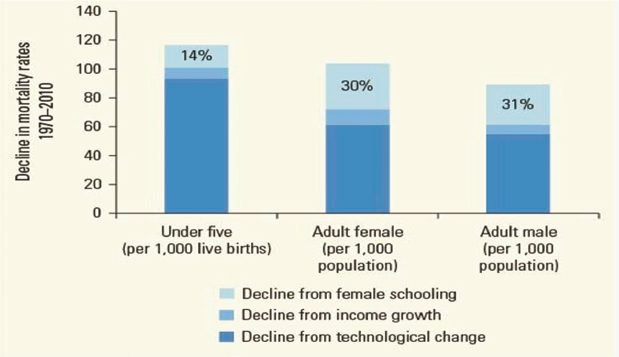
NOTE: Data are from 92 low- and middle-income countries, each of which included observations at 5-year intervals between 1970 and 2010. For full list, see https://dcp-3.org/sites/default/files/chapters/Annex%2030A.%20Countries%20in%20Regression%20Analysis.pdf
SOURCE: Pradhan et al. (2017, Figure 30.1). Reprinted under Creative Commons Attribution 3.0 IGO license (CC BY 3.0 IGO) http://creativecommons.org/licenses/by/3.0/igo
Berkman said that one of the most promising areas for future research is using natural experiments3 to look at the impact of policy on health outcomes. For example, a study in South Africa found that men who were newly eligible for pensions—due to lowering of the eligibility age—had higher than expected cognitive function (Jock et al., 2023). The study suggested cash transfers may hold promise as potential interventions to promote healthy cognitive aging.4 These types of policy “experiments” are a very powerful tool for learning more about the effects of interventions on health. In addition, she said, this type of research does not rely on people’s memory, which can be unreliable.
Another type of research that does not require asking people about their individual exposure is research on environmental conditions. For example, a study in China showed decreases in cognitive function with exposure to ambient particulate matter for middle-age and elderly Chinese
___________________
3 For details, see Craig et al. (2017).
4 The change in pension eligibility allowed a comparison of men who received pensions at a younger age than prior cohorts under the assumption that the policy change was exogenous, that is analogous to an experimental treatment.
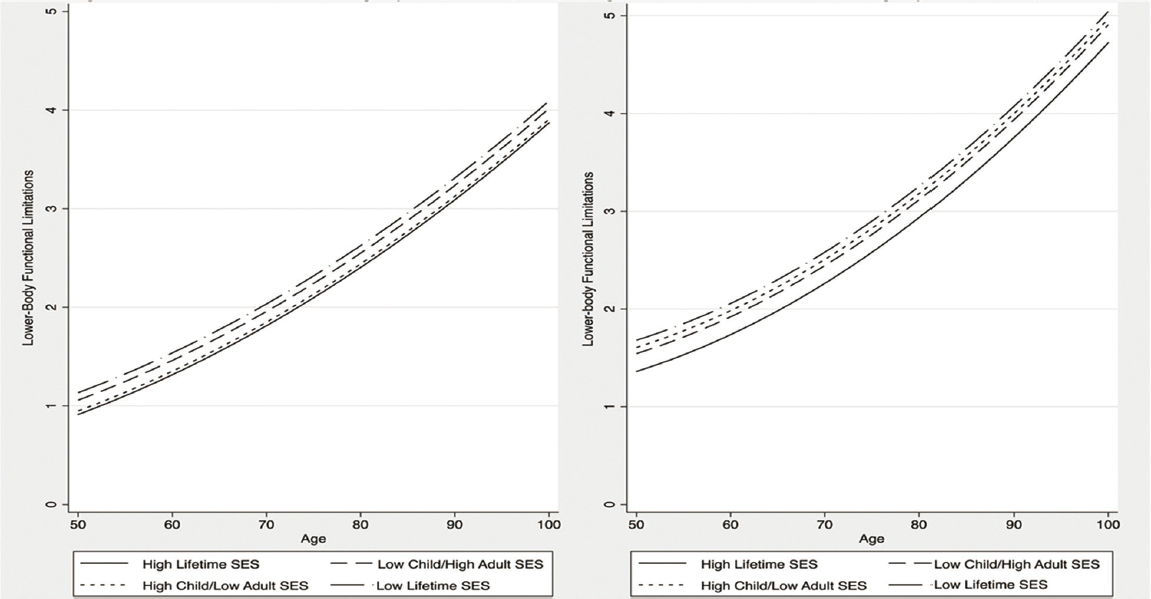
SOURCE: Torres et al. (2018, Figures 1C and 1D). Reprinted with permission.
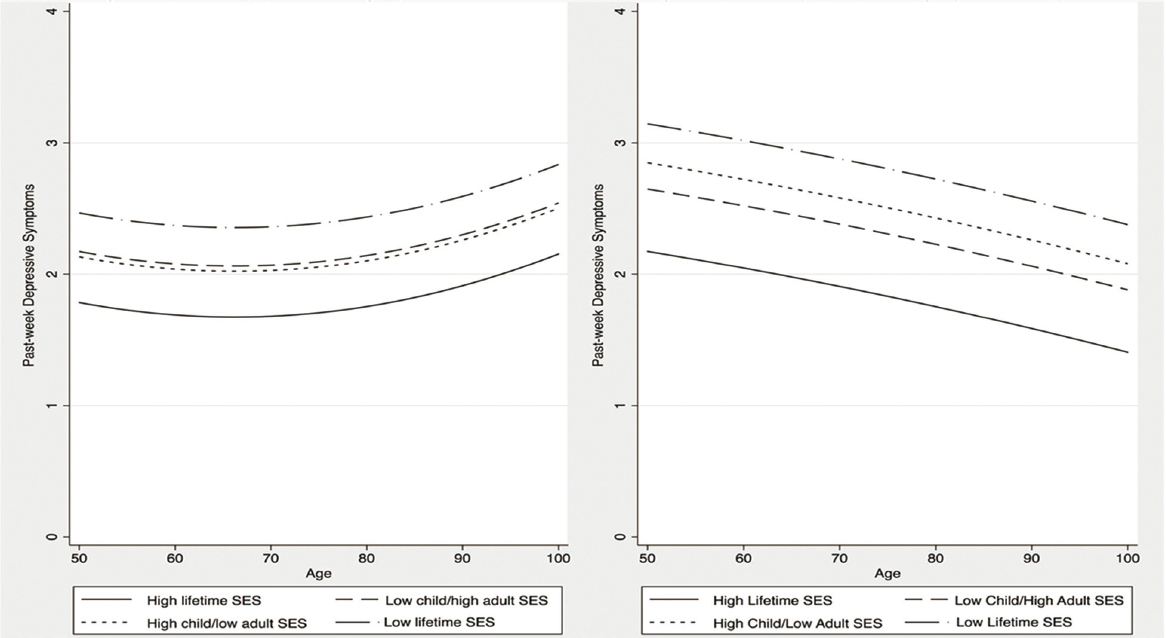
SOURCE: Torres et al. (2018, Figures 1A and 1B). Reprinted with permission.
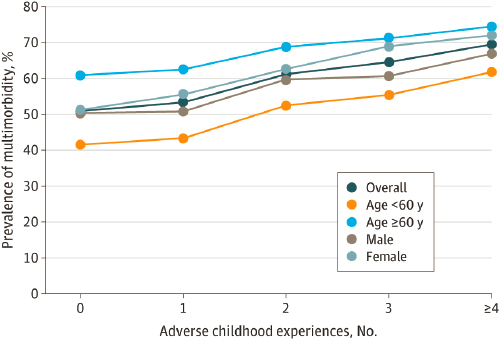
SOURCE: Lin et al. (2021, Figure 2). Reprinted with permission.
adults (Yao et al., 2022). It is essential, said Berkman, that researchers study the impact of the environment on aging health; climate change has huge consequences for people in LMICs, and it is critical to understand how policies could help or hurt these populations. She also noted that researchers looking at social determinants sometimes ignore the important role of health systems. A study in sub-Saharan African looked at how easier access to antihypertensive treatment could improve blood pressure control (Parati et al., 2023). It is essential, said Berkman, that researchers consider the role of multiple stakeholders—including governments, health care systems, the scientific community, development partners, communities, and individuals—when studying the factors that affect healthy aging.
In conclusion, Berkman encouraged researchers to identify demographic transitions in societies and to focus on major institutions that influence change, including educational, economic, political, environmental, and health systems. She emphasized the importance of using the perspective of an aging society rather than focusing on individual factors. However, she noted that societies are heterogeneous, and it is important to look both at averages as well as differences within populations. The distributional differences can sometimes “tell a more interesting story,” she said, and can expand knowledge about healthy aging for both individuals and populations as a whole.


