Impacts of National Science Foundation Engineering Research Support on Society (2024)
Chapter: 4 Recognizing Engineering Impacts on Society Brought About by NSF Investments
4
Recognizing Engineering Impacts on Society Brought About by NSF Investments
The committee’s statement of task directed it to identify up to ten extraordinary engineering impacts made possible by National Science Foundation (NSF) investments; to organize a public symposium on this topic; and to develop clear, compelling narratives for public engagement in these impacts. This chapter addresses these three elements. It describes NSF’s own initiatives to highlight the effects that its work has had on science, technology, and society. The committee’s efforts to gather information are then presented. These include a symposium—summarized here and detailed in a separate proceedings (NASEM, 2023b)—that not only highlighted the many innovations that resulted from NSF support of engineering research and education but also brought to light the persons responsible for those innovations and the stories of how they came about. Other committee initiatives—questionnaires circulated to the members of the National Academy of Engineering and input received from NSF staff—are then discussed.
The chapter goes on to explain the committee’s framework for identifying exemplary impacts and presents descriptions of these impacts. It closes with the conclusions and recommendations that were drawn from this work.
CONSIDERATIONS IN RECOGNIZING THE WAYS IN WHICH ENGINEERING RESEARCH, PRACTICE, AND EDUCATION AFFECT SOCIETY
The study’s statement of task identified several different ways that engineering research, practice, and education might have an impact on society. It noted that
[t]hese impacts might include expanded technological and social capabilities, scientific breakthroughs, and improvements in economic opportunity. They could have led to improvements in individual quality of life, national security, population health, manufacturing services, infrastructure resilience, and public policy, among others.
In formulating its own approach to the question and considering the role of NSF support, the committee was mindful of the fact that significant societal impacts often stem from multiple sources and progress over time—they neither happen instantaneously nor are they the result of a single action or agent. This is especially true when considering the impact of federal funding efforts. Federal agencies have different missions, constituencies, roles, and support practices. Their actions may take the form of funding fundamental, often speculative, research that develops the basic principles that underlie an entire field, nurturing promising but undeveloped technologies until they mature to the point of independent viability, or providing long term support to efforts that generate great social value but not necessarily a high economic return. NSF is unusual among federal agencies in that it operates in all of these spheres, and the
committee sought to recognize all of them. It was also careful to acknowledge the other governmental and non-governmental contributors to the impacts it chose to highlight.
PREVIOUS EFFORTS TO IDENTIFY IMPACTS BROUGHT ABOUT BY NSF INVESTMENTS
The National Science Foundation has undertaken three efforts over recent years to identify and document the effects of governmental support for research and education on the economy, human well-being, and societal advancement. These efforts—which coincided with the 50th, 60th, and 70th anniversaries of the founding of the agency—highlighted the substantial return on investment of government support for science and technology and served as resources to inform the committee’s considerations of engineering impacts on society.
NSF Nifty 50
Developed for the 50th anniversary of agency in 2000, the Nifty 50 are “NSF-funded inventions, innovations and discoveries that have become commonplace in our lives” (NSF, 2000c). Nearly half of the list, which covers the breadth of NSF’s support initiatives, cites inventions, technologies, or programs related to engineering. Table 4-1 displays these.
TABLE 4-1 NSF Nifty 50 (2000) Achievements Most Directly Related to Engineering
|
SOURCE: NSF (2000c).
On the Nifty 50 website, each of these items is accompanied by a description of how NSF’s support contributed to the development. For example, NSF’s contributions to bar codes are described as follows:
NSF funding helped play a crucial role—both earlier and more recently—in the development of bar codes. In the early 1990s, research in computer vision conducted at the State University of New York–Stony Brook led to major advances in algorithms for bar code readers. That research led to commercial development of a new product line of barcode readers that has been described
___________________
23 The Darci Card is an adaptive tool that empowers individuals with physical disabilities to operate a computer using either an on-screen keyboard or Morse code input methods.
as a revolutionary advance, enabling bar-code readers to operate under messy situations and adverse conditions. Work continues on developing two-dimensional bar codes,24 which will enable far greater amounts of information to be represented in a very compact form. NSF helped fund bar-code research in the 1970s, which helped to perfect the accuracy of the scanners that read bar codes. Credit must also be given to private industry for its work in development and implementation of bar codes and scanners. (NSF, 2000c)
NSF Sensational 60
Ten years later, for its 60th anniversary, NSF produced a list of 60 advances—the so-called Sensational 60—that “have had a large impact or influence on every American’s life” (NSF, 2010b). The items on this new list that were not among the Nifty 50 included a number of engineering related innovations:
- biofuels and clean energy
- cloud computing
- deep-sea drilling
- (NSF-funded) engineering research and science and technology centers
- functional magnetic resonance imaging
- “invisibility cloaks”
- RSA25 and public-key cryptography
- supercomputer facilities
These advances, too, are accompanied by descriptions of NSF’s involvement in the research. For functional magnetic resonance imaging (fMRI)), for example, the description is:
Since the development of fMRI in the early 1990s, NSF has supported numerous fMRI studies that have resulted in a deeper understanding of human cognition across a spectrum of areas, including sensation, perception, motor control, memory, empathy, language, and emotion. Additionally, NSF has funded the development of new statistical methods necessary for the analysis and interpretation of fMRI data. In 1999, NSF helped launch the National Functional Magnetic Resonance Imaging Data Center (fMRIDC) at Dartmouth University. Now funded by the National Institutes of Health and maintained at the University of California, Santa Barbara, the fMRIDC provides a publicly accessible repository of studies and data to further the study of the human brain. fMRI is an excellent example of how NSF funding supports technological innovation and medical advances. NSF supported the underlying NMR, as well as research in other areas directly related to the development of MRI technology, such as electromagnetics, digital systems, computer engineering, biophysics and biochemistry (NSF, 2010b; p. 25).
NSF “History Wall”
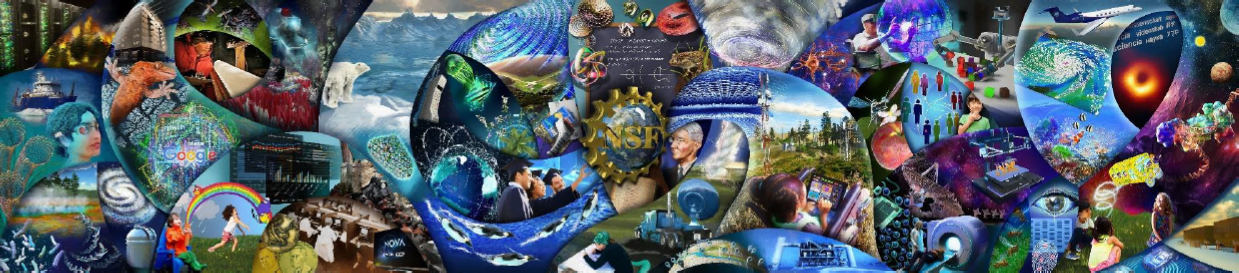
More recently, for the NSF’s 70th anniversary, NSF commissioned a mural for its new headquarters in Alexandria, Virginia, that provides a visual history of the effects research supported by the foundation has had on society (Figure 4-1) (NSF, 2022f). Created by artist
___________________
24 For example, QR (Quick Response) codes, which can be scanned by a smart phone and used to open webpages, call phone numbers, and the like.
25 The Rivest-Shamir-Adleman (RSA) encryption algorithm is a widely used means to secure data.
Nicolle R. Fuller, the History Wall includes many items on the above lists but also several other items. These are presented in a descriptive format and include:
- Carbon nanotubes have novel properties yielding new applications.
- Geckos inspire the development of polymers and directional adhesion materials.
- NSF-funded search-and-rescue robots improve disaster response.
- NSF supports GPS technology, such as the National Center for Geographic Information and Analysis.
- NSF’s SBIR program strengthens the role of small business in federally funded R&D, as it did in cellular technology in the 1990s.
- In electronics and material science, graphene’s unique electrical and physical properties promise new breakthroughs.
- Robobees are innovative autonomously flying microrobots that have potential impacts in many applications.
- Quantum phenomena can yield novel technologies in computing and communications.
- 3D printing has impacted manufacturing, design and the arts.
- With support for programs like “The Magic School Bus,” NSF supports elementary and informal STEM education.
- Robotics and automation promise to transform transport and more.
- NSF supports potentially transformative technologies like virtual reality.
THE COMMITTEE’S OUTREACH EFFORTS TO IDENTIFY IMPACTS BROUGHT ABOUT BY NSF INVESTMENTS
The committee undertook two outreach efforts intended to supplement their own knowledge of engineering innovations brought about by NSF investments and the background research conducted by staff. One of these was a symposium carried out in fulfillment of the statement of task. The other was a set of questionnaires circulated to members of the National Academy of Engineering, along with a companion solicitation of input from NSF staff. These efforts are described below.
Symposium on Extraordinary Engineering Impacts on Society
The committee organized and conducted a virtual information-gathering symposium in August 2022. The 2-day event comprised four sessions that touched on major themes raised in the statement of task:
- NSF and its role in fostering extraordinary engineering impacts on society
- People who brought about extraordinary engineering impacts on society
- NSF centers that catalyzed extraordinary engineering impacts on society
- NSF processes that fostered extraordinary engineering impacts on society
It featured two keynote speakers, 23 session presenters, and an additional three discussants. The event was webcast and attracted logins from nearly 600 unique IP addresses from across the United States and 22 other countries.
The symposium speakers provided many examples of how support of investments in engineering education and research by NSF has led to positive societal and economic impacts. These are listed in Table 4-2.
|
SOURCE: NASEM (2023b).
The symposium had 3 primary purposes. First, it highlighted the rich interconnections between science and engineering and the many ways in which each informs the other. An innovation in one area can have unexpected and far-reaching implications in other areas, and these lines of influence extend in all directions. With semiconductor technology, to take just one example, expanded research often follows technological innovation and is not just a precursor. The linear model—scientific research leading to technological development—upon which NSF was founded has given way to a much richer and more complex picture of how science, technology, and innovation are intertwined.
Second, the symposium emphasized the deep and productive link between research and education. When undergraduate and graduate students, postdoctoral fellows, and early-career researchers learn, graduate, and move to new jobs, they carry with them not just knowledge and expertise but networks of human connections. Gradually, their networks of knowledge, projects, and community broaden and deepen, creating cultural as well as intellectual, social, and human capital. As they advance in their careers, these individuals participate in institutional, disciplinary, and policy-making entities through which they can direct the enterprise in productive directions. In the process, they help to create new companies, new products, and new industries that bolster national security, economic competitiveness, and human health and well-being.
Third, the symposium demonstrated that an underappreciation or misunderstanding of engineering is partially responsible for hindering both technological progress and the participation of underrepresented groups that could contribute to engineering advancements as well as gain benefits from their participation. Greater understanding of the role of engineering
and engineers in society could spur increased interest and engagement in the engineering professions and raise the visibility of engineering as a viable career path in diverse communities.
Extraordinary Engineering Impacts on Society. Proceedings of a Symposium (NASEM, 2023b) documents the event in detail. Videos of the presentations and discussions are also posted to the web for viewing, along with copies of the presentation slides.26
Questionnaires Circulated to National Academy of Engineering Members and Input Received from NSF Staff
The committee circulated two questionnaires to gather insights into the perceived societal impacts resulting from NSF support of engineering research and education and to inform their own evaluation of impacts. These were sent to members of the National Academy of Engineering. NAE members are elected by their peers in recognition of their achievements in “business and academic management, in technical positions, as university faculty, and as leaders in government and private engineering organizations” (NAE, 2023a). They were invited via email to respond to a short questionnaire, the primary question of which was:
Do you have knowledge of any significant engineering impacts on society resulting from funding provided by the National Science Foundation?
The questionnaires were circulated in November 2021 and again in February 2023. Table 4-3 presents the combined responses (n=87). Submissions are categorized according to the engineering domains outlined by the NAE’s disciplinary engineering sections,27 with an additional category for Education and Workforce Development. It is important to note that many of the impacts cited span multiple engineering disciplines and the categorizations reflect the committee’s judgement about the most representative discipline[s]. NAE sections where no impacts were reported were omitted from the table.
TABLE 4-3 NAE Member Questionnaire Responses—Significant Engineering Impacts on Society
| Engineering Discipline | Engineering Impact[s] |
|---|---|
| Aerospace |
|
| Bioengineering |
|
| Chemical |
|
| Civil & Environmental |
|
___________________
26 These materials may be found at https://www.nationalacademies.org/event/08-18-2022/symposium-on-extraordinary-engineering-impacts-on-society.
27 A complete listing of NAE sections may be found at https://www.nae.edu/166166/Sections.
28 Engineering Research Center.
| Engineering Discipline | Engineering Impact[s] |
|---|---|
|
|
| Computer Science & Engineering |
|
| Electric Power/Energy Systems |
|
| Electronics, Communication & Information Systems |
|
| Industrial, Manufacturing & Operational Systems |
|
| Mechanical |
|
| Education and Workforce Development |
|
___________________
29 Industry-University Cooperative Research Centers.
NOTES: Similar responses are grouped together. Notations—(×2), for example—indicate the number of times that the impact was cited by respondents.
In addition, input was solicited from NSF staff on the same question. Table 4-4 summarizes the responses received (n=6), using the same disciplinary breakouts as above.
TABLE 4-4 NSF Staff Input—Significant Engineering Impacts on Society
| Engineering Discipline | Engineering Impact[s] |
|---|---|
| Bioengineering |
|
| Civil & Environmental |
|
| Computer Science & Engineering |
|
| Electric Power/Energy Systems |
|
| Electronics, Communication & Information Systems |
|
| Industrial, Manufacturing & Operational Systems |
|
| Mechanical |
|
| Education and Workforce Development |
|
THE COMMITTEE’S FRAMEWORK FOR IDENTIFYING ENGINEERING IMPACTS ON SOCIETY
The committee was tasked to “identify up to 10 extraordinary engineering impacts made possible by NSF investments from 1950 onward” and was directed that
[t]hese impacts might include expanded technological and social capabilities, scientific breakthroughs, and improvements in economic opportunity. They could have led to improvements in individual quality of life, national security, population health, manufacturing services, infrastructure resilience, and public policy, among others.
The framework the committee established to fulfill this task was informed by both this guidance and other considerations. Primary among these considerations was that the committee determined that it would not single out a “top 10” set of achievements. As this report makes clear, NSF support of engineering education, research, careers, and institutions has resulted in numerous innovations that have had and continue to exert profound societal effects. It is the committee’s opinion that any attempt to distinguish the best 10 of these—however “best” might be defined—would necessarily exclude numerous significant achievements and obscure the breadth and magnitude of the impacts that NSF has had.
Instead, akin to efforts like the Nifty 50 and Sensational 60, the committee chose to highlight 10 exemplary impacts that had clear connections to NSF support; would be easily understood and appreciated by a general audience, and that covered a broad spectrum of characteristics:
- the time period specified in the statement of task (1950 onward)
- engineering disciplines—biomedical, civil, computer, electrical, …;
- the forms of impact—economic, social, technological, …;
- the nature of the support provided—educational, career, basic research, applied research;
- the recipients of the support—individuals, centers, academic institutions, private-sector organizations, partnerships, ….
Details, including citations to relevant literature and in some cases NSF grants, are included to document the reasoning behind the choices made.
In keeping with the statement of task directive to “engage young people from all segments of society” the committee chose impacts that lend themselves well to storytelling. The descriptions feature stories intended to draw the attention of and inspire diverse audiences, and place special emphasis on highlighting the work of researchers from historically underrepresented groups in engineering.30 The text is intended to enhance the narrative describing the impact rather than detail the history of the underlying technology or program. While it does not include every achievement or individual who has made a significant contribution, the committee acknowledges the role that they played in bringing these accomplishments about.
The committee’s decision making was informed by its own knowledge and experience along with staff-conducted research on candidate impacts and the resources identified above: the NAE member questionnaire responses, input received from NSF staff, NSF’s own lists of its
___________________
30 The committee followed the framework set out by NSF’s biannual Diversity and STEM report (NSF, 2023b), which defines underrepresented groups as those including women, minoritized racial groups (African Americans, Hispanics or Latinos, and American Indians or Alaska Natives), and people with disabilities.
greatest achievements and lists generated by others, and the people who presented at the committee’s symposium and the impacts that they identified.
In making their decisions about what constituted an impact “brought about” by NSF investments, the committee took the same expansive view of this question as the agency did in the Nifty 50, Sensational 60, and History Wall compilations listed above. NSF played a role in the achievements noted in these compilations, but the nature of that role varied. In some, it had a primary or even seminal part in the technology or program being highlighted while in others it carried on or enhanced work that had originated elsewhere, funded the development of a crucial piece of a larger “puzzle”, or supplied early support for a researcher who went on to make significant contributions. All of these, in the committee’s perspective, could constitute impacts worthy of inclusion in its list.
The committee was also mindful that engineering research and education are wide-ranging activities and that federal support makes up only a fraction of the total funding devoted to that work, with the private sector providing backing in some circumstances, and state and local governments, academic institutions, nonprofit organizations and others subsidizing some initiatives. Further, within the federal sphere, there are a number of agencies that support engineering-related research—prominently, the Department of Defense (DoD), including the Defense Advanced Research Projects Agency (DARPA), the Department of Energy, National Institutes of Health (NIH), National Aeronautics and Space Administration (NASA), and the National Institute of Standards and Technology (NIST). This is especially true for impacts in fields like computer science and engineering, where other organizations may have been the primary funding source, but where NSF played a significant role in bringing about particular impacts. These other sources of support are acknowledged where appropriate.
It is also true that NSF does not play a prominent part in supporting research in some engineering disciplines, resulting in their not being cited explicitly on the committee’s list even though these fields are responsible for innovations that have had material societal impacts. The detailed accounts presented in this report do note, though, contributions in many of these fields.
EXEMPLARY ENGINEERING IMPACTS ON SOCIETY IDENTIFIED BY THE COMMITTEE
The 10 exemplary engineering impacts on society brought about by NSF investments that were identified by the committee run the gamut from specific technologies to areas of research to programs that provide support. They are, in alphabetical order,
- additive manufacturing (and, in particular, 3D printing)
- artificial intelligence
- biomedical engineering (and, in particular, rehabilitative engineering advancements)
- cybersecurity
- engineering education and early career support
- materials science and engineering
- NSF Centers (Engineering Research Centers and others)
- NSF contributions to internet advancements
- semiconductors and integrated circuits
- wind energy technology
The programmatic areas—“NSF Centers” and “engineering education and early career development”—qualified as exemplary impacts in the committee’s view because of their scope, which touches on virtually all engineering disciplines; their cumulative economic effect; the number of persons they have affected; and, of course, the range of breakthroughs they made possible through the support of research efforts and the people who achieved them
The descriptions of these impacts presented in the sections below describe:
- the technology, advancement, or program;
- the history and nature of NSF’s support, acknowledging the role of other organizations that were involved in bringing about the impact;
- examples of specific technologies, outcomes, or other forms of impact resulting from the support;
- the ways in which the impact has affected society; and
- stories of one or more NSF-funded people involved in the impact.
They include references documenting the research initiatives, programs, funding, technologies, and people cited.
ADDITIVE MANUFACTURING
The emergence of additive manufacturing, particularly three-dimensional (3D) printing, has transformed traditional manufacturing by enabling efficient, digitally guided layer-by-layer construction of objects, offering enhanced material usage, design flexibility, accelerated production, and precise output compared to conventional techniques. While widely embraced by students and hobbyists in homes, classrooms, and maker spaces31 around the country, 3D printing finds significant application in aerospace, automotive, medical, and other industries globally. Its versatility spans from prosthetics, dental implants, and artificial organs to artificial reefs, personal protective equipment, and food production (Agarwal, 2022; Heimgartner, 2022; Nelson, 2023; Sheela et al., 2021). A recent analysis valued the 2022 global additive manufacturing market at $14.5 billion (Vantage Market Research, 2024).
In 2013, NSF Assistant Director for Engineering Pramod Khargonekar praised additive manufacturing for “chang[ing] the way we think about the manufacturing process . . . by reduc[ing] the time, cost, and equipment and infrastructure needs that once prevented individuals and small businesses from creating truly customized items and accelerat[ing] the speed at which new products can be brought to market” (NSF, 2013a). In May 2022, the Biden Administration in collaboration with major U.S. manufacturers launched “AM Forward,” aimed at bolstering the adoption of 3D printing among small and medium-sized manufacturers for supply chain resilience (CEA, 2022). This initiative seeks to use 3D printing’s capabilities to drastically reduce lead times, material costs, and energy consumption compared with traditional processes (ASTRO America, 2022). This discussion delves into the history of additive manufacturing and its multifaceted impacts on society, examining the engineers behind many of these steps forward and how they have reshaped traditional manufacturing paradigms.
___________________
31 Collaborative workspaces with equipment such as 3D printers.
History
The development of additive manufacturing and 3D printing is a story braided together by commercial, academic, and federal support and research. In the 1960s, the now defunct Teletype Corporation revolutionized printing with the invention of inkjet technology which enabled precise printing of ink up to 120 characters per second. This breakthrough not only facilitated rapid printing but also laid the foundation for the widespread adoption of consumer desktop printing. Building on this success, Teletype experimented with the use of melted wax instead of traditional ink, which led to Johannes F. Gottwald’s 1971 patent. By solidifying liquified metal into predetermined shapes layer by layer, this prototype heralded a new era of rapid prototyping and additive manufacturing.
In the 1980s, a flurry of patents was filed for different types of 3D printing technologies, yet many were disregarded for seemingly having no commercial appeal. Raytheon filed a patent in 1982 to use powdered metal to add layers to an object. In 1984 entrepreneur Bill Masters filed a patent for a process called Computer Automated Manufacturing Process and System, which mentioned the term 3D printing for the first time. Another 1984 patent from France described additive manufacturing using stereolithography (explained below) but was also disregarded for a lack of “business perspective.”
In 1984, Chuck Hull, an American inventor, helped develop and coined the term “stereolithography” (SLA) and subsequently founded the company 3D Systems. Based on Hull’s previous patent for curing photopolymers (materials that undergo a chemical change when exposed to light) using radiation, his design sent spatial data from a digital file to the extruder of a 3D printer to build up the object one layer at a time, hardening each with light. It led to the release of the first-ever 3D printer, the SLA-1, in 1987, marking the dawn of a revolutionary era in manufacturing and design. Following Hull’s innovation, the late 1980s and early 1990s witnessed the emergence of various other 3D printing technologies creatively using distinct materials and methodologies such as Fused Deposition Modeling, Selective Laser Sintering, and PolyJet (NSF, 2013d). The NSF Engineering Directorate took note of these developments and established the Strategic Manufacturing (STRATMAN) Initiative, led by the Division of Civil, Mechanical, and Manufacturing Innovation. STRATMAN provided support for research in the additive manufacturing field during this pivotal period of the late 1980s and early 1990s which saw the advent of its foundational technologies (Weber et al., 2013). Between 1986 and 2012, NSF made 593 additive manufacturing awards.
With 3,822 additive manufacturing patents filed from 1975 to 2011, the United States has been home to several of the most successful additive manufacturing companies, including 3D Systems, Stratasys, Z Corporation, and Solidscape (Wohlers and Gornet, 2015). Innovation in the field has become dominated by the private sector, especially when it comes to the total number of patents and the continual advancement of the technology beyond initial discovery. That said, many important and foundational milestones in additive manufacturing can be traced to federal funding, including support from NSF and DARPA (Table 4-5; Weber et al., 2013).
As an example of a company derived from academic breakthroughs, consider the case of Emanuel “Ely” Sachs32. Sachs became a faculty member at MIT in mechanical engineering in 1986 and worked from 1988 to 2002 on rapid prototyping and 3D printing, one of the pioneers of the “binder jet” method in 1989. Sachs and his team developed this method, which involves depositing a binding agent onto a layer of powder material, selectively bonding the powder
___________________
32 Elected to the NAE in 2016.
particles together in the shape defined by the digital design. In 2015, Sachs co-founded Desktop Metal, a company that specializes in providing innovative 3D printing solutions for metal manufacturing processes (Desktop Metal, n.d.).
TABLE 4-5 Foundational and NSF-Influenced Advanced Manufacturing Patents and Processes
| Advanced Manufacturing Process | U.S. Patent Number and Title | Inventor(s) | Application Year |
|---|---|---|---|
| Vat photopolymerization | 4575330: Apparatus for production of three-dimensional objects by stereolithography | Charles Hull | 1984 |
| Powder bed infusion | 4863538: Method and apparatus for producing ports by selective sintering | Carl Deckard | 1986 |
| Material extrusion | 5121329: Apparatus and method for creating three-dimensional objects | S. Scott Crump | 1989 |
| Binder jetting | 5204055: Three-dimensional printing techniques | Emanuel Sachs John Haggerty Michael Cima Paul Williams |
1989 |
| Sheet lamination | 4752352: Apparatus and method for forming on integral object from laminations | Michael Feygin | 1987 |
| Contour crafting | 5529471: Additive fabrication apparatus and method | Behrokh Khoshnevis | 1995 |
SOURCE: Adapted from: Peña et al. (2014). Reprinted with the permission of the publisher, Mary Ann Liebert, Inc.
Numerous influential minds in additive manufacturing have propelled the field forward, such as Joseph Beaman, the Earnest F. Gloyna Regents Chair in Engineering at the University of Texas at Austin (UT). He is best known for his work on “Solid Freeform Fabrication” (SFF), a foundational technique which allows intricate solid objects to be created directly from a computer model without the need for custom tooling or specialized expertise. Beaman was the first academic to begin exploring this field in 1985 and coined the term in 1987 (TAMEST, 2013; UT, n.d.). In 1984, he was an inaugural winner of NSF’s Presidential Young Investigator Award33 to support his research, and he has subsequently received nearly $3.2 million in total NSF funding. Among the notable advancements originating in Professor Beaman’s laboratory was Selective Laser Sintering (SLS), pioneered by Beaman and his student, the late Carl Deckard.
Beaman recounted how Deckard’s grades weren’t the best, but he advocated for Deckard’s advisor to “let this guy in [to the graduate program], I think he’s got some potential” (Davies, 2020). Together, they developed and successfully commercialized SLS, a process wherein a laser is used to melt and fuse together a powder to create a solid form, layer by layer. Deckard came up with the idea of SLS as an undergraduate, and as a graduate student under Beaman, the two of them secured a $30,000 NSF grant34 to further develop the technology and construct a prototype machine. UT licensed SLS technology—a university-first—and it was spun off to a commercial operation in 1987 (TAMEST, 2013).
___________________
33 Award # 8352272.
34 Award # 8707871.
Jennifer Lewis is the Hansjörg Wyss Professor of Biologically Inspired Engineering at Harvard University. She is best known for her work in building the world’s first 3D printed battery in 2013 (Wyss Institute, 2013). In the early 2000s, she 3D-printed scaffolds that mimicked the natural structure of bones and tissue in the body to induce natural bone growth and heal wounds using ceramic based materials (Jackson, 2017). Her lab develops “inks” with functional properties: cell-laden ones to print 3D tissues, or conductive inks that flow through rollerball pens at room temperature to draw functional circuits on paper. Lewis works with high-school teachers to incorporate these inexpensive pen-on-paper electronics in their classes so students can explore electrical engineering through circuit design. With over 15 NSF awards, including a Young Investigator35 and CAREER Award36 in 1994, Lewis has translated academic research into commercial ventures by co-founding start-up companies such as Voxel8 (acquired by Kornit), which manufactures multi-material 3D printing technology, and Electroinks Inc., which produces a reactive silver ink used in printed electronics. She developed a bioprinting platform for fabricating 3D human organ-on-chip models, which could eliminate the use of animal testing by the pharmaceutical and cosmetic industries and is a pioneer in 3D printed electronics, optical and structural metamaterials, soft robotics, and 3D vascularized tissues and organs.
Behrokh Khoshnev is known for developed contour crafting—a form of 3D printing using a computer-controlled crane to construct homes rapidly and efficiently with less manual labor—with NSF funding.37 A later grant38 helped Khoshnevis adapt the technology commercially and create a startup called Contour Crafting Corporation. This company specializes in rapid home construction as a way to rebuild destroyed homes after natural disasters, like the devastating earthquakes that have plagued his native country of Iran. It is now being considered for application in the construction of bases on Mars and Moon (CC Corp, n.d.). Khoshnevis also developed other powder-based additive manufacturing methods including Selective Separation Shaping, which works in zero-gravity conditions and can be used in space for the fabrication of spare parts and tools.
Additive manufacturing and 3D printing have revolutionized the way society advances and builds itself, with applications across practically every field of human endeavor. Its impact, from an economic, environmental, and medical perspective is already staggering, and its potential impact as the technology continues to evolve is almost impossible to predict. NSF, and particularly its Engineering Directorate, have played a critical role in the origin, growth, development, and advancement of the field of additive manufacturing and its associated technologies.
ARTIFICIAL INTELLIGENCE
The rapid advancement of artificial intelligence (AI) has brought about technological transformations that are reshaping our world in ways previously only seen in science fiction. From virtual personal assistants such as Siri, Alexa, and ChatGPT, to recommendation algorithms that suggest our next binge-worthy show on streaming platforms, to self-driving cars navigating our streets, AI has become an integral part of the 21st-century experience. Its impact
___________________
35 Award # 9457957.
36 Award # 9453446.
37 Award # 9634962.
38 Award # 0230398.
extends far beyond convenience and entertainment, touching upon fields as diverse as healthcare, finance, transportation, and education, with the promise of enhancing efficiency, solving complex problems, and opening new frontiers of innovation. That said, AI researchers are grappling with challenges like privacy issues, job displacement, and the imperative for diversity and inclusivity in AI development. AI can exhibit tendencies towards inherent biases and susceptibility to manipulation for malicious purposes, underscoring the intricate ethical dilemmas surrounding their deployment. These issues require careful stewardship from private industry, academia, and federal organizations as the U.S. navigates the transformative journey into the age of AI. This section explores some of innovations surrounding AI and complementary technologies, the people behind them, and the educational and research support that made their work possible.
Background
AI is “an umbrella term that means the use of computers to perform tasks that typically require objective reasoning and understanding” (Thomason, 2020). It refers to the longstanding research field, and is also used colloquially for contemporary applications that have become part of our everyday lives. Sub-areas of the broad field of AI include machine learning (ML) models like large-language models (LLM) and neural networks that are designed to handle text, images, and other data types. (IBM, 2023).
American AI research traces back to a pivotal workshop held at Dartmouth College in 1956. The attendees and their students would go on to shape the landscape of AI research throughout the 1960s, emerging as leaders in the field who achieved remarkable feats. Their computer programs broke new ground by mastering checkers strategies, solving algebraic word problems, proving intricate logical theorems, and even communicating in English (Crevier, 1993, pp. 52–54; McCarthy et al., 2006).
In the 1960s, investments in computing infrastructure supported the advancement of AI. The number of academic computer facilities grew from 100 in 1961 to over 2,000 by 1969, partially thanks to NSF’s Computer Center Facilities program which awarded 414 infrastructure grants between 1959 and 1971 to various types of institutions such as research universities, liberal arts colleges, junior colleges, and even high schools (NSF, 2000d).
In recent years, advances in high-performance computing and software engineering have led to a burgeoning of applications of AI in everyday life, leading a 2024 International Monetary Fund report to observe that the field “is set to profoundly change the global economy, with some commentators seeing it as akin to a new industrial revolution” and concurrent effects on the labor market (Cazzaniga et al., 2024; p. 2). A different analysis estimated that AI could contribute over $15 trillion to the global economy by 2030 (pwc, n.d.). This section will explore just some of these impacts.
NSF’s contributions to AI -related research is evidenced by the funding it has provided over the years. A 2024 analysis identified a total of $7.7B in AI-related grants and noted that “93 universities across the US have received AI-related NSF grants exceeding $20 million each, and 145 have received more than $10 million each” (Guerini, 2024). These include $225M to Carnegie-Mellon University, $219M to the University of California San Diego, $196M to the University of Illinois Urbana-Champagne, and $183M to the Massachusetts Institute of Technology.
Key Innovations and NSF’s Contributions
Image Recognition
In 2006, Fei-Fei Li hypothesized that computers might learn like children by observing various objects and scenes (Hempel, 2018). Supported by an NSF CAREER Award, Li and her team created ImageNet, a database initially comprising 3.2 million hand-labeled images across 5,247 categories (Deng et al., 2009). ImageNet soon evolved into the ImageNet Large Scale Visual Recognition Challenge (ILSVRC) to see which algorithm could most accurately identify new images after being trained on this dataset (Russakovsky et al., 2015). Over seven years of ILSVRC, the database grew to over 14 million images across 20,000 categories, and object classification accuracy soared from 71.8 percent to 97.3 percent, surpassing human performance and igniting the current AI boom. In 2012, University of Toronto’s ILSVRC winners, led by Professor Geoffrey Hinton (known as the “Godfather” of AI), introduced AlexNet (named after Hinton’s Ph.D. student, Alex Krizhevsky, who designed it), which used deep neural networks to surpass the next-best recognition method by 41 percent (Gershgorn, 2017). AlexNet remains seminal in research architecture today. With NSF support,39 Hinton had been exploring artificial neural networks since the 1980s. Meanwhile, others such as Yann LeCun were implementing neural networks in practical applications such as ATM check readers with the support of AT&T Bell Labs, and later, with NSF backing.40 The contributions of Li, Hinton, LeCun, Yoshua Bengio and many others in deep learning and in AI image recognition laid the groundwork for modern tasks such as Facebook’s photo tagging and self-driving car object detection. ImageNet taught us that the dataset on which algorithms are trained is as paramount for AI as the algorithms themselves.
Recommender Algorithms
In the early 1990s, recommender systems emerged such as John Riedl and Paul Resnick’s NSF-supported GroupLens,41 which collected news article ratings from readers to predict how much other readers would like an article before they read it. Journalist Malcolm Gladwell quoted Riedl’s explanation of their system: “What you tell us about what you like is far more predictive of what you will like in the future than anything else we’ve tried” (Gladwell, 1999). With further NSF backing,42 Riedl and Resnick founded the GroupLens lab, which was the first to train students in automated recommender systems, and also established commercial ventures like Net Perceptions. By the 2000s, e-commerce giants like Amazon and BestBuy had integrated recommender systems. From 2006 to 2009, Netflix sponsored a $1 million competition to enhance its recommendation algorithm (Bennett et al., 2007). The advent of AI techniques like neural networks and deep learning revolutionized recommender systems, enhancing accuracy and personalization.
Today, personalized recommendations are omnipresent, shaping our digital lives and influencing what people watch, buy, read, and listen to. However, Riedl and others were conscious that building effective systems necessitates not just advanced algorithms but also an understanding of user privacy, ethics, and diversity. In a 2012 talk on diversity issues on platforms like Wikipedia, Riedl urged students to consider “how to redesign socio-technical
___________________
39 Award # 8520359.
40 Award # 0535166.
41 Awards # 9208546 and #9408708.
42 Award # 9613960.
communities so that they work differently,” for instance, “what would be a Wikipedia that was more welcoming, that worked better for women?” (Taraborelli, 2013). Shortly after this talk, Riedl succumbed to a years-long battle with cancer in 2013, leaving a legacy of impactful AI research and inspiring a generation of computer and social scientists to think of software design as a way to build better social systems (Taraborelli, 2013).
Speech Recognition
Speech recognition technology originated with Bell Labs’ Audrey system in the 1950s which could understand the digits 0–9, and IBM’s Shoebox machine in the 1960s, which recognized 16 English words (IBM, 2024). Early speech recognition systems faced numerous limitations, such as decreasing accuracy with different speakers, the need for pauses between words, and an inability to understand continuous speech. Dr. Raj Reddy at Carnegie Mellon University (CMU) and his team, supported by the Defense Advanced Research Projects Agency (DARPA) and NSF, made significant advances with his students developing Harpy in the early 1970s, which was capable of understanding over 1,000 words (Huang et al., 2014). Concurrently, spouses James and Janet Baker, also Reddy’s students, took a “heretical and radical” approach to speech recognition, relying on a combination of phonetics and probability—how statistically likely it was that certain words would be paired together (Garfinkel, 1998). An article from MIT’s Technology Review stated that “their system had no knowledge of English grammar, no knowledge base, no rule-based expert system, no intelligence. Nothing but numbers,” yet, it soon outperformed other approaches (Garfinkel, 1998). The Bakers founded Dragon Systems in 1982, releasing such software as DragonDictate in 1990, which gained popularity among users with disabilities, and Dragon NaturallySpeaking in 1993, which solidified Dragon Systems as a leader in the field of continuous speech recognition (Garfinkel, 1998). The technologies pioneered by companies like Dragon Systems laid the groundwork for subsequent innovations like Google’s Voice Search, Apple’s Siri, and smart home devices. These advances, driven by AI and machine learning, have made speech recognition integral to modern life, with ongoing efforts focused on enhancing accessibility and adapting to evolving language dynamics.
Machine Learning
Machine learning plays a crucial role in advancing technologies related to AI. Although once considered synonymous with AI due to its learning and decision-making capabilities, it is more properly thought of as a subset of the field, developing alongside it until the late 1970s when it started to evolve independently. Today, machine learning is a vital tool that is utilized in numerous technologies, including several discussed in this and other sections of the report.
NSF’s involvement with machine learning traces back to the late 1960’s, when it funded studies that examined how computers could be used for pattern recognition. Later, it supported research on neural networks and large language models, which are used in generative AI applications like chatbots. It has since significantly expanded and the agency’s current National Artificial Intelligence Research Institutes initiative, including programs that support the building of intelligent learning systems for STEM education (The INVITE Institute43); combine meteorological, soil, and crop yield data to identify climate-smart agricultural practices and boost
___________________
43 Inclusive Intelligent Technologies for Education Institute – https://invite.illinois.edu/.
rural economies (AI-CLIMATE44); and apply machine learning to develop and operate safe, reliable, and ethical dynamic systems (Institute in Dynamic Systems45). NSF’s partners in this effort, which is administered by the agency’s Directorate for Computer and Information Science and Engineering, include the National Institute of Standards and Technology; the Departments of Agriculture, Defense, Education, and Homeland Security; and IBM Corporation.
NSF also supports foundational research in machine learning, notably that conducted by Tomaso Poggio, an MIT professor whose many titles include serving as director of the Center for Brains, Minds, and Machines,46 an NSF center that seeks to understand how the human brain generates intelligent behavior and how that intelligence might be replicated by machines. He is considered to be one of the founders of the field of computational neuroscience and he and the Center have made key contributions to the biophysics of computation and learning theory, and developed an influential model of the processing of information by the visual cortex. Several of Poggio’s students have gone on to make their own contributions in the field, including Amnon Shashua, who founded OrCam47—a start-up that uses AI technology to help blind and visually impaired people understand the environment around them via devices that can clip onto a pair of glasses.
Facial Recognition/Affect Recognition
The journey of facial recognition technology reflects both engineering progress and ethical dilemmas. Facial recognition technology, spurred by federal support, has evolved since the 1960s. Early efforts by Woody Bledsoe and his team manually plotted the coordinate locations of facial features—mouth, nose, eyes, and even hairline—and compared new photographs against this database to identify individuals with the closest numerical resemblance (Raviv, 2020). Much of his work was backed by the Central Intelligence Agency (CIA). The 1990s witnessed a groundbreaking advance with the development of the Eigenface method by Matthew Turk and Alex Pentland, partially funded by NSF,48 which efficiently represents faces using linear algebra and serves as the foundation for numerous modern facial recognition algorithms. In 2001, Paul Viola and Michael Jones from MIT pioneered real-time face detection in video footage through their integration of the Viola–Jones object detection framework (Viola and Jones, 2004), resulting in AdaBoost, the first real-time frontal-view face detector, supported in part by Viola’s NSF CAREER Award.49 Some of the earliest clients of facial recognition technologies were the Department of Motor Vehicles (DMVs) to prevent people from obtaining multiple driving licenses, U.S. prison systems for automated identification systems, and law enforcement to track criminals across states (Gates, 2011). Meanwhile, Rosalind Picard and Rana El Kaliouby, supported by NSF grants,50 sought to imbue AI with emotional intelligence by recognizing and identifying facial expressions. Their company, Affectiva, aimed to aid those on the autism spectrum but faced a moral dilemma when offered funding for surveillance purposes. They stood by their core values, refusing a $40 million offer and instead finding investors aligned with their vision. In a Forbes interview, El Kaliouby emphasized, “It was empowering
___________________
44 AI Research Institute for Climate-Land Interactions, Mitigation, Adaptation, Tradeoffs and Economy – https://cse.umn.edu/aiclimate.
48 Award # 8719920.
49 Award # 9875866.
50 Awards # 0705647 and # 0087768.
because it demonstrated that you can navigate your path according to your principles” (Cohn, 2020). AI facial recognition remains controversial and has been restricted in some U.S. cities. These technological developments continue to spark debates on balancing security and individual rights and weighing the societal implications of AI progress.
Robotics
Since the beginning of AI, researchers have explored ways to integrate AI with robotics. In the mid-20th century, early experiments focused on creating machines that could mimic basic human tasks, such as navigating simple mazes or performing specific, pre-programmed actions. Early experiments laid the foundation for AI-driven robots capable of basic tasks. The 1980s and 1990s marked a significant period of advancement, with the introduction of more sophisticated algorithms and computational techniques. During this era, robotics research began to incorporate elements of machine learning, computer vision, and natural language processing, enabling robots to learn from experience, recognize objects, and understand spoken commands. This period also saw the establishment of dedicated research institutions and university programs across the United States, supported by federal agencies such as NSF, DARPA, and NASA. Some notable examples of AI robots and their innovators include:
- Alice Agogino is a pioneering figure in engineering education and AI who established the University of California, Berkeley’s first integrated artificial intelligence hardware lab in the mid-1980s and received the NSF Presidential Young Investigator Award. Her long career at Berkeley has taken many turns, including founding a spin-off company, Squishy Robotics, which makes robots capable of surviving drops of up to 1,000 feet for various applications, including disaster response, military use, the Industrial Internet of Things, and package delivery (Squishy Robotics, 2024).
- Manuela Veloso, a prominent figure in AI and robotics, has spearheaded research at Carnegie–Mellon University in collaborative robots, or cobots, aiming to enhance productivity and efficiency by combining machine learning with autonomous decision making. With an NSF CAREER award, her work focuses on creating autonomous agents that integrate cognition, perception, and action to address various tasks such as navigating indoor environments and participating in team-based activities, reflecting a future where humans and machines collaborate more closely (Brandom, 2016).
- Dr. Yulun Wang, dubbed the “father of modern surgical robotics,” (Southern California Biomedical Council, 2020) founded InTouch Health, now part of Teladoc Health, revolutionizing healthcare delivery by enabling remote surgical procedures and consultations through his NSF-funded innovations in telepresence and surgical robotics, with a strong emphasis on humanitarian efforts to provide healthcare in conflict-affected regions such as Ukraine.
- Sebastian Thrun, renowned for his pivotal role in developing self-driving cars as a Stanford University professor and Google’s self-driving car project founder, achieved significant milestones in AI-driven transportation, with his research in robotics, artificial intelligence, and machine learning having been supported by NSF grants. Additionally, his initiative to democratize education through Udacity,
- offering free online courses to millions globally, reflects his commitment to inclusive and accessible learning opportunities (Hill, 2023).
Observations
The rapid evolution of AI has brought about transformative changes across various aspects of society, from health care to entertainment and education, but also brings with it ethical, privacy, and job displacement concerns. This revolution—which traces back to pivotal early investments in people and technologies by federal agencies such as NSF—has led to groundbreaking innovations in AI-driven fields such as image recognition, recommender algorithms, speech recognition, facial recognition, and robotics. Exemplary researchers and engineers have not only advanced the capabilities of AI systems but also grappled with ethical considerations, privacy concerns, and the need for diversity and inclusivity in AI development. Through efforts such as making “broader impacts” one of two criteria used to evaluate requests for support, NSF has required researchers to take a well-rounded approach to their work. The National Artificial Intelligence Research Institutes (AI Institutes) program, initiated by the NSF’s CISE directorate, is a significant collaborative effort among federal agencies and private organizations to advance AI research, education, and workforce development, with 25 institutes established across 40 states and D.C., and will play a key role in implementing the 2023 Executive Order on safe and trustworthy AI.51 As AI becomes increasingly integrated into various sectors, the collective effort of academia, industry, and federal agencies will be crucial in navigating the ethical, legal, and societal implications of AI technologies, while also ensuring equitable access and fostering innovations that yield benefits to society.
BIOMEDICAL/REHABILITATION ENGINEERING
If you or anyone you know has ever gotten an MRI, had genetic analysis, or uses prostheses, you have biomedical engineering to thank. Engineers play an essential role by working cross disciplinarily to help design the technology, delivery methods, diagnostic tools, and devices that are advancing the horizons of modern medicine and having direct impacts on improving and saving peoples’ lives all over the globe. For the past 60 years, NSF, amongst other federal agencies like the National Institutes of Health, Department of Veterans Affairs, Department of Defense, and private organizations, has played an instrumental role in funding this research and supporting the education of the professionals who have made these breakthroughs (Biomedical Engineering Society, 2004).
Areas of biomedical engineering supported by NSF include but are not limited to:
- Biophotonics: the use of light-based technologies to visualize and analyze cells and tissue.
- Biosensing: harnessing biological molecules to measure the presence of various substances.
- Cellular and biochemical engineering: the manipulation and optimization of cells and biochemical pathways to develop products and processes for medical, industrial, and environmental applications (NSF, 2023c).
___________________
51 The description of the AI Institutes program in this chapter contains additional information on this issue.
Another prominent area of advancement is rehabilitation engineering, the “the use of engineering principles to 1) develop technological solutions and devices to assist individuals with disabilities and 2) aid the recovery of physical and cognitive functions lost because of disease or injury” (National Institute of Biomedical Imaging and Bioengineering, 2016). There are an estimated 1.85 billion people with disabilities globally, a number greater than the population of China (Donovan, 2020) and the demand for assistive/rehabilitation devices will only grow in the coming years owing to the aging of the general population.
Several programs at the NSF support rehabilitative research, including the Disability and Rehabilitation (DARE) program (started in 2017); Biomechanics and Mechanobiology (started in 2016); Engineering of Biomedical Systems (started in 2015); Smart and Connected Health (started in 2013); National Robotics Initiative (subfocus on assistive robotic technology, started in 2011); Human Centered Computing (subfocus on assistive and adaptive technology, started in 2013);and the Mind, Machine, and Motor Nexus program (started in 2018) (NSF, n.d.-h; NSF, 2013a; NSF, 2013b; NIH, 2011), which have collectively contributed over $292 million towards assistive and rehabilitative technological advances. In late 2022, for instance, NSF’s Convergence Accelerators awarded $11.8 million to 16 teams to design projects enhancing the quality of life for people with disabilities (NSF, 2022d).
A 2022 NSF article (Zehnder and Kulwatno, 2022) highlighted some of the more recent assistive technological advances, including:
- A custom exoskeleton (a wearable device that supports or enhances movement) to be worn over the leg that measures the changing mechanical properties of the knee during complex, real-world situations to enhance the functionality of future rehabilitation robotics and protheses.52
- Actuators (devices that convert energy into mechanical motion) made entirely of soft, biocompatible materials that can be safely implanted in the ear and deliver hearing aid electrodes without the rigidity of previous implants which can damage inner ear structures.53
- Organic actuators that can recreate the complex sensations of touch including roughness, adhesion, softness, and moisture in virtual reality settings for myriad applications such as virtual reality rehabilitation and simulated surgery.54
- Lighter assistive exoskeletons that help paralyzed people perform daily activities via the combination of functional electrical stimulation and assistive robotics technology.55
- Lab-grown neural tissues that can recognize and decode brain signals, which may eventually be able to replace damaged brain tissues and restore function to individuals who have had strokes.56
For decades, researchers and initiatives supported by NSF have been laying the foundation for these modern advances. The field of tissue engineering, for instance, was championed by Y.C. Fung of the University of California at San Diego, who coined the term at a
___________________
52 Principal investigator (PI) Elliot Rouse, Award #1846969, University of Michigan.
53 PI Jaeyoun Kim, Award #1605275, Iowa State University.
54 PI Darren Lipomi, Award #1929748, University of California-San Diego.
55 PI Eric Schearer, Award #2025142, Cleveland State University.
56 PI An Hong Do, Award #2223559, University of California-Irvine.
1987 meeting sponsored by NSF (Viola et al., 2003). Soon thereafter, the discipline was defined at another NSF-sponsored workshop as “the application of principles and methods of engineering and life sciences toward fundamental understanding . . . and development of biological substitutes to restore, maintain and improve [human] tissue functions” (Skalak and Fox, 1998). Between 1987 and 2001, the NSF invested more than $70 million in the field (Viola et al., 2003).
The agency continues to support researchers and labs working in tissue engineering, such as Gilda Barabino. Dr. Barabino—Professor of Biomedical and Chemical Engineering and President of the Olin College of Engineering, as well as the 2022 President of the American Association for the Advancement of Science—was the first African American admitted to the chemical engineering program at Rice University and only the fifth African American woman in the United States to obtain a doctorate in chemical engineering (NASEM, 2023). Currently, her research focuses on developing novel, wavy-walled bioreactors that enhance mixing while reducing shear that can damage cells. This work was partially supported by the NSF Visiting Professorship for Women in Science and Engineering program.57 Dr. Barabino has received over $2.5 million in NSF support throughout her career to not only conduct research but also to help broaden participation of minority engineering faculty, enhance interdisciplinary collaboration, and strengthen ties to enterprise.
Cutting-edge research on technologies that interface with neural systems has also led to previously unimaginable advances such as restoring sight to the blind. Retinal protheses, also known as “artificial retinas,” “retinal chips,” or “bionic eyes,” are implantable electronic devices that have restored some vision and perception of light and motion to some retinitis pigmentosa patients by recreating vision by capturing images from photosensor arrays and sending corresponding electrical signals to nerve cells in the retina (Chamot, 2003). This can help people with diseases such as retinitis pigmentosa or age-related macular degeneration. This work was highlighted in the NSF’s “Nifty 50” list of innovations in 2000, when “researchers [were] a few years from permanently implanting an eye chip into a blind person” (NSF, 2000c). By 2010, NSF’s “Sensational 60” list described how “researchers have begun implanting retinal prosthesis in blind people, . . . allow[ing] patients who had not seen light to see light and to make out some shapes and sizes” (NSF, 2010b). As of early 2023, the number of electrodes in artificial retinas has risen from 16 in the early 2000’s to 240 (NASEM, 2023). Patients have been able to recognize letters and even play basketball with their grandchildren, and researchers are working on cameras that can be implanted into the eye to transmit signals to the artificial retina, rather than being worn on external lenses. This research has been spearheaded by Dr. Mark Humayun, co-inventor of the Argus retinal prosthesis system, with over $42.6 million in NSF support since 1998, including a grant of over $37 million to establish the University of Southern California’s Biomimetic Microelectronic Systems Engineering Research Center from 2003 to 2015 (currently the Ginsburg Institute for Biomedical Therapeutics) where many of these advances were made, as well another NSF grant of nearly $2 million in 2019 to continue this research. In the authoring committee’s August 2022 information-gathering symposium (NASEM, 2023), Humayun described how “on a personal note, it was also of extreme interest to me because my grandmother, who raised me, went blind from diabetic retinopathy.”
Engineers often have life experiences that motivate them to make a difference in society through their work. Direct experience also lends itself to improved designs (Henderson and Golden, 2015), underlining the significance of supporting researchers who themselves have disabilities in the development of inclusive and accessible assistive technologies. Dr. Rory A.
___________________
57 Award # 8211920.
Cooper, for instance, is a U.S. Army veteran with a distinguished professorship at the University of Pittsburgh in the Department of Rehabilitation Science and Technology (University of Pittsburgh, n.d.-c). He incurred a spinal cord injury through his military service and uses a wheelchair. Since becoming disabled, he has earned all three of his degrees, completed marathons, and founded the university’s Human Engineering Research Laboratory (HERL). The mission of HERL is to “continuously improve the mobility and function of people with disabilities through advanced engineering in clinical research and medical rehabilitation,” and the lab celebrated its 30-year anniversary in 2023 (University of Pittsburgh, n.d.-a). Dr. Cooper stated that one of the NSF’s best programs is the Research Experience for Undergraduates (REU) program (NASEM, 2023). He leads an REU program at HERL58 entitled “American Student Placements in Rehabilitation Engineering (ASPIRE)” which promotes “greater involvement and understanding of Rehabilitation Engineering and assistive technology—while fostering an understanding of the problems faced by individuals with disabilities” (University of Pittsburgh, n.d.-b). Over a quarter of the past REU participants had reported an impairment that limits one or more daily activities. Examples of innovative projects coming out of the Pitt ASPIRE REU program include designing a waterproof wheelchair that increases accessibility to places like waterparks and expands play possibilities for children, applying functional MRI to understand how cortical hand control is affected by spinal cord injuries, and developing a custom mobile health application to promote physical activity for those who use manual wheelchairs. Dr. Cooper has also been supported by NSF programs such as the ICorps for Learning pilot program and the Experiential Learning for Veterans in Assistive Technology and Engineering program.
Another biomedical engineering researcher whose innovations are already helping society is Dr. Ayanna Howard, current Dean of The Ohio State University’s College of Engineering. She believes that “every engineer has a responsibility to make the world a better place. We are gifted with an amazing power to take people’s wishes and make them a reality” (Georgia Tech, n.d.-a). With nearly $7.5 million in funding from NSF to date, Dr. Howard has applied her extensive experience in robotics to develop cutting edge robots to, among a host of functions, assist in therapeutic activities and pediatric rehabilitation for children with special needs including Down syndrome, autism, and cerebral palsy. While working at the Georgia Institute of Technology (Georgia Tech) as director of the Human-Automation Systems Lab (HumAns) from 2005 to 2021 (Georgia Tech, n.d.-b), Howard received NSF support for projects such as “Accessible Robotic Programming for Students with Disabilities”,59 “Robot Movement for Patient Improvement” aimed to “to fuse play and rehabilitation” to help children with pediatric rehabilitative needs,60 and “An Accessible Robotic Platform for Children with Disabilities” to scale-up and make this platform commercially viable.61 In 2013, Howard channeled this research into a spinoff company Zyrobotics, which received nearly $900,000 in seed funding from NSF’s Small Business Innovation Research (SBIR) program62 (SBIR, n.d.). The examples of Howard and others demonstrate how federal funding for rehabilitation engineering research can lead to the creation of spin-off companies that bring innovative assistive device technologies to consumers and benefit the economy. In addition to her passion for inclusive technology, Howard has been involved in several initiatives to recruit and retain
___________________
58 Award # 1852322.
59 Award # 0940146.
60 Award # 1208287.
61 Award # 1413850.
62 Awards # 1447682 and # 1555852.
minority groups in engineering, including serving as lead investigator for Georgia Tech’s Summer Undergraduate Research in Engineering program in Robotics63 from 2009 to 2021. Her book, Sex, Race, and Robots: How to Be Human in the Age of AI explores how human biases affect AI algorithms and the implications for society (Howard, 2020).
In September 2022, the Biden–Harris administration signed an executive order on “Advancing Biotechnology and Biomanufacturing Innovation for a Sustainable, Safe, and Secure American Bioeconomy” in which the NSF was tasked with “identifying high-priority fundamental and use-inspired basic research goals to advance biotechnology and biomanufacturing and to address the societal goals” (White House, 2022a). In response to this executive order, the NSF’s 2022–2026 Strategic Plan (NSF, 2022a) emphasized the organization’s aims to “expand our strategic leadership across emerging areas” (p. 3) including biotechnology, a field which “will advance the U.S. bioeconomy, accelerating the ability to harness biological systems to create goods and services that contribute to agriculture, health, security, manufacturing and climate resilience” (p. 23). The White House Office of Science and Technology Policy subsequently launched the National Bioeconomy Board to complement this effort (OSTP, 2024).
There are thus a wide range of biomedical engineering achievements made possible with NSF investments. The cited researchers and assistive technologies are illustrative of the agency’s impact in this field. Although it has been over 33 years since the Americans with Disabilities Act and the Individuals with Disabilities Education Acts of 1990 were signed into law, disabled rights activists continue to fight for greater inclusion and accessibility to public spaces, equitable education, and opportunities. Support for progress in research areas like biomedical and rehabilitation engineering not only promises to enhance the quality of life for the millions of people living with disabilities, but also to bolster the influence of disabled and underrepresented researchers at the forefront of these fields.
CYBERSECURITY
The Information Age has ushered in an era marked by unprecedented connectivity and interdependence. From the 1960s through 1980s, advances such as computer time-sharing, local area networks, broader networks of the ARPANET and internet, semiconductors, and advances in storage transformed computing technology. In the 2000s and 2010s, technologies such as personal computers, the World Wide Web, smartphones, IoT (Internet of Things), and cloud computing became widespread, making digital technology a part of our daily lives. However, this interconnectedness has also exposed societies to novel vulnerabilities, with the realm of cyberspace emerging as a critical frontier.
The importance of cybersecurity in our modern world cannot be overstated, as it stands as a bulwark against malicious actors—from both criminals and nation-states— seeking to exploit digital infrastructure for nefarious ends. The exponential growth of digital networks has intertwined critical systems, economic services, and personal lives, making the safeguarding of sensitive information and the integrity of digital systems paramount. A breach in cybersecurity not only jeopardizes individual privacy but has the potential to cripple essential services, compromise national security, and weaken the foundations of a globalized society. In the United States, as with much of our technological advancement, cybersecurity progress has been a group effort among government agencies, private industry, and academia.
___________________
63 Awards # 0851643, # 1263049, and # 1757401.
In the 1970s and 1980s, threats to computers shifted from the mere physical security of locks to the digital security of software systems. This need came about with the advent of time-sharing systems that linked minicomputers or terminals to larger mainframes, either locally or on pioneering commercial networks such as Tymshare’s TYMNET. Pioneering research and development (R&D) efforts on digital access control technology and intrusion detection systems were sponsored by the Department of Defense (DoD) and the National Security Agency (NSA). More specifically, the DoD/NSA collaborative National Computer Security Center; the military branches (especially the Air Force); and Federal Funded Research and Development Corporations (especially MITRE, RAND, SRI, and System Development Corporation) did path-breaking work on standards and certification mechanisms. This R&D was important to protecting the nation’s classified information and intelligence infrastructure but had relatively little impact on security tools and technology in the private sector, which was often far less robust. This was true for the early internet as well.
A largely different group of institutional and individual academic and government actors spawned the internet. Central to this were standards groups such as the Internet Engineering Working Group (IEWG), academic researchers, and the National Science Foundation (NSF). The NSF provided research and development to fund regional networks and facilitated the underlying internet networking backbone that became NSFnet.64 These groups then worked at privatizing this infrastructure into today’s internet in the first half of 1990s. The IEWG, NSF, and other government and academic and industry partners (MCI, IBM, etc.) prioritized interoperability and access.
Rapid deployment and interoperability in computer networking and the internet had many economic and social benefits, but it resulted in security vulnerabilities. Focusing events, such as the Morris Worm—generated by then Cornell graduate student Robert Tappan Morris—in 1988 which disabled at least a tenth of the internet for 72 hours (MIT, n.d.-b), made clear how vulnerable the Internet was to various types of malware, viruses, distributed denial of services, and other types of attacks and misuse (Karger et al., 2002; Spafford, 2003).
Recognizing this early on, NSF began to support computer security research in different parts of the agency, particularly by divisions of the Computer and Information Science and Engineering (CISE) Directorate, funding research at universities and other research organizations. Since the 1990s, NSF programs such as Secure and Trustworthy Cyberspace (SaTC) and its predecessors , as well as collaborations of CISE with the Engineering Directorate and other directorates and programs within NSF, have helped develop and advance significant technologies and policies in cybersecurity. This continued in the later 1990s and expanded before the end of the new millennium’s first decade. In 2009, this resulted in NSF CISE’s Trustworthy Computing Program, led by Carl Landwehr, a senior scientist in computer security who had worked at the Naval Research Lab for many years. In several years this effort expanded (in name, dollars, and a greater agency-stretching makeup) into NSF’s Secure and Trustworthy Cyberspace Program. Centered in CISE and collaborating with other NSF Directorates—Engineering, Math and Physical Sciences; Social, Behavioral and Economic Sciences; and Education and Human Resources—SaTC and its partners have contributed greatly to cybersecurity and privacy.
Today’s threats to cybersecurity and privacy are complex, extensive, and constantly accelerating and evolving. The offensive capabilities of adversarial state actors like Russia,
___________________
64 Former NAE President, Bill (William) Wulf was a key driver of this transformation when he was Assistant Director of NSF’s Directorate of Computer and Information Science and Engineering (CISE).
China, North Korea, and others are quite advanced, as are those of the United States. On the offensive side, the U.S. military branches (especially U.S. Cyber Command and the Air Force), intelligence agencies (NSA and the Central Intelligence Agency), DoD, and universities such as Naval Postgraduate School and Air University, tend to take the lead. While all of these entities extensively fund defensive research and development work–often intertwined to varying degrees–NSF and SaTC are particularly impactful on defense against a vast range of cyberattacks. These include well-known methods, crimes, and data abuses, but also zero-day attacks, or malware techniques that are unforeseen (0 days to prepare against). Fundamental to this is an interdisciplinary and integrative approach to both basic and applied research for which NSF and SaTC have no equal in supporting research, education, knowledge, and infrastructure to better ensure cybersecurity and privacy. NSF designed SaTC precisely for this purpose.
The Assistant Director of CISE from 2011 to 2014, Farnam Jahanian,65 provided critical leadership and support for the early SaTC initiative. Jahanian, an Iranian-American, emigrated to the United States as a teenager. His many cybersecurity accomplishments include co-founding Arbor Networks, where he and his team devised means for service providers to safeguard networks from zero-day threats, distributed denial of service attacks, and other risks. These internet security solutions have been widely adopted by internet service providers, cloud service providers, wireless carriers, and numerous other networks globally. During Jahanian’s tenure as director of the NSF Directorate for Computer and Information Science and Engineering, he not only helped to launch interdisciplinary research and education initiatives such as SaTC, but also public–private partnership programs such as U.S. Ignite and the I-Corps. In an interview, Jahanian explained that “as an immigrant, serving my country was such an honor. I am very proud of my academic record and the research I have done. And I am proud of the students I have mentored, and the impact I have had through entrepreneurship. But, besides my children, what I am most proud of is my service in the public sector” (Sewald, 2019).
As Jahanian recounted, “the aim was to support fundamental scientific advances and technologies to protect cyber systems from malicious behavior, while preserving privacy and promoting usability” (Freeman, et al., 2019, p. 158). Keith Marzullo, who formerly led the SaTC program, stressed how an integrative agency-wide approach was essential to SaTC from its conception. He stated that they brought in:
. . . [c]yberinfrastructure, which . . . was a separate office . . . to understand the infrastructure aspects of cybersecurity as well as the need to protect our supercomputing capacity. We brought in Math and Physical Sciences, because there’s a whole aspect to quantum computing and the deep math associated with that, and we brought in social, behavior[al], and economic scientists, because if you were to look at the strategic plan that was published in 2010 on cybersecurity by the Office of Science and Technology Policy, you’ll see they called out for emphasizing economic incentives (Freeman et al., 2019, p. 158).
As such, the SaTC program was wide-ranging and a major investment for NSF in helping to advance cybersecurity, privacy, and national security. In 2016 it represented a $160 million dollar program across NSF. Rarely does a relatively new program grow to this size so quickly at the foundation. This fast ramp-up is indicative of the range of cybersecurity and privacy threats
___________________
65 Dr. Jahanian is currently (2024) the President of Carnegie Mellon University.
and the importance of basic and applied interdisciplinary and inter-directorate and program research and development. This remains true today, as the current program emphasizes.
Achieving a truly secure cyberspace requires addressing both challenging scientific and engineering problems involving many components of a system and vulnerabilities that stem from human behaviors and choices (NSF, n.d.-i).
What SaTC (and the ramping of funding with Trustworthy Computing leading to it) has accomplished is wide and varied, and the most meaningful work has often extended from the integrated, interdisciplinary research and infrastructure it supports. This is because understanding behavior is so critical to effective cybersecurity and protections of privacy. What follows are several examples of such support and its impacts.
Security, Privacy, and Usability
One computer scientist who has done significant work at the intersection of human–computer interaction and security and privacy research and education is Carnegie Mellon University (CMU) Professor of Computer Science and Engineering and Public Policy, Lorrie Faith Cranor. After receiving a doctorate that focused on human–computer interaction and privacy, she worked on computer security at AT&T Labs before joining the faculty of Carnegie Mellon. Her early work in the intersection between privacy, security, and usability included the seminal monograph Security and Usability (Cranor and Garfinkel, 2005). Shortly after arriving at CMU, Cranor received a 5-year NSF Integrative Graduate Education and Research Traineeship (IGERT) grant in 2009 for $2.92 million, “Usable Privacy Security,” on which Cranor was Principal Investigator and Program Director. It allowed her to start and grow a pioneering laboratory that she named CUPs for Cylab Usable Privacy and Security. The usability-focused event, her book, and research/education of the lab coalesced to have tremendous impact. The event became SOUPs, an annual Symposium on Usable Privacy and Security. SOUPs rapidly grew, from roughly 70 attendees at the original event, to become a major computer science symposium and arguably the most diverse event in cybersecurity and privacy. Cranor’s pioneering IGERT was at the cusp of Trustworthy Computing, growing into SaTC, which would become ever more interdisciplinary and inter-directorate and programmatic at NSF. The IGERT that had facilitated the start and early growth of CUPS established CMU as leader for graduate education and research on usability.
Cranor and her team’s work has had significant implications for the password requirements that are part of our interactions with every website that uses our personal data. Their analyses of password strength, user behavior, and user sentiment under different sets of password composition protocols (i.e., requirements for length, special characters, or numbers)—supported in part by the NSF—have resulted in improved policies that put less burden on users while enhancing the security of their information (IGERT, 2011).
TRUST Collaboration for Trustworthy Infrastructures
One major challenge to secure infrastructures is add-ons placed on systems not designed to be secure. As such, research and education into the design of trustworthy infrastructures is extremely important and is an area that SaTC—and prior security and privacy NSF-funding—has targeted to affect positively. The NSF has led efforts for the creation of multi-university collaborations to have in targeted areas on a large scale. One valuable center launched with NSF funding and receiving $40 million over a 10-year period is the Team for Research in Ubiquitous Secure Technology, or TRUST (NSF, 2017). S. Shankar Sastry, the longtime Dean of Engineering at the University of California (UC), Berkeley, was the principal investigator (PI).
Along with TRUST’s home base at UC Berkeley were partnerships with Carnegie Mellon University, Cornell University, San Jose State University, Stanford University and Vanderbilt University. It had four targeted areas—Financial, Health, and Physical Infrastructures, and the science of security—with a number of the partnering schools working on each of the four areas. In these domains, the center focuses on technical, operational, legal, policy, and economic issues in the design, development, deployment, and maintenance of trustworthy systems. It used early NSF support to bring in tens of millions of dollars from a range of private foundations as well as a host of industry partners.
More recently, in 2022 the NSF announced a $25.4 million investment through SaTC. These funds were awarded to various projects, including nearly $6.4 million for North Carolina State University’s secure software supply chain project, which aims to protect the process of software development and distribution from vulnerabilities that hackers could exploit. Additionally, over $4 million was awarded to the University of Florida for research on privacy for marginalized groups, addressing the specific challenges faced by vulnerable populations and developing technologies to safeguard their personal information. Indiana University received nearly $3 million for a project centered on secure computation using trusted hardware, which involves using specialized computer chip hardware to perform sensitive computations securely, ensuring data confidentiality (Errick, 2022).
Observations
NSF in conjunction with other governmental agencies, universities, and private industry, has played a pivotal role in shaping the landscape of cybersecurity, addressing the evolving challenges posed by the rapid advancement of digital technologies. From the early days of computer time-sharing and the ARPANET to the current era of smartphones, cloud computing, and IoT, NSF has fostered research and development to safeguard privacy, commerce, and critical infrastructures. Through programs such as Secure and Trustworthy Cyberspace, NSF has facilitated interdisciplinary collaborations, bringing together experts from computer science, engineering, mathematics, social sciences, and more. The SaTC program’s comprehensive approach, spurred by the leadership of individuals such as Farnam Jahanian and Carl Landwehr, has not only addressed well-known cyber threats but has also anticipated emerging challenges, including zero-day attacks. The success stories highlighted underscore the impact of NSF’s investments in research, education, and infrastructure.
ENGINEERING EDUCATION AND EARLY CAREER SUPPORT
The NSF plays an important role in shaping the future of engineering and science by supporting greater diversity, equity, and inclusion in engineering education as well as early career stages nationwide. To achieve these goals, the foundation has implemented various initiatives, including the Faculty Early Career Development Program (CAREER), which encourages applications from underrepresented groups (NSF, 2022c). Additionally, the Engineering Education Coalitions Program (1990-2005) went beyond the traditional research grant model to support university consortia aimed at improving engineering education and broadening participation (Borrego et al., 2007). NSF emphasizes support for researchers who not only conduct high-impact research but also engage underrepresented groups into their research and education and transfer their knowledge into products and services that benefit our society. These investments ensure that diverse voices and perspectives help drive technological and societal advancement. This section highlights NSF’s efforts in transforming engineering culture,
practices, and policies through educational and early career support of diverse and underrepresented groups in engineering.
Example NSF Programs and Their Impacts
NSF ADVANCE
NSF ADVANCE was initiated in 2001 to increase women’s representation and advancement in academic science and engineering careers. In the first 20 years, NSF ADVANCE invested over $365 million and supported more than 200 universities across the United States (Gold et al., 2022; NSF, 2021a). The first call for proposals had three tracks. The fellowship and leadership tracks provided support for individual women, yet this focus on “fixing the women” does not address the broader environment and culture in which they operate. The institutional transformation (IT) track focused on the institution instead of the individual, representing a new model at NSF for broadening participation that has been part of ADVANCE since its inception; indeed, the lessons learned by participants from all tracks informed later program directions (DeAro et al., 2019; Morimoto et al., 2013). The current ADVANCE program includes IT, Adaptation, Partnership, and Catalyst tracks. ADVANCE’S focus on gender (and, later, on other identities that intersect with gender) and systemic barriers in academic STEM careers is essential to developing a more diverse STEM workforce.
ADVANCE not only promotes institutional transformation and systematic changes but also facilitates both basic and applied knowledge production on perspectives within and about gendered academic organizations. In other words, ADVANCE helps assess how new processes, practices, and policies work in different universities as well as contributes to the social science knowledge base, especially regarding gender inequality and organizational innovations (Nelson and Zippel, 2021; Rosser et al., 2019; Zippel and Ferree, 2019). Over time, ADVANCE has expanded its focus to address systemic barriers due to other identities that intersect with gender to affect people’s access and opportunities in academic STEM fields, including race/ethnicity, sexuality, class, and disabilities (Lee et al., 2022). An intersectional approach to understanding individuals and wider social contexts was incorporated into ADVANCE programming in 2016 (Morimoto, 2022).
With more than two decades of funding, NSF ADVANCE awardees have developed and implemented multiple strategies to address gender and intersectional equities. They include:
- Enhancing institutional structures through reviewing and revising policies for recruitment, hiring, promotion, and tenure as well as increasing the transparency and consistent implementation of these policies
- Providing work–life support through collecting and analyzing data regarding work–life issues, developing and implementing career policies accommodating various needs, and training administrators and faculty on these policies and work–life programs
- Improving equitable career support through establishing formal mentoring for faculty members and ensuring equitable allocation of resources by developing unbiased mechanisms to assign, track, and report teaching, service, and research
- Empowering faculty, department heads, and administrators through training on reducing implicit bias, creating research-based tools to reduce the impact of implicit
- biases in decision making, and creating processes to track and evaluate the efficacy of the policies to achieve gender equity (NSF, 2021a; Stewart and Valian, 2018).
ADVANCE’s impact remains after the funding period as it is estimated that two-thirds of funded institutions continue to support and promote activities developed by the ADVANCE team (DeAro et al., 2019). Some early ADVANCE organizations have institutionalized policies developed during the funding period a decade or more later and continue to introduce new measures and policies (Zippel and Ferree, 2019), and other organizations adapt models developed by or become allies of ADVANCE institutions. ADVANCE’s impact is also found overseas. For instance, the INTEGER (Institutional Transformation for Effecting Gender Equality in Research) funding program in Europe was modeled after ADVANCE (DeAro et al., 2019).
NSF INCLUDES
To pursue diversity, equity, and inclusion among engineering students, NSF started the INCLUDES (Inclusion Across the Nation of Communities of Learners of Underrepresented Discoverers in Engineering and Science) program in 2017, one of NSF’s 10 Big Ideas. INCLUDES and ADVANCE are both listed in NSF’s 2022–2026 Strategic Plan, with the emphasis that students’ demographic backgrounds should not limit their choices and chances of earning a STEM degree (NSF, 2022a). The five components of INCLUDES are: (1) shared vision, (2) partnership, (3) goals and metrics, (4) leadership and communication, and (5) expansion, sustainability, and scale. INCLUDES was renamed in August 2022 to the Eddie Bernice Johnson INCLUDES Initiative to honor this trailblazing U.S. Congresswoman, notable for her advocacy in STEM education and environmental issues (NSF INCLUDES National Network, 2022; Seeley, 2021).
An influential INCLUDES alliance is the Computing Alliance of Hispanic-Serving Institutions (CAHSI), which focuses on building and maintaining a community to enhance recruitment, retention, and advancement of Hispanics in computing (CAHSI, n.d.). CASHI started in 2006 with seven Hispanic-Serving Institutions (HSIs) funded by NSF’s Broadening Participation in Computing. In 2016, with funding from the NSF INCLUDES Design and Development Launch Pilot program, CAHSI switched to a collective impact model (i.e., the idea that a network of committed institutions can achieve more than individual institutions). In 2018, CAHSI was selected by NSF to be one of the first five national INCLUDES Alliances, and now includes over 60 HSIs, industry partners, and other groups (Villa et al., 2019; Villa et al., 2020), and despite the COVID-19 pandemic, the alliance continued expand (Hug et al., 2021).
HSIs play an essential role in mentoring, networking, and preparing students for academic success and transition into the computing workforce (Gates, 2017). CAHSI supports student success by incorporating values grounded in the Hispanic community, including mutual support, respect for community members, and familial ties. Through programs such as Peer-Led Team Learning, CAHSI increases students’ reported confidence in their ability to succeed in computing. The Fellow-Net program implemented at several CAHSI institutions provides opportunities for graduate students to work with mentors to enhance their grant applications (Núñez et al., 2021; Thiry, 2017).
CAHSI consistently exceeded national bachelor’s degree graduation rates in computer engineering from 2002 to 2017. In 2006, the national graduation rate dropped to 64 percent of its 2002 level, while CAHSI institutions maintained a rate of 94 percent. By 2017, CAHSI
institutions were graduating students at 148 percent of the 2002 rate, compared to 84 percent at other institutions. (Villa et al., 2019). CAHSI students have also reported a stronger sense of belonging than Hispanic computer science students at other institutions (Thiry, 2017).
INCLUDES focuses on community colleges as well, as they play an important role in transferring underrepresented minority students into 4-year colleges and engineering programs (Villa, 2017). Through the Aspire Alliance Regional Collaborative, Aspire fellows—graduate students from underrepresented groups in 4-year universities—are mentored to learn about effective and inclusive teaching skills as well as the culture of community colleges, thus encouraging fellows to consider rewarding career opportunities in community colleges (Flores et al., 2022).
NSF Broadening Participation in Engineering (BPE) Program
Since 2015, the NSF has funded projects under the Broadening Participation in Engineering (BPE) program, a program of the Division of Engineering Education and Centers in the Directorate for Engineering. To date, the NSF has invested nearly $175 million into the program, spanning 110 projects (NSF, n.d.-c).
The BPE program aims to foster a more inclusive engineering environment by funding projects that increase the participation of underrepresented groups. According to the description on the NSF website, “The BPE Program seeks to support not only research in the science of broadening participation and equity in engineering, but also collaborative endeavors which foster the professional development of a diverse and well-prepared engineering workforce as well as innovative, if not revolutionary, approaches to building capacity through inclusivity and equity within the engineering academic experience” (NSF, 2021b). To facilitate this goal, BPE supports projects in four tracks:
- Planning and Conference Grants: Conference Grants engage communities and facilitate collaborations for future Planning Grants, while Planning Grants facilitate the development of collaborative BPE projects.
- Research in Broadening Participation in Engineering: BPE-supported research provides evidence for engineering educators, administrators, employers, and policymakers to implement effective programs that broaden participation in engineering. This research identifies systemic barriers for underserved communities, develops methods to enhance access and retention, and aims to transform the culture towards diversity, equity, and inclusion across K-12 to professional levels
- Inclusive Mentoring Hubs (IMHubs): This track supports proposals across engineering disciplines to create all-access, open-platform IMHubs that connect underrepresented racial and ethnic groups in STEM with mentoring and professional development opportunities. These IMHubs will cater to diverse communities, including students, educators, and professionals, aiming to establish sustainable networks over five years.
- Centers for Equity in Engineering (CEE): CEE’s aim to recruit and retain diverse students through systemic cultural, organizational, and pedagogical changes. Phase I of the CEE initiative focuses on establishing infrastructure and deploying inclusive practices within engineering colleges, while Phase II expands and sustains these efforts through partnerships with other institutions (NSF, 2021c).
Researchers and Educators Whose Work Has Been Supported by NSF
Gary S. May, Ph.D. is the Chancellor of the University of California, Davis. He was previously the Dean of the College of Engineering at the Georgia Institute of Technology. He is a member of the National Advisory Board of the National Society of Black Engineers and an elected member of the National Academy of Engineering. NSF has been supporting Dr. May’s work since graduate school. He has published over 250 articles and technical presentations in semiconductor processing and the computer-aided manufacturing of integrated circuits (NASEM 2023). Dr. May also received the Presidential Award for Excellence in Science, Mathematics, and Engineering Mentoring in 2015 (White House, 2015).
Dr. May has had impact beyond research. With NSF support, he founded several programs aimed at broadening participation of historically underrepresented groups in STEM. Among them, the Summer Undergraduate Research in Engineering/Science (SURE) program at Georgia Tech (with $3 million in NSF funding) was designed to attract talented minority students into graduate school (SURE, 2024). As one of the longest running summer research programs in the country, SURE is tremendously successful in that about 75 percent of the students from the SURE program have enrolled in graduate school in engineering or science since the program inception in 1992 (Conrad et al., 2015; SURE, 2024).
The success of the SURE program set the foundation for another, much larger NSF grant for the Facilitating Academic Careers in Engineering and Science program (FACES66). FACES was designed to increase the number of African American students receiving doctoral degrees from Georgia Tech and then launching their academic STEM careers and becoming role models. FACES helped produce over 400 minority doctorate recipients in STEM, which surpassed all other universities in the whole country over the time period (1998–2013) (NASEM, 2023).
Karan Watson, Ph.D., is the Regents Professor in the Department of Electrical and Computer Engineering at Texas A&M University and has previously served in administrative roles there such as provost and executive vice president, vice provost, associate Dean for graduate studies in the College of Engineering, President of ABET (Accreditation Board for Engineering and Technology), President of the Education Society of IEEE, and more. Professor Watson is a fellow of IEEE, ASEE, and ABET. Her awards and recognitions include the U.S. President’s Award for Mentoring Minorities and Women in Science and Technology, AAAS mentoring award, IEEE International Undergraduate Teaching Award, College of Engineering Crawford Teaching Award, and two Distinguished Achievement Awards from the Texas A&M University Association of Former Students in student relations (1992) and in administration (2010) (Texas A&M University, n.d.). Most recently, she was awarded the 2021 ASEE Lifetime Achievement Award in Engineering Education for “her pioneering leadership and sustained contributions to education in the fields of engineering and engineering technology” (Meyers, 2021). Watson was the first woman to graduate with a Ph.D. in engineering from Texas Tech in 1982.
Since the start of her career, Watson has been a champion for underrepresented populations in engineering. In 1990, she was a PI on a 5-year NSF grant that brought in over $1.2 million dollars to Texas A&M for “Graduate Engineering Education for Women, Minorities and/or Persons with Disabilities”.67 Watson spearheaded the Texas Alliance for Minority Participation from 1991 to 2007 in which Texas A&M led a coalition of 9 Texas universities, 31
___________________
66 Award #0450303.
67 Award #9017249.
community colleges, 67 industrial partners, and 12 national laboratories “dedicated to improving the quality of the undergraduate and graduate education of minorities in engineering, mathematics and the sciences through a program of enhanced preparation, recruitment, transfer and retention” (NSF, n.d.-f), bringing in nearly $11.4 million in NSF funding. Watson led numerous other projects such as “Changing Faculty through Learning Communities,” which focused on evolving the faculty culture through faculty training in strategic disciplines to create inviting and inclusive learning environments. From 2003 to 2013, Watson was PI for the Texas A&M University System Louis Stokes Alliance for Minority Participation (LSAMP), which focuses on increasing the number of STEM bachelor’s and graduate degrees awarded to underrepresented populations (NSF, n.d.-d). As PI, Watson secured nearly $13.5 million in funding from NSF for LSAMP, not to mention her contributions as co-PI from 2013 onward. At the time of the writing of this report, Texas A&M’s LSAMP program had supported 36,000 students through their various programs including 68 Ph.D.s (TAMUS LSAMP, n.d.).
Sarah EchoHawk, a citizen of the Pawnee Nation of Oklahoma, has devoted more than 20 years to advancing Indigenous communities, notably in the realm of STEM education. Serving as the chief executive officer of the American Indian Science and Engineering Society (AISES) since 2013, she has been at the forefront of the organization’s efforts to enhance Indigenous representation in STEM fields (AISES, 2022). Established in 1977, AISES currently has over 6,000 members and supports a vast network of 230 affiliated pre-college schools, 196 college and university chapters, 3 tribal chapters, and 18 professional chapters spanning the United States and Canada (AISES, 2016; NASEM, 2023). AISES offers numerous benefits to its members, including over $13 million in academic scholarships, internships, professional development resources, and national and regional conferences.
Additionally, NSF has supported AISES through INCLUDES grants and in conducting research to identify the factors influencing the persistence and success of Indigenous scholars and professionals in STEM (Page-Reeves, 2017). This support includes initiatives such as the 50K Coalition and Engineering Plus awards, which aim to boost the annual number of engineering bachelor’s degrees awarded to women and underrepresented minorities in the United States from 30,000 to 50,000 by 2025, constituting a 66 percent increase. Further programs, such as the Innovation Technology Experiences for Students and Teachers (ITEST) initiative, target engagement of Indigenous girls in computer science, while efforts such as “Lighting the Pathway to Faculty Careers for Natives in STEM”68 examine the experiences of Native learners and professionals to enhance their representation in STEM faculty roles nationwide. Prior to EchoHawk’s role at AISES, she held positions at First Nations Development Institute and the American Indian College Fund, demonstrating extensive experience in nonprofit management and advocacy for Indigenous causes. Her commitment to education is exemplified by her years as an adjunct professor of Native American Studies, fostering academic growth and cultural understanding. Furthermore, her advocacy extends beyond academia through involvement in various boards and committees, such as the American Indian Policy Institute and the Last Mile Education Fund, emphasizing the importance of inclusive research and collaboration with Indigenous communities to ensure their meaningful participation in shaping their educational and professional journeys.
NSF funding has thus empowered colleges, universities, and other organizations committed to achieving gender and intersectional equities as well as individual researchers and their teams to achieve their goals of broadening participation in engineering and science. A
___________________
68 Award #1935888.
diverse engineering workforce benefits not only their fields but also society as a whole, as is showcased in the tremendous social impacts they have been making. Moving forward, NSF’s role in nurturing talent and fostering a culture of discovery and innovation will undoubtedly continue to be a cornerstone of progress and engineering excellence. The legacy of NSF’s support is a testament to the power of investing in the future, ensuring that the field of engineering remains vibrant, dynamic, and at the forefront of shaping our world for the better.
MATERIALS SCIENCE AND ENGINEERING
Materials science and engineering have long been instrumental in shaping the modern world and underpinning technological and societal advancements. The scientists and engineers in these disciplines seek to comprehend and manipulate the fundamental properties of physical materials, with the ultimate goal of enhancing existing materials and creating novel materials for innovative applications. The impact of materials science and engineering innovations has been transformative across a multitude of sectors, including energy, transportation, health care, electronics, construction, and manufacturing. Moreover, the concerted federal effort to advance materials science and engineering in the latter half of the 20th century in the United States not only supported these disciplines but also paralleled the broader advancement of science and engineering.
The launch of Sputnik by the Soviet Union in 1957 ignited the “space race” and triggered a domino effect of events that led to the rapid expansion of materials science and engineering research in the United States. These events included a 1958 report by the President’s Science Advisory Committee entitled “Strengthening American Science,” which advocated that “a special institute should be created to work exclusively on new metals and materials, if we are to obtain the strength and heat resistance demanded by our unfolding technologies—both military and nonmilitary” (President’s Science Advisory Committee, 1958, p. 7). Subsequently, the Federal Council for Science and Technology was established, appointing a Coordinating Committee on Materials Research and Development (CCMRD). The CCMRD established the Interdisciplinary Laboratories (IDL) program for materials science and engineering through the Advanced Research Projects Agency (ARPA69), which was launched in 1960 (NRC, 1975). At this time, materials science and engineering did not exist as a discipline. It was formerly encompassed in metallurgy or ceramics engineering programs. The IDL program ran for more than a decade before it moved to the National Science Foundation (NSF) and was reestablished as the Materials Research Laboratories (MRL) program. The IDL and MRL programs thus helped launch this completely new, interdisciplinary field (Baker, 1987).
From 1972 to 1996, the NSF administered the MRL program, introducing an innovative funding model at the agency (NRC, 2007). Traditionally, NSF had awarded individual grants for research confined to specific disciplines. However, it was recognized that comprehensive materials science and engineering research necessitated interdisciplinary collaboration from experts in fields such as physics, chemistry, and mathematics. Accordingly, the MRL program issued block-type grants for multidisciplinary research and shared facilities, as was true for the IDL program under ARPA. William Baker (1915–2005), former president and chairman of Bell Telephone Laboratories, wrote a 1987 historical perspective for the National Academy of Sciences on “Advances in Materials Research and Development” (Baker, 1987). In this piece, Baker underscored the importance of the MRL program’s model as a frequently overlooked
___________________
69 The agency changed its name to the Defense Advanced Research Projects Agency (DARPA) in 1972.
precursor to the NSF’s highly successful Engineering Research Center (ERC) program, established in 1985.
From 1994 to 1996, the MRL program transitioned into the NSF Materials Research Science and Engineering Centers (MRSEC) program. The MRSEC program is ongoing, and, as of the writing of this report, there are 28 active MRSECs. The most recent MRSEC competition in 2023 awarded 9 grants totaling $162 million (NSF, 2023e). Because of the interdisciplinary nature of materials science and engineering, NSF support for the field is also evident in myriad other programs and initiatives, including the ERCs. This support has helped to spur innovations such as:
- Development of sustainable biotextiles: The mainstream fashion and textile industry has long been criticized for its unsustainable cradle-to-grave model, which results in significant volumes of waste and contamination from petroleum-based textiles and synthetic dyes. In 2017, researchers at Columbia University’s MRSEC achieved first place in the Sustainable Planet category of the National Geographic Chasing Genius challenge with their startup AlgiKnit (NSF MRSEC, 2017) This company makes kelp-based biodegradable knitwear, apparel, and footwear with natural pigment and a closed-loop lifecycle. In 2020, researchers at this same MRSEC unveiled “compostable bioleather” inspired by pre-industrial and indigenous science, which relies on the microbial biosynthesis of nanocellulose (Kelso, 2022). Another startup from this MRSEC, known as Werewool, focuses on developing textile fibers with inherent color and performance properties reliant on biomimicry protein structures instead of synthetic dyes and fibers (Werewool, 2020). Biotextile alternatives to fast fashion hold promise for moving the needle closer towards global sustainability goals and a circular economy.
- Biocompatible medical implants and materials: The NSF ERC for Revolutionizing Metallic Biomaterials (ERC-RMB), led by North Carolina A&T State University in collaboration with the University of Pittsburgh and the University of Cincinnati70, has pioneered the development of biomaterials and “smart” implants for various medical interventions, such as craniofacial, dental, orthopedic, cardiovascular, thoracic, and neural procedures. One of the center’s major achievements has been the development of biodegradable metals, particularly magnesium-based alloys, with the aim of creating implants that can adapt to the human body and eventually dissolve when they are no longer needed. This innovation has the potential to reduce the need for multiple invasive surgeries and lower health care costs. The ERC-RMB has also contributed to advances in materials processing and characterization, modeling, biocompatibility testing, and the use of data mining, machine learning, and artificial intelligence in biomaterials manufacturing. The center has promoted entrepreneurship and diversity in engineering education, prioritizing a “culture of inclusion,” and it was the first ERC to be based at a Historically Black College or University (NSF, 2008).
- Recycling of lithium ion (Li-ion) batteries for electric vehicles (EVs): In 2022, President Biden invoked the Defense Production Act to spur the domestic recycling of EV batteries, given that “the U.S. and its allies currently do not produce enough of
___________________
70 Award #0812348.
- the critical minerals and battery materials needed to power clean energy technologies” (White House, 2022b). However, rewinding to 2012, Worcester Polytechnic Institute professors Yan Wang and Eric Gratz faced challenges securing funding for fundamental research recycling of Li-ion battery materials, primarily due to the nascent state of the technology and limited expectations concerning its necessity (NSF, 2022b). Fortunately, the team was able to secure initial research investment from the Center for Resource Recovery and Recycling, an NSF Industry-University Cooperative Research Center (IUCRC). With additional backing from the NSF Innovation Corps (I-Corps) program and seed funding from NSF’s Small Business Innovation Research (SBIR) program, the team launched the company Ascend Elements, which grew and inaugurated North America’s largest electric vehicle battery recycling facility in May 2023 (Ascend Elements, 2023).
When looking at important figures in the history of materials science and engineering, particularly nanoscience, it would be difficult to overstate the importance of the work of Mildred (Millie) Dresselhaus (1930–2017).71 In 2014, President Obama awarded Dresselhaus the Presidential Medal of Freedom, stating that “her influence is all around us, in the cars we drive, the energy we generate, and the electronic devices that power our lives” (Hunter College, 2014). Dresselhaus enjoyed a long and diverse career as an Institute Professor—the highest academic title—at the Massachusetts Institute of Technology (MIT), where her research encompassed the study of carbon and semi-metals. Her career began with an NSF-sponsored fellowship in 1958, dedicated to the exploration of superconducting materials before her tenure at MIT. Upon joining MIT in 1960, she shifted her focus to the fundamental properties of carbon atoms—a field that received limited attention at the time. By delving into the electronic structure of graphite and carbon as a whole, Dresselhaus laid the foundation for a wealth of new developments in science and engineering. Her work contributed to the discovery of carbon nanotubes, which are essential in developing stronger and lighter materials for aerospace and construction; buckyballs, which have potential applications in drug delivery systems and materials science; and the advancement of quantum computing, paving the way for ultra-fast and secure data processing and revolutionizing fields such as cryptography, artificial intelligence, and complex system simulations. Her work on superlattice structures enabled the technologies leading to lithium-ion batteries72 that are used in electric vehicles and renewable energy storage (NIHF, 2014). Beyond her groundbreaking research, Dresselhaus was a cherished educator and a strong advocate for increased participation and mentorship of women in STEM. Her research endeavors received support from 20 different NSF grants.
Within the extensive landscape of researchers whose careers have been shaped by the foundational work of Mildred Dresselhaus, one notable figure is Dr. Baratunde Cola. As a professor at the Georgia Institute of Technology, Cola’s research portfolio encompasses critical domains such as heat transfer, combustion and energy systems as well as micro and nano engineering (Georgia Tech, n.d.). One highlight of Cola’s research was the use of carbon nanotubes for heat dissipation, culminating in the scalable production of organic and organic–inorganic hybrid nanostructures with diverse technological applications. These cutting-edge
___________________
71 Maia Weinstock’s presentation on the life and work of Mildred Dresselhaus is summarized in the proceedings of the National Academy of Engineering’s 2022 symposium on Extraordinary Engineering Impacts on Society (NASEM, 2023).
72 U.S. Patent No. 7,465,871.
technologies include materials that manage heat transfer, like devices that convert heat into electricity, antennas that capture and convert light energy, strong materials made from tiny carbon tubes, and adjustable materials that precisely control heat flow. It is important to recognize that these research pursuits in the field of heat transfer address universal challenges, often underappreciated particularly in the context of clean energy and the efficiency of everyday technologies that Americans rely upon. Cola’s journey to prominence began with his achievements as an athlete, where he excelled as a starting fullback during his undergraduate years at Vanderbilt University (Vanderbilt University, 2017a). Subsequently, he firmly established himself as one of the nation’s foremost young engineers, exemplified by his receipt of the 2012 Presidential Early Career Award for Scientists and Engineers presented by President Obama (White House, 2012), and the 2017 NSF Alan T. Waterman Award—the highest honor bestowed upon early-career scientists and engineers in the United States (Vanderbilt University, 2017b). Cola directs the Georgia Tech Nanoengineered Systems and Transport Lab, which has led to the creation of his startup venture, Carbice (Armstrong, 2022). This company specializes in the production of carbon nanotubes for a wide spectrum of electronics cooling applications.
A third example of a materials science and engineering researcher using nanotechnology is Paula Hammond, Institute Professor, Vice Provost for Faculty, and former Department Head of Chemical Engineering at MIT. As a chemical engineer, she embraces the opportunity to “manipulate matter in new and exciting ways, to be able to build something truly incredible” (MIT, n.d.-a). In the early stages of her career, Hammond secured funding from NSF for her work involving the use of oppositely charged polyelectrolytes to construct thin films. These films, constructed one nanolayer at a time, “encapsulate the drug like shrink wrap” (Shen, 2024). Subsequently, her research endeavors extended to the study of how these materials assemble in solution and the use of synthetic polypeptides as carriers for pharmaceutical agents (NASEM, 2023). Later, Hammond, in collaboration with her colleagues at MIT, harnessed FDA-approved nanoparticles to encapsulate and deliver chemotherapy drugs with precision to specific target cells, addressing the formidable challenges posed by lung, breast, and ovarian cancer. In her presentation at the NAE Symposium on Extraordinary Engineering Impacts on Society in 2022, Hammond shed light on the unique challenges associated with ovarian cancer, emphasizing its often late stage detection. Through a cataloging of different kinds of nanoparticles with varying outer-layer charges, Hammond and her team identified three compositions with a remarkable affinity for ovarian cancer cells. This breakthrough not only holds promise for early detection but could also train the immune system to recognize ovarian tumors before they begin to grow. A substantial portion of Hammond’s fundamental research in polymer science has received support from NSF, and her distinction as one of the very few individuals to be elected to all three of the National Academies—The National Academy of Sciences, the National Academy of Engineering, and the National Academy of Medicine—underscores the impact of her contributions to many diverse fields.
In essence, the story of materials science and engineering is one of continuous innovation and interdisciplinary collaboration, driven by a shared commitment to advancing science and technology for the betterment of society. Looking to the future, these disciplines will continue to play a crucial role in addressing some of society’s most pressing challenges and driving progress in a wide range of fields.
NSF CENTERS (ENGINEERING RESEARCH CENTERS AND OTHERS)
President John F. Kennedy’s exhortation for the country to become an international leader in space exploration and to go to the moon, not because it was easy, but because it was hard, still resonates today as an enduring source of motivation and inspiration. These words underline the importance of tackling ambitious goals that push the boundaries of human achievement. They are clearly relevant to the NSF’s centers initiatives and to the engineering profession as they embody a shared vision, determination to respond to unprecedented challenges, unwavering focus, strategic allocation of resources, acceptance of high risks and failure, the power of nontraditional teams, and recognition of hidden talents. The United States’ momentous journey to the moon within 7 years after Kennedy’s call to action exemplifies the power of these principles, which continue to shape the DNA of NSF centers and drive transformative achievements. This section underscores the vital role of centers within the NSF portfolio and their continuing extraordinary contributions to engineering research and education.
The adoption of a centers model at NSF faced skepticism in the 1980s. The agency—initially established to support basic research through grants to individual principal investigators or small teams—was unaccustomed to an approach that demanded higher funding levels, cross-disciplinary and multiorganization collaboration, and administrative oversight extending up to a decade. Nevertheless, the model has withstood the test of time at NSF, and subsequently it has been strategically adopted at other federal agencies. As NSF’s inaugural holistic center concept, the Engineering Research Center (ERC) program has effectively fulfilled its mission to address U.S. competitiveness and prepare students for engineering practice in industry. A 2010 study estimated that $50–75 billion in downstream economic value had been generated from technologies developed by ERCs in the first 25 years of the program (Preston and Lewis, 2020).
The embrace of the centers model by NSF is a narrative woven together by geopolitical events and the evolution of the engineering profession. During the Cold War, pressures stemming from global competitiveness, the quality of public education, and the need for scientific and engineering accomplishments led to a series of federal actions that elevated the prominence of engineering at NSF. Over time, it became evident that engineering achievements, rather than fundamental scientific discoveries, formed a primary basis for the agency’s case to Congress for augmented budgets. Key events in these early years included:
- The 1968 Daddario–Kennedy amendment to the National Science Foundation Act of 1950 (Public Law 90-407) expanded the NSF charter to include applied research in addition to basic research.
- The Research Applied to National Needs (RANN) program (1971–1978), which stemmed from the Daddario-Kennedy amendment, focused on economic and socially relevant research to address domestic challenges such as pollution, energy, and global competitiveness (NSF, n.d.-g, 1994; Preston and Lewis, 2020).
- The founding of RANN’s Industry–University Cooperative Research Centers (IUCRC) program in 1973 fostered industry–academia collaboration (NSF, n.d.-a).
- The early 1980s proposal to create a separate National Engineering Foundation (Bozeman and Boardman, 2004) in response to tensions between basic science and applied engineering which kept funding for engineering low (NSF, 1994).
Although the National Engineering Foundation did not come to pass, NSF established the Directorate for Engineering (ENG) in March 1981, significantly increasing the profile of engineering at NSF. ENG soon conducted an assessment of engineering education and research, culminating in a recommendation to establish on-campus “engineering centers” to support emerging research fields, establish industry partnerships, and facilitate cross-disciplinary research. The National Academy of Engineering (NAE) helped design the ERC framework (NAE, 1983) at the request of NSF, with direct engagement by universities, industry, and government, and in 1985—under the leadership of NSF Director Erich Bloch—the ERC program was officially launched. This marked a seminal development, occurring just four years after the inception of the engineering directorate.
The ERC program went on to become a hallmark of the directorate and a gold standard for NSF. ERCs have been instrumental in producing breakthroughs that address national challenges, launch entirely new industries and fields of study, and create new and foundational opportunities. The program also introduced a tool to help organize research strategies by breaking down ambitious 10-year visions into manageable components: the three-plane diagram (Figure 4-2). The diagram consists of “systems,” “enabling technologies,” and “fundamental knowledge” planes and serves as a framework guiding ERCs and other centers in identifying barriers to achieving 10-year visions and developing research plans to overcome them. Although other center programs at NSF do not formally require the three-plane chart, they have adopted many elements of this tool.
Because of persistent concerns about global competitiveness and education, ENG and other directorates at NSF continued to introduce networks and other center-like programs that advanced engineering, education, and science throughout the United States. Examples of these are noted below:
___________________
73 For more on the three-plane diagram, see (NASEM, 2023 pp. 53-55).
- The Science & Technology Centers (STCs) program was announced by NSF in 1987, launched in 1989, and continues to this day. STCs support innovative, large-scale research projects which are intended to foster breakthroughs, foster collaboration with industry, generate transformative technologies, and train scientists. STCs focus on creating new scientific paradigms through interdisciplinary partnerships and contribute to global leadership in research and education across diverse science and engineering areas. The program has supported 62 centers to date (NSF, 2023f).
- In 1994, NSF launched the National Nanofabrication User Network (NNUN), a national network of user research facilities to connect expensive facilities, foster synergy, and reduce duplication. In response to President Clinton’s 2000 National Nanotechnology Initiative, a series of NSF programs were launched including the Nanoscale Science & Engineering Centers (NSECs; established in 2001), and the Network for Computational Nanotechnology (2002). In addition, the NNUN concept was broadened and recompeted to establish the National Nanotechnology Infrastructure Network (2003). These programs collectively constitute a dynamic framework for pioneering nanoscale research, fostering computational nanotechnology advancements, and providing extensive infrastructure support to propel the field of nanotechnology into the future (NSF, 2003, 2006; Roco, 2011).
- 1994 also marked the inception of the Packing Research Center at Georgia Tech. This ERC facilitated research and development of “System-in-package” (SiP) packaging, a means of integrating multiple, diverse electronic components into a single module. SiP technology is used in smartphones and other devices where space is at a premium. A study estimated that the state of Georgia, which had invested $32.5M in the Center between 1994 and 2004, realized a yield of $192M in direct economic impacts and an additional $159 million in indirect and induced impacts (SRI International, 2008).
- The Earthquake Engineering Research Centers were funded in 1997 in response to Congress’s Earthquake Hazards Reduction Act of 1977 (Public Law 95-124). The George E. Brown, Jr., Network for Earthquake Engineering Simulation was established in 2004. These centers and network are dedicated to advancing seismic resilience nationwide through innovative research and collaboration, including site remediation, structural control and simulation, high-performance materials, and decision support systems (NSF, 2000b), and their efforts have contributed to protecting property and saving lives.
- The National Artificial Intelligence Research Institutes (AI Institutes) program was established by NSF’s Computer and Information Science and Engineering (CISE) directorate in 2020 after a 2019 Executive Order on AI (E.O. 1385974). A partnership among federal agencies and private sector organizations led by CISE supports fundamental research, education, and workforce development in this fast-growing and vital field. As of 2023, there were 25 NSF-funded AI Institutes in 40 states and the District of Columbia, with a combined $220 million NSF investment (NSF, 2023a). In October 2023, Executive Order 14110—Safe, Secure, and Trustworthy Development
___________________
74 https://www.federalregister.gov/documents/2019/02/14/2019-02544/maintaining-american-leadership-in-artificial-intelligence.
- and Use of Artificial Intelligence75—was issued, initiating a government-wide program aimed at steering responsible AI development and implementation through leadership from federal agencies, industry regulation, and collaboration with international partners. NSF will also have a major role in the implementation of directives contained in this order.
- The Partnerships for Research and Education in Materials (PREM) program, initiated in 2003 by the Division for Materials Research, supports Minority-Serving Institutions (MSIs) in partnership with Materials Research Science and Engineering Centers (MRSEC). This collaboration empowers an MSI to lead a major center program and engages the underrepresented communities in cutting-edge materials science and engineering research and education (Partnerships for Research and Education in Materials, n.d.).
- The Engineering Directorate’s Division of Engineering Education and Centers76 oversees education-based initiatives within the ERCs and the Industry-University Cooperative Research Centers, including those related to research and practical experience opportunities for students and teachers and research in engineering education. The chapter section titled “Engineering Education and Early Career Development” provides details on some of the division’s signature programs: Broadening Participation in Engineering (BPE), Faculty Early Career Development Program (CAREER), and NSF INCLUDES (Inclusion across the Nation of Communities of Learners of Underrepresented Discoverers in Engineering and Science). One example of the agency’s Research Experiences for Undergraduates (REU) program is described in the chapter section titled “Wind Energy”.
While other federal agencies, such as the DoD with its Centers of Excellence at Minority-serving Institutions (DoD, 2023), have also adopted the centers model and often collaborate with the NSF, the NSF’s broad support across a diverse range of scientific and engineering disciplines uniquely positions it to sustain interdisciplinary centers with engineering capabilities. This support spans many disciplines and extends over time. Figure 4-3 presents a timeline of significant events related to NSF centers through 2020.
___________________
75 https://www.whitehouse.gov/briefing-room/presidential-actions/2023/10/30/executive-order-on-the-safe-secure-and-trustworthy-development-and-use-of-artificial-intelligence/.
It is worth noting that the first center-like program under NSF’s purview was the Materials Research Laboratories (MRL) program, transferred to NSF from the Advanced Research Projects Agency (ARPA) in 1972 and formerly known as the Interdisciplinary Laboratories (IDL) program (Sproull, 1987). These shared-equipment facilities were intended to support interdisciplinary materials research and to train personnel on state-of-the-art equipment. While MRLs had different missions and operating structures than ERCs, observers have argued that they served as a model for future NSF programs (Baker, 1987; NRC, 2007). In fact, the MRL program was later converted into the MRSEC program in 1994 by integrating formal research studies that required use of those MRL facilities. The historical trajectory of the MRLs follows a recurring pattern where technologies or programs may originate in other government agencies before being transferred to NSF once they mature or due to policy considerations (see for instance, the story of the internet or the transfer of MOSIS from DARPA to NSF, both of which are discussed elsewhere in this chapter). Nevertheless, ERCs embodied the first holistic centers concept that originated in NSF (i.e., grand vision, strong cross-disciplinary research, transformative engineering education, and non-academic partnerships).
In 2022, the report’s authoring committee conducted a symposium on “Extraordinary Engineering Impacts on Society” (NASEM, 2023). This symposium included a session on NSF centers featuring speakers who were current or former directors of center types mentioned above. The session’s speakers identified many common characteristics and advantages of these center programs which enable large teams to:
- realize transformative visions and address complex engineered system challenges in collaboration with industry and other stakeholders;
- reconceptualize engineering education with cross-disciplinary and applied programs and opportunities for engineering practice through internships;
- promote interdisciplinary and inclusive cultures that broaden participation in engineering;
- demonstrate complex engineered systems integration at scale, including testbed development, system-level performance demonstration, and process optimization;
- establish enduring partnerships with industry and global stakeholders;
- cultivate innovation ecosystems;
- transform academic culture;
- create value and drive meaningful impact through new industry launches and regulatory/policy innovations; and
- develop leaders with the capacity to see the big picture and to design and execute on large-scale programs.
As of late 2023, NSF had provided support to 79 ERCs. These initiatives have yielded impressive results, including the publication of over 25,000 peer-reviewed journal articles and books; the acquisition of more than 800 patents, 1,300 licenses, and 2,500 invention disclosures; the establishment of over 240 spinoff companies; and the conferral of more than 14,400 bachelor’s, master’s, and doctoral degrees to ERC students (NSF, 2023d). The committee’s research and responses to questionnaires circulated to NAE Members yielded a number of noteworthy examples of these, several of which are described below.
The Collaborative Adaptive Sensing of the Atmosphere (CASA) ERC. CASA was founded in 2003 and is headquartered at the University of Massachusetts, Amherst. The ERC’s achievements include the development of low-cost collaborative adaptive radar networks. These radar systems have significantly improved weather forecasting, enabling more precise storm characterization and early warnings for severe weather conditions. CASA’s radar network has played a crucial role in providing data during weather events, potentially saving lives. Moreover, its focus on student involvement has provided educational and research opportunities, fostering future expertise in the field of atmospheric sensing. After its founding, CASA later transitioned from tornadoes to severe storms and developed the CASA Dallas–Fort Worth Living Lab in partnership with North Texas Public Safety to conduct research on end-to-end severe weather warnings and human response (NSF, 2014; University of Massachusetts, 2023).
The ERC for Emerging Cardiovascular Technologies (ERC–ECT). This ERC, established at Duke University in 1997, focused on preventing sudden cardiac death through innovative research in implantable defibrillators and related technologies. The advances it made in electrode technology and biphasic waveforms have been adopted by industry leaders such as Medtronic and have improved device performance. These innovations have not only enhanced the effectiveness of implantable defibrillators but have also led to the development of portable defibrillators, benefiting individuals experiencing heart attacks in public places. Additionally, the ERC–ECT’s research in three-dimensional ultrasound technology laid the foundation for its widespread adoption, with broad applications in the medical field (Lewis, 2010; NSF, 2015b).
The Data Storage Systems Center (DSSC) ERC. DSSC was established at Carnegie Mellon University (CMU) in 1990 and has had a significant impact on data storage technology. Under the leadership of Mark Kryder, the ERC built upon innovations in perpendicular magnetic recording (PMR) technology, which surpassed the limitations of longitudinal recording and substantially increased data storage density. Dr. Kryder transitioned from CMU to the data storage technology company Seagate—maintaining a close relationship with the DSSC—where PMR was implemented in hard disk drives (HDDs) and successfully commercialized. By 2005, PMR became the industry standard. This breakthrough helped sustain the growth of HDDs, which play a critical role in the cloud computing industry due to their cost-effectiveness. Moreover, the DSSC’s research in heat-assisted magnetic recording has further extended technological advances in data storage, ensuring the continued relevance of HDDs (CMU, 2016; NSF, 2000a).
The Center for Subsurface Sensing and Imaging Systems (CenSSIS) ERC. CenSSIS is an ERC that took the three-plane chart to heart. CenSSIS was in the ERC Class of 2000. It was a multi-institution center led by Northeastern University in partnership with Boston University, Rensselaer Polytechnic Institute, the University of Puerto Rico at Mayagüez, and several strategic affiliates. The CenSSIS team developed generalized physics-based signal processing models to probe the subsurface at different wavelength regimes, from sub-cellular (100 nm–100 µm) to sub-sea (10 cm–1 km). CenSSIS was able to use this research to win a Department of Homeland Security (DHS) center of excellence award to detect and mitigate explosives, framing the center goals with the three-plane chart. After 10 years, the outcomes of this DHS center were applied to yet another DHS center to neutralize threats in soft targets–crowded places environments (e.g., sports venues, schools, etc.). CenSSIS leadership then developed a large-scale strategy for an NSF INCLUDES Alliance: Engineering PLUS. The idea was to use this tool to take a systems approach to unraveling the challenges of broadening participation in
engineering and to create a national alliance that could collectively achieve the long-term, sustainable vision of inclusion.
The Biomimetic Microelectronic Systems (BMES) ERC77 was led by Dr. Mark Humayun, a distinguished professor at the University of Southern California, in collaboration with the California Institute of Technology and the University of California, Santa Cruz. The BMES ERC was intended to develop biomimetic microelectronic systems to address critical challenges, including restoring lost sensory functions. The center’s three testbeds focused on creating interfaces with the human nervous system for sight restoration, developing systems for cognitive function restoration, and designing a cellular testbed for light-sensitive neurons. Facing obstacles such as preserving microelectronics in the corrosive environment of the human body, the ERC successfully developed an Food and Drug Administration–approved implanted device to treat advanced retinitis pigmentosa, marking a breakthrough in vision restoration. The BMES ERC showcased a significant university–industry collaboration involving multiple disciplines which generated numerous patents, publications, and startup companies. Post-NSF funding, it transitioned into the Ginsburg Institute for Biomedical Therapeutics, continuing its beneficial work in converting technologies into therapies and training the workforce needed for their engineering and commercialization. The institute’s ongoing projects, such as an implanted eye camera, demonstrate a commitment to advancing neural function restoration on a potentially transformative scale.
As captured in the previous examples, centers and networks are natural ecosystems for developing engineering leaders with the capacity for large-scale initiatives and grand challenges. Other notable leaders of NSF centers include Dr. Veena Misra, a Distinguished Professor of Electrical and Computer Engineering at North Carolina State University, who currently serves as the Director of the NSF NSEC on Advanced Self-Powered Systems of Integrated Sensors and Technologies (ASSIST), established in 2012. The ASSIST center has had a material impact on global health by using nanotechnology to create self-powered, wearable health monitoring systems, enabling long-term health management and improved quality of life outcomes. Their work advances environmental health research, clinical trials, and public health, while also promoting STEM education and diversity in engineering careers.
Dr. Misra’s journey, closely intertwined with the ERC program, began as a graduate student conducting her Ph.D. research at the Gen-1 ERC for Advanced Electronic Materials Processing at NCSU. Following a stint in industry at the Motorola Advanced Products Research and Development Laboratories, she joined NCSU’s faculty in 1998. She continued her involvement in ERCs, taking on a leadership role in the Gen-2 ERC for Future Renewable Electric Energy Delivery and Management Systems Center, launched in 2008. The center has advanced the development and commercialization of advanced energy distribution technologies with innovations in energy routing, solid state transformers, and control algorithms that revolutionize how electric utilities interface with customers on the grid, leading to a more efficient and flexible energy delivery system, numerous patents, and the establishment of spinoff companies. Her funding includes a 2001 NSF CAREER Award and a 2001 Presidential Early Career Award for Scientists and Engineers. Dr. Misra’s contributions span research, teaching, and her impact on diversity, equity, and inclusion, earning her election as an Institute of Electrical and Electronics Engineers Fellow, among other honors.
___________________
77 Further information on the Biomimetic Microelectronic Systems ERC is contained in the chapter section titled “Biomedical/Rehabilitative Engineering”.
Dr. Karen Lozano is the Julia Beecherl Endowed Professor of Mechanical Engineering at the University of Texas–Rio Grande Valley (UTRGV) and has used her NSF center to make impacts on broadening participation in engineering. She has been the Principal Investigator and Director of a PREM center in partnership with the University of Minnesota MRSEC that specializes in carbon nanofiber-reinforced thermoplastic composites. More specifically, these centers encompass three Interdisciplinary Research Groups aiming to (1) advance comprehension of charge transport within solid-state materials, which plays a pivotal role in technologies such as plastic electronics and magnetic storage devices; (2) create non-toxic nanocrystals from readily available elements, with the aim of crafting thin films suitable for applications in solar energy and low-energy lighting; and (3) develop innovative methods for assembling polymeric materials with exceptional property combinations, facilitating a wide range of applications spanning water treatment, fuel cell membranes, gene therapy, and integrated circuit manufacturing.
Dr. Lozano’s university, UTRGV, is a Minority-Serving Institution with approximately 90 percent Hispanic, primarily first-generation students. The multi-year duration of the PREM center has enabled Lozano to create a culture of achievement for her students, strategically pursuing projects that allow each student to make realistic contributions. Roughly 85 percent of her more than 200 peer-reviewed journal articles have been co-authored by undergraduate students. She has mentored over 500 undergraduate students with a 100 percent graduation rate in engineering. Many of these students have continued their studies in graduate school. Dr. Lozano has more than 20 patents and patent applications, and the students participate in these entrepreneurial activities with her as well. Notably, despite her university’s focus on undergraduate education rather than research, she received a 2000 NSF CAREER Award, two Major Research Instrumentation Program grants, and other significant NSF research grants. Dr. Lozano has earned multiple awards and honors, including the 2019 Presidential Award for Excellence in Science, Mathematics, and Engineering Mentoring and the distinction of being elected to the 2020 class of the National Academy of Inventors and the 2023 class of the National Academy of Engineering (NAE), making her the first NAE member to achieve that status while building her entire career at a non-R1 institution78.
In conclusion, the NSF centers and those spearheading them epitomize a shared vision, the resolve to tackle unprecedented challenges, unwavering focus, and the power of diverse teams. These principles have guided NSF centers in their transformative endeavors, producing extraordinary contributions that affect society, address national challenges, launch new industries, and create extensive opportunities for students and researchers. From the early days of the innovative ERC program to the diverse center models and alliances embraced across all NSF directorates today, the centers model has endured and thrived. It is a testament to the continued relevance of engineering centers in shaping the landscape of science and engineering. Just as President Kennedy’s moonshot speech was a defining moment in history, NSF centers represent the ongoing pursuit of “engineering moonshots” that propel our nation’s progress in science, engineering, and innovation.
___________________
78 “R1” is a classification in the Carnegie Classification of Institutions of Higher Education denoting an academic institution that awards doctoral degrees and has a “very high research activity” level (https://carnegieclassifications.acenet.edu/carnegie-classification/classification-methodology/basic-classification/).
NSF CONTRIBUTIONS TO INTERNET ADVANCEMENTS
It is hard to imagine a world without the internet, even for those who lived before it came into existence. The worldwide web of information—supported by a backbone of hardware and software engineering innovations—pervades almost every aspect of life, and its origins provide a case study in how early investment in research by the U.S. federal government can catalyze the growth of not just a field or an industry, but fundamental changes in society.
In 1987 the National Research Council of the National Academy of Sciences released a wide-ranging report titled Directions in Engineering Research: An Assessment of Opportunities and Needs. The report’s authors were tasked with identifying especially important or emerging areas of engineering research and, as part of that responsibility, offered some prescient examples of how that work could “bring large and rapid improvements in the quality and diversity of everyday life”:
- “Information utilities” could provide low-cost access from home or office to extensive information on virtually any subject.
- Data collection and recordkeeping could become so systematized and coordinated among institutions and consumers that most ordering, billing, and banking transactions would be done instantaneously via electronics. (NRC, 1987; pp. 18–19).
These were grand aspirations at the time, but the foundation for their realization was already being laid.79 Two years earlier, NSF had taken over lead federal government responsibility for coordinating the development of an internetwork80 of civilian hubs of computer resources from the Department of Defense (DoD) (Gould, 1990). NSFNET—an outgrowth of the agency’s support of the establishment of the Computer Science Network (CSNET) in 1981 (Denning et al., 1981)—provided a means for the university-based supercomputer centers of that era81 to be quickly and freely accessed by U.S. researchers and educational institutions. NSF’s goal was to build and facilitate the operation of a network at a larger scale than had previously been attempted and to put in place a decentralized management structure to oversee it. Engineering the large-scale collaborations needed to agree on the underlying construction path, operational regime, and governance structure was itself a research project of great magnitude and difficulty, one that was overseen by Stephen Wolff, then the agency’s Division Director for Networking and Communications Research and Infrastructure (Internet Society, n.d.).
A history of the network highlighted NSFNET’s contribution to the later development of the modern internet:
It was the first large-scale implementation of internet technologies in a complex environment of many independently operated networks. NSFNET forced the internet community to iron out technical issues arising from the rapidly increasing number of computers and address many practical details of operations, management and conformance (NSF, 2010a; p. 10).
___________________
79 Continuing Innovation in Information Technology: A Workshop Report (NASEM, 2016) includes a more detailed history of the evolution of the internet in Chapter 2.
80 The descriptive term “internetwork” was first shorted to “internet” in the 1974 publication Request for Comments 675 – Specification of Internet Transmission Control Program (Cerf et al., 1974) and later came into general usage.
81 The supercomputers centers themselves are an impact that was established with funding that was provided in part by NSF (Bement et al., 1995); they are addressed elsewhere in the report.
As networks proliferated and commercial entities took a greater interest in them, NSF identified the need to transition their stewardship to the private sector. A solicitation delineating the elements of the system that would allow the internet to grow and sustain itself was published in 199382, and contracts awarded in 1995 allowed the decommissioning of the NSFNET backbone that year (Frazer, 1996). Over the time period when NSF was most active in the effort—1985–1993—the number of internet-connected computers grew from 2,000 to more than 2 million (NSF, 2000d).
These early investments were not the only components of NSF’s broad-ranging support that helped to make the modern internet possible. Other internet-related innovations include:
- the widespread adoption of Transmission Control Protocol/Internet Protocol (TCP/IP), the set of rules that govern how computers communicate with one another over a network. Vinton Cert and Robert Kahn designed the TCP/IP protocol suite in 1970s. Dennis Jennings, the first Program Director for networking at NSF, championed its adoption as the standard for all computers and networks connected to NSFNET in 1985 (TechArchives, 2015). While there was some initial resistance to the idea of mandating a single communications protocol for all applications, it was soon recognized that such standardization was essential to the establishment of a universally accessible web (Leiner et al., 1997).
- Digital Subscriber Line (DSL) broadband access. Dr. John Cioffi, recognized as the father of DSL, was funded by an NSF Presidential Young Investigator83 (in 1987) and later awards,84 during the time in which he and his collaborators developed the methodology that underlies the operation of the modems that connect remote computers to one another via landlines (Cioffi, 2004).
- Mosaic, the first freely available Web browser that incorporated both graphics and text in an inline format. Mosaic was developed and refined at the NSF-funded National Center for Supercomputing Applications at the University of Illinois Urbana–Champaign. The browser, which was initially made public in 1993, allowed text, graphics, sound, and videos to co-exist on a single web page and paved the way for the multimedia browsers currently in use (History of Domains, 2020).
- Google. NSF was lead agency for the federal Digital Library Initiative, which made its first grants in 1994. One of these went to Stanford University85 and supported the work of then-graduate student Larry Page. Sergey Brin, who held an NSF Graduate Research Fellowship at the university, and Page authored the seminal 1998 paper that explicated PageRank, a system for identifying the relative importance of websites in content searches that culminated in Google’s search service.
___________________
82 Solicitation 93-52. Network Access Point Manager, Routing Arbiter, Regional Network Providers, and Very High Speed Backbone Network Services Provider for NSFNET and the NREN Program. https://www.nsf.gov/pubs/stis1993/nsf9352/nsf9352.txt (accessed February 18, 2023).
83 Award #8657266.
84 Awards #9203131, #9628185, and #0427711.
85 Award #9411306.
Another of these innovations targeted at K-12 teachers, the California Education and Research Federation network (CERFnet), was addressed in the committee’s August 2022 information-gathering symposium (NASEM, 2023) in a presentation by its founder, Susan Estrada. Ms. Estrada established the network in 1986 with a $2.6 million grant from NSF. It initially connected 33 academic institutions and two commercial users (SAIC and Northrop Corporation) but quickly expanded to over 100 members. CERFnet later joined with Virginia-based networks PSInet and UUnet to form the Commercial Internet eXchange, a consortium that facilitated the implementation of e-commerce (Kende, 2000). The network also pioneered connecting K–12 teachers to the web—providing them with email access through the Free Education Mail gateway whose establishment was funded by NSF (Christianson and Fajen, 1993)—and supplying remote digital access to library databases (NRC, 1995). CERFnet’s outreach activities included a comic book series titled The Adventures of Captain Internet and CERF Boy that sought to teach the principles of internet operation, nomenclature, and use to the general public through the punning escapades of the titular characters86 (Figure 4-4). The network has been informally credited as one of the originators of the expression “surfing the web”.87 Ms. Estrada’s contributions were recognized in her 2014 induction into the Internet Hall of Fame.88
SOURCE: CERFnet (1991).
To be clear, none of the innovations cited here came about solely as the result of NSF funding, and other agencies of the federal government—notably the Department of Defense, Department of Energy, and NASA—played key parts in them. Later, commercial firms, some of which were started by entrepreneurs who had previously received agency funding, advanced these developments to create the myriad hardware and software components of today’s web. Still, NSF support at critical junctures is widely credited with having a formative role in developing the internet of today.
The influence of these innovations on the U.S. economy and society in general is vast and has been the topic of extensive scholarship (e.g., DiMaggio et al., 2001). A detailed examination of the internet’s impacts is beyond the scope of this study, but a few examples illustrate its reach:
It was estimated that the internet sector was the fourth largest sector of the U.S. economy in 2018, contributing $2.1 trillion to the nation’s gross domestic product, creating 6 million direct jobs, and supporting an additional 13.1 million jobs in other areas of the economy (Hooton, 2019).
While the Federal Communications Commission has noted marked improvement in the number of people who have access to high-speed internet services and in the penetration of those services into rural areas in recent years, 14.5 million Americans still lacked such access in 2019,
___________________
86 See, for example, Volume 1, October 1991, The LAN that Time Forgot, which is preserved on the Internet Archive (https://archive.org/details/CaptainInternetAndCERFBoyNumber1October1991).
87 The Women who Coined the Expression “Surfing the Internet.” (n.d.). https://www.surfertoday.com/surfing/the-woman-who-coined-the-expression-surfing-the-internet (accessed February 20,2023).
88 https://www.internethalloffame.org/inductee/susan-estrada/.
and tribal areas continue to lag behind in deployment (FCC, 2021). Disparities in access have material effects on peoples’ welfare, a circumstance exacerbated by the COVID-19 pandemic. Survey data collected in 2021 found that subjective well-being was higher during the pandemic for people with better home internet service after controlling for age, employment status, earnings, working arrangements, and other factors (Barrero et al., 2021).
The internet has transformed all aspects of self-care and medicine. Web-connected activity-tracking smartwatches, nutrition coaching and other self-improvement apps, and prescription fulfillment services help people live healthier lives, while e-Health services provide 24/7 access to authoritative advice without a person having to leave home (Lee et al., 2023). However, there are economic and social inequities in access to such amenities (Latulippe et al., 2017), and health misinformation spread via social media and online forums “has considerably harmed the adoption of recommended prevention and control behaviors and has decreased support for vital policies, such as vaccination” (Kington et al., 2021; p. 2).
Analyses presented in a series of reports by committees of the National Academies organized by its Computer Science and Telecommunications Board (NRC, 1995, 2002, 2003, 2009; NASEM 2012, 2016, 2020) document how the internet and, more broadly, innovations in wireless and broadband technologies affect and are affected by sectors as diverse as agriculture, manufacturing, and entertainment, as well as a wide range of public entities and commercial ventures.
The scope and magnitude of the engineering innovations mentioned here illustrate why “the internet” is cited in NSF’s Nifty 50,89 Sensational 60,90 and 70th anniversary (History Wall91) compilations of scientific and technical developments that the agency has contributed to, and why the committee chose to highlight it as an exemplary impact.
SEMICONDUCTORS AND INTEGRATED CIRCUITS
The evolution of computing devices traces a fascinating journey from mechanical gears to vacuum tubes and transistors, each stage marking a leap in speed and efficiency. However, it was the groundbreaking invention of the integrated circuit in the early 1960s that ignited a revolution. This compact marvel, which integrates multiple semiconductor devices on a single chip, has become the driving force behind the electronic landscape that powers the modern world, be it the internet, smartphones, wireless communication including Wi-Fi and cellular, or the ongoing artificial intelligence revolution. Semiconductors have become so indispensable to our modern lives that the CHIPS and Science Act (Public Law 117–167; 2022) dedicated $52.7 billion to enhance American research, development, and manufacturing of semiconductors as well as develop a skilled semiconductor workforce,92 thereby bolstering national defense and global competitiveness.
In the nascent era of integrated circuits, only a handful of transistors could fit on an integrated circuit chip. Contemporary integrated circuits, by contrast, contain tens of billions of transistors. This technological growth over the past six decades can be attributed to two concurrent revolutions that have significantly shaped the trajectory of modern electronics. The
___________________
89 https://www.nsf.gov/about/history/nifty50/index.jsp.
90 https://www.nsf.gov/about/history/sensational60.pdf.
91 https://www.nsf.gov/about/history/history-wall.jsp.
92 The act also authorized the establishment of the Technology, Innovation, and Partnerships (TIP) directorate at NSF, which is charged with advancing U.S. competitiveness through investments in key technologies including semiconductors.
first of these is the semiconductor manufacturing revolution, commonly encapsulated in “Moore’s Law.” This principle describes the consistent reduction in feature size—denoting the dimensions of a transistor—that has enabled the number of transistors on a microchip to double approximately every 2 years, leading to an exponential advancement in computational capabilities. Progress in digital electronics, such as the decline in microprocessor costs, expansion of memory capacity (random access memory [RAM] and flash), enhancement of sensors, and advances in digital camera pixel count and size, are closely intertwined with Moore’s law.
Concurrently, an equally pivotal revolution unfolded, rooted in the concept of “abstraction.” The first integrated circuits were used to create basic logic elements, such as inverters and NAND gates. The outcome of this abstraction was that engineers designing these integrated circuits did not have to design at a lower specification level and instead could provide higher-level specifications which make the design process faster and more accessible. This abstraction revolution continues today, and various milestones include generations of microprocessors, communications chips, graphics processors, and the emergence of chips enabling the artificial intelligence revolution.
These dual revolutions are a quintessential example of synergy and collaboration between industry, academia, and the Federal Government’s research-funding organizations, in particular, (D)ARPA and the NSF. This discussion spotlights some of the integral contributions in integrated circuits development that have resulted from the cooperative efforts of these key stakeholders.
Mead-Conway Very Large Scale Integration (VLSI) Design
In the 1970’s, integrated circuits provided a foundational set of abstractions for engineers designing electronic systems. However, delving into the design of these circuits remained a specialized art, requiring intricate knowledge of the manufacturing process. Two researchers—one from industry and one from academia—revolutionized this process. Carver Mead, a Caltech professor, taught the course “Semiconductor Devices” in 1971. After a presentation about the course at Xerox in 1976, Mead met Lynn Conway, a then Xerox PARC computer system architect, and the two co-authored the textbook Introduction to VLSI [Very Large Scale Integration] Systems in 1978 which revolutionized the field. VLSI is a set of tools which included the concept of “Lambda,” drastically simplifying the semiconductor design process. Lambda is a unit of measurement used to express the physical dimensions of components on a chip. It is used to abstract the physical dimensions, allowing designers to work at a higher level and focus on the functionality of the components rather than their specific physical details. This breakthrough made integrated circuit design accessible to a broader range of computer scientists and engineers, particularly within the university research community. Even before Mead and Conway’s book was published in 1978, the circulation of early preprint chapters in classes and among other researchers attracted widespread interest and created a community of people interested in the approach (Perkins, 2023). Very quickly, NSF began receiving proposals to fund VLSI research, and the first VLSI grant was awarded in 1978.93 Carver’s colleague, Ivan Sutherland—professor and co-founder of Caltech’s Computer Science department—-
___________________
93 Award #7805776.
implemented VLSI courses at the heart of the program and also received funding from NSF to design with VLSI.94
Mead and Conway “provided the structure for a new integrated system design culture that made VLSI design both feasible and practical” (Electronics Design, 2002; p. 220); however, it would not have been possible to take advantage of this innovation without the concurrent capability to fabricate physical chips. Here is where government research and development became indispensable. A system called MOSIS, the Metal Oxide Semiconductor Implementation Service, allowed researchers to fabricate small quantities of chip prototypes using their designs at a reduced cost through a technique known as a multi-project chip, akin to the contemporary concept of “ridesharing.” Originally supported by DARPA, access to MOSIS was limited until 1982 when the project was transferred to NSF. This transition broadened and democratized access to MOSIS, including NSF-sponsored researchers and institutions, making chip prototyping available to a much wider community and nurturing the technology until it reached it reached commercial viability (NRC, 1999, p. 121).
The Mead-Conway collaboration and MOSIS also helped to facilitate something even more revolutionary: the “fabless” semiconductor industry. Instead of investing in expensive fabrication facilities (fabs), fabless semiconductor companies can outsource the production of their designs to third-party semiconductor foundries. Companies can then focus on designing and marketing semiconductor chips without owning and operating the fabs. This ability to separate the design of an integrated circuit from the details of the semiconductor fabrication process fostered an explosion in the number of private companies and individuals engaged in designing integrated circuits, which includes many of the largest chip companies in the world, such as NVIDIA, Broadcom, and Qualcomm. On the foundry side, Morris Chang founded Taiwan Semiconductor Manufacturing Company (TSMC) in 1987, the first foundry dedicated solely to semiconductors. TSMC remains the largest semiconductor producer in the world, generating an estimated 90% of super-advanced semiconductor chips for fabless semiconductor companies like those listed previously (Cheung and Ripley, 2024).
Computer-Aided Design Tools Applied to Electronic Circuits
In the early years of integrated circuit design, the creation of masks used for patterning the layers of integrated circuits was a painstaking, manual process. In addition, the tools available for checking these layouts and simulating the circuits before going into fabrication were still in their infancy. The Mead–Conway revolution unleashed creativity in a whole other dimension, namely, software tools for creating, simulating, and checking the designs.
In no small part the chip industry owes its existence to the simultaneous development of sophisticated software tools. As semiconductor design automation became essential, NSF and DARPA responded to the growing complexity of chip design by supporting research that laid the groundwork for the successful commercial development of Computer Aided Design (CAD) software. By automating these activities, the ability to “tape out” a virtual design and have confidence that it would be functional when fabricated increased dramatically. In present day, it is not uncommon for multi-billion transistor chips to function seamlessly on the first fabrication attempt, or “first silicon.”
One of the most crucial hardware advancements since the 1970s is a process known as “logic synthesis.” Despite Mead–Conway’s simplification of chip design details, engineers still
___________________
94 Award #7826367.
had to design at a relatively low level—the “transistor” or “gate” level. To enhance abstraction, they began using “cell libraries,” similar to the components of previous integrated circuits. Going further, engineers developed the ability to write “code” that could be “compiled” into a functional chip. Specialized languages, such as Verilog and VHDL, were created for digital system design, known as register transfer languages (RTLs). RTLs proved useful because once a design was captured in code, various tools such as simulators could be employed for higher-level validation. These simulations are critical for allowing designers to test complex integrated circuit designs before reducing them down to a “transistor” or “gate” level. RTLs made hardware design more like software design, essentially turning it into a process akin to programming. The commercialization of logic synthesis by companies such as Synopsis and Cadence marked a revolution essential to the existence of the modern computer industry.
NSF supported a number of the early contributions in the semiconductor field and the researchers responsible for them. These include:
- In the late 1960s/early 1970’s, Donald Pederson and his students at the University of California, Berkeley (including Lawrence Nagel) developed Simulation Program with Integrated Circuit Emphasis (SPICE), the first universally applicable circuit simulation program, and made it widely available to industry95 (Roessner et al., 1998).
- As an NSF-funded graduate student at MIT, Ivan Sutherland (the aforementioned co-founder of Caltech’s Computer Science department) developed the first program ever to use a graphical user interface, forever changing human–computer interaction. Considered the first CAD system, “Sketchpad” was debuted in Sutherland’s 1963 doctoral thesis (Cardoso, 2017). For his work he won the Turing Award in 1988 (ACM, n.d.).
- At Carnegie Mellon University (CMU), Daniel Siewiorek and colleagues received extensive NSF support for breakthroughs in digital synthesis and multiprocessor architecture. In a 1991 interview (Siewiorek, 1991), Siewiorek said that the highlights of his NSF-funded work were: Cm (“CM Star”), ISP (instruction set processor), and Micon (microprocessor configurator).
- Cm: A multiprocessor system developed in the early 1970s designed to coordinate large numbers of microprocessors into a modular and interconnected computing system.
- ISP: A computer language also developed in the 1970s, serving as a behavioral language to concisely describe computer systems at the register transfer level, with an emphasis on the automatic synthesis of high-level structures using register transfer modules. ISP is considered a predecessor to Verilog.
- Micon: A specialized CAD system developed in the 1980s, primarily focused on designing microprocessor-based systems for customized single-board computer design. It featured knowledge acquisition at the front, end giving users the ability to specific design features based on a series of prompts.
- Stephen Director was an early innovator in CAD with NSF CAD grants dating back to 1976 (NSF, n.d.-e). Director developed methods for maximizing the yield
___________________
95 Award #GK-17931.
- in integrated circuit manufacturing, leading to the “design for manufacturability” industry (Martin, 2016). In 1982, Director founded the Semiconductor Research Corporation–CMU Center for Computer-Aided Design.
The list of semiconductor technologies and the innovators driving this global paradigm shift is extensive. Among these innovators is Tsu-Jae King Liu. Liu, the child of parents who came from Taiwan to study in the United States, has made significant contributions to technology in both academia and the semiconductor industry, achievements that were facilitated in part by NSF Faculty Early Career Development Program (CAREER) funding. At Berkeley, she leads research focusing on novel semiconductor and non-volatile memory devices as well as M/NEMS technology for ultra-low power circuits. Her work is part of the Berkeley Emerging Technologies Research Center and the NSF Center for Energy Efficient Electronics in Science. Liu’s accomplishments include pioneering work on polycrystalline silicon–germanium thin film technology and co-inventing—along with Chenming Hu and Jeffrey Boker—the three-dimensional fin field-effect transistor (FinFET) design, now ubiquitous in microprocessor chips (O’Reagan and Fleming, 2018). As dean of Berkeley’s College of Engineering, she has been a vigorous advocate for diversity and inclusion in the field.
Organic Semiconductors
While research on traditional semiconductors such as silicon and germanium, was focused on their electrical properties, thermal conductivity, fabrication, and rigidity, in the 1950s and 1960s physicists and chemists were exploring organic semiconductors, which are made of polymers of carbon and hydrogen and which were not just available in a crystalline form but also as amorphous thin film. In 1960, while working at New York University, Harmutt Kallmann and Martin Pope discovered that organic semiconductors are electrical insulators but become semiconducting when charges are injected from electrodes. This discovery paved the way for applying organic solids as active elements of integrated circuits in today’s electronic devices, such as organic light-emitting diodes, organic solar cells, and organic field-effect transistors, (OFET) now ubiquitous in high-end televisions and phones.
In 1963, Pope, a child of Ukrainian immigrants who had changed his name from Isidore Poppick due to concerns regarding anti-Jewish bias, authored a paper titled “Electroluminescence in Organic Crystals.” This paper documented his findings that electricity could induce light emission from anthracene (Hafner, 2022). His research, partially supported by NSF in 1974,96 delved into the properties of organic compounds such as anthracene and tetracene. Pope’s investigations revealed that these substances possessed the essential characteristics required for the development of carbon-based electronic devices, mirroring the functionality of silicon-based counterparts. Unlike silicon, which is derived from minerals, carbon-based materials exhibiting semiconductor properties offer a distinct advantage as they can be malleable and flexible, enabling easier fabrication into thin films used in electronic applications.
This flexibility and versatility of organic semiconductors found an application in the field of biosensors using OFETs. One engineer who explored this area is Stanford’s Dr. Zhenan Bao97 whose research focuses on the design of organic electronic materials such as integrated circuits
___________________
96 Award #7404764.
97 Elected to the NAE in 2016.
with skin-like properties (flexible, stretchable, self-healing, and biodegradable). Dr. Bao hypothesized that such soft electronic sensors with skin-like properties could fundamentally change the way humans interact with electronic devices; since our health is regulated by both electrical and chemical signaling, the ability to monitor such information precisely throughout the entire body instead of at a single location should enable a significantly better understanding of human health and eventually lead to effective interventions (Materials Today, 2024). Dr. Bao has received support from NSF for fabrication98 and patterning99 of semiconductor devices. This work has exciting interdisciplinary applications, such as improved organic solar cell efficiency,100 AI-enabled multimodal stress detection for precision medicine,101 and multi-layer self-healing synthetic electronic bandages for artificial skin on prosthetic limbs. Through her co-founded startup companies, Bao has helped market conductive ink (C3 Nano, 2015) and wireless non-invasive blood pressure monitoring (PyrAmes, 2024).
Observations
Computing devices have undergone a remarkable journey, with integrated circuits emerging as a transformative force in shaping the modern electronic landscape. From Mead–Conway’s revolutionary Very Large Scale Integration to the democratization of chip prototyping through NSF’s MOSIS and the advent of the fabless semiconductor industry, collaborative efforts have propelled the field forward. The development of Computer Aided Design tools applied to electronic circuits further accelerated progress, automating complex tasks and enabling nearly seamless functionality of multi-billion transistor chips. The intertwining of hardware and software advancements, exemplified by logic synthesis and register transfer languages, has turned hardware design into a process akin to programming.
Acknowledging the pivotal role played by individuals such as Tsu-Jae King Liu, who has not only made significant contributions to semiconductor technology but also advocated for diversity and inclusion in engineering, underscores the holistic nature of this technological paradigm shift. Reflecting on these parallel revolutions, it becomes evident that the collaborative efforts of industry, academia, and government organizations including the NSF have been instrumental in propelling the United States and the world into the era of advanced computing and shaping the trajectory for the 21st century.
WIND ENERGY TECHNOLOGY
Energy, indispensable for our quality of life, serves critical functions in lighting, heating, and cooling homes and facilitating transportation. As a fundamental component of industrial processes, it plays a vital role in global infrastructure. Due to global population growth and development, between now and 2060 the global primary energy demand is projected to increase by one-third and the proportion of energy from renewable sources versus fossil fuels is expected to double or triple (Kober et al., 2020). Addressing this demand while mitigating climate change requires a shift toward diverse energy sources, including renewables, biofuels, electricity, hydrogen, and gas.
___________________
98 Award #1006989.
99 Award #0705687.
100 Award #1434799.
101 Award #2037304.
While most renewable energy -related research in the U.S. is funded at the federal level by the Department of Energy, NSF’s history of investments has also advanced knowledge and created economic opportunities in some specific areas. These include agency support of fundamental and applied research on solar panels, leading to improvements in design and efficiency and increased solar energy production (NSF, n.d-j); more efficient and sustainable means of manufacturing biofuels (ITIF, 2024), and innovations in wind energy technology. The last of these is the focus of this section.
Wind energy, a centuries-old renewable source, has become a critical contributor to the U.S. energy portfolio. Constituting only 1 percent of total electricity generation in the United States in 1990, wind power had increased to approximately 10.3 percent by 2020 (EIA, 2023a,b). The Department of Energy (DOE) has set a goal of 20 percent wind power by 2030 (DOE, 2008), including the Biden–Harris administration’s goal of 30 gigawatts of offshore wind power by 2030—sufficient to power 10 million homes with purely offshore electricity (DOI, 2022). The roots of wind energy research in the United States trace back to the oil crisis of 1973, prompting the establishment of the Energy Research and Development Administration (ERDA) and investment in renewable energy (Anders, 1980). In collaboration with the NSF and private partners, ERDA funded NASA’s Lewis Research Center in Sandusky, Ohio, where a prototype wind turbine—the 100-kW Mod-0 with three blades—was developed in 1975, laying the foundation for the contemporary wind turbine industry.
As in the development of the 100-kW Mod-0, government agencies have played complementary roles in the advance of wind energy and renewable energy overall. This is exemplified by the memorandum of understanding signed in 2022 between NSF and DOE’s Office of Energy Efficiency and Renewable Energy, affirming the continuation of their longstanding collaboration and the shared commitment to decarbonize the U.S. economy by 2050 (NSF, 2022e). While the DOE has historically specialized in applied research and development, translating foundational discoveries into scalable solutions, NSF usually contributes by advancing foundational research, funding academic institutions and research facilities, and supporting cutting-edge research for technological breakthroughs (NSF, 2024). However, in recent years NSF has taken a more active role in supporting applied research as well.
One example is the NSF-funded Industry–University Cooperative Research Center (IUCRC) for Wind Energy, Science, Technology and Research (WindSTAR), established in 2014 through a collaboration between the University of Massachusetts (UMass) Lowell and the University of Texas at Dallas (UTD). WindSTAR focuses on addressing the critical needs of the wind industry (WindSTAR, 2023), thus facilitating multi-sectoral collaboration between university and industry partners to improve the economic and technical viability of wind power at all stages of wind power plant development. Industry partners include wind turbine manufacturers, producers of crucial wind turbine components, suppliers of specialized equipment and consultants, service providers, and wind project developers along with associated industries (NSF, n.d.-b). As of 2020, WindSTAR had carried out 50 research projects of benefit to their industry partners (NSF, 2020b), securing $3.9 million in funding between 2014 and 2019, with an additional $1.1 million from NSF to sustain operations until 2024 (UTD, n.d.-b).
At UMass, the focus is on advancing materials, manufacturing, and testing of wind turbines as well as on exploring energy storage, transmission, and zero-carbon fuel generation. Meanwhile, UTD specializes in high-fidelity simulations of wind power systems, using LiDAR measurements and wind tunnel testing to design efficient turbines. UTD also contributes to
training the next generation of renewable energy professionals through programs such as NSF’s Research Experience for Undergraduates (REU)102 and Non-Academic Research Internships for Graduate Students (INTERN).103 Collaborative research efforts include optimizing wind blade repairs, predicting turbine joint lifetimes, using machine learning to control blade manufacturing processes, and developing structural health monitoring systems for turbine blades (WindSTAR, 2023).
Other significant wind energy projects supported by NSF include:
- Simulating wind power expansion with supercomputing: A Cornell University study used advanced supercomputer simulations to model plausible scenarios for expanding U.S. wind power capacity. The research suggested the potential to double or quadruple wind power capacity, emphasizing the use of next-generation, larger wind turbines to minimize impacts on system-wide efficiency and local climate in order to meet the DOE target of achieving 20 percent wind power electricity by 2030 without requiring additional land (NSF, 2020c).
- Centers of Research Excellence in Science and Technology (CREST) Center for Energy and Environmental Sustainability (CEES—Phases I and II): Located at Prairie View A&M University, a Historically Black University, this center has made significant contributions to the renewable energy sector including wind energy104. Research achievements include understanding flow dynamics to enhance efficiency through pointed-tip turbine blades, contributing to a potential power increase in the dynamic stall region (10–15 m/s wind speed) compared with the original National Renewable Energy Laboratory blade. Additionally, CEES plays a vital role in education and outreach, establishing an energy engineering minor, awarding scholarships, and engaging with the Greater Houston community through publications, presentations, and community initiatives.
- U.S./Europe Partnership for International Research and Education (PIRE) in Wind Energy Intermittency (WINDINSPIRE): Led by Johns Hopkins University in partnership with U.S. and European research partners, WINDINSPIRE addressed crucial research questions related to integrating intermittent wind sources into power systems105. The project developed improved tools for computational fluid dynamics modeling of wind farms, enhancing predictions of power fluctuations and creating dynamic models for wind farm controls. WINDINSPIRE also contributed to the development of methods for estimating spatio-temporal variability in power output, models for efficient resource allocation in grid planning, and tools for analyzing market designs and regulatory choices. Beyond its research impact, WINDINSPIRE played a significant role in educating and training the next generation of wind researchers through international collaborations, symposia, and research experiences for graduate and undergraduate students.
The fundamental research driving advances in the wind industry is spearheaded by leaders such as Dr. John Oluseun Dabiri, a Nigerian–American aeronautics engineer and
___________________
102 Award # 2150488.
103 Award # 1362033.
104 Awards #1036593 and #1914692.
105 Award #1243482.
Centennial Chair Professor at the California Institute of Technology. His research as director of the Biological Propulsion Laboratory (Center for Biologically Inspired Design, 2014) has delved into fluid transport and flow dynamics in aquatic locomotion, energy conversion, and cardiac flows. This work includes the design of a vertical-axis wind farm inspired by the formations of schooling fish,106 whose coordinated movements produce wakes that aid in the motion of surrounding fish. Taking advantage of analogous physical properties in adjacent vertical-axis wind turbines can significantly enhance wind farm power production.
Dabiri’s innovative approach to wind farm design involves closely spaced pairs of counter-rotating turbines that efficiently funnel air to neighboring turbines, minimizing energy loss to turbulence (Dabiri, 2011; Pritchard, 2011). This design not only benefits adjacent turbines but also demonstrates a power generation boost compared with turbines working independently. In tests, turbines positioned five rows back still generated 95 percent of the power of those in the front row. This closely packed wind farm design has the potential to produce 20 to 30 watts per square meter of land, approximately ten times the output of current wind farms. Dabiri and some of his students implemented the experimental wind farm design in the indigenous community of Igiugig, Alaska, supported by a grant from the Gordon and Betty Moore Foundation.107 The turbines help to power a rural community that had traditionally relied on more expensive diesel generators. One of Dabiri’s students created a startup, XFlow,108 to continue the project.
Dabiri’s important research contributions in a variety of fields have garnered recognition, including a MacArthur Fellowship, a Presidential Early Career Award for Scientists and Engineers (PECASE), and his service on the President’s Council of Advisors on Science and Technology (PCAST), along with receiving the 2020 NSF Alan T. Waterman Award, recognizing outstanding young science and engineering researchers.
Another exemplary figure with significant contributions to both academia and the field of wind energy is Dr. Mario Rotea. As the Erik Jonsson Chair in Engineering and Computer Science at the University of Texas at Dallas (UTD), he has played a pivotal role in advancing wind energy science and engineering. Rotea co-founded “WindSTAR,” the aforementioned NSF Industry—University Cooperative Research Center that fosters collaboration between academia and industry to drive forward wind energy through relevant research. Additionally, he serves as the director of “UTD Wind,” a center specifically established for the advancement of wind energy science (UTD, n.d.-a).
Rotea has held various leadership positions, including heading the mechanical engineering department at UTD, where he oversaw significant growth in student enrollment, faculty size, and the establishment of a Ph.D. program (NSF, 2015a). Prior to his tenure at UTD, he significantly expanded the Mechanical and Industrial Engineering Department at the University of Massachusetts Amherst, particularly in the area of wind energy and industrial engineering applications in healthcare. Rotea’s commitment to interdisciplinary collaboration is evident in his co-directorship of WindSTAR, bringing together researchers from UTD and the University of Massachusetts Lowell with industry partners. His work demonstrates a dedication to both research and education, aligning with the NSF’s mission as seen in his terms as director of the Control Systems Program and division director of Engineering Education and Centers at NSF. Rotea’s influence extends beyond academia, as he worked for the United Technologies
___________________
106 Award #0725164.
107 https://www.uaa.alaska.edu/news/archive/2015/09/harnessing-the-wind-in-igiugig-for-village-sized-energy-alternatives.cshtml.
Research Center, contributing to the development of advanced control systems for various applications, including helicopters, gas turbines, and machine tools. Recognized as a Fellow of the Institute of Electrical and Electronics Engineers (IEEE), his contributions to robust and optimal control of multivariable systems have significantly shaped the field.
Looking towards 2050, anticipating a global population increase to nearly 10 billion people (UN, 2022) and electricity needs that are predicted to more than double by 2060 (World Energy Council, 2019), the imperative for a low-carbon energy future becomes ever more pronounced. The dual challenge facing society involves extending energy benefits to all while effectively managing the risks of climate change. This energy transition, under way globally, will unfold at varying paces and yield different outcomes based on local factors such as available natural resources, weather patterns, national climate change policies, economic growth, and the adoption of technologies. To address this challenge, collaboration among policymakers, private industry, governmental agencies, and academic institutions is crucial. In the United States, NSF is a key player in this collaborative effort. The wind energy sector is an example of how multidisciplinary and multisectoral collaborations, funding academic institutions, facilitating cutting-edge research, and supporting innovative researchers contributes to the ambitious goal of transitioning to a sustainable and efficient energy future.
CONCLUSIONS
As the committee’s research—and, in particular, the descriptions of the exemplary impacts presented in this chapter—make clear, NSF funding of engineering research and education has had profound societal effects. On the basis of these descriptions and the additional information presented in this and earlier chapters of the report, the committee has reached the following conclusions.
- NSF’s investments in engineering education and research have played a catalytic role in advancing the science, technology, and engineering ecosystems.
- NSF’s support of interdisciplinary and intersectoral collaboration on research initiatives and of centers has contributed to engineering’s positive impacts on society.
- NSF investments in women and in others underrepresented in the engineering field and in fostering a more supportive learning and research environment for these groups have had a part in bringing about significant engineering contributions.
REFERENCES
ACM (Association for Computing Machinery). n.d. Ivan Sutherland. https://awards.acm.org/award-recipients/sutherland_3467412 (accessed March 1, 2024).
Agarwal, R. 2022. The personal protective equipment fabricated via 3D printing technology during COVID-19. Annals of 3D Printed Medicine 5: 100042. https://doi.org/10.1016/j.stlm.2021.100042.
AISES (American Indian Science and Engineering Society). 2016. About AISES https://www.aises.org/about (accessed March 1, 2024).
AISES. 2022. Sarah EchoHawk. https://www.aises.org/about/staff/sarah-echohawk (accessed April 21, 2024).
Anders, R. 1980. The Federal Energy Administration. U.S. DOE. https://www.energy.gov/management/articles/federal-energy-administration. (accessed March 21, 2024).
Armstrong, Z. 2022. Nanotechnology startup opens facility in Atlanta’s West End. https://www.bizjournals.com/atlanta/inno/stories/news/2022/09/02/nanotechnology-startup-opens-facility-in-west-end.html (accessed February 29, 2024).
Ascend Elements. 2023. Ascend Elements opens North America’s largest electric vehicle battery recycling facility in Georgia. https://www.prnewswire.com/news-releases/ascend-elements-opens-north-americas-largest-electric-vehicle-battery-recycling-facility-in-georgia-301786245.html (accessed February 29, 2024).
ASTRO America. 2022. AM Forward. https://astroa.org/project/am-forward/ (accessed February 28, 2024).
Baker, W. 1987. Advances in materials research and development. In National Research Council, Advancing materials research. Washington, DC: National Academy Press. https://doi.org/10.17226/10291. Pp. 3–24.
Barrero, J. M., N. Bloom, and S. J. Davis. 2021. Internet access and its implications for productivity, inequality, and resilience. National Bureau of Economic Research working paper 29102. https://www.nber.org/papers/w29102
Bement, A. L. Jr., P. A. Kollman, M. K. Vernon, J. Hennessy, A. B. White Jr., J. Ingram, A. Schlumberger, W. A. Wulf, N. Pitts, R. Voigt, and P. R. Young. 1995. Report of the Task Force on the Future of the NSF Supercomputer Centers Program. https://nsf.gov/pubs/1996/nsf9646/nsf9646.pdf (accessed February 18, 2023).
Bennett, J., C. Elkan, and B. Liu. 2007. KDD Cup and Workshop 2007. SIGKDD Explorations 9(2): 51–52.
Biomedical Engineering Society. 2004. BMES: Celebrating 35 years of biomedical engineering: An historical perspective. Biomedical Engineering Society. https://assets.noviams.com/novi-file-uploads/bmes/PDFs_and_Documents/History/BMES_35_year_HISTORY__FINAL_1_.pdf (accessed April 16, 2024).
Borrego, M., R. S. Adams, J. Froyd, L. R. Lattuca, P. T. Terenzini, and B. Harper. 2007. Panel - emerging results: Were the engineering education coalitions an effective intervention? 2007 37th Annual Frontiers In Education Conference - Global Engineering: Knowledge Without Borders, Opportunities Without Passports: F4F-1-F4F-6. https://doi.org/10.1109/FIE.2007.4418188
Bozeman, B., and C. Boardman. 2004. The NSF Engineering Research Centers and the university–industry research revolution: A brief history featuring an interview with Erich Bloch. Journal of Technology Transfer 29(3-4):365–375.
Brandom, R. 2016. Humanity and AI will be inseparable, says CMU’s head of machine learning. The Verge, November 15. http://www.theverge.com/a/verge-2021/humanity-and-ai-will-be-inseparable (accessed March 1, 2024).
Brin, S., and L. Page. 1998. The anatomy of a large-scale hypertextual web search engine. Computer Networks and ISDN Systems 30(1–7):107–117.
C3 Nano. 2015. Technology overview—C3Nano. https://c3nano.com/technology/, https://c3nano.com/technology/ (accessed March 1, 2024).
CAHSI (Computing Alliance of Hispanic-Serving Institutions). n.d. CAHSI overview. https://cahsi.utep.edu/about/ (accessed April 21, 2024).
Cazzaniga, M,. F. Jaumotte, L. Longji, G. Melina, A. J. Panton, C. Pizzinelli, E. J. Rockall, and M. M. Tavares. 2024. Gen-AI: Artificial intelligence and the future of work. https://www.imf.org/-/media/Files/Publications/SDN/2024/English/SDNEA2024001.ashx International Monetary Fund staff discussion note (accessed June 4, 2024).
Cardoso, D. 2017. Experimental archaeology of CAD. http://dcardo.com/projects/archaeology_of_cad/index.html (accessed April 23, 2024).
CC Corp. n.d. Space applications. https://www.contourcrafting.com/space (accessed February 28, 2024).
CEA (White House Council of Economic Advisers). 2022. Using additive manufacturing to improve supply chain resilience and bolster small and mid-size firms. https://www.whitehouse.gov/cea/written-materials/2022/05/09/using-additive-manufacturing-to-improve-supply-chain-resilience-and-bolster-small-and-mid-size-firms/ (accessed February 28, 2024).
Center for an Informed Public. 2021. $2.25 million National Science Foundation funding will inform Center for an Informed Public’s rapid response research of mis- disinformation. Center for an Informed Public. https://www.cip.uw.edu/2021/08/15/national-science-foundation-uw-cip-misinformation-rapid-response-research/ (accessed April 16, 2024).
Center for Biologically Inspired Design. 2014. Biological Propulsion Laboratory (Caltech) | BioInspired! https://bioinspired.sinet.ca/content/biological-propulsion-laboratory-caltech (accessed February 29, 2024).
Cerf, V., Y. Dalal, and C. Sunshine. 1974. Request for comments 675. Specification of internet transmission control program. December. https://www.rfc-editor.org/rfc/rfc675 (accessed February 23, 2023).
CERFnet. 1991. The adventures of Captain Internet and CERF Boy—Number 1. October. https://archive.org/details/CaptainInternetAndCERFBoyNumber1October1991 (accessed March 8, 2024)
Chamot, J. 2003. Artificial retinas may restore partial sight for thousands in the next decade. The National Science Foundation. June 25. https://beta.nsf.gov/news/artificial-retinas-may-restore-partial-sight (accessed April 16, 2024).
Cheung, E., and W. Ripley. 2024, March 23. Everyone wants the latest chips. That’s causing a huge headache for the world’s biggest supplier | CNN Business. https://www.cnn.com/2024/03/22/tech/taiwan-tsmc-talent-shortage-training-center-intl-hnk/index.html (accessed May 29, 2024).
Christianson, J. S., and A. L. Fajen. 1993. Education in the matrix: The FrEdMail network. Boardwatch Magazine March:33,38. https://www.christiansonjs.com/wpcontent/uploads/2022/01/Boardwatch_Education_In_The_Matrix.pdf (accessed February 20, 2023).
Cioffi, J. M. 2004. Ask me again in ten years! IEEE Signal Processing Magazine 21(6):8–11. https://ieeexplore.ieee.org/stamp/stamp.jsp?arnumber=1359137 (accessed February 20,2023).
CMU (Carnegie Mellon University). 2016. Data Storage Systems Center. https://www.dssc.ece.cmu.edu/ (accessed November 9, 2023).
Cohn, A. 2020. A journey to emotional (and artificial) intelligence. Forbes, July 24. https://www.forbes.com/sites/alisacohn/2020/07/24/a-journey-to-emotional-and-artificial-intelligence/ (accessed March 1, 2024).
Conrad, L. F., J. L. Auerbach, and A. Howard. 2015. The impact of a robotics summer undergraduate research experience on increasing the pipeline to graduate school. In 2015 ASEE Annual Conference and Exposition. Pp. 26.1538.1–13. https://peer.asee.org/the-impact-of-a-robotics-summer-undergraduate-research-experience-on-increasing-the-pipeline-to-graduate-school (accessed April 21, 2024).
Cranor, L. F., and S. Garfinkel. 2005. Security and usability: Designing secure systems that people can use. Newton, MA: O’Reilly Media.
Crevier, D. 1993. AI: The tumultuous history of the search for artificial intelligence. New York: Basic Books.
Dabiri, J. O. 2011. Potential order-of-magnitude enhancement of wind farm power density via counter-rotating vertical-axis wind turbine arrays. Journal of Renewable and Sustainable Energy 3(4):043104. https://doi.org/10.1063/1.3608170.
Davies, S. 2020. Invention, optimism, & realism: The back story of SLS 3D printing with Dr. Joe Beaman. https://www.tctmagazine.com/api/content/bc50c9c2-4f3a-11ea-bcf5-1244d5f7c7c6/ (accessed February 28, 2024).
DeAro, J., S. Bird, and R. S. Mitchell. 2019. NSF ADVANCE and gender equity: Past, present, and future of systemic institutional transformation strategies. Equality, Diversity and Inclusion: An International Journal 38(2):131–139.
Deng, J., W. Dong, R. Socher, L.-J. Li, K. Li, K., and L. Fei-Fei. 2009. ImageNet: A large-scale hierarchical image database. 2009 IEEE Conference on Computer Vision and Pattern Recognition, pp. 248–255. https://doi.org/10.1109/CVPR.2009.5206848
Denning, P. J., A. Hearn, and C. W. Kern. 1983. History and overview of CSNET. ACM SIGCOMM Computer Communication Review 13(2):138–145.
Desktop Metal. n.d. About Desktop Metal. https://www.desktopmetal.com/about-us (accessed February 28, 2024).
DiMaggio, P., E. Hargittai, W. R. Neuman, and J. P. Robinson. 2001. Social implications of the Internet. Annual Review of Sociology 27(1):307–336. https://www.jstor.org/stable/pdf/2678624 (accessed February 20, 2023).
DoD (U.S. Department of Defense). 2023. DOD Invests $40 Million to Establish Research Centers of Excellence at Minority-serving In. https://www.defense.gov/News/Releases/Release/Article/3560060/dod-invests-40-million-to-establish-research-centers-of-excellence-at-minority/https%3A%2F%2Fwww.defense.gov%2FNews%2FReleases%2FRelease%2FArticle%2F3560060%2Fdod-invests-40-million-to-establish-research-centers-of-excellence-at-minority%2F (accessed June 4, 2024).
DOE (U.S. Department of Energy). 2008. 20% wind energy by 2023: Increasing wind energy’s contribution to U.S. electricity supply: Executive summary. https://www.nrel.gov/docs/fy09osti/42864.pdf (accessed April 23, 2024).
DOI (U.S. Department of the Interior). 2022. Fact sheet: Biden–Harris Administration announces new actions to expand U.S. offshore wind energy [Press Release]. https://www.doi.gov/pressreleases/fact-sheet-biden-harris-administration-announces-new-actions-expand-us-offshore-wind (accessed February 29, 2024).
Donovan, R. 2020. 2020 annual report—The global economics of disability. Return on Disability Group. https://www.rod-group.com/research-insights/annual-report-2020/ (accessed April 30, 2024).
EIA (U.S. Energy Information Administration). 2023a. Frequently asked questions (FAQs). https://www.eia.gov/tools/faqs/faq.php (accessed February 29, 2024).
EIA. 2023b. History of wind power. https://www.eia.gov/energyexplained/wind/history-of-wind-power.php (accessed February 29, 2024).
Electronics Design. 2002. Hall of fame; Honor role. https://ai.eecs.umich.edu/people/conway/Awards/ElectronicDesign/ED%20Hall%20of%20Fame%202002.pdf (accessed June 2, 2024).
Errick, K. 2022. NSF Invests $25.4M into Cybersecurity and Privacy Research Projects. https://www.nextgov.com/emerging-tech/2022/08/nsf-invests-254m-cybersecurity-and-privacy-research-projects/375274/ (accessed June 6, 2024).
FCC (Federal Communications Commission). 2021. Fourteenth broadband deployment report. FCC 21-18. GN Docket No. 20-269. https://docs.fcc.gov/public/attachments/FCC-21-18A1.pdf (accessed February 21, 2023).
Flores, B. C., J. Shenberger-Trujillo, and M. Montes. 2022. Mentoring graduate underrepresented minorities in STEM. Making Connections. https://uen.pressbooks.pub/makingconnections/chapter/mentoring-graduate-underrepresented-minorities-in-stem/ (accessed March 1, 2024).
Frazer, K. D. 1996. NSFNET: A partnership for high-speed networking: Final report, 1987–1995. Merit Network. https://www.merit.edu/wp-content/uploads/2019/06/NSFNET_final-1.pdf (accessed February 18, 2023).
Freeman, P., W. R. Adrion, and W. Aspray. 2019. Computing and the National Science Foundation: Building a foundation for modern computing, 1950–2016. New York: ACM Books.
Garfinkel, S. 1998. Enter the Dragon. Technology Review, September 1. https://www.technologyreview.com/1998/09/01/236899/enter-the-dragon/ (accessed March 1, 2024).
Gates, A. Q. 2017. The CAHSI INCLUDES collective impact initiative. Pp. 67–71 in Proceeding of NSF INCLUDES Conference: Advancing the Collective Impact of Retention and Continuation Strategies for Hispanics and other Underrepresented Minorities in STEM Fields. https://par.nsf.gov/servlets/purl/10049620 (accessed April 21, 2024).
Gates, K. A. 2011. Our biometric future: Facial recognition technology and the culture of surveillance. New York: NYU Press. https://www.jstor.org/stable/j.ctt9qg8xd (accessed March 1, 2024).
Georgia Tech. n.d. Baratunde A. Cola. https://www.me.gatech.edu/faculty/cola (accessed February 29, 2024).
Georgia Tech. n.d.-a. Ayanna Howard. https://howard.ece.gatech.edu/ (accessed April 16, 2024).
Georgia Tech. n.d.-b. Ayanna Howard, Ph.D.—Director of HumAnS Lab. https://humanslab.ece.gatech.edu/people/ (accessed April 16, 2024).
Gershgorn, D. 2017, July 26. The data that transformed AI research—and possibly the world. Quartz, July 26. https://qz.com/1034972/the-data-that-changed-the-direction-of-ai-research-and-possibly-the-world (accessed March 1, 2024).
Gladwell, M. 1999. The science of the sleeper. The New Yorker, September 26. https://www.newyorker.com/magazine/1999/10/04/the-science-of-the-sleeper (accessed February 29, 2024).
Gold, J. R., A. J. Gates, S. A. Haque, M. C. Melson, L. K. Nelson, and K. Zippel. 2022. The NSF ADVANCE network of organizations. ADVANCE Journal 3(1):33822.
Gould, S. B. 1990. An intellectual utility for science and technology: The National Research and Education Network. Government Information Quarterly 7(4):415–425.
Guerini, R. 2024. Carnegie Mellon, UC San Diego top US grant winners for AI research. Science|Business 14 May. https://sciencebusiness.net/news/carnegie-mellon-uc-san-diego-top-us-grant-winners-ai-research (accessed June 5, 2024).
Hafner, K. 2022. Martin Pope, whose research led to OLEDs, dies at 103. The New York Times. March 27. https://www.nytimes.com/2022/03/27/obituaries/martin-pope-dead.html (accessed March 1, 2024).
Harvard Magazine. 2013. Harvard bioengineering professor Jennifer Lewis prints 3-D on a micron scale. https://www.harvardmagazine.com/node/42927 (accessed February 28, 2024).
Heimgartner, J. 2022. Coral relief: How 3D printing is reviving the ocean’s key ecosystems. https://www.engineering.com/story/coral-relief-how-3d-printing-is-reviving-the-oceans-key-ecosystems (accessed February 28, 2024).
Hempel, J. 2018. Fei-Fei Li’s quest to make machines better for humanity. Wired, November 13. https://www.wired.com/story/fei-fei-li-artificial-intelligence-humanity/ (accessed March 1, 2024).
Henderson, S., and M. Golden. 2015. Self-driving cars: Mapping access to a technology revolution. Washington, DC: National Council on Disability.
Hill, K. 2023. Santa Barbara nonprofit delivers vital telehealth care to front lines in war-torn Ukraine. Noozhawk, February 27. http://www.noozhawk.com/santa-barbara-nonprofit-delivers-vital-health-care-to-front-lines-in-war-torn-ukraine/ (accessed March 1, 2024).
History of Domains. 2020. Mosaic web browser and its release. https://www.historyofdomains.com/mosaic/ (accessed February 20, 2023).
Hooton, C. 2019. Measuring the U.S. internet sector: 2019. Internet Association. https://internetassociation.org/publications/measuring-us-internet-sector-2019/ (accessed February 21, 2023).
Howard, A. 2020. Sex, Race, and Robots: How to Be Human in the Age of AI. Audible Originals.
Huang, X., J. Baker, and R. Reddy. 2014. A historical perspective of speech recognition. Communications of the ACM, January 1. https://cacm.acm.org/research/a-historical-perspective-of-speech-recognition/ (accessed March 1, 2024).
Hug, S., H. Thiry, and M. McKay. 2021. External evaluation of the CAHSI INCLUDES Alliance, 2021. https://cahCAHSIsi.utep.edu/wp-content/uploads/cahsi-includes-evaluation-report-august-2021.pdf (accessed April 21, 2024).
Hunter College. 2014. Alumna Mildred Dresselhaus ‘51 receives Presidential Medal of Freedom. https://www.youtube.com/watch?v=T932NSNSRSE (accessed April 22, 2024).
IBM. 2023. AI vs. Machine Learning vs. Deep Learning vs. Neural Networks | IBM. https://www.ibm.com/think/topics/ai-vs-machine-learning-vs-deep-learning-vs-neural-networks (accessed May 29, 2024).
IBM. 2024. Speech recognition. https://www.ibm.com/history/voice-recognition (accessed March 1, 2024).
IGERT (Integrative Graduate Education and Research Traineeship). 2011. Achievement: Password composition and strength. http://www.igert.org/spotlights/2542.html (accessed May 30, 2024).
Internet Society. n.d. A brief history of the internet. https://www.internetsociety.org/internet/history-internet/brief-history-internet/ (accessed June 2, 2024).
ITIF (Information Technology & Innovation Foundation). 2024. How federal funding for basic research spurs clean energy discoveries the world needs: Eight case studies. https://itif.org/publications/2024/03/13/federal-funding-for-basic-research-spurs-clean-energy-discoveries-eight-case-studies/ (accessed June 3, 2024).
Jackson, B. 2017. Interview with Harvard 3D printing pioneer Jennifer Lewis. https://3dprintingindustry.com/news/interview-harvards-3d-printing-pioneer-jennifer-lewis-106645/ (accessed February 28, 2024).
Karger, P. A., and R. R. Schell. 2002. Thirty years later: Lessons from the Multics security evaluation. www.acsac.org/2002/papers/classic-multics.pdf (accessed April 16, 2024).
Kelso, H. 2022. Compostable bioleather offers sustainable solutions for the clothing industry and beyond. https://www.engineering.columbia.edu/news/compostable-bioleather-offers-sustainable-solutions-clothing-industry-and-beyond (accessed February 29, 2024).
Kende, M. 2000. The digital handshake: Connecting internet backbones. OPP Working Paper No. 32. Office of Plans and Policy. Federal Communications Commission. https://docs.fcc.gov/public/attachments/DOC-206157A2.pdf (accessed February 20, 2023).
Kington, R., S. Arnesen, W.-Y. S. Chou, S. Curry, D. Lazer, and A. Villarruel. 2021. Identifying credible sources of health information in social media: Principles and attributes. NAM Perspectives. Discussion Paper, National Academy of Medicine, Washington, DC. https://doi.org/10.31478/202107a (accessed February 23, 2023).
Kober, T., H.-W. Schiffer, M. Densing, and E. Panos, E. 2020. Global energy perspectives to 2060—WEC’s World Energy Scenarios 2019. Energy Strategy Reviews 31:100523. https://doi.org/10.1016/j.esr.2020.100523.
Latulippe, K., C. Hamel, and D. Giroux. 2017. Social health inequalities and eHealth: A literature review with qualitative synthesis of theoretical and empirical studies. Journal of Medical Internet Research. 19(4):e136. https://www.jmir.org/2017/4/e136/ (accessed February 23,2023).
Lee, A., M. Corneille, K. T. Jackson, B. Banks, S. Allen, R. N. Coger, M. I. Kanipes, and S. Luster-Teasley. 2022. Narratives of Black women STEM faculty: Breaking barriers to promote institutional transformation at historically Black colleges and universities. ADVANCE Journal 3(1):33797. https://www.advancejournal.org/article/33797-narratives-of-black-women-stem-faculty-breaking-barriers-to-promote-institutional-transformation-at-historically-black-colleges-and-universities (accessed April 21, 2024).
Lee, P., A. Abernethy, D. Shaywitz, A. V. Gundlapalli, J. Weinstein, P. M. Doraiswamy, K. Schulman, and S. Madhavan. 2023. Digital health COVID-19 impact assessment: Lessons learned and compelling needs. In National Academy of Medicine. 2023. Emerging stronger from COVID-19: Priorities for health system transformation. Washington, DC: The National Academies Press. https://doi.org/10.17226/26657. Pp. 177–234.
Leiner, B. M., V. G. Cerf, D. D. Clark, R. E. Kahn, L. Kleinrock, D. C. Lynch, J. Postel, L. G. Roberts, and S. Wolff. A brief history of the Internet. 1997. The Internet Society. https://www.internetsociety.org/wp-content/uploads/2017/09/ISOC-History-of-the-Internet_1997.pdf (accessed February 20, 2023).
Lewis, C. 2010. Engineering research centers innovations: ERC-generated commercialized products, processes, and startups. SciTech Communications LLC. https://ercassoc.org/sites/default/files/topics/policy_studies/ERC_innovations_2010-final.pdf. (accessed November 9, 2023).
Lush Prize. n.d. Science prize. https://lushprize.org/awards/science-prize/ (accessed February 28, 2024).
Martin, G. S. 2016. Provost emeritus Stephen Director named National Academy of Inventors fellow. Northeastern Global News, December 19. https://news.northeastern.edu/2016/12/19/provost-emeritus-stephen-director-named-national-academy-of-inventors-fellow/ (accessed March 1, 2024).
Materials Today. 2024. Lab profile: Zhenan Bao, Stanford University. https://www.materialstoday.com/lab-profile-zhenan-bao-stanford-university/ (accessed March 1, 2024).
McCarthy, J., M. L. Minsky, N. Rochester, and C. E. Shannon. 2006. A proposal for the Dartmouth summer research project on artificial intelligence, August 31, 1955. AI Magazine 27(4):4. https://doi.org/10.1609/aimag.v27i4.1904.
Meyers, C. 2021. Karan Watson recognized with lifetime achievement award. https://engineering.tamu.edu/news/2021/08/karan-watson-recognized-with-lifetime-achievement-award.html (accessed March 1, 2024).
MIT. n.d.-a. Paula T. Hammond—MIT chemical engineering. https://cheme.mit.edu/profile/paula-t-hammond/ (accessed February 29, 2024).
MIT. n.d.-b. The Robert Morris internet worm. https://groups.csail.mit.edu/mac/classes/6.805/articles/morris-worm.html (accessed March 1, 2024).
Morimoto, S. A. 2022. The social science of institutional transformation: Intersectional change in the academy. Frontiers in Sociology 7:824497.
Morimoto, S. A., A. M. Zajicek, V. H. Hunt, and R. Lisnic. 2013. Beyond binders full of women: NSF ADVANCE and initiatives for institutional transformation. Sociological Spectrum 33(5):397–415.
NAE (National Academy of Engineering). 1983. Guidelines for engineering research centers. Washington, DC: National Academy of Engineering. https://doi.org/10.17226/19472.
NAE. 2005. Educating the engineer of 2020: Adapting engineering education to the new century. Washington, DC: The National Academies Press. https://doi.org/10.17226/11338.
NAE. 2023. Members homepage. https://www.nae.edu/19581/MembersSection (accessed February 29, 2024).
NASEM (National Academies of Sciences, Engineering, and Medicine). 2012. Continuing innovation in information technology. Washington, DC: The National Academies Press. https://doi.org/10.17226/13427.
NASEM. 2016. Continuing innovation in information technology: Workshop report. Washington, DC: The National Academies Press. https://doi.org/10.17226/23393.
NASEM. 2020. Information technology innovation: Resurgence, confluence, and continuing impact. Washington, DC: The National Academies Press. https://doi.org/10.17226/25961.
NASEM. 2023. Extraordinary engineering impacts on society: Proceedings of a symposium. Washington, DC: The National Academies Press. https://doi.org/10.17226/26847.
Nelson, A. 2023. 3D-food printing for healthy eating and delicious desserts. https://new.nsf.gov/science-matters/3d-food-printing-healthy-eating-delicious-desserts (accessed February 28, 2024).
Nelson, L. K., and K. Zippel. 2021. From theory to practice and back: How the concept of implicit bias was implemented in academe, and what this means for gender theories of organizational change. Gender and Society 35(3):330–357.
NIBIB (National Institute of Biomedical Imaging and Bioengineering). 2016. Rehabilitation engineering. National Institutes of Health. https://www.nibib.nih.gov/science-education/science-topics/rehabilitation-engineering (accessed April 16, 2024).
NIH. 2011. NOT-EB-11-006: Notice of NIH Participation in the National Robotics Initiative (NRI). https://grants.nih.gov/grants/guide/notice-files/NOT-EB-11-006.html (accessed June 5, 2024).
NIHF (National Inventors Hall of Fame). 2014. NIHF Inductee Mildred Dresselhaus Invented the Lattice Structure. https://www.invent.org/inductees/mildred-dresselhaus (accessed May 30, 2024).
NRC (National Research Council). 1975. Materials and man’s needs: Materials science and engineering—Volume I: The history, scope, and nature of materials science and engineering. Washington, DC: National Academy Press. https://doi.org/10.17226/10436
NRC. 1987. Directions in engineering research: An assessment of opportunities and needs. Washington, DC: National Academy Press. https://doi.org/10.17226/1035 (accessed 02-18-2023).
NRC. 1995. Evolving the High Performance Computing and Communications Initiative to support the nation’s information infrastructure. Washington, DC: National Academy Press. https://doi.org/10.17226/4948.
NRC. 1999. Funding a revolution: Government support for computing research. Washington, DC: National Academy Press. https://nap.nationalacademies.org/download/6323 (accessed February 14, 2023).
NRC. 2002. Information technology research, innovation, and e-government. Washington, DC: The National Academies Press. https://doi.org/10.17226/10355.
NRC. 2003. Innovation in information technology. Washington, DC: The National Academies Press. https://doi.org/10.17226/10795.
NRC. 2007. The National Science Foundation’s Materials Research Science and Engineering Centers program: Looking back, moving forward. Washington, DC: The National Academies Press. http://doi.org/10.17226/11966.
NRC. 2009. Assessing the impacts of changes in the information technology R&D ecosystem: Retaining leadership in an increasingly global environment. Washington, DC: The National Academies Press. https://doi.org/10.17226/12174.
NSF INCLUDES National Network, 2022. INCLUDES name change honors U.S. Congresswoman Eddie Bernice Johnson. https://www.includesnetwork.org/blogs/nsf-includes-coordination-hub1/2023/02/07/includes-name-change-eddie-bernice-johnson (accessed April 21, 2024).
NSF MRSEC (NSF Materials Research Science and Engineering Centers). 2017. Columbia University MRSEC collaboration wins National Geographic award. https://mrsec.org/news/columbia-university-mrsec-collaboration-wins-national-geographic-award (accessed February 29, 2024).
NSF (National Science Foundation). 1994. The National Science Foundation: A Brief History. https://www.nsf.gov/about/history/nsf50/nsf8816.jsp#preface (accessed November 29, 2023).
NSF. 2000a. Award abstract #8907068: Engineering research center for the Carnegie Mellon Data Storage Systems Center. https://www.nsf.gov/awardsearch/showAward?AWD_ID=8907068&HistoricalAwards=false (accessed November 8, 2023).
NSF. 2000b. Multidisciplinary Center for Earthquake Engineering Research (MCEER). https://www.nsf.gov/pubs/2000/nsf00137/nsf00137m.htm (accessed November 8, 2023).
NSF. 2000c. Nifty 50. https://www.nsf.gov/about/history/nifty50/ (accessed February 22, 2024).
NSF. 2000d. Nifty 50 – The Internet. https://www.nsf.gov/about/history/nifty50/theinternet.jsp (accessed February 29, 2024).
NSF. 2003. Award abstract #9731294: Renewal proposal for National Nanofabrication Users Network. https://www.nsf.gov/awardsearch/showAward?AWD_ID=9731294 (accessed January 24, 2024).
NSF. 2006. Nanoscale science and engineering. https://nsf-govresources.nsf.gov/about/budget/fy2006/pdf/9-NSF-WideInvestments/36-FY2006.pdf (accessed November 8, 2023).
NSF. 2008. NSF Launches an ERC for revolutionizing medical implants. https://www.nsf.gov/news/news_summ.jsp?cntn_id=112180 (accessed February 29, 2024).
NSF. 2010a. Cyberinfrastructure—A special report. https://www.nsf.gov/news/special_reports/cyber/Cyberinfrastructure%20_NSF.pdf (accessed February 18, 2023).
NSF. 2010b. NSF Sensational 60. https://www.nsf.gov/about/history/sensational60.pdf (accessed February 19, 2024).
NSF. 2013a. 3-D printing and custom manufacturing: from concept to classroom. https://new.nsf.gov/news/3-d-printing-custom-manufacturing-concept (accessed February 28, 2024).
NSF. 2013b. IIS: Human-Centered Computing (HCC). https://new.nsf.gov/funding/opportunities/iis-human-centered-computing-hcc (accessed June 5, 2024).
NSF. 2013c. NSF 13-543: Smart and Connected Health. https://new.nsf.gov/funding/opportunities/smart-health-biomedical-research-eraartificial/nsf13-543/solicitation (accessed June 5, 2024).
NSF. 2013d. The engineering behind additive manufacturing and the 3-D printing revolution. https://www.nsf.gov/news/engineering-behind-additive-manufacturing-3-d (accessed February 29, 2024).
NSF. 2014. Award abstract #0313747: Center for Collaborative Adaptive Sensing of the Atmosphere (CASA). https://www.nsf.gov/awardsearch/showAward?AWD_ID=0313747&HistoricalAwards=false (accessed November 9, 2023).
NSF. 2015a. Mario Rotea to lead NSF Division of Engineering Education and Centers. https://www.nsf.gov/news/news_summ.jsp?cntn_id=136191 (accessed February 29, 2024).
NSF. 2015b. NSF engineering research centers: Creating new knowledge, innovators, and technologies for over 30 years. https://www.nsf.gov/eng/multimedia/NSF_ERC_30th_Anniversary.pdf (accessed November 9, 2023).
NSF. 2017. Team for research in ubiquitous secure technology (TRUST). https://www.nsf.gov/awardsearch/showAward?AWD_ID=0424422#:~:text=The%20Team%20for%20Research%20in%20Ubiquitous%20Security%20Technology%20(TRUST)%20was,security%20as%20it%20affects%20society (accessed May 1, 2024).
NSF. 2020a. FY 2020 Engineering Research Centers program report. https://www.nsf.gov/pubs/2022/nsf22104/nsf22104.pdf (accessed November 7, 2023).
NSF. 2020b. I/UCRC: Wind Energy, Science, Technology, and Research (WindSTAR). https://www.nsf.gov/awardsearch/showAward?AWD_ID=1362022&HistoricalAwards=false (accessed April 23, 2024).
NSF. 2020c. Supercomputing future wind power rise. https://new.nsf.gov/news/supercomputing-future-wind-power-rise (accessed February 29, 2024).
NSF. 2021a. 20 Years of NSF ADVANCE. https://www.nsf.gov/pubs/2021/nsf21050/nsf21050.pdf (accessed April 19, 2024).
NSF. 2021b. Broadening Participation in Engineering (BPE). https://new.nsf.gov/funding/opportunities/broadening-participation-engineering-bpe (accessed May 31, 2024).
NSF. 2021c. NSF 22-514: Broadening Participation in Engineering (BPE): Program Solicitation. https://new.nsf.gov/funding/opportunities/broadening-participation-engineeringbpe/nsf22-514/solicitation (accessed May 31, 2024).
NSF. 2022a. 2022–2026 strategic plan. https://www.nsf.gov/pubs/2022/nsf22068/nsf22068.pdf (accessed April 16, 2024).
NSF. 2022b. Battery recycling breakthrough. https://new.nsf.gov/science-matters/battery-recycling-breakthrough (accessed February 29, 2024).
NSF. 2022c. Faculty Early Career Development Program (CAREER). https://new.nsf.gov/funding/opportunities/faculty-early-career-development-program-career (accessed May 31, 2024).
NSF. 2022d. NSF accelerates use-inspired solutions for persons with disabilities. The National Science Foundation. https://beta.nsf.gov/news/nsf-accelerates-use-inspired-solutions-persons
NSF. 2022e. NSF and DOE announce partnership for science and engineering research. https://www.nsf.gov/news/news_summ.jsp?cntn_id=305100 (accessed February 29, 2024).
NSF. 2022f. NSF History Wall. https://www.nsf.gov/about/history/historywall/NSF_history-guide_July2022_Update.pdf (accessed February 19, 2024).
NSF. 2023a. Artificial intelligence at NSF. https://www.nsf.gov/cise/ai.jsp (accessed November 7, 2023).
NSF. 2023b. Diversity and STEM: Women, Minorities, and Persons with Disabilities. https://ncses.nsf.gov/pubs/nsf23315/report
NSF. 2023c. Engineering of Biomedical Systems. https://new.nsf.gov/funding/opportunities/engineering-biomedical-systems (accessed May 30, 2024).
NSF. 2023d. Engineering research centers. https://www.nsf.gov/eng/eec/erc.jsp (accessed November 7, 2023).
NSF. 2023e. NSF invests $162 million in research centers to accelerate materials science from lab to factory. https://new.nsf.gov/news/nsf-invests-162-million-research-centers (accessed February 29, 2024).
NSF. 2023f. Science and technology centers. https://new.nsf.gov/od/oia/ia/stc#:~:text=In%201989%2C%20the%20National%20Science,changing%20needs%20of%20science%20and (accessed January 25, 2024).
NSF. 2024. Energy technology. https://new.nsf.gov/focus-areas/energy (accessed February 29, 2024).
NSF. n.d.-a. About the IUCRC program. https://iucrc.nsf.gov/about/ (accessed November 29, 2023).
NSF. n.d.-b. Center for Wind Energy Science, Technology and Research (WindSTAR). https://iucrc.nsf.gov/centers/wind-energy-science-technology-and-research/ (accessed February 29, 2024).
NSF. n.d.-c. NSF Award Search: Advanced Search Results for Awards funded by BPE. https://www.nsf.gov/awardsearch/advancedSearchResult?ProgEleCode=768000&BooleanElement=Any&BooleanRef=Any&ActiveAwards=true#results (accessed May 31, 2024).
NSF. n.d.-d. NSF award search: Advanced search results for Karan Watson. https://www.nsf.gov/awardsearch/advancedSearchResult?PIId=&PIFirstName=karan&PILastName=watson&PIOrganization=&PIState=&PIZip=&PICountry=&ProgOrganization=&ProgEleCode=&BooleanElement=All&ProgRefCode=&BooleanRef=All&Program=&ProgOfficer=&Keyword=&AwardNumberOperator=&AwardAmount=&AwardInstrument=&ActiveAwards=true&ExpiredAwards=true&OriginalAwardDateOperator=&StartDateOperator=&ExpDateOperator= (accessed March 1, 2024).
NSF. n.d.-e. NSF award search: Advanced search results for Stephen Director. https://www.nsf.gov/awardsearch/advancedSearchResult?PIId=&PIFirstName=Stephen&PILastName=director&PIOrganization=&PIState=&PIZip=&PICountry=&ProgOrganization=&ProgEleCode=&BooleanElement=All&ProgRefCode=&BooleanRef=All&Program=&ProgOfficer=&Keyword=&AwardNumberOperator=&AwardAmount=&AwardInstrument=&ActiveAwards=true&ExpiredAwards=true&OriginalAwardDateOperator=&StartDateOperator=&ExpDateOperator= (accessed March 1, 2024).
NSF. n.d.-f. NSF award search: Award #9153745—AMP: Texas Alliance for Minority Participation. https://www.nsf.gov/awardsearch/showAward?AWD_ID=9153745&HistoricalAwards=false (accessed March 1, 2024).
NSF. n.d.-g. NSF’s history and impacts: A brief timeline. https://new.nsf.gov/about/history#:~:text=The%20first%20was%20over%20the,draining%20funds%20from%20basic%20research (accessed January 24, 2024).
NSF. n.d.-h. Rehabilitation research at NSF. https://www.nsf.gov/eng/rehab.jsp (accessed April 16, 2024).
NSF. n.d.-i. Secure and trustworthy cyberspace (SaTC). https://new.nsf.gov/funding/opportunities/secure-trustworthy-cyberspace-satc (accessed May 1, 2024).
NSF. n.d-j. Solar energy: Harnessing the sun’s power. https://www.nsf.gov/news/special_reports/solarscience/energy.jsp (accessed June 3, 2024).
Núñez, A. M., J. Rivera, J. Valdez, and V. B. Olivo. 2021. Centering Hispanic-serving institutions’ strategies to develop talent in computing fields. Tapuya: Latin American Science, Technology and Society 4(1):1842582.
O’Reagan, D.O., and L. Fleming. 2018. The FinFET breakthrough and networks of innovation in the semiconductor industry, 1980–2005. Technology and Culture 59(2):251-288.
OSTP (White House Office of Science and Technology Policy). 2024. The White House Advances Biotechnology and Biomanufacturing Leadership with the Launch of the National Bioeconomy Board. https://www.whitehouse.gov/ostp/news-updates/2024/03/22/the-white-house-advances-biotechnology-and-biomanufacturing-leadership-with-the-launch-of-the-national-bioeconomy-board/ (accessed May 30, 2024).
Page-Reeves, J., A. Marin, M. Bleecker, M. L. Moffett, K. DeerInWater, S. EchoHawk, and D. Medin. 2017. From community data to research archive: Partnering to increase and sustain capacity within a native organisation. Gateways: International Journal of Community Research and Engagement 10:283–297.
Partnerships for Research and Education in Materials. n.d. Program overview. https://pre-mdmr.org/program-overview (accessed November 8, 2023).
Peña V, Lal B, Micali M. 2014. U.S. Federal Investment in the Origin and Evolution of Additive Manufacturing: A Case Study of the National Science Foundation. 3D Printing and Additive Manufacturing 1(4): 185–193. https://doi.org/10.1089/3dp.2014.0019
Perkins, R. 2023. How a small class at Caltech helped launch a computer revolution. https://www.caltech.edu/about/news/how-a-small-class-at-caltech-helped-launch-a-computer-revolution (accessed February 29, 2024).
President’s Science Advisory Committee. 1958. Strengthening American science: A report. Washington, DC: U.S. Government Printing Office.
Preston, L., and C. Lewis. 2020. Agents of change: NSF’s engineering research centers: A history. https://erc-history.erc-assoc.org/ (accessed November 29, 2023).
Pritchard, H. 2011. Schools of fish help squeeze more power from wind farms. BBC News, August 8. https://www.bbc.com/news/science-environment-14452133 (accessed February 29, 2024).
pwc. n.d. Sizing the prize What’s the real value of AI for your business and how can you capitalise? https://www.pwc.com/gx/en/issues/analytics/assets/pwc-ai-analysis-sizing-the-prize-report.pdf (accessed June 4, 2024).
PyrAmes. 2024. Our pipeline: Creating a new standard of cNIBP. https://pyrameshealth.com/our-platforms/our-pipeline/ (accessed March 1, 2024).
Raviv, S. 2020, January 21. The secret history of facial recognition. Wired, January 21. https://www.wired.com/story/secret-history-facial-recognition/ (accessed March 1, 2024).
Roco, M. C. 2011. The long view of nanotechnology development: The National Nanotechnology Initiative at 10 years. Journal of Nanoparticle Research 13(2):427–445. https://doi.org/10.1007/s11051-010-0192-z.
Roessner, D., R. Carr, I. Feller, M. McGeary, and N. Newman. 1998. The role of NSF’s support of engineering in enabling technological innovation: PHASE II executive summary. SRI International: Prepared for the NSF. https://www.nsf.gov/pubs/1999/nsf98154/nsf98154.htm (accessed April 23, 2024).
Rosser, S. V., S. Barnard, M. Carnes, and F. Munir. 2019. Athena SWAN and ADVANCE: Effectiveness and lessons learned. The Lancet 393(10171):604–608.
Russakovsky, O., J. Deng, H. Su, J. Krause, S. Satheesh, S. Ma, Z. Huang, A. Karpathy, A. Khosla, M. Bernstein, A. C. Berg, and L. Fei-Fei. 2015. ImageNet Large Scale Visual Recognition Challenge. International Journal of Computer Vision 115(3): 211–252. https://doi.org/10.1007/s11263-015-0816-y.
SAE Media Group. 2023. Create the Future design contest: 2014 winners. https://contest.techbriefs.com/2014/winners (accessed February 28, 2024).
SBIR (Small Business Innovation Research). n.d. Zyrobotics LLC. https://www.sbir.gov/sbc/zyrobotics-llc (accessed April 16, 2024).
Seeley, D. 2021. Eddie Bernice Johnson on the importance of STEM education in underserved communities. Dallas Innovates. https://dallasinnovates.com/eddie-bernice-johnson-on-the-importance-of-stem-education-in-underserved-communities/ (accessed March 1, 2024).
Sewald, J. 2019. Farnam Jahanian, President of Carnegie Mellon University. Pittsburgh Quarterly. https://pittsburghquarterly.com/articles/farnam-jahanian-president-of-carnegie-mellon-university/ (accessed May 29, 2024).
Sheela, U. B., Usha, P. G., Joseph, M. M., Melo, J. S., Thankappan Nair, S. T., and Tripathi, A. 2021. 3D printing in dental implants. In D. J. Thomas & D. Singh (Eds.), 3D Printing in Medicine and Surgery (pp. 83–104). Woodhead Publishing. https://doi.org/10.1016/B978-0-08-102542-0.00007-5
Shen, K. 2024. Achievements from the nanoscale to the Institute: Paula Hammond SB ‘84 PhD ‘93 named 52nd Killian Award recipient. https://thetech.com/2024/04/11/hammond-killian-lecture (accessed May 30, 2024).
Siewiorek, D. P. 1991. Oral history: Daniel Siewiorek [Telephone]. https://ethw.org/Oral-History:Daniel_Siewiorek (accessed March 1, 2024).
Skalak, R., and C. F. Fox. 1998. Tissue engineering: Proceedings of a workshop held at Granlibakken, Lake Tahoe, California, February 26-29, 1988. New York: Academic Press.
Southern California Biomedical Council. 2020. Yulun Wang, Ph.D. EE ‘88: SoCalBio. https://www.ece.ucsb.edu/news/all/2020/yulun-wang-phd-ee-88-socalbio-honor (accessed March 1, 2024).
Spafford, E. H. 2003. A failure to learn from the past. 19th Annual Computer Security Applications Conference Proceedings. 217–231. https://www.acsac.org/2003/papers/classic-spafford.pdf (accessed April 16, 2024).
Sproull, R. L. 1987. The early history of the materials research laboratories. Annual Reviews of Materials Science 17:1–12.
Squishy Robotics. 2024. Squishy robotics—Life-saving, cost-saving robots. https://squishy-robotics.com/ (accessed March 1, 2024).
Stewart, A. J., and V. Valian. 2018. An inclusive academy: Achieving diversity and excellence. Cambridge, MA: MIT Press.
SURE (Summer Undergraduate Research in Engineering/Sciences). 2024. SURE program overview. https://sure.gatech.edu/home (accessed April 21, 2024).
TAMEST (Texas Academy of Medicine, Engineering, Science & Technology). 2013. Q&A with Dr. Joseph Beaman: 3-D printing pioneer. https://tamest.org/news/3D-printing-pioneer/ (accessed February 28, 2024).
TAMUS LSAMP. n.d. Louis Stokes Alliance for Minority Participation. https://tamuslsamp.org/ (accessed March 1, 2024).
Taraborelli, D. 2013. Researching collaboration for a better world: John T. Riedl (1962–2013). Diff, July 18. https://diff.wikimedia.org/2013/07/18/researching-collaboration-better-world-john-riedl-1962-2013/ (accessed March 1, 2024).
TechArchives. 2015. Dennis Jennings. https://techarchives.irish/how-the-internet-came-to-ireland-1987-97/dennis-jennings/ (accessed February 20, 2023).
Texas A&M University. n.d. Karan L. Watson. https://engineering.tamu.edu/electrical/profiles/kwatson.html (accessed March 1, 2024).
Thiry, H. 2017. The importance of community, belonging and support: Lessons learned from a decade of research on Hispanic retention in STEM. Computing Alliance of Hispanic Serving Institutions. Draft white paper.
Thomason, R. 2020. Logic and artificial intelligence. The Stanford Encyclopedia of Philosophy Summer. E. N. Zalta (ed.). https://plato.stanford.edu/archives/sum2020/entries/logic-ai/>. (accessed June 23, 2023).
SRI International. 2008. National and regional economic impacts of Engineering Research Centers: A pilot study, Summary report. SRI Project P16906.
UC Davis (University of California at Davis). 2023. Gary S. May | UC Davis Leadership. https://leadership.ucdavis.edu/chancellor/gary-s-may (accessed May 29, 2024).
U.S. Electrical Information Administration. 2023. Wind Explained. History of Wind Power. https://www.eia.gov/energyexplained/wind/history-of-wind-power.php (accessed February 28, 2024).
UN (United Nations). 2022. World population prospects 2022. https://population.un.org/wpp/Download/Standard/MostUsed/ (accessed February 29, 2024).
United States. 1968. Public Law 90-407. 82 Stat. 363. https://www.govinfo.gov/content/pkg/STATUTE-82/pdf/STATUTE-82-Pg360.pdf
University of Massachusetts. 2023. CASA: Engineering Research Center for Collaborative Adaptive Sensing of the Atmosphere. http://www.casa.umass.edu/ (accessed November 9, 2023).
University of Pittsburgh. n.d.-a. Human Engineering Research Laboratories. https://www.herl.pitt.edu/education/undergrad/aspire (accessed April 16, 2024).
University of Pittsburgh. n.d.-b. REU projects. https://www.herl.pitt.edu/education/undergrad/aspire/projects (accessed April 16, 2024).
University of Pittsburgh. n.d. Rory Cooper | School of Health and Rehabilitation Sciences | University of Pittsburgh School of Health and Rehabilitation Sciences. https://www.shrs.pitt.edu/people/rory-cooper (accessed May 29, 2024).
UT (University of Texas at Austin). n.d. Joseph Beaman. https://www.me.utexas.edu/people/faculty-directory/beaman (accessed February 28, 2024).
UTD (University of Texas at Dallas). n.d.-a. Department of Mechanical Engineering people: Mario A. Rotea. https://me.utdallas.edu/people/mario-rotea/ (accessed April 23, 2024).
UTD. n.d.-b. WindSTAR—UTD Wind. https://wind.utdallas.edu/research/windstar/ (accessed February 29, 2024).
Vanderbilt University. 2017a. Bara Cola: From VU walk-on fullback to nationally acclaimed engineer. https://vucommodores.com/bara-cola-from-vu-walk-on-fullback-to-nationally-acclaimed-engineer/ (accessed February 29, 2024).
Vanderbilt University. 2017b. NSF recognizes double ME alum with Waterman Award. https://engineering.vanderbilt.edu/news/2017/nsf-recognizes-me-alum-waterman-award/ (accessed February 29, 2024).
Vantage Market Research. 2024. Additive Manufacturing Market. https://www.vantagemarketresearch.com/industry-report/additive-manufacturing-market-2349 (accessed June 3, 2024).
Villa, E. Q., 2017. CAHSI-INCLUDES relevant scholarship for 2-4 year partnerships panel. Pp. 62-63 in NSF INCLUDES Conference: Advancing the Collective Impact of Retention and Continuation Strategies for Hispanics and other Underrepresented Minorities in STEM Fields. https://par.nsf.gov/servlets/purl/10049620 (accessed April 21, 2024).
Villa, E. Q., S. Hug, H. Thiry, D. S. Knight, E. F. Hall, and A. Tirres. 2019. Broadening participation of Hispanics in computing: The CAHSI INCLUDES alliance. In 2019 CoNECD-The Collaborative Network for Engineering and Computing Diversity. https://peer.asee.org/broadening-participation-of-hispanics-in-computing-the-cahsi-includes-alliance.
Villa, E., A. Gates, S. Kim, and D. Knight. 2020. The CAHSI INCLUDES alliance: Realizing collective impact. In Zone 1 Conference of the American Society for Engineering Education.
Viola, J., B. Lal, and O. Grad. 2003. The emergence of tissue engineering as a research field. The National Science Foundation. Available at https://nsf.gov/pubs/2004/nsf0450/start.htm (accessed April 16, 2024).
Viola, P., and M. J. Jones. 2004. Robust real-time face detection. International Journal of Computer Vision 57(2):137–154. https://doi.org/10.1023/B:VISI.0000013087.49260.fb.
Ware, W. H. 1970. Security controls for computer systems: Report of the Defense Science Board Task Force in Computer Security. RAND Corporation. https://apps.dtic.mil/sti/citations/tr/ADA076617 (accessed May 1, 2024).
Ware, W. H., and B. Peters. 1967. Security and privacy in computer systems. Proceedings of the 1977 Spring Joint Computer Conference. 30:27–282. https://doi.org/10.1145/1465482.1465523.
Weber C. L., V. Peña, M. K. Micali, E. Yglesias, S. Rood, J. A. Scott, B. Lal. 2013. The role of the National Science Foundation in the Origin and Evolution of Additive Manufacturing in the United States. Institute for Defense Analyses Science & Technology Policy Institute. https://www.ida.org/-/media/feature/publications/t/th/the-role-of-the-national-science-foundation-in-the-origin-and-evolution-of-additive-manufacturing-in/ida-p-5091.ashx (accessed February 28, 2024).
Weber, C., V. Peña, M. Micali, B. Lal, E. Yglesias, S. Rool, and J. Scott. 2013. U.S. federal investment in the origin and evolution of additive manufacturing: A case study of the National Science Foundation. Institute for Defense Analyses. https://www.liebertpub.com/doi/10.1089/3dp.2014.0019 (accessed February 7, 2023).
Werewool. 2020. Executive summary prepared for the Biomimicry Institute. https://biomimicry.org/wp-content/uploads/2020/05/Werewool.pdf.
White House. 2012. President Obama Honors Outstanding Early-Career Scientists. https://obamawhitehouse.archives.gov/the-press-office/2012/07/23/president-obama-honors-outstanding-early-career-scientists (accessed February 29, 2024).
White House. 2015. President Obama honors outstanding science, mathematics, and engineering mentors. March 27. https://obamawhitehouse.archives.gov/the-press-office/2015/03/27/president-obama-honors-outstanding-science-mathematics-and-engineering-m (accessed April 21, 2024).
White House. 2022a. Executive order on advancing biotechnology and biomanufacturing innovation for a sustainable, safe, and secure American bioeconomy. https://www.whitehouse.gov/briefing-room/presidential-actions/2022/09/12/executive-order-on-advancing-biotechnology-and-biomanufacturing-innovation-for-a-sustainable-safe-and-secure-american-bioeconomy/ (accessed April 16, 2024).
White House. 2022b. Fact Sheet: Biden-Harris Administration driving U.S. battery manufacturing and good-paying jobs. https://www.whitehouse.gov/briefingroom/statements-releases/2022/10/19/fact-sheet-biden-harris-administration-driving-u-s-battery-manufacturing-and-good-paying-jobs/ (accessed February 29, 2024).
WindSTAR. 2023. WindSTAR 2022 annual report. https://www.uml.edu/docs/2022-WindSTAR-Annual-Report_tcm18-363014.pdf (accessed April 23, 2024).
Wohlers, T., and T. Gornet. 2015. History of additive manufacturing. Wohlers Associates Inc. https://wohlersassociates.com/wp-content/uploads/2022/08/history2015.pdf (accessed April 17, 2024).
Wondwossen W. 2020. #NSFstories: Breaking Boundaries and Escaping Boxes. https://new.nsf.gov/science-matters/nsfstories-breaking-boundaries-escaping-boxes (accessed February 28, 2024).
World Energy Council. 2019. World energy scenarios 2019: Exploring innovation pathways to 2040. https://www.worldenergy.org/assets/downloads/2019_Scenarios_Full_Report.pdf?v=1571307963 (accessed April 23, 2024).
Wyss Institute. 2013. Printing tiny batteries. https://wyss.harvard.edu/news/printing-tiny-batteries/ (accessed February 28, 2024).
Yost, J. R. 2015. The origin and early history of the computer security software products industry. IEEE Annals of the History of Computing 37(2):46–58.
Yost, J. R. 2016. The march of IDES: A history of intrusion detection expert systems. IEEE Annals of the History of Computing 38(4):42–54.
Zehnder, S., and J. Kulwatno. 2022. Biomedical engineering makes strides in assistive technologies. National Science Foundation. https://beta.nsf.gov/science-matters/biomedical-engineering-makes-strides-assistive (accessed April 16, 2024).
Zippel, K., and M. M. Ferree. 2019. Organizational interventions and the creation of gendered knowledge: U.S. universities and NSF ADVANCE. Gender, Work and Organization 26(6):805–82.


