Visions into Voyages for Planetary Science in the Decade 2013-2022: A Midterm Review (2018)
Chapter: 1 Background on the Decadal Survey and Midterm Assessment
1
Background on the Decadal Survey and Midterm Assessment
The 2011 planetary sciences decadal survey, Vision and Voyages for Planetary Science in the Decade 2013-2022 (NRC, 2011), provided guidance for the National Aeronautics and Space Administration (NASA) to structure its planetary science program for the coming decade. It was produced in response to a request that included the following tasks:
- An overview of planetary science—what it is, why it is a compelling undertaking, and the relationship between space- and ground-based planetary science research;
- A broad survey of the current state of knowledge of the solar system;
- An inventory of the top-level science questions that should guide flight programs and supporting research programs;
- Recommendations on the optimum balance among small, medium, and large missions and supporting activities;
- An assessment of National Science Foundation (NSF)-supported infrastructure;
- A discussion of strategic technology development needs and opportunities;
- A prioritized list of major flight investigations in the New Frontiers and larger classes recommended for initiation over the decade 2013-2022;
- Recommendations for supporting research required to maximize the science return from the flight investigations; and
- A discussion of the opportunities for conducting science investigations involving humans in situ and the value of human-tended investigations relative to those performed solely robotically.
The decadal survey process relied heavily on five supporting panels that were specific to particular kinds of bodies (inner planets, Mars, giant planets, satellites, and primitive bodies, respectively) coordinated by a steering group. Community input was sought in the form of white papers as well as presentations to the panels and the steering committee. The survey also developed detailed technical studies that were commissioned for specific mission concepts. Independent cost and technical evaluations (CATEs) were obtained from The Aerospace Corporation for a limited set of these technical studies, and they played a very significant role in the prioritizations reached late in the survey.1
___________________
1 The CATE process was developed by the National Academies and modified for each of the decadal surveys. It attempts to produce a cost estimate that also takes into account the technical maturity of a mission concept as well as external threats (like inadequate budgets) to development. It is not the same as an independent cost estimate.
DECADAL SURVEY RECOMMENDATIONS
The final report lays out the compelling case for a sustained planetary program. Four criteria were used for selecting and prioritizing missions. The first and most important was science return per dollar. Science return was judged with respect to the key science questions identified by the planetary science community. The second criterion was programmatic balance—striving to achieve an appropriate balance among mission targets across the solar system and an appropriate mix of small, medium, and large missions. The other two criteria were technological readiness and availability of trajectory opportunities within the 2013-2022 time period.
Small Missions
The survey concluded that there is much compelling science that can be addressed by small (Discovery class) missions, and recommended continuation of the Discovery program at its then current level, adjusted for inflation, with a cost cap per mission that is also adjusted for inflation from the current value (i.e., to about $500 million in fiscal year [FY] 2015, excluding launch vehicle). The survey also recommended a cadence of ≤24 months for release of Discovery announcements of opportunity (AOs) and for selection of new missions. The survey also supported the European Space Agency (ESA)-NASA Trace Gas Orbiter small mission that was subsequently successfully placed into Mars orbit in 2016.
Medium Missions
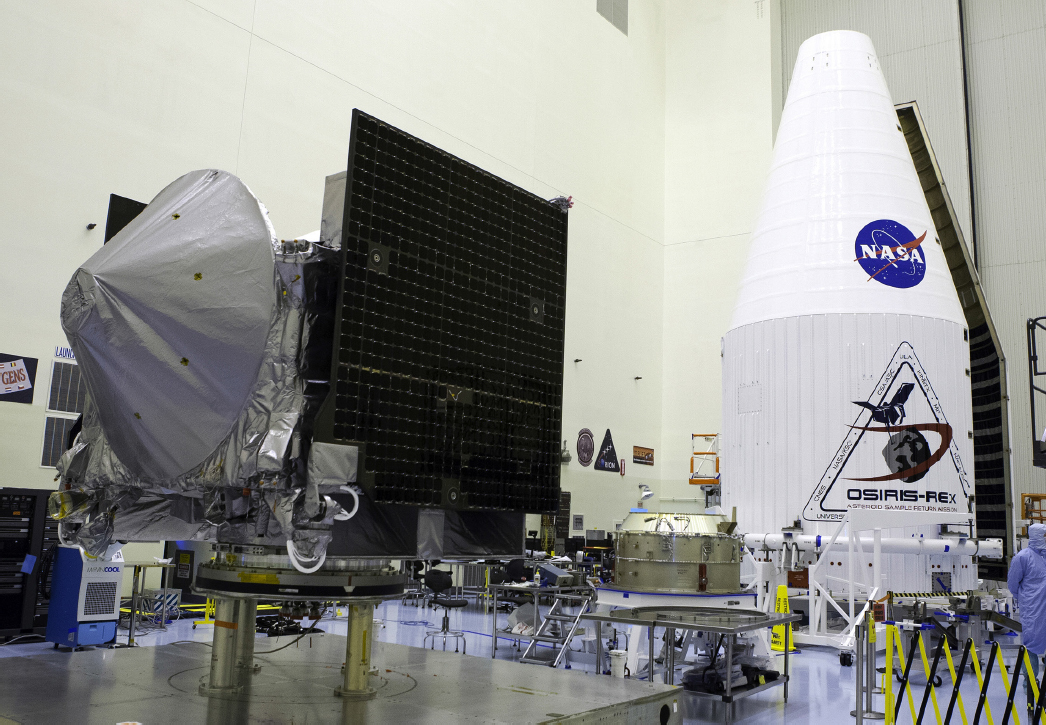
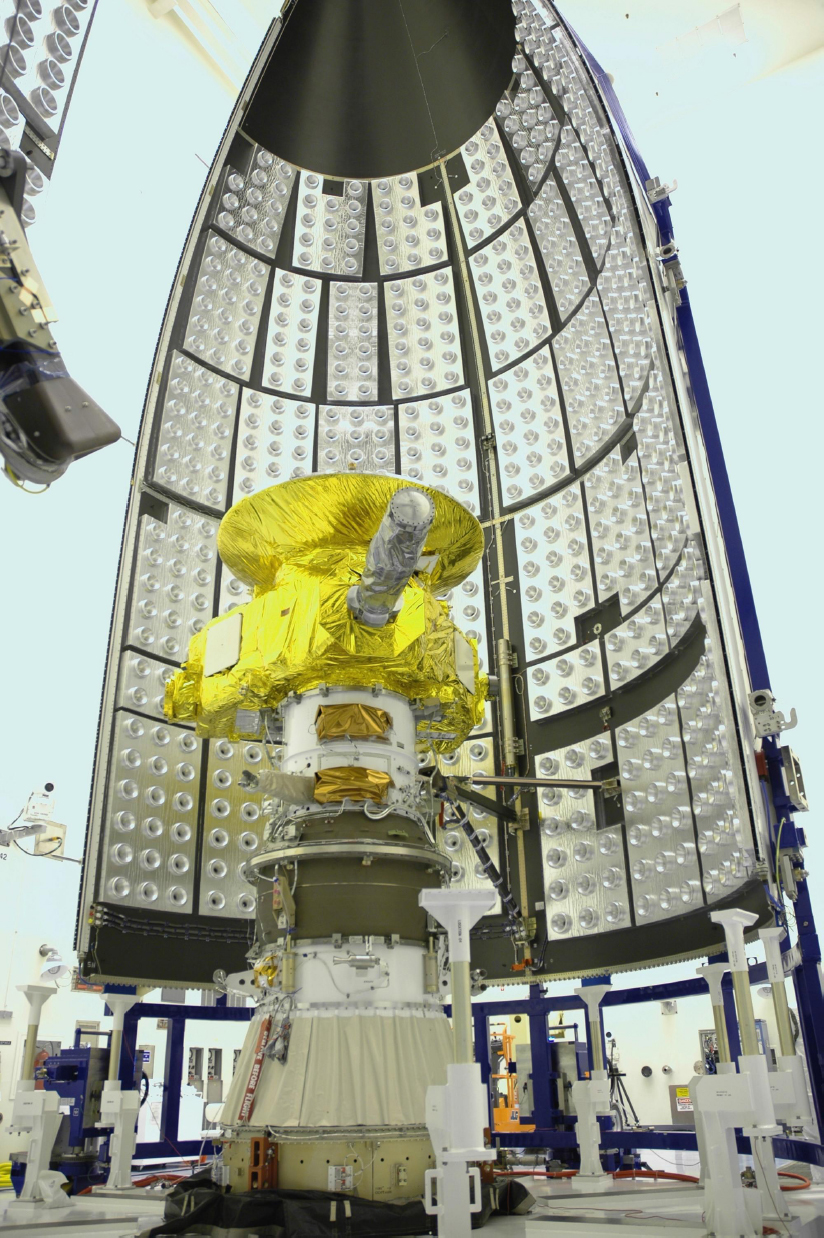
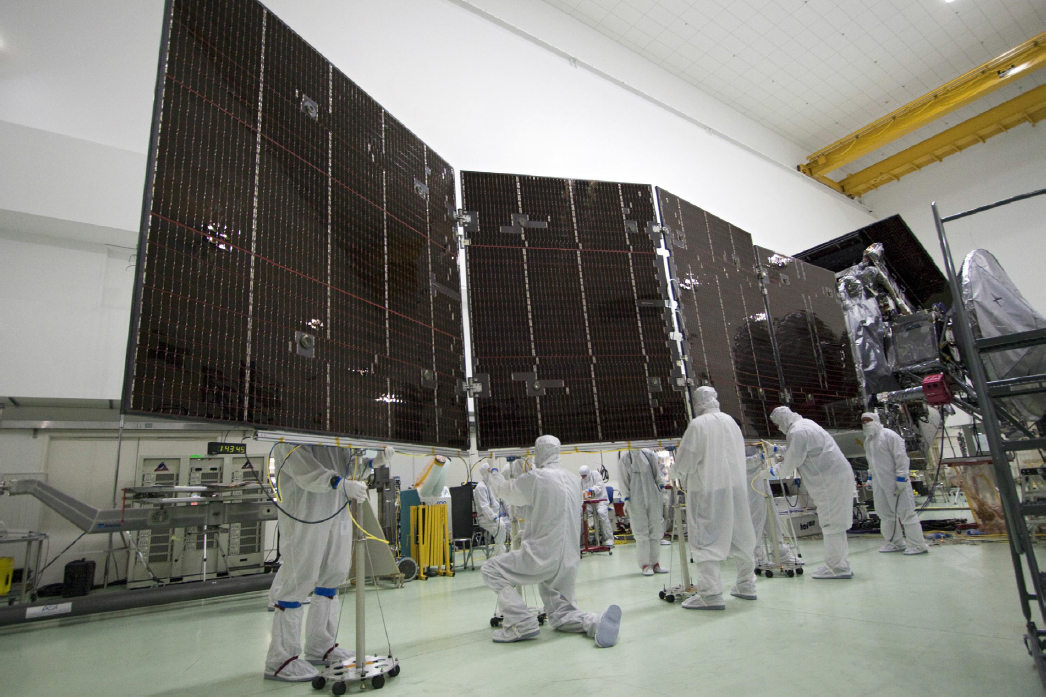
At the time of the survey, two medium (New Frontiers) missions were under way (New Horizons to Pluto and beyond, and Juno to Jupiter; the Origins, Spectral Interpretation, Resource Identification, Security, Regolith Explorer [OSIRIS-REx] was selected in May 2011—after the decadal survey was delivered—and launched to the asteroid belt in 2016). (See Figures 1.1, 1.2, and 1.3.) The survey proposed modest but significant changes to the cost cap for this class of mission and two mission opportunities were advocated for 2013-2022. The survey also proposed to cap New Frontiers missions at $1.0 billion excluding the launch vehicle. The survey chose five candidates for the New Frontiers 4 opportunity:
- Comet Surface Sample Return,
- Lunar South Pole-Aitken Basin Sample Return,
- Saturn Probe,
- Trojan Tour and Rendezvous, and
- Venus In-Situ Explorer.
This list was subsequently augmented for the second (New Frontiers 5) opportunity, adding
- Io Observer and
- Lunar Geophysical Network.
An “Ocean Worlds Program” was not addressed by the decadal survey committee, but has subsequently garnered interest within the scientific community due to discovery of candidate Europa plumes, hydrothermal activity on Enceladus, a Titan subsurface ocean, and related discoveries.2 NASA added—without a formal Academies endorsement—two Ocean Worlds concepts (Titan, Enceladus) to the New Frontiers 4 list.
___________________
2 There is a misconception within the scientific community that Congress mandated that Ocean Worlds concepts be added to the New Frontiers mission line. The NASA Appropriations Act of 2015 called for the creation of a NASA Ocean Worlds Program but did not direct that it be incorporated into the New Frontiers program line.
Large Missions
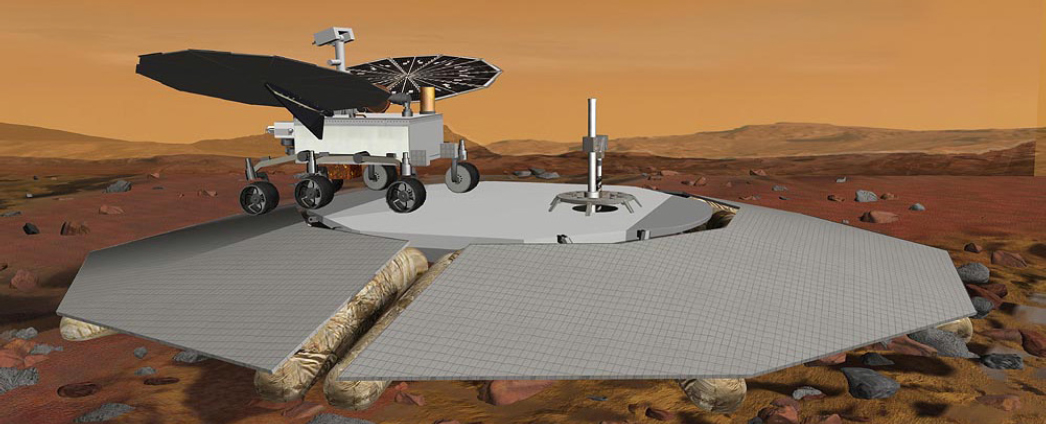
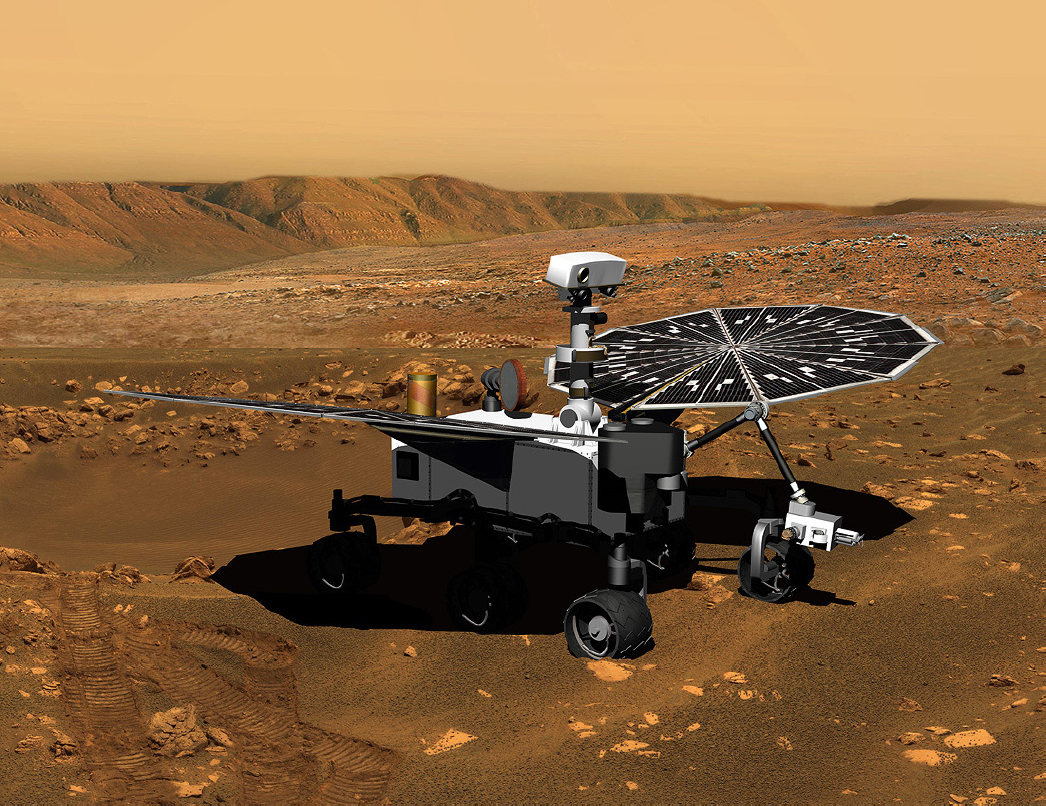
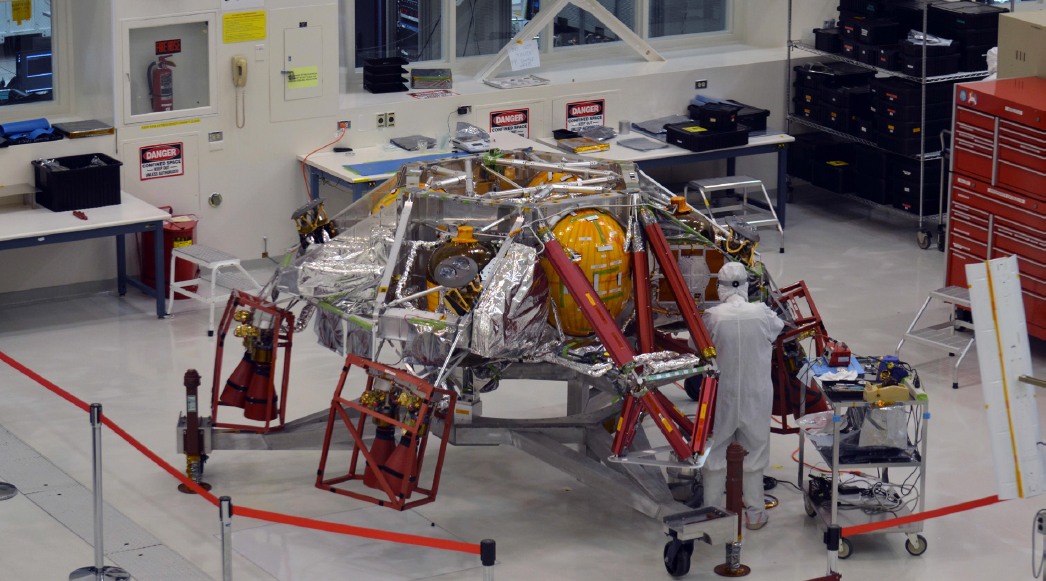
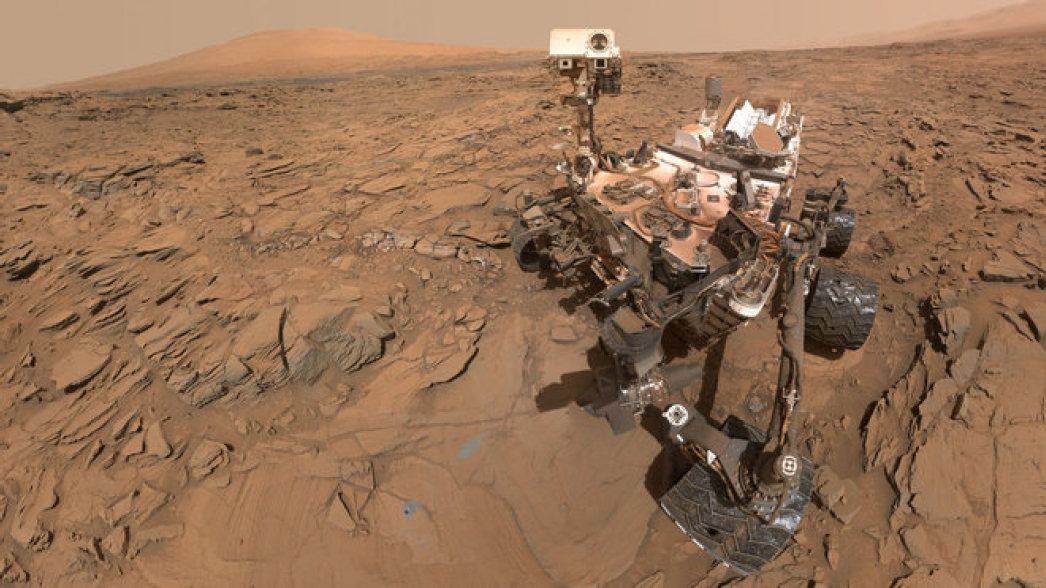
The large strategic (flagship) mission category was the most difficult challenge presented to the survey because all of the options under consideration proved to be of higher cost than originally anticipated. The highest priority was a Mars rover (then called MAX-C, now called Mars 2020; see Figures 1.4, 1.5, and 1.6); a first step in the return of samples from Mars, but with a mission architecture that has heritage from the Mars Science Laboratory/Curiosity mission (see Figure 1.7). This choice was contingent on reducing the cost to $2.5 billion by FY 2015 (the original CATE estimate was $3.5 billion). This mission was conceived to have significant scientific return in addition to being the first step in a campaign to return samples, but it also meant an implicit commitment beyond the time frame of the decadal survey.
The second priority large strategic (flagship) mission was a Europa orbiter (referred to as the Jupiter Europa Orbiter, or JEO, mission), but here too, the choice was contingent on the development of a mission design that was much reduced in cost from the original concept, which the CATE estimated at $4.7 billion. This has now become the Europa Clipper, which achieves many but not all of the science goals identified for the Jupiter Europa Orbiter.
The third large mission proposed was the Uranus Orbiter and Probe mission. The choice of Uranus over Neptune was for practical reasons (trajectories, flight times, and cost), as opposed to scientific ones—the decadal survey committee stated that both ice giants and their moons are equally scientifically interesting. The survey
concluded that it should be possible to initiate this mission in the current decade, even with both the Mars and Europa missions in place, although it recognized that a constrained budget might cause delay and offered the same cautionary guidelines on budget that applied to Mars and Europa.
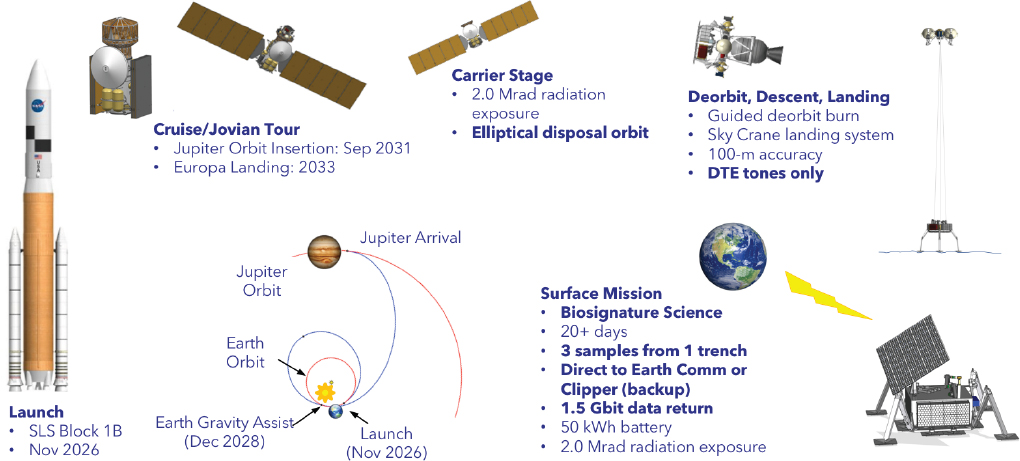
With respect to Europa, since Vision and Voyages, there has been congressional interest in a Europa lander. The decadal survey committee addressed the potential scientific significance of a “far term” Europa lander mission as part of the search for life, stating that “a key future investigation of the possibility of life on the outer planet satellites is to analyze organics from the interior of Europa. Such analysis requires either a lander in the far term or the discovery of active Enceladus-style venting, which would allow analysis from orbit with a mission started in the next decade.” A Europa lander was not in the prioritized list of missions in the Vision and Voyages recommendations for this decade, and no mission concept for a lander was evaluated or subjected to the CATE process like the other large strategic (flagship)-class missions. (See Figure 1.8.)
NASA’s Planetary Research and Analysis Programs
The survey found that the research and analysis (R&A) programs are heavily oversubscribed and recommended that NASA
- Increase the R&A budget for planetary science by 5 percent above the total finally approved FY 2011 expenditures in the first year of the coming decade, and
- Increase the budget by 1.5 percent above the inflation level for each successive year of the decade.
NSF-Funded Research and Infrastructure
The survey recognized that the ground-based observational facilities supported wholly or in part by NSF are essential to planetary astronomical observations, both in support of active space missions and in studies independent of (or as follow-up to) such missions. They concluded that their continued support is critical to the advancement of planetary science.
Technology Needs
The survey offered many specific examples of coming challenges in technology, but also provided a summary of the core needs:
- Reduction of mass and power requirements for spacecraft and their subsystems;
- Improved communications capabilities yielding higher data rates;
- Increased spacecraft autonomy;
- More efficient power and propulsion for all phases of the missions;
- More robust spacecraft for survival in extreme environments;
- New and improved sensors, instruments, and sampling and sample preservation systems; and
- Mission and trajectory design and optimization.
Since the future of planetary science depends on a well-conceived, robust, stable technology investment program, the survey strongly recommended that a substantial program of planetary exploration technology development should be reconstituted and carefully protected against all incursions that would deplete its resources. They concluded that this program should be consistently funded at approximately 6 to 8 percent of the total NASA Planetary Science Division (PSD) budget. (See Figure 1.9.)
Humans in Space
For the foreseeable future, humans can realistically explore only the surfaces of the Moon, Mars, Phobos and Deimos, and some asteroids. The Apollo experience suggests that robotic missions to targets of interest will undoubtedly precede human landings. The survey observed that the objectives of human exploration precursor measurements focus mainly on issues regarding health and safety and engineering practicalities, rather than science. Although there are a number of examples where the interests intersect—for example, finding a resource like water—the motivation and ultimate data applications of the two goals are typically quite different. The survey expressed concern that human spaceflight programs can impact space science programs and endorsed previous recommendations for budgetary firewalls. (See Figure 1.10.)

Recommended Program Descope Options
The decadal survey fully recognized the possibility that both NASA budgets and development challenges could impact execution of its recommended program. To help address this possibility, the survey provided the following decision rules to be used for planetary science program descopes:
- Increased funding for planetary exploration could make even more missions possible. If funding were increased, the committee’s recommended additions to the plans presented above would be, in priority order:
- An increase in funding for the Discovery program,
- Another New Frontiers mission, and
- Either the Enceladus Orbiter or the Venus Climate Mission.
- It is also possible that the budget picture could turn out to be less favorable than the committee assumed. This could happen, for example, if the actual budget for solar system exploration is smaller than the projections the committee used. If cuts to the program are necessary, the committee recommends that the
- first approach should be de-scoping or delaying large strategic (flagship) missions. Changes to the New Frontiers or Discovery programs should be considered only if adjustments to large strategic missions cannot solve the problem. And high priority should be placed on preserving funding for R&A programs and for technology development.
THE COMMITTEE’S CHARGE AND TASKS
NASA is at the midpoint of the 10-year horizon of the decadal survey (which covers the years 2013-2022). At NASA’s request (and as required by the NASA Authorization Act), the National Academies of Sciences, Engineering, and Medicine convened an ad hoc committee to conduct a midterm assessment of NASA’s planetary science program.
The midterm study was assigned the following tasks:
- Describe the most significant scientific discoveries, technical advances, and relevant programmatic changes in planetary sciences over the years since the publication of the planetary decadal survey (Vision and Voyages).
- Assess the degree to which NASA’s current planetary science program addresses the strategies, goals, and priorities outlined in Vision and Voyages and other relevant National Research Council (NRC) and National Academies reports, and assess NASA progress toward realizing these strategies, goals, and priorities, and effectiveness in maintaining programmatic balance.
- With respect to the Mars program within the planetary science program, the committee’s assessment will include:
- The PSD’s Mars exploration architecture and its responsiveness to the strategies, priorities, and guidelines put forward by the National Academies’ Vision and Voyages and other relevant National Academies Mars-related reports;
- The long-term goals of the PSD’s Mars Exploration Program and the program’s ability to optimize the science return, given the current fiscal posture of the program;
- The Mars exploration architecture’s relationship to Mars-related activities to be undertaken by foreign agencies and organizations; and
- The extent to which the Mars exploration architecture represents a reasonably balanced mission portfolio.
- Recommend any actions that could be taken to optimize the science value of the planetary science program, including how to take into account emergent discoveries since the decadal survey in the context of current and forecasted resources available to it.
- Provide guidance about implementation of the decadal survey’s recommended mission portfolio and decision rules for the remaining years of the current decadal survey, but do not revisit or redefine the scientific priorities or mission recommendations from Vision and Voyages.
- Recommend any actions that should be undertaken to prepare for the next decadal survey, such as community discussion of science goals, potential missions, and programmatic balance, and NASA support of potential mission concept studies.
THE COMMITTEE’S REVIEW PROCESS
The midterm assessment committee—comprised of planetary mission principal investigators (PIs), other scientists, experts in technology and programmatic issues, as well as individuals who served on the decadal survey committee—conducted its review, deliberations, and assessment over the course of five meetings.3 The Vision and
___________________
3 These meetings were held in May, July, August, and November 2017, and in February 2018. Shortly before the committee’s first meeting, the Mars assessment task was added to the statement of task, enlarging both the scope of the study and the size of the committee. During the August 2017 meeting, NASA unveiled a new architecture for accomplishing Mars sample return, which further expanded the issues that the committee needed to address. As a result, the committee adjusted its plans for delivery of its final report.
Voyages report provided the recommendations and priorities against which the current NASA planetary program was assessed. The committee formulated questions to NASA Science Mission Directorate (SMD) and the PSD leadership, mission team leadership, mission support infrastructure experts, and program cost analysts, who then briefed the committee on their programs and responded to the questions. They provided briefing charts as well as written responses to follow-up questions.
Consistent with the charge, the committee’s review covered not only missions envisioned at the time of the decadal survey but also new mission concepts that have emerged since the decadal survey, such as possible use of CubeSats, as well as commercial and entrepreneurial interest in planetary exploration.
The committee deliberations leading to the findings and recommendations in this report focused on assessing the briefings and follow-up questions in terms of how well the PSD’s program is following the recommendations in the Vision and Voyages report.
ORGANIZATION OF THIS REPORT
The findings and recommendations of the midterm assessment are provided in this report. They address the committee’s review tasks as follows:
- Chapter 2 addresses task 1—recent scientific discoveries and their impact on the current program.
- Chapter 3 responds to task 2—the assessment of how well the current NASA planetary science program (with the exception of the Mars Exploration Program, which is found in Chapter 4) meets the intent of the recommendations provided in the Vision and Voyages report.
- Chapter 4 addresses task 3, technology.
- Chapters 3-6 address task 5, providing guidance about implementation of the decadal’s recommended mission portfolio for the remainder of the decade.
- Chapter 5 addresses task 4, the strategic vision, architecture, content, and overall balance of the Mars program.
- Chapter 6 addresses task 6 and provides recommendations for mission studies in preparation for the next decadal survey as well as process-improvement recommendations for science program management.
There have been many impressive planetary science mission accomplishments and scientific discoveries since the publication of Vision and Voyages. NASA landed the Curiosity rover on Mars in 2012, and flew the New Horizons spacecraft past Pluto in 2015. The Cassini spacecraft ended its long and distinguished exploration of the Saturn system in 2017, and Juno began its exploration of Jupiter’s atmosphere and magnetosphere. (See Figure 1.11.) The Mercury Surface, Space Environment, Geochemistry and Ranging (MESSENGER) mission completed its exploration of Mercury, and Dawn explored Vesta and continues to observe Ceres. Spacecraft such as the Mars Reconnaissance Orbiter, Odyssey, and the Lunar Reconnaissance Orbiter are in their extended mission phases and continue making important scientific discoveries. NASA has also contributed instruments and provided other support to foreign partner missions, such as the European Space Agency’s highly successful Rosetta mission, which carried two U.S. instruments.
While this report was in its final stages, the Opportunity rover experienced its five-thousandth sunrise on Mars, but had gone to sleep during a massive Mars-wide dust storm, hopefully to awaken again soon and continue its extraordinary mission.
REFERENCE
NRC (National Research Council). 2011. Vision and Voyages for Planetary Science in the Decade 2013-2022. The National Academies Press. Washington, DC.


