Practices and Standards for Plugging Orphaned and Abandoned Hydrocarbon Wells: Proceedings of a Workshop (2025)
Chapter: 7 Advances in Plugging and Abandonment for Idled Wells
7
Advances in Plugging and Abandonment for Idled Wells
INTRODUCTION
In the final session of the workshop, planning committee member and moderator Mileva Radonjic, Oklahoma State University, invited speakers to discuss advanced technologies for orphaned and idled wells. The goal of the session was to provide an overview of the industry’s highest standards for plugging and abandonment and to begin to break existing silos across disciplines and communities.
LESSONS LEARNED FROM THE AMERICAN ASSOCIATION OF PETROLEUM GEOLOGISTS: 2020–PRESENT
Susan Nash, American Association of Petroleum Geologists (AAPG), said that AAPG’s Division of Environmental Geology aims to preserve the integrity of the environment, especially with consideration for oil and gas operations and issues related to groundwater, surface water, and induced seismology. She stressed that this mission can be achieved by communicating, sharing information, and collaborating across disciplines as well as by leveraging new technologies such as artificial intelligence (AI), large language models, and analytics.
Nash explained that AAPG shares information via workshops, webinars, research conferences, an annual convention, and publications such as AAPG Bulletin and AAPG Explorer. It also hosts platforms, for which AAPG membership is not required, that encourage discussion and collaboration. On the topic of orphaned and abandoned wells, AAPG has organized 10 webinars (e.g., on methane detection, modeling the subsurface, modeling cause and effect) since 2020 and several workshops in cities across the United States since 2022. The next workshop is scheduled for February/March 2025. These events extend beyond discussions of current regulations to include conversations about strategies to tackle the problem; she reiterated that knowledge sharing across the states
is key. New insights that states gather during these events relate to transparent data sharing, best practices, consistency, proactive and pre-emptive approaches for marginal wells (i.e., future orphaned wells), opportunities for both traditional (e.g., bonds) and innovative (e.g., carbon credits) funding sources, data integration and analytics (e.g., AI and machine learning), and repurposing.
Nash noted that platforms for knowledge sharing and support continue to expand across the field. For example, the U.S. Geological Survey (USGS) is developing databases to inform work with orphaned wells, abandoned wells, and remediation, and the Department of Energy is developing an initiative to help locate undocumented orphaned wells. Furthermore, AAPG’s Technology Showcases highlight new technologies (e.g., sensors for methane detection, monitoring, and measurement; materials for plugging; new analytics) and help people to connect with those working on the ground, to consider how to fund new technologies, and to develop new partnerships with technology companies to plug wells more efficiently and effectively.
Nash encouraged “reconfiguring our imagination” to think about data and problem-solving in new ways (e.g., how knowledge about modeling fluid flow at the subsurface can be used to understand how other wells could be affected and how new orphaned wells could be identified). She underscored that orphaned wells present far more than just a technology problem. Orphaned wells represent an opportunity for repurposing to augment the nation’s water and energy supply, as well as serving as potentially novel ways to expand the nation’s infrastructure.
NEW AND UPCOMING PLUGGING AND ABANDONMENT TECHNOLOGY
Thomas Lopez, ExxonMobil, noted that in 2024 alone, ExxonMobil will complete 2,000 plugging and abandonment projects globally. Before providing a general overview of emerging technologies, he underscored that rock-to-rock barriers are required to contain sources of inflow, and ExxonMobil’s principal objective is restoration of the caprock. He explained that barriers are meant to be permanent; thus, it is important to use proper materials that will not degrade over time, incorporate a long enough plug, be placed properly in an impermeable caprock with sufficient strength to withstand future recharge pressures, and meet regulatory and technical requirements.
Lopez mentioned that although ExxonMobil primarily focuses on offshore operations, many of its philosophies still apply to onshore operations. He encouraged exploring novel execution techniques (e.g., “through-tubing” cement plug placement) and avoiding activities that are too costly, complex, or time-consuming and do not improve long-term well integrity. He proposed that equipment always be “right-sized” (i.e., smallest-footprint equipment spread) and cost-effective for a job, and he suggested using a phased plugging and abandonment approach by grouping similar-phase tasks on different wells with the same equipment.
Lopez indicated that ExxonMobil prioritizes rigless plugging and abandonment in its offshore work to reduce equipment spread. Rather than pulling tubing and performing operations on the drill pipe, they leave the equipment in place, set mechanical plugs and
punch tubing, and place cement plugs from the surface. If contamination is a concern, longer plugs can be used.
Another concern in offshore operations relates to poor annular cement, Lopez explained. Using a contemporary approach, one might perforate and circulate cement around the backside or use section milling. Modern alternatives to these approaches include the use of (1) “perforate, wash, and cement,” in which holes are punched and cement is pumped across the interval; and (2) crept shale, in which one identifies, modifies, and hydraulically tests existing ductile shales that have formed a natural barrier around an exposed casing. New and developing technologies include casing ablation techniques (essentially vaporizing the casing using propellant) and a coil tubing erosional technique.
Cement bond logging tools, Lopez continued, are also in the process of being improved. Traditional versions of these tools require the removal of tubing to evaluate the cement behind the casing. However, newer versions operate “through-tubing” to discover what is behind the casing without removing the tubing. He pointed out that this technology is not yet mature; although it uses some machine learning, one would need to account for the exact combination of casing sizes, tubing sizes, weights, cement grades, and formation slowness. He also mentioned that this technology could enable work with less equipment on site in both the onshore and offshore environments.
Lopez next briefly highlighted a few alternate abandonment materials—for example, bismuth alloy plugs and thermite-based plugs. A thermite tool, which reaches 2,500°C in a wellbore, can be used to melt existing tubing, residual cement, casing, and formation. However, although it forms a type of plug, he said that this plug is not gas-tight and thus is not providing a seal. As a result, some companies are using the thermite plug first and then using a corrosion-resistant bismuth plug on top of it to provide a gas-tight seal. He noted that the latter option creates a very small plug with only a few feet of cement, which could be problematic if issues exist with the caprock.
Lopez explained that other companies are focused on addressing issues with leaking channels. Approaches include biomineralization (i.e., pumping in bacteria to convert salts in the fluid to a solid plug), mineral scale (i.e., pumping in incompatible waters to produce mineral scale in small spaces), dissolvable glass (i.e., dissolving glass into a stable solution, which precipitates on contact with cement, rock, or steel), and mechanical cement densification (i.e., creating dents in the casing that expand to compact the cement).
In closing, Lopez emphasized that many new approaches to plugging and abandoning wells are emerging, but barrier quality remains a top concern; new techniques have to be as good as or better than traditional techniques if they are to be deployed. Subsequent goals relate to continual gains in efficiency and safety; if efficiency improves by finding the right equipment and the right solutions, more wells can be plugged. Instead of thinking about others in the abandonment space as “competitors,” he encouraged cooperation and learning from one another’s experiences. He urged companies, universities, and governments to work together to support, promote, and test emerging technologies.
URBAN ABANDONMENT: CHALLENGES AND SOLUTIONS
Jesse Frederick, WZI, emphasized that location is key when selecting approaches for abandoning wells. Challenging logistical issues arise in urban areas in particular; for example, in Los Angeles, orphaned wells have been discovered on the properties of urban high schools and churches as well as when residents prepare to install pools or add basements to their homes. In addition to residential areas, he said that urban orphaned wells might be found in commercial areas, open areas, existing oilfields, and abandoned oilfields.
Frederick indicated that when these wells are discovered, several issues could arise relating to pressure recovery, bad or missing casing, missing well history, cement, equipment, project control, or contracts. He noted that a well in a recovering field is particularly dangerous owing to pressure recovery issues; if the well has a wellhead but no valves or gauges, one could penetrate a pressure barrier (i.e., encounter unexpectedly high pressures in the wellhead). Over the past two decades, industry professionals have learned that just because one has finished pumping a well does not mean that it has no pressure or will stay depressurized; as long as fluids are left in the reservoir that reflect the original composition, a new pressure will emerge and rebalance. Thus, he stressed that knowing the conditions of wells before entering them is critical. An important first step before contracting for work on an orphaned well is likely conducting “orphaned well triage,” which helps to highlight potential issues and determine priority based on achieving key objectives (e.g., whether the goal of a project is to reduce methane or to address an acute hazardous issue).
Elaborating on the potential issues and risks that contractors who plug and abandon wells face, Frederick explained that on the way into a well, problems could arise while removing the top seal, drilling out the first plug, finding fish, encountering loss of circulation, or encountering casing failures (e.g., casing corrosion, casing that was shot off and pulled, damaged casing, casing filled with debris). Tools to address these casing issues include active and passive ranging, drill collar severance, and concrete cure/temperature logging. On the way out of the well, issues could arise from a poor cement job or poor seals in the upper intervals. Well-to-well communication is a particularly challenging problem to address, he continued. When Los Angeles first became more urban, people were encouraged to put wells into a common well cellar; however, when wells are clustered, they start to communicate with each other as they age (i.e., near the surface where they converge into the common cellar–not in the reservoir). Frederick and his team developed a way to identify which wells are communicating, which is key for accurate pressure monitoring during well abandonment.
Turning to a discussion of various plugging materials, Frederick distributed several samples to workshop participants, including compressed bentonite (which expands to 250% of its volume and has low permeability), Class G cement, and novolac (a thermosetting bisphenol plastic). He noted that novolac can be used to seal micro-annuli, although it is difficult to manage and pressure control is essential. He encouraged the use of ample sand to act as heatsink when using novolac, given its high temperature; then, in combination with nanoparticles, it will form a firm bond to steel and provide a “superior” seal (see Figure 7-1). He added that sodium silicate does not achieve success-
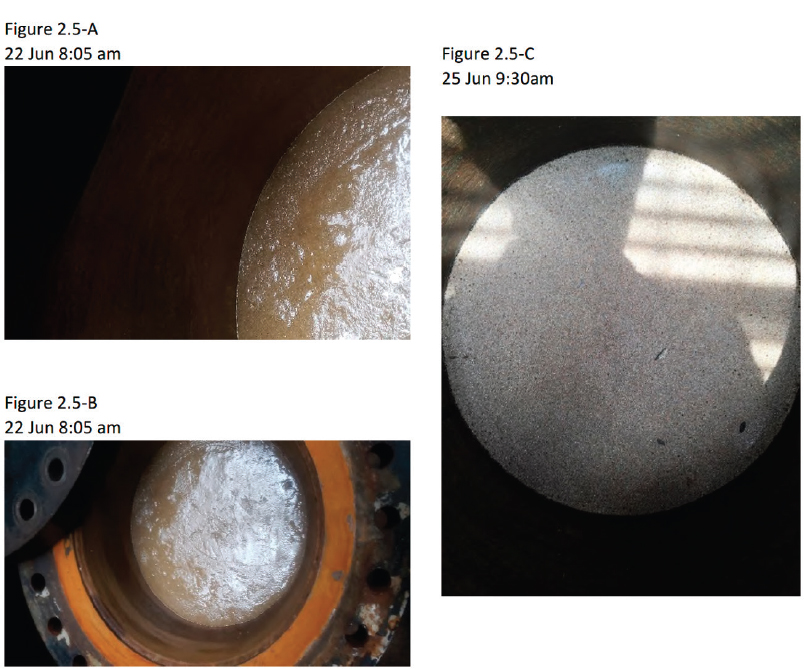
SOURCE: Frederick, 2024.
ful seals of micro-annuli. Furthermore, he agreed with the concerns expressed earlier in the workshop about inferior cement quality. For example, issues with cement could include a poor cure, channeling and micro-annuli, and leakage. Additives can lead to a better outcome, however, and he suggested latex as the best additive for cement to preclude gas.
Frederick next offered several suggestions to enhance project control for plugging and abandonment jobs. He suggested that dedicating funding and effort to sealing the top of the productive hydrocarbon layer could be beneficial. He also suggested the American Petroleum Institute (API) could release a series of recommended practices for wells of various types, which could be used by the private and regulatory sectors. This type of support could help to ensure that people have met regulatory and technical requirements and could be used as an instrument in the future to assign emissions reduction credits. He underscored the value of preparing back up plans for all plugging and abandonment jobs. Looking forward, he mentioned five additional suggestions for the industry: (1) create a “greenhouse gas bounty” on orphaned wells, (2) establish a rational requirement for completion of plugging and abandonment, (3) do not trust casing because it corrodes, (4) establish rational criteria for liability protections to
attract experienced teams (e.g., a temporary federal agency similar to the Resolution Trust Corporation to absorb liabilities of wells, if all criteria are met), and (5) establish equipment and qualification criteria for a site early in the process.
U.S. GEOLOGICAL SURVEY SCIENCE TO SUPPORT ORPHANED WELL-PLUGGING: HISTORICAL DRILLING, PRODUCED WATERS GEOCHEMISTRY, AND GROUNDWATER QUALITY
Nick Gianoutsos, USGS, provided an overview of oil and gas drilling in the United States, noting that the first commercial oil well was drilled in Pennsylvania in 1859, leaving a legacy of more than 160 years of drilling and abandonment. He indicated that plugging with cement became standard in the 1950s and wells abandoned before then likely were plugged insufficiently and are now “orphaned.” He defined orphaned wells as “unplugged, nonproducing oil and gas wells that have no responsible owner or party to remediate the well site, leaving the burden of plugging and reclamation to the local, state, or federal governments, and occasionally to landowners and nongovernmental organizations.” Recalling discussions from the first day of the workshop, he added that the United States now has nearly 150,000 documented orphaned wells and 250,000–750,000 undocumented wells, and according to one study by Raimi and colleagues (2021), the median cost of plugging each well is $76,000—an amount that varies by well age, depth, condition, and cement type.
Gianoutsos explained that USGS has created a series of products that can be used to enhance decision-making for plugging orphaned wells. In 2022, USGS released the first publicly available national-scale dataset (Grove and Merrill, 2022), including more than 117,000 orphaned wells across 27 states. The orphaned oil and gas well dataset includes API numbers and latitude and longitude coordinates. This dataset represents a snapshot in time as the population of orphaned wells continues to evolve as more wells are documented and other wells are plugged, but it remains a useful analytical tool, he said. For example, analysis reveals that when energy was in high demand and oil prices were high (e.g., in the 1940s and 1980s), more wells were drilled and a higher percentage of those wells became orphaned. Also, as technology has improved over time, well depth has increased. Currently, the deepest well in the dataset is 23,431 feet deep, drilled in the 1980s in Oklahoma. He added that vertical wells comprise 98% of the dataset (Merrill et al., 2023).
Gianoutsos noted that if a well plug is expected to last thousands of years, understanding the environment in which the plug will be placed is critical. He suggested use of the USGS Produced Waters Geochemical Database, which is available online and contains more than 100,000 samples of produced waters across the United States compiled over decades from published sources and from USGS sampling and analysis (Blondes et al., 2023). Samples include constituents and total dissolved solids as well as other information. He stated that the database’s user interface allows users to search for the area in which they will be working or for a specific formation. The database also contains critical information about other minerals, which could inform the repurposing process for wells.
Another useful resource, Gianoutsos continued, is the USGS dataset on groundwater quality near orphaned wells, which was created in 2024 (Haase et al., 2024). Groundwater quality measurements within 1 mile or less of an orphaned well were collected from the USGS dataset of 117,000 orphaned wells across the United States and from the USGS National Water Information System. This USGS dataset on groundwater quality contains water quality parameters and indicators for corrosivity, for example. Initially, he said that USGS was most interested in the impacts that orphaned wells are having on groundwater quality, but now it is exploring the impact that groundwater quality is having on orphaned wells. For example, areas with high corrosivity may have wells that deteriorate faster and could pose a more immediate risk to groundwater.
In summary, Gianoutsos remarked that as drilling practices and techniques have improved, different sets of challenges have arisen for well-plugging based on the location, era, geology, and geochemistry of each orphaned well. Understanding these differences is key for decision-making, and he underscored that USGS’s data products help enhance understanding of orphaned well emissions and inform efforts to plug orphaned wells.
ISOLATING ANNULI USING SHALE/SALT AS A BARRIER
Eric van Oort, University of Texas at Austin, presented an overview of RAPID (Rig Automation and Performance Improvement in Drilling), a consortium at the University of Texas at Austin that focuses on drilling and drilling automation, with a branch dedicated to well-plugging and abandonment and related well-integrity issues. He mentioned that RAPID is supported by industry; in particular, AkerBP, Equinor, and TotalEnergies have been strong proponents of the use of shale/salt as a barrier (SAAB).
van Oort pointed out that although cement is a good building material, it is not necessarily a good isolation material. In a comparison between ordinary Portland cement (OPC) and geopolymers (alkali-activated materials), he noted that OPC has higher compressive strength but lower tensile strength and significantly lower bond strength than geopolymers. When cement in used as a plugging material, he said that micro-annuli can form easily given this weak bond strength between the casing and the cement, causing a pathway for flow and cracks in the cement that will not heal. However, if geopolymers are damaged, they exhibit unique re-healing properties. As a result, some operators are replacing their OPC abandonment plugs with those made of geopolymers. However, he mentioned that it is unknown how stable and isolating either OPC or geopolymers will be over thousands of years, and accelerated aging tests cannot be conducted with cement.
Introducing a solution to this problem of unknown material durability, van Oort explained that 15 years ago, North Sea operators were reentering wells for abandonment, running cased-hole bond logs, and finding great bonding far above the top of cement. However, this phenomenon was only occurring in shale formations. The mechanism that enables this seal is creep—that is, a rock that behaves as a liquid and flows. Essentially, he indicated that the caprock is being replaced with actual caprock instead of an artificially introduced material with unknown behavior.
van Oort and his team began investigating this phenomenon for SAAB several years ago by building rock mechanics test setups (see Figure 7-2). They put cylindrical shale samples in a core holder, with a casing insert in the middle and an open annular space between them. The rock was confined, and downhole stresses and temperatures were applied. Perfect primary and secondary creep was observed filling in the annulus, forming a great barrier. When the barrier’s permeability was tracked over time, he said that it eventually reached that of the native shale, which is 1,000 times less than that of cement, thus creating a barrier that is 1,000 times better than cement. A breakthrough test was performed next to verify the integrity of this barrier: the sample measured 3 inches and held 1,000 psi differential pressure. These barriers were found to be extremely strong: a shale section of only a few feet had the barrier power of a cement column of several hundred feet.
During continued laboratory observation of the barrier’s behavior, van Oort indicated that the annulus closed over approximately 18 days. A finite element model was then constructed for simulation purposes, and parameters were extracted—in the field simulation, the annulus closed in approximately 90 days. However, he noted that barrier formation can be accelerated with thermal simulation—that is, placing a heater in the well to heat the casing and the formation behind it to accelerate the creep rate by orders of magnitude. He cautioned against heating to temperatures above 300°C, which would damage the shale.
van Oort explained that the types of North Sea shales that form these barriers naturally include geologically young shales with high clay content (with significant free and mixed-layered smectite), high porosity, high cation exchange capacity, low matrix cementation, low strength, low friction angle, and low compressional wave velocities. Whether North American shale/salt formations have these characteristics and display the same creep behavior remains unknown, and suitable candidates could be identified and tested in SAAB equipment. Furthermore, he and his team are preparing to run a new set of tests with larger samples for the second phase of SAAB experiments to determine if shale/salt creep can close micro-annuli and cracks in cement and re-establish annular pressure integrity. He shared that if an annulus is open and leaking methane, in the future one could stimulate the shale to form the annular barrier and set the abandonment plug (without the need for a rig) with geopolymers.
OPEN DISCUSSION
Radonjic moderated a discussion among the workshop speakers and participants. An online participant asked how USGS datasets are affected by the fact that spud dates for older wells were not always reported to or recorded by regulators. Gianoutsos responded that finding dates for the oldest wells in the United States is challenging, as drilling records started to become standard only in the 1950s. Thus, he said that the orphaned oil and gas well dataset was created by identifying wells with API numbers, gathering a spud or completion date from the S&P Global database, and mapping. Frederick suggested looking at archives of the Oil and Gas Journal, which dates back to 1902, for information on well activities categorized by location.
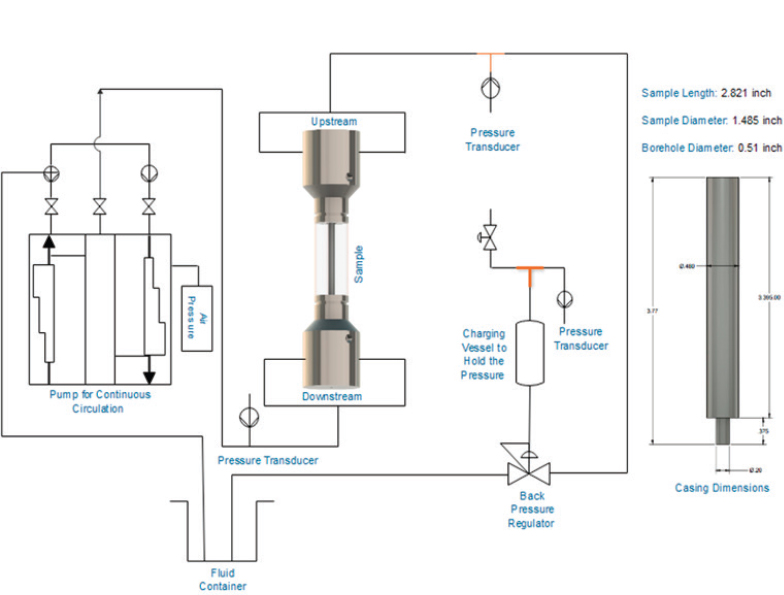
SOURCE: van Oort, 2024.
Mohammad Khan, AHP Tech, inquired as to whether a correlation exists in how the wells included in the USGS dataset on groundwater quality lowered the alkalinity or increased the corrosivity of groundwater. Gianoutsos noted that making a direct correlation is difficult. His team is collecting groundwater quality measurements near the wells but cannot link the source of the constituents in the groundwater quality, especially when active wells surround orphaned wells. He emphasized that the primary goal of the dataset is for people to develop a basic understanding of the groundwater quality where they are working.
Khan also highlighted a disconnect between the plugging and abandonment industry and the cement and concrete industry, the latter of which has many technological advancements that could benefit the former. He encouraged increased collaboration between the plugging and abandonment industry and the American Concrete Institute. Nash mentioned that those conducting research on material strength have participated in AAPG conferences, and Radonjic expressed her support for an interdisciplinary approach to explore new materials and additives. van Oort reiterated that researchers are looking actively for alternatives to cement owing to its limitations; for example, an earthquake can shear a casing cement bond interface easily and create a leakage path. Frederick urged people to keep regulatory approvals in mind when considering the use of innovative materials; he encouraged more “dynamic” approaches in the regulatory sector as new technologies are introduced.
Greg Lackey, National Energy Technology Laboratory, asked what type of information would be useful for van Oort to develop confidence in North American shale barriers. van Oort replied that he would need to see the shale’s properties and conduct SAAB tests, which are performed easily in the laboratory and use a standard protocol to determine whether the shale exhibits the appropriate behavior. Meg Coleman, Environmental Defense Fund, wondered if van Oort had considered the Bureau of Economic Geology as a source to test North American shales, but he responded that because some of their core samples are not well preserved and are dried out he has not pursued that path. In response to a request from Bryan McLellan, Alaska Oil and Gas Conservation Commission, van Oort encouraged operators to send core shale samples to his team for suitability analysis. Radonjic posed a question about the potential to use synthetic shale, but van Oort said that synthetic shale would not provide the degree of cementation seen in a real shale, and he would rather use field materials. He added that AkerBP currently is building shale barriers into their new well designs.
In response to a question from Nash, van Oort noted that distributed acoustic sensing networks have not been used to monitor for any micro-seismicity or other changes that could affect the integrity of shale barriers. Danny Sorrells, Railroad Commission of Texas, inquired about the temperature range applied for North Sea shales. van Oort explained that the optimum temperature to accelerate creep and form a better barrier is ~200°C, which can be achieved with a commercial heater. In theory, one could heat as high as 2,500°C with thermite, but that would be both unnecessary and detrimental to creep and re-healing properties.
An online participant posed a question about the role of petroleum landmen in finding, negotiating, and plugging orphaned and abandoned wells. Nash replied that even in cases in which an orphaned well is the responsibility of the state, the state might not own the minerals. This issue complicates the potential for carbon credits and who is entitled to them. A landman could help find both the title and the required surface owner permission as well as complete the mineral takeoffs and secure ownership. She highlighted the role of oil and gas attorneys in navigating these multi-ownership issues.


