Community-Driven Relocation: Recommendations for the U.S. Gulf Coast Region and Beyond (2024)
Chapter: 10 Challenges and Opportunities for Policy
10
Challenges and Opportunities for Policy
This chapter discusses the following:
- Challenges of the existing approach to community-driven relocation related to
- Communications and responsibilities relating especially to buyout programs and environmental hazard risk
- The role of insurance in community-driven relocation
- Issues related to household eligibility for existing buyout and relocation-related programs
- Issues related to program complexity, buyout process duration, and post-buyout requirements
- Economic justice issues including benefit-cost analysis (BCA), outdated cost determinations, funding match requirements, and replacement housing costs and safety
- Opportunities for innovations under the existing legal framework related to knowledge sharing and learning, reducing barriers to obtaining grants, addressing the cost-effectiveness criterion, and implementing other solutions that improve the fairness of current practices related to community-driven relocation
- Lessons that can be learned from New Zealand and Fiji related to national policies that address relocation
INTRODUCTION
In the previous chapter, the committee discussed the complex web of policies, programs, and funding involved in pursuing community-driven relocation. This chapter follows closely from the framework laid out in Chapter 9 to describe the challenges that arise as a result of this web and some potential solutions, which are further defined in recommendations made in Chapter 11. In this chapter, the committee provides an overview of the numerous challenges that households, local and state governments, as well as other community stakeholders face when navigating the relocation process; discusses ongoing innovations to the current system aimed at addressing some of these challenges; and summarizes two international community relocation case studies with lessons learned. The challenges fit into five overarching categories:
- lack of clarity of responsibility between individual households and government (at various levels);
- uneven access to and perverse incentives created by current flood insurance systems;
- funding delays and uncertainties created by unclear and inconsistent eligibility requirements and a patchwork of eligibility criteria;
- program designs that are too complex and long for homeowners and communities; and
- economic requirements and determinations that place specific individuals and groups at a disadvantage.
The discussion of each of these categories includes issues of fairness, with examples of innovations to increase fairness in the community-driven relocation process. This chapter also reflects many of the concerns the committee heard from community members at information-gathering sessions over the course of the study.
CHALLENGES OF THE EXISTING APPROACH
This section looks at some of the challenges around the relocation process, and the disaster response system more generally, as it currently stands in the United States. Areas of challenge examined here include communications and responsibilities, insurance, the relationship between disaster funds appropriations and determinations of household eligibility, program complexity, and a lack of economic justice. Many of these areas have been discussed in previous chapters; here, the committee gives a detailed picture of these particular challenges to lay the groundwork for envisioning more effective and equitable approaches.
Communication Challenges
As discussed in Chapter 7, there is limited communication and transparency about the voluntary buyout process among agencies and between agencies, leaders, and residents. Sentiments from Kevin McKinney of Flood Victims of Richmond at the committee’s first workshop in Houston, Texas,1 echoed this limited communication:
I think that our government and elected officials need to educate the public and we need to hold our elected officials accountable for this […] we need to educate our communities at least somehow in the buyout program process and tell them there is hope.
In some cases, communication about these programs has been poor, which can impede participation in voluntary relocation programs (National Academies of Sciences, Engineering, and Medicine, 2022c). Lessons learned from buyout practices (e.g., those described throughout this chapter, particularly in the section titled Opportunities for Innovation Under the Existing Legal Framework) undertaken by one community have not been effectively shared with other communities, which further highlights the lack of policy learning from relocations efforts in the United States (Greer & Binder, 2017). Since inclusivity, timing, and consistency have been communication challenges in previous relocation efforts (Bragg et al., 2021), policies encouraging effective communication may increase community dialogue about relocation efforts and could help frame and communicate relocation projects to residents (de Vries, 2020). At the committee’s information-gathering session on property acquisitions,2 Courtney Wald-Wittkop, Blue Acres program manager, commented on the importance of communicating at the individual homeowner level as well as at the community level throughout the buyout process:
I think we also learned that, you know, when we talk about flooding, it’s a people problem, right? This is where people are living, and it’s largely their biggest investment. And so, we have to recognize that flooding doesn’t just happen to individuals. It happens to communities as a whole. So, the conversation about where buyouts happen is maybe one-on-one with the homeowner, the sort of planning for buyouts and what can you do in terms of restoration after the fact; all of that needs to have a community-level
___________________
1 Comments made to the committee on June 8, 2022, during a public information-gathering session in Texas. More information is available at https://www.nationalacademies.org/event/06-08-2022/managed-retreat-in-the-us-gulf-coast-region-workshop-1
2 Comments made to the committee on December 13, 2022, during a virtual public information-gathering session. More information is available at https://www.nationalacademies.org/event/12-13-2022/managed-retreat-in-the-us-gulf-coast-region-perspectives-and-approaches-to-property-acquisitions-challenges-and-lessons-learned
focus. And we need to consistently say that these buyout programs are community oriented. They need to be involved.
Communication and Flood Risk Disclosure
The communication of risk between buyers, sellers, and governmental bodies is also an essential element of successful community-driven relocation. Disclosing flood risk, communicating and socializing flood risk to the public, and keeping the public informed of the latest science driving flood risks are key factors in keeping people out of harm’s way (Environmental, Social, and Governance Initiative, 2019). The process of buying and selling houses lacks transparency as the federal government (Scata, 2018) and many states do not have statutory or regulatory requirements that a seller disclose a property’s flood vulnerability to a buyer (Evans & Baeder, 2022; Frank, 2021; Henstra & Thistlethwaite, 2018; The Wharton School of the University of Pennsylvania, 2019). This is changing in some states, with New York, for example, recently passing legislation that requires that sellers inform buyers if the property is in a flood risk area or has experienced flood damage (New York State, 2023). Another example is the bill proposed in Harris County after Hurricane Harvey that requires a seller to post a disclosure notice for residential property regarding floodplains, flood pools, floodways, or reservoirs (Texas SB 339). This lack of communication and transparency is a challenge to relocation in that market drivers, such as housing demand and broader real estate development, pass on flood risks to residential buyers, who are unaware of property risks. As a result, people continue to buy homes in flood-prone areas, many of them unknowingly placing a household’s safety and financial security at risk (Frank, 2021; Hino & Burke, 2021). The need to equip communities with the information needed to “assess their climate risks” is highlighted as an objective in the National Climate Resilience Framework (White House, 2023, p. 17). The flipside of disclosing a property’s flood risk (as described in Chapter 9) is that it can contribute to a market-driven retreat wherein people who cannot afford to move are trapped in a home with decreasing market value. Kelly Main, executive director of Buy-In Community Planning, described this phenomenon at the committee’s webinar and suggested that buyout programs should be a safety net for people in this situation.3
Communication and Insurance
Additional challenges around communication arise around the role of insurance. Growing insurance crises, such as those in Louisiana and Florida, where premiums increase and insurers withdraw, have affected residents’
___________________
3 Ibid.
ability to maintain coverage (Frank, 2023; Ubert, 2017). When homeowners understand their potential flood risk, they are more likely to incorporate flood risk adaptation measures; similarly, when proper incentives are provided, housing demand within a floodplain can be reduced (Hemmati et al., 2021). Notably, although premium increases and insurer withdrawals can effectively minimize housing demand in floodplains, they can also disproportionately force lower-income residents out of their community and away from their jobs and social networks, potentially placing them in a more economically and socially precarious situation, despite having moved out of a floodplain.
Flood Risk Responsibility
Beyond communicating risks, the responsibility to manage those risks is shared by residents and government bodies. Research about risk management in non-U.S. countries (Snel et al., 2021; Hegger et al., 2017; Valois, Bouchard et al., 2020) suggests that there is a broader acknowledgment of the need for a shared responsibility between the government and homeowners, yet homeowners are reluctant to accept this responsibility (Snel et al., 2021). This shift in responsibility from government bodies to homeowners is occurring due to (a) an increase in risks requiring all actors (government, private sector, households) to engage; (b) a lack of governmental resources such as finances and labor availability for enabling and implementing mitigation programs; (c) limited beneficiaries of risk reduction due to government policies; (d) rising physical and mental health impacts to the individual or household; (e) conflicting timescales between implementation, current/future value of projects, and governance; and (f) private property rights, where ultimately the homeowner is the sole decision maker (Hegger et al., 2017; Snel et al., 2021; Valois, Bouchard et al., 2020). A clear understanding of the government’s role and responsibility to communicate risks and a homeowner’s understanding of their role and responsibility for household decision making are both critical to a transparent and equitable relocation process.
However, in many cases in the Gulf region and beyond, communication around risk and recovery needs between government and homeowners remains disconnected because of ineffective engagement and communication processes (Chapter 7). To address this disconnect, governments could increase residents’ flood risk awareness; improve the accessibility and timeliness of financial support; inform community members about and provide technical support for relocation options; and enact policies that aim to reduce flood risk, such as requiring new development to account for flood risk, requiring sellers to disclose flood risk, and requiring insurance providers to stipulate that homeowners build back to more
resilient standards—examples of efforts to increase risk awareness from seller to buyer include New York State and Harris County, Texas, as described above. Other opportunities for the government to improve on flood risk communication can occur during the reclassification of regulatory floodplains.
The establishment of trusted communication channels between government bodies and homeowners could foster lasting relationships and result in effective communication and long-term transparency of process. As such, homeowners would be better positioned to assert responsibility for learning about and acting on their risks, including seeking out potential solutions that are available to reduce those risks (e.g., grants, financial aid); actively participating in engagement processes; using insurance, flood risk disclosure, and other market drivers that might impact the real estate market; and participating in collaborative processes to foster collective agency.
The Role of Insurance
Disaster insurance plays a critical role in recovery and securing financial resilience to disasters. Without insurance, most households lack sufficient savings to cover emergency expenses and the cost of rebuilding after a disaster. According to recent survey, over 10 percent of U.S. homeowners lack homeowners’ insurance, an increase from around 5–8 percent a few years prior (Fields, 2023). Residents, especially those in poverty and of low socioeconomic status, who cannot afford costly disaster insurance (i.e., flood or earthquake) may have more difficulty recovering after disasters as a result (Substance Abuse and Mental Health Services Administration, 2017). Insurance enables households to mitigate damage costs and financial risk, enhancing recovery after disasters, as an inch of flooding can cost upward of $25,000 (Risk Factor, n.d.).4 In addition, widespread uptake of flood insurance policies improves local economic recovery by increasing visitations to local commercial establishments, while a lack of flood insurance can widen inequalities in the post-disaster setting (Kousky, 2022).
However, the current insurance system also presents barriers to community-driven relocation by encouraging reconstruction to previous standards in the same high-risk locations rather than to improved resilience standards, thereby not addressing future risks. Furthermore, many households struggle to afford insurance premiums, making them more vulnerable when a disaster strikes and, in some cases, ineligible for federal recovery funding (which
___________________
4 Risk Factor draws on data from government agencies including the National Oceanic and Atmospheric Administration, National Aeronautics and Space Administration, and U.S. Geological Survey to produce damage calculations. More information is available at https://help.riskfactor.com/hc/en-us/articles/360058025433-Data-sources-used-to-determine-a-property-s-Flood-Factor
may include a buyout option) that is tied to holding an insurance policy. Data reported by the National Association of Insurance Commissioners place Florida, Louisiana, and Texas in the top five most expensive states according to average homeowners’ insurance premiums, with Mississippi coming in sixth (Insurance Information Institute, 2023). The lack of affordability was echoed by Chris Monforton, chief executive officer at Habitat for Humanity Mississippi Gulf Coast and speaker at the committee’s virtual Focused Discussion: Gulf Coast Community Stakeholder Perspectives from Mississippi and Alabama.5
I got my insurance renewal on Saturday, and it doubled. It doubled from $6,000 to $12,000 a year. In Louisiana, there’s two companies writing policies now. People are not able to afford it, and it’s going to continue getting worse.6
Insurance companies use climate and risk modeling to forecast their future risk and determine whether it is in their best financial interest to continue providing coverage to a given area (Gall, 2023). As a result, multiple large U.S. insurance companies have stopped covering home policies in some states, including California, Florida, and Louisiana (Gall, 2023). Although insurance companies keep their calculations private, pulling out of an area sends a clear message. One impact of this crisis is that states and residents rely more heavily on public wind pools (i.e., insurance coverage for residents and businesses in coastal areas usually for wind damage),7 such as Citizens Property Insurance in Florida and Louisiana, which are insurers of last resort. These nonprofit organizations were put into place by the state when a severe event made clear that there was insufficient availability or affordability of insurance from the private sector. Although Citizens Property Insurance started as a last resort, it is now the top home insurer in Florida. While insurers of last resort provide coverage, they are typically more expensive for minimal protection (Clow, 2023). Related to housing costs (which include the cost of insurance), the committee also acknowledges that banks are changing lending policies by not lending as much to low-lying areas (i.e., bluelining), and credit rating agencies are assessing bond ratings and costs based on resilience. These changes do not necessarily account for the equity and well-being of households and local governments (Chung, 2019; Keenan & Bradt, 2020).
___________________
5 See footnote 2.
6 Limits in access to insurers through private companies lead people to insurers of last resort, which in Louisiana is Louisiana Citizens.
7 More information about wind insurance pools is available at https://www.air-worldwide.com/publications/air-currents/2013/How-Coastal-Wind-Insurance-Pools-Can-Own-the-Risk/
Despite these barriers, there are promising practices using the National Flood Insurance Program’s (NFIP’s) Community Rating System (CRS), as well as new insurance developments. For example, following Hurricanes Ivan and Katrina, which hit the U.S. Gulf Coast in 2004 and 2005, respectively, insurance companies began raising rates and reducing coverage, causing many residents to drop their wind insurance. In response, the director of the Mitigation Resources Division of the Alabama Department of Insurance created a new program called Strengthen Alabama Homes.8 The program is modeled on the work done by the Insurance Institute for Building and Home Safety, which aims to reduce a property’s risk of being damaged or destroyed in a storm by fortifying homes, subsequently making the home less risky for companies to insure. The program is funded by insurance industry fees and has been successful in increasing insurance coverage in Alabama (Berlin, 2023). The NFIP and additional insurance developments that leverage parametric models to fill coverage gaps in high-risk areas and offer immediate relief post-disaster are discussed further in the sections below.
National Flood Insurance Program
Although the Federal Emergency Management Agency (FEMA) is one of the main potential funders for community-driven relocation projects, the NFIP (administered by FEMA) is one of the main reasons people are able to repair homes and businesses following major disasters and in turn to continue to live on the coast, even as it becomes increasingly costly and dangerous.9 The NFIP was created by Congress in 1968 with the goals of reducing flood impacts by (a) “providing affordable insurance to property owners” who may experience flooding so they could recover quickly and (b) “encouraging communities to adopt and enforce floodplain management regulations” by requiring communities wishing to benefit from NFIP programs to adopt such regulations (FEMA, 2022d; Government Accountability Office [GAO], 2020b). Unfortunately, according to reporting by the New York Times in 2020, based on FEMA data, as many as 250,000 insurance policies violate NFIP requirements, and these insured properties account for over 1 billion dollars in flood claims over the past decade (Flavelle & Schwartz, 2020). Furthermore, the NFIP’s land-use criteria, which
___________________
8 More information about Strengthen Alabama Homes is available at https://strengthenalabamahomes.com/
9 FEMA states that any homes or businesses in high-risk flood areas that have mortgages through a government-backed lender are required to have flood insurance (FEMA, 2022c). In many high-risk flood areas, private insurance companies have stopped offering coverage, signaling that the economic risks outweigh the benefits, and yet the NFIP and state subsidies (e.g., in Florida, Texas, and Louisiana) continue to make it feasible for those who can afford insurance to live on the coast.
“set the baseline for building and zoning ordinances” and are required for NFIP eligibility, haven’t been updated since 1976 (Rush, 2022). In addition to flood insurance and floodplain management, the NFIP also requires that FEMA identify and map floodplains (FEMA, 2002). Still these maps do not take into account the effects of climate change that have been projected to increase 100-year flood levels in U.S. Gulf Coast counties, with 100-year flood events estimated to occur every 5–30 years (average across U.S. Gulf Coast counties) by the end of the 21st century (Marsooli et al., 2019). Nor do floodplains account for pluvial flooding due to cloudburst events, a growing concern in many communities (see Chapter 2).
Moreover, these subsidized policies do not account for the actual cost of living in high-risk areas, and the NFIP has been criticized for subsidizing insurance rates, thereby incentivizing development in flood-prone areas (Craig, 2019; Knowles & Kunreuther, 2014). This results in repetitive-loss properties that receive multiple claim payouts that far surpass insurance premiums. Repetitive-loss properties accounted for 30 percent of claim payouts between 1978 and 2004 but only about 1 percent of insurance policies (King, 2005). Craig (2019, p. 217) asserts that these properties are evidence of the NFIP facilitating building and rebuilding in risky areas “rather than encouraging property owners to migrate inland.” These properties have become political and financial issues in U.S. Gulf Coast states. In 2005, following Hurricanes Katrina, Rita, and Wilma, the NFIP paid out more than it had in all prior years and ended up nearly 17 billion dollars in debt (GAO, 2020b).
This is changing with Risk Rating 2.0, a new FEMA methodology that was implemented in phases between October 2021 and April 2023 that is shifting the program to charge rates that are “[actuarially] sound, equitable, easier to understand, and better reflect a property’s flood risk.”10 Across the U.S. Gulf Coast, Risk Rating 2.0 impacted premiums differently. For example, between May 2020 and October 2021, in Louisiana, 16.7 percent of single-family home NFIP policy premiums decreased while 74.3 percent increased by $0–$10, 6.8 percent increased by $10–$20, and 2.1 percent increased by more than $20 (FEMA, n.d.). Notably, these changes do not reflect total rate changes as statutory requirements limit increases to 18 percent per year.11 Risk Rating 2.0 does not currently have any means-tested affordability program and would need Congress to provide that directive. As of April 2023, only 47 of Louisiana’s communities participated in the CRS; however, a national voluntary program to reduce premiums by recognizing community floodplain management programs that exceed NFIP
___________________
10 More information about Risk Rating 2.0 is available at https://www.fema.gov/flood-insurance/risk-rating
11 Ibid.
minimums is underway (FEMA, 2023b). Moreover, none of these participating communities meet the optimal Class 1 designation, which would allow for a 45 percent discount on premiums (FEMA, 2023b).
A recent analysis of over two decades of CRS classes and actions and NFIP flood loss data showed that “participation in CRS is associated with reduced flood damage claims,” with percent reduction in claims roughly matching premium discounts (Gourevitch & Pinter, 2023, p. 5). Buyouts and acquisitions and other structural projects such as floodproofing and elevation were among the CRS activities associated with the greatest reduction in claims (Gourevitch & Pinter, 2023). Gourevitch and Pinter (2023, p. 8) suggest that because CRS benefits (in the form of premium discounts) go to individual policyholders, they create “perverse incentives for floodplain development,” and a new model, which directs benefits to local governments for further flood mitigation, could be more beneficial.
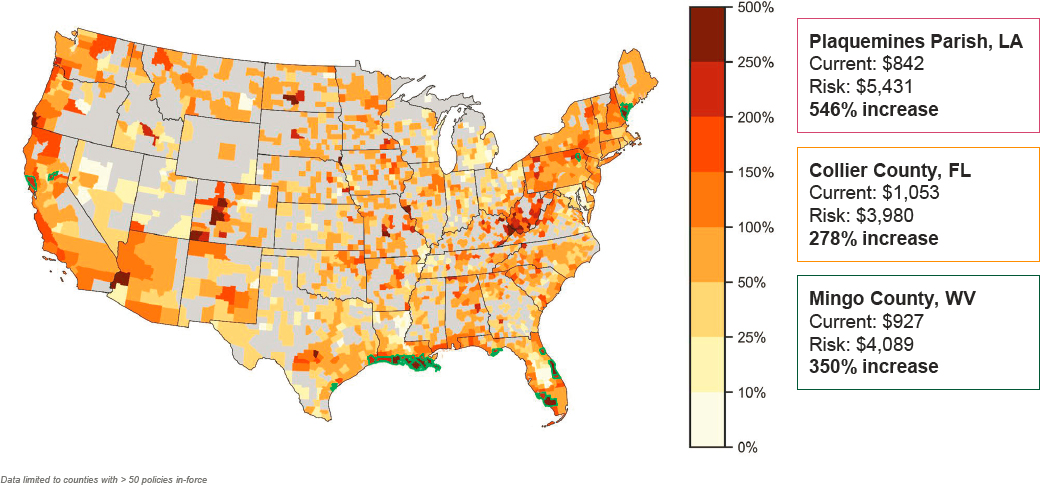
FEMA estimates that on average, nationwide, only about 35 percent of households in Special Flood Hazard Areas have flood insurance. In comparison, less than 2 percent of those outside this area have flood insurance (FEMA, 2018). There is, however, high regional variation in flood insurance uptake, with take-up rates of NFIP insurance much higher in communities along the Gulf and East coasts (Kousky & Lingle, 2018). However, according to a representative survey of residents from 24 counties on the Texas Gulf Coast affected by Hurricane Harvey, only 23 percent of those whose homes were damaged had flood insurance (Hamel et al., 2017). Hamel et al. (2017) did not report whether or not survey participants lived in a Special Flood Hazard Area. Increasing rates through Risk Rating 2.0 could lead to a drop in policies unless there is a greater emphasis on improving community ratings and optimizing premium discounts. In April 2023, FEMA released data on the difference between the average current cost of insurance and the average risk-based cost of insurance expected by state, county, and ZIP code.12 The expected increases are an average of $1,124 in Alabama, $1,256 in Florida, $1,091 in Louisiana, $1,279 in Mississippi, and $629 in Texas. In coastal areas in Florida and Louisiana increases are expected to be especially substantial. For instance, Plaquemines Parish, Louisiana, will experience an average increase of 546 percent (and does not participate in CRS), while a 278 percent increase is expected in Collier County, Florida (which does participate in CRS at Class 5 or a 25% discount; see Figure 10-1).13
___________________
12 Data by price range or by state, ZIP code, and county level are available at https://www.fema.gov/flood-insurance/work-with-nfip/risk-rating/single-family-home
13 More information about CRS classes and discounts is available at https://www.fema.gov/floodplain-management/community-rating-system. The list of CRS-eligible communities as of April 1, 2023, is available at https://www.fema.gov/sites/default/files/documents/fema_crs-eligible-communities_042023.pdf
In addition to not being able to afford premiums, many households are not eligible for NFIP insurance (FEMA, 2018), including those located in areas without the required zoning ordinances (FEMA, 2018).14 Although some are seeking alternative flood insurance from the private market, private insurers are limited due to the catastrophic losses that could be experienced from a flood event and the inability to cover these losses with a premium price that is affordable. Problematically for those outside of NFIP, the FEMA Flood Mitigation Assistance grant program requires individual homeowners to have NFIP policies to be eligible for buyouts (though this requirement is not clearly stated in the statute 42 U.S.C. § 4104c).
Parametric Insurance
Parametric insurance offers new ways of approaching risks.15 Kousky and team at the Wharton Risk Management and Decision Processes Center at the University of Pennsylvania studied parametric insurance in depth and offered guidance on its value and its challenges. Parametric insurance, unlike traditional insurance, is a form of coverage that pays out when an objective measurement (or “trigger”), such as wind speed or flood levels, indicates a disaster has occurred rather than requiring an assessment of actual damage. The payout amount is predetermined and not linked to the exact cost of damages, enabling quicker, less bureaucratic responses to disasters and making it suitable for covering broader losses such as business interruption during a hurricane. However, this also introduces basis risk, where the payout may not fully cover the actual loss. Despite this, parametric insurance can effectively cover gaps in traditional insurance, provide immediate post-disaster financial assistance, and is being increasingly utilized to improve inclusivity and resilience in underserved communities (Sengupta & Kousky, 2020). In 2018, Louisiana reportedly “signed a three-year parametric policy for named storms with sustained winds of at least 80 miles per hour” (Martinez-Diaz et al., 2020) wherein the payout is 1.25 million dollars per storm (Passy, 2020); other river communities are considering it (Colman, 2020). While the review of varying types of available insurance is beyond the scope of this study, tools such as parametric and blended financial models offer broader resources and therefore broader payor groups (Sengupta & Kousky, 2020). Moreover, these types of policies are not only
___________________
14 To be eligible, the individual must live in a community with ordinances that meet minimum federal requirements to restrict development within Special Flood Hazard Areas (same as 100-year floodplains; see 42 U.S.C. § 4012a). Development in these areas must have flood insurance and must comply with local floodplain management ordinances (42 U.S.C. § 4022).
15 More information about parametric insurance is available at https://insights-north-america.aon.com/total-cost-of-risk/using-parametric-insurance-to-match-capital-to-climate-risk
for households but also for industries. For example, in the Caribbean, parametric insurance is in place for fisheries (World Bank, 2019a).
Community-Based Parametric Insurance
Community-based parametric insurance is a way of addressing some of the above challenges currently plaguing the U.S. insurance system. A small pilot program was initiated in New York City in early March 2023 to increase equity in flood recovery and support by quickly allocating postdisaster funds for low- and middle-income households (Kousky, 2023). The team represents a public-private partnership including the Environmental Defense Fund (EDF), the New York City Mayor’s Office of Climate and Environmental Justice, the Center for New York City Neighborhoods, and St. Bernard Project (a Louisiana-based disaster relief nonprofit) (Kousky, 2023). The motivation behind this initiative was to assist disproportionately affected households in the New York City region who are flood prone and in need of recovery support after a disaster (Kousky & French, 2022). The goal is to enhance financial resilience in the area as “flooding is the costliest natural disaster and the risk is growing,” and “low and moderate-income households suffer disproportionately from disasters and recover less quickly than more privileged residents” (EDF, n.d.). Many low- to middle-income households are unaware of potential risks when they first move in (as discussed above), and then are denied post-disaster loans and federal assistance, which are typically inadequate and slowly disseminated (Kousky, 2023).
The cross-sectoral team uses parametric risk transfer to provide quickly accessible and flexible funds from a reinsurance company, Swiss Re, to the Center for New York City Neighborhoods so they can provide small cash grants to pilot neighborhoods immediately following an extreme rainfall flood event. This program provides financial assistance to households while they wait for other slower forms of assistance (Kousky, 2023). The project has four components: deploy innovative insurance pilots, build a community of practice, link research to actionable change, and increase literacy and capacity (EDF, n.d.).
Housing Eligibility Criteria
Disaster appropriations (which are often drawn from for relocation activities) are conditioned by federal and state program guidelines and priorities, including household eligibility requirements. The complex web of agencies and programs that dictate eligibility (see Chapter 9) can be challenging to navigate for households. This section highlights some of the specific challenges associated with eligibility requirements.
Household Eligibility
There is lack of transparency in eligibility criteria about who qualifies for a buyout (Siders, 2019), and those who do not hold clear titles to their homes may not be eligible. For example, rental properties and those in traditional communities where the title is informally handed down following the death of a relative historically have not been eligible (Gotham, 2014; Satter, 2009).
Recently, FEMA implemented a program to allow heirs of property owners to apply with an affidavit of ownership.16 As applicants (often states) determine mitigation priorities, rental properties are eligible for buyout under the Hazard Mitigation Grant Program (HMGP) if the state in which the structures are located decides to make this an eligible type of project (assuming the structures meet standard eligibility criteria like cost-effectiveness and having a willing seller, i.e., landlord).17 One example of this was in North Carolina following Hurricane Fran in 1996 (Smith, 2014). In this case, renters were eligible for Uniform Relocation Act assistance. However, in most cases, renters, who are often low-income and non-White due to past discriminatory housing policies, are left out of relocation programs despite making up a substantial proportion of households in floodplains (Dundon & Camp, 2021).
In addition, existing federal funding sources prioritize properties with repetitive or severe repetitive losses as candidates for buyouts on the basis that these are usually more cost-effective (Conrad et al., 1998; Tate et al., 2016; Zavar, 2015). This means that owners whose property has not been repeatedly damaged may not be eligible.
Mobile and Manufactured Homes Eligibility
It is estimated that between 18 and 20 million people in the United States live in mobile or manufactured homes, and 15 percent of these residences are of “high-flood-risk” (National Academies, 2022c; Fadel & Seshadri, 2023). These mobile homes are often overlooked and rarely restored after disasters (Fadel & Seshadri, 2023; Smith, K., 2022). About one-third of these homes are located in mobile home parks where residents “own their housing unit but rent the land underneath” (Sullivan et al., 2022, p. 232). As a result, owners who do not own the land their home sits on face additional challenges since buyout funds require the acquisition
___________________
16 More information about affidavit of ownership for heirs of property owners is available at https://www.fema.gov/press-release/20210902/fema-makes-changes-individual-assistance-policies-advance-equity-disaster
17 More information about eligibility and priorities for HMGP activities is available at https://www.fema.gov/grants/mitigation/hazard-mitigation/before-you-apply
of the land on which the structure sits (Lubben, 2022). Unless the mobile home park owner agrees to sell the land, the buyout cannot occur (Lubben, 2022; Maryland.gov, n.d.). Such homes are prone to damage from severe weather, and most are not actually mobile, despite their name. Those not meeting alternate location relocation requirements or codes may be abandoned (Smith, K., 2022). Also, there is a stigma associated with mobile home parks, so finding a suitable site for relocation can be challenging. Additionally, mobile homes’ values are low (depreciating over time) and rarely qualify for federal funding, such as payments through FEMA (Fadel & Seshadri, 2023). Additionally, mobile home residents are often left out of basic legal protections (Smith, K., 2022). At the committee’s first workshop in Houston, Texas,18 Andy Rumbach, senior fellow at the Urban Institute where he co-leads the Climate and Communities practice area in the Metropolitan Housing and Communities Policy Center, commented,
Even in places where they have community involvement, many times the mobile fleets are not involved.
In Harris County, Texas, FEMA has facilitated buyouts to protect residences from sea level rise, where 357 mobile home units were purchased (Lubben, 2022). Although not necessarily directly tied to flood risk or relocation, other states have developed programs to help protect mobile home residents. One example is Colorado’s Mobile Home Park Oversight Program, which, among other responsibilities, handles dispute resolution between park landlords and mobile home owners to keep issues out of the costly court system, and educates residents about mobile home park laws.19 However, many residents continue to be unaware of this program and its features (Fadel & Seshadri, 2023). Some programs suggest approaches that strengthen rights and legal protections for mobile home residents, enhance statewide databases, and prioritize mobile home residents in short- and long-term disaster planning and recovery (Smith, K., 2022).
Geographic Eligibility
According to FEMA, local officials determine what properties are eligible for buyouts, but usually eligible properties are in Special Flood Hazard Areas and are primary residences.20 Examples of eligibility determinations include location of the parcel in a floodway, history of flooding, and
___________________
18 See footnote 1.
19 More information about the Mobile Home Park Oversight Program is available at https://cdola.colorado.gov/mobile-home-park-oversight
20 More information about the acquisition of property after a flood event is available at https://www.fema.gov/press-release/20230502/fact-sheet-acquisition-property-after-flood-event
insurance coverage with the NFIP. At the community level, property may be determined eligible if there is the potential for it to be used for flood mitigation projects after acquisition (Siders, 2019, Table 3). In addition, the FEMA grants mentioned in Chapter 9 require communities to have hazard mitigation plans (HMPs) to receive funding. However, a six-state study21 of 176 local comprehensive plans found that many state and local HMPs were not used as a key decision-making mechanism, did not include land-use measures as a risk reduction tool (i.e., avoidance in climate change adaptation language), and were not closely aligned with emerging climate change adaptation plans (Berke et al., 2014; Lyles et al., 2014a,b). This indicates that although these plans are required to obtain federal funding for community relocation, they are not being utilized to their full potential.
Unintended Consequences—Checkerboarding
These eligibility requirements contribute to a checkerboard pattern of existing buyouts wherein some households take a buyout while others stay, leaving vacant homes or vacant lots interspersed between still-inhabited homes. This type of pattern is a major concern in terms of impacts on communities (Atoba et al., 2021; Zavar & Hagelman, 2016). For example, checkerboard buyouts reduce the potential environmental and flood risk reduction benefits that can come from restoring a cluster of plots back to their natural state, creating an unencumbered floodplain (Atoba, 2022; Atoba et al., 2021). Additionally, the cost of upkeep for these sporadic vacant lots throughout still-residential zones can be high, and these lots can become sources of concern for residents left behind if not maintained. Dolores Mendoza, a former resident of Harris County, commented on this at this study’s first workshop in Houston, Texas:22
I moved one year when I was 20 thinking I would love to raise my kids in a new community; I hated it and came back. I came back after a year because I didn’t have the community and I wanted it. That’s how I want my kids to be. My home was forcibly sold to the county. I moved out on Dec 23rd and it has been vandalized; the county is not coming in to clean it up. The property has a lot of dust in it, people use it to dump things [and] it’s full of trash. I’m sorry for my neighbors who are there. Mr. Sánchez can see my house. He sees garbage, an abandoned home, and nothing is being done.
___________________
21 The six coastal states included in this study were California, Florida, Georgia, North Carolina, Texas, and Washington (Lyles et al., 2014a).
22 See footnote 1.
Methods of reducing checkerboarding include identifying priority areas for acquisition, as has been done by the Harris County Flood Control District (see Chapter 8), and pre-approving contiguous properties for acquisition.
High-Level Analysis of Complexity, Time, and Post-Buyout Requirements
Program Complexity
Current efforts to advance relocation, including associated funding streams and competitive grant programs (i.e., through FEMA, Department of Housing and Urban Development [HUD], U.S. Army Corps of Engineers [USACE]), are highly prescriptive and complex. These programs put little emphasis on local capacity-building assistance. Their rules often fail to account for local needs and conditions. For example, data collected after Hurricane Sandy found that recovery policies were perceived by residents as cumbersome and constantly changing, and that there was a lack of common goals between homeowners and policy makers (Greer & Trainor, 2021).
Because of these difficulties and the complex array of federal programs that may fund relocation described in Chapter 9, it is extremely difficult for a household that wants a buyout or relocation to obtain funding and successfully navigate the process. Individual households generally must rely on their municipality to submit a subgrant application to the state, which then submits an application to FEMA, HUD, or another federal entity (Congressional Research Service, 2023). All of the grant platforms for relocation programs are extremely difficult to use and they are entirely different for each agency (FEMA even has a different platform for HMGP than for Building Resilient Infrastructure and Communities [BRIC]), such that the same information has to be entered on numerous platforms for different grants (GAO, 2022b). Not all municipalities have grant writers able to navigate these platforms. For example, in the first few years of BRIC’s existence, underresourced communities often found it very difficult to develop and submit competitive proposals due to a combination of program complexity and limited local government capacity to write successful grant applications (Smith & Vila, 2020). FEMA has recognized this problem, even going so far as to explicitly incorporate the need to reduce the complexity of its assistance programs and “[r]emove barriers to FEMA programs through a people first approach” in its strategic plan (FEMA, 2022e). However, this goal, which is laudable, has not been effectively operationalized. In fact, this goal runs counter to BRIC, one program that is regularly cited as overly complex, leading to many underresourced communities choosing not to apply for this type of federal aid (Smith & Vila, 2020; Vila et al., 2022).
This problem can be addressed in two ways. First, program complexity, particularly among FEMA’s hazard mitigation and disaster recovery programs, needs to be reduced. Widely cited program sticking points, like, for instance, the reliance on BCA to determine project eligibility, need to be simplified. (This suggestion is made recognizing that “cost-effectiveness” determinations do not necessarily require the use of this data-intensive, time-consuming tool.) Research by RAND analyzing FEMA’s BCA methodology and subsequent equity challenges supports this assertion and recommends, in order to simplify the application process, that FEMA “replace BCA with a simpler measure of cost-effectiveness” and “establish a minimum cost threshold or other criteria for a full BCA” (Miller et al., 2023, p. 70). (BCA and RAND’s recommendations are discussed in more detail in the next section.)
Second, FEMA and other stakeholders could expand the provision of technical assistance to underresourced communities, to include helping them to assess their risk, develop HMPs to identify potential relocation projects, refine project scope, write project applications, and implement these projects over time. Research by RAND about social equity in BRIC suggests close partnerships between FEMA and subapplicants that include “context-sensitive nuance,” and FEMA-paid consultants who are able to provide technical assistance, with “state hazard mitigation officers or emergency management agencies [playing an] important role” (Clancy et al., 2022, p. 43). Finucane (2023) noted that more information is needed to understand the specific barriers communities face while applying for BRIC to help determine what type of support is optimal and for whom, and that new mechanisms, such as BRIC funding indirect and direct administrative costs up front for lower-income communities, need to be explored. While FEMA is attempting to expand the delivery of BRIC Direct Technical Assistance (DTA),23 a larger nationwide commitment to this effort is merited. It is noteworthy that “the White House launched a new Community-Driven Relocation Subcommittee as part of the White House National Climate Task Force in August 2022,” co-led by FEMA and the U.S. Department of the Interior.24 This subcommittee could form the basis for a coordinating entity among various agencies involved with climate migration.25
___________________
23 More information about the delivery of BRIC DTA is available at https://www.fema.gov/grants/mitigation/building-resilient-infrastructure-communities/direct-technical-assistance
24 More information about the White House National Climate Task Force in August 2022 is available at https://www.whitehouse.gov/briefing-room/statements-releases/2022/08/01/fact-sheet-10-ways-the-biden-harris-administration-is-making-america-resilient-to-climate-change/
25 More information on FEMA efforts advancing community-driven relocation is available at https://www.fema.gov/fact-sheet/fema-efforts-advancing-community-driven-relocation
FEMA and HUD could streamline funding programs and make them more user-friendly. They could also support capacity building from the ground up to allow communities to meaningfully address their needs. While states could act as a linchpin, most do not have a strategy to build capacity and address inequities. Finally, limited pre-event land-use planning (both process-based planning as well as physical, including home, site, neighborhood, and regional scales) hampers relocation efforts, and so further support for pre-event planning (within existing policies) could help municipalities to prepare.
Buyout Process Duration
The average timeframe from the application for a buyout to the actual sale is over five years (Weber & Moore, 2019). One study comparing the risk recovery ratios of FEMA’s HMGP program and HUD’s Community Development Block Grant (CDBG) Program found that acquisitions carried out by CDBG on average took longer than those carried out by HMGP (all applications were submitted in 2009; CDBG acquisitions were not completed until 2014, compared to 2011 for HMGP; Muñoz & Tate, 2016). It is important to note that HUD’s CDBG Program is specifically aimed at assisting low- to moderate-income people, and according to this study, participants had to wait longer for home acquisitions to be completed compared to HMGP participants. However, the opposite (that FEMA HMGP funding is slower than HUD CDBG funding) was reported by participants at the committee’s webinar, Perspectives and Approaches to Property Acquisitions: Challenges and Lessons Learned.26 During the waiting period, residents are in limbo and still face disaster risks in potentially unsafe homes. Residents may find that rebuilding in the same space is faster than waiting for funding for a buyout and reduces personal financial impacts, such as simultaneous monthly mortgage and rental payments.
A transitional housing plan that accounts for resident cost burdens and preferences can be a useful element in a relocation strategy (see the case study on Japan in Chapter 3). However, the post-Hurricane Katrina approach in 2005, wherein FEMA rapidly purchased and distributed inexpensive travel trailers of varying sizes for emergency shelter, proved to be unsustainable (Hany Abulnour, 2014). The poor quality of these units, resulting from their cheap materials and rushed production, rendered them inconvenient to the federal government and unsatisfactory to the occupants, who had to endure high relative costs, a relatively short lifespan of the structure, and a detrimental indoor health environment. Moreover, the use of these trailers far exceeded the original 18-month expectation, with
___________________
26 See footnote 2.
a significant population of 60,000 people still living in these temporary homes two years following the disaster (Hany Abulnour, 2014).
In contrast, the “Katrina cottage” emerged as a successful housing solution for some. These homes feature a compact 27.8 m2 layout assembled from affordable, durable, and lightweight prefabricated timber panels built for hurricane conditions They are designed to withstand high winds and moisture and, coupled with cost-effectiveness intended for permanent residency, offered a practical alternative to FEMA’s temporary trailers (Hany Abulnour, 2014). Some states built these cottages faster than others (e.g., by mid-2009 Mississippi had built over 500 where Louisiana had built none) and the program was not without its difficulties (Gogola, 2012). Another example of fast-paced permanent housing recovery that applies a community-based approach is the Lower Rio Grande Rapid Recovery Re-Housing Program (RAPIDO),27 which prioritizes a swift and efficient rehousing process while ensuring resilience and cultural appropriateness. This approach encompasses pre-disaster preparation and local-focused strategies, and emphasizes community empowerment. RAPIDO’s innovative model includes temporary-to-permanent housing transformations that are both cost-effective and sustainable, aligning with the needs and preferences of affected communities. This ensures a seamless transition for families from immediate post-disaster scenarios to stable, long-term housing situations.
Delayed timelines can also impact the number of people a state can help with its allotted funding. Michael Johnson, public assistance officer at the Alabama Emergency Management Agency, noted this in the committee’s webinar, Perspectives and Approaches to Property Acquisitions: Challenges and Lessons Learned, explaining that cost estimates for a buyout program (including the removal and acquisition of properties) might be higher by the time the project is carried out compared to the original estimate.28 This results in the state being unable to cover all of its expenses and/or less work getting done with the same amount of money. This sentiment was echoed by Chris Monforton, chief executive officer, Habitat for Humanity of the Mississippi Gulf Coast, based in Ocean Springs, Mississippi, who described two challenges with grants:
- The unpredictability of prices makes it difficult to know how much to apply for: “We told [HUD …] hey, it’s like we need to build in a 30 percent contingency just to replace a roof because [of …] the fluctuation and prices of roofing materials, and then let alone
___________________
27 More information about RAPIDO is available at http://www.rapidorecovery.org/the-idea
28 See footnote 2.
- availability of materials those entities or agencies that are left with implementing.”
- The inflexibility of agency program administrators limits opportunities: “Some of these tend to be very bureaucratic and what they know is what is familiar, not what is actually possible. […] Oftentimes [it] is very narrow when […] there’s much more potential […] and flexibility than maybe what is […] immediately being communicated.”29
Although there can be a tradeoff between rapidly carrying out a buyout program and ensuring a deliberate process, this tradeoff can be avoided by conducting the necessary preparatory work outside of the funding opportunity. For example, as described in the below section on BCA, the municipality and state could pre-identify houses and infrastructure that merit a buyout and obtain the necessary clearances so that when a household decides to start a buyout, they do not have to wait. The process of obtaining these clearances could also be streamlined (see Chapter 8, “Relocation Site Planning” section). Another method of reducing the duration of the relocation process was pursued by the Hazard Eligibility and Local Projects Act, proposed in Houston (National Academies, 2022c), which would allow Harris County, Texas, to immediately fund buyouts after a storm and then request reimbursement from FEMA afterward (P.L. 117-332).
To mitigate the challenges posed by the compressed timeline of development activities in a rapid post-disaster buyout program, it is important to improve the design of planning processes and institutional structures following disasters, as suggested by Olshansky et al. (2012), and to do as much preemptive planning and preparation as possible. The accelerated pace of disaster recovery necessitates efficient resource mobilization, effective interagency communication, and adaptation of existing systems to expedite the process (Olshansky et al., 2012). While quick decision making and action planning are crucial, they can also undermine transactional transparency, accountability, and public trust. For example, the rapid pace of post-disaster environments often results in an information deficit, which fuels the spread of rumors and mistrust toward government assistance efforts, often outpacing the ability of institutions to provide accurate, clarifying information. Moreover, the pressure to act swiftly increases the likelihood of errors, which can have amplified consequences due to time constraints. To address this, Olshansky et al. (2012) propose the development of decentralized decision-making frameworks and enhanced coordination among organizations to minimize the adverse effects.
___________________
29 Ibid.
New Jersey’s Blue Acres program30 is an example of a program that reduces the timeframe by indicating that if a property floods up to a certain extent during a disaster, the owner will not be allowed to rebuild. It also stipulates that the owner can apply for a buyout at any time, including before the flood, and the buyout will immediately happen after the flood; in this case, the owner is allowed to stay in the home until the next flood. (This program is discussed in relation to federal grant money in Chapter 3.) Another example is from the North Carolina following Hurricane Floyd. To speed up the process, no BCA was used. FEMA Region 4 co-located with the North Carolina Division of Emergency Management to approve projects face-to-face, writing applications in anticipation of future funding. Funding for the acquisition of 600 homes was approved one week after the storm (Smith, 2014). This example is described in more detail in the section below that discusses the cost-effectiveness criterion and buyout eligibility.
Other issues regarding the duration and timing of the current buyout process described at the National Academies acquisitions webinar include people dropping out of buyouts after initially agreeing to them, and investors buying properties in the floodplain and selling them to unsuspecting newcomers.31 This was reflected by Kathy Hopkins in a public information gathering session, manager of the Flood Mitigation Assistance and State Flood Grant Programs at the Texas Water Development Board, where she described the issue of timing in buyout programs:
The time period is so long that we saw a whole bunch of investors come in and buy out the properties and they’re not interested in acquisition; they’re interested in making money, so they’ll keep the properties and sell them to homeowners that are not knowledgeable to the fact their home is in a Special Flood Hazard Areas. It’s been a big challenge the last couple of years trying to purchase those properties before investors come in.
Because of the long timeline, during this time, many interested homeowners revert to making the needed repairs and withdrawing from the program. Recent efforts to alleviate this burden have resulted in rapid buyouts in Kentucky, following the Eastern Kentucky floods in 2022. Within six months, FEMA had awarded 29.9 million dollars to buy and remove 173 homes.32 Although funding has been awarded quickly, delays may still be experienced by the homeowners moving forward in finalizing agreements and receiving the funding.
___________________
30 More information about the Blue Acres Program is available at https://dep.nj.gov/blueacres/
31 See footnote 2.
32 More information about the rapid buyouts in Kentucky is available at https://content.govdelivery.com/landing_pages/42025/35c63a32d9a866677b68f2f4916088cb
Post-Buyout Requirements
Once a FEMA buyout occurs, the home must be destroyed or relocated outside of the floodplain (42 U.S.C. § 5170c(b)(2)(B); 44 C.F.R. § 80.19). This can be emotionally difficult for the former homeowners (see Chapter 6) or for some unacceptable (e.g., Farbotko, 2018); during a tour of Isle de Jean Charles, committee members saw that a resident had a sign on their property insisting they would stay. Following acquisition and demolition or relocation, the property must be maintained as open space in perpetuity and belongs to the municipality. Additional options include relying on the county/parish, a quasi-governmental entity, or a nonprofit (42 U.S.C. § 5170c(b)(2)(B); 44 C.F.R. § 80.19). Local governments can lease buyout lands to nearby homeowners to maintain the land over time assuming the property owner uses that land in accordance with FEMA rules and regulations (Smith et al., 2023).
Highly prescriptive and administratively challenging federally funded buyout programs make it difficult for state and local governments to address the myriad individual-level challenges widely recorded in the buyout literature. As discussed throughout the past chapters, these challenges include the length of time it takes to develop and administer a buyout, the financial situation among low-income participants, the failure to identify suitable replacement housing, and deep place attachment, which often leads to uneven levels of participation among community residents.
The committee notes that local governments can impede relocation. Local officials may be unwilling to discuss the risks facing the community, engage in pre-event relocation planning, or participate in buyout programs. In the committee’s judgment, state-run buyout programs can be used to gain local government support for community-driven relocation, but this puts some local governments at risk of losing significant parts of their jurisdiction as discussed in Shi et al. (2023) and Chapter 8.
Economic Justice
Benefit-Cost Analysis
Congress requires FEMA to make decisions on buyouts based on cost-effectiveness, a term that could conceivably encompass a range of values. But FEMA has chosen to use a fairly limited BCA that does not quantify values such as environmental justice. Which is to say, FEMA’s decisions on whether to acquire property through a buyout are, by agency policy, based primarily on this benefit-cost calculus (C.F.R. Part 80), with the agency defining benefits as the projected future losses and costs as the cost of acquisition and the maintenance costs (Tate et al., 2016). HUD, on the
other hand, has integrated more social and environmental factors into its decision-making process and has not relied so stringently on the BCA.
While it is an important part of disaster response, the BCA process and methodology can be controversial (Institute of Medicine, 2013; Kind et al., 2017; Naussbam, 2000). One challenge to the relocation process introduced by the use of the BCA is the inequitable distribution of funds. The use of BCA in flood risk management, both by USACE and FEMA, has led to inequitable distribution of funds to protect higher-value properties (McGee, 2021; Pape, 2021). When a house has a high value, the benefit of relocation is calculated to be higher, because it is only based on the home price and not on the vulnerability of the owners or equitable outcomes (Junod et al., 2021). Thus, BCA can privilege buyouts of high-value property over buyouts in low-income neighborhoods. For example, Louisiana’s Road Home Program, a federally funded program, was efficacious for higher-income families but not low-income families because the program provided a grant for either the pre-storm value or the cost of repairs—whichever was less; in many cases for low-income residents, this was the former, and they were therefore left to cover a higher percentage of rebuilding costs on their own (Adelson et al., 2022). Clancy et al. (2022, p. 48) suggest mechanisms that could help reduce disadvantages faced by underserved populations when applying for BRIC funding including “[establishing] a set-aside for underserved populations, similar to the current tribal set-aside” and developing a “formula approach that identifies a certain amount of resources to be directed toward communities that are unable to compete effectively in the current design of the national competition.” Further discussion of the methods that can be and are being used to address the challenges laid out in this section can be found in the section below, titled “Addressing the Cost-Effectiveness Criterion and Buyout Eligibility.”
Outdated Cost Determinations
Another barrier to community-driven relocation is the enormous difficulty of determining the amount of financial and other resources that will be required. For example, the cost of relocating Newtok, Alaska, was estimated as 80 to 130 million dollars by USACE prior to relocation; but how USACE arrived at this amount is not clear (USACE, 2006; see Chapter 3). The financial costs associated with specific past disasters are often used to develop probabilities and estimates of the cost of future events. Basing financial cost estimates on experience with past disasters is a fundamental error given the extent to which disasters are becoming larger (e.g., Hurricanes Maria and Harvey) and population density in some areas is increasing (Smith, 2022). Additionally, estimates must be adjusted to
fit the appropriate timeframes. This means that cost determinations need to account for changes in the cost of acquisitions, demolitions, and other relocation processes between the time funds are applied for to when those actions will be carried out.
Funding Match Requirements
If it’s a substantial funding amount, there is always a match required, and you know our cities can’t pay for the match.33
As described in the above quote, buyouts require nonfederal matching funds from communities (and in some states, individual property owners), which can be difficult for low-income communities (Ristroph, 2021; Smith & Vila, 2020). For example, FEMA buyout programs typically require a 25 percent match from the state (e.g., 42 U.S.C. § 5133(h)). For tribal communities, for example, federal money is their main source of funding, so they struggle to come up with the nonfederal match, and their general fund is often not enough (Ristroph, 2021). There are some exceptions to this requirement, including the Swift Current Initiative, launched in 2022 with Infrastructure Act funding, where the cost share is 10 percent for buildings located in socially vulnerable communities.34 Also, Community Development Block Grant Disaster Recovery (CDBG-DR) Program funds may be used as a match for FEMA programs if the activity is eligible under CDBG-DR (GAO, 2022b), but in other cases, federal funds from one entity may not serve as the required match for another entity (Smith, 2011). Some states (e.g., North Carolina) cover all or some of the nonfederal match (Smith et al., 2013). Texas has also worked to cover a portion of the local match requirement through a grant and loan program called Flood Infrastructure Fund,35 administered by the Texas Water Development Board, and using funds associated with Hurricane Harvey-related FEMA public assistance and Hazard Mitigation Assistance funds.36 Kathy Hopkins of the Texas Water Development Board also described efforts to create annual
___________________
33 Comments made to the committee during a virtual public information-gathering session. More information is available at https://www.nationalacademies.org/event/03-30-2023/virtual-focus-group-mississippi-and-alabama-gulf-coast-community-stakeholder-perspectives-on-managed-retreat
34 More information is available at https://www.fema.gov/press-release/20220321/president-biden-vice-president-harris-fema-announce-flood-mitigation
35 More information about the Flood Infrastructure Fund is available at https://www.twdb.texas.gov/financial/programs/fif/index.asp
36 More information about Hurricane Harvey-related funds used for matching nonfederal cost share requirements is available at https://recovery.texas.gov/hurricane-harvey/recovery-funds/index.html
funding for these programs through legislative action.37 The committee acknowledges the inequities among states with some having much more political will for and funding from the coast; therefore, they will be more likely to have or find the capital for these programs.
However, this leaves the underlying problem of some communities not applying to federal grants in the first place due to a lack of capacity. One study showed that an Alaska Native Village had to acquire and spend nearly $200,000 to develop a competitive funding application for relocating 21 homes (Bureau of Indian Affairs, 2020). In short, wealthier communities seem better able to navigate this complex and biased system and have more capacity to come up with matching funds (Mitsova et al., 2019). At the National Academies webinar featuring speakers from Mississippi and Alabama,38 Casi (KC) Callaway, chief resilience officer for Alabama, said,
I see all these problems and also see solutions, but bringing it together and making it happen is such a challenge, and all of our cities, I feel, are out there operating as individual communities on their own […] and a 20 or 25 percent match on a project is a lot—often too much. But it’s 20 or 25 of a 100, and making a difference and prioritizing spending that money is just huge. So how can we figure out how to get […] the 20 percent match needed? How can we create allies with more non-traditional partners, or […] nonprofits or businesses, so that we can actually make some of these differences. There are lots of businesses out there that would donate a percentage of their time to get the rest of the money. There are tradeoffs, and there are opportunities. We just got to think about [projects, partners, and funding] a little bit differently.
Furthermore, Clancy et al. (2022) recommended adjusting the technical criteria for BRIC, which gives additional points to those subapplications that cover an increased nonfederal cost share. By extension, this places lower-income communities who cannot meet the full nonfederal cost share at a disadvantage because they cannot receive these additional points.
Replacement Housing Costs
Another frequently discussed challenge within the current system for relocation is that money received from a buyout is often not enough to purchase a new house (especially one in a safe area; Smith, 2014). Perla
___________________
37 See footnote 2.
38 See footnote 33.
Garcia, a resident from Houston’s Allen Field neighborhood and National Academies workshop participant,39 noted,
Since the beginning, we have maintained that we will not sell to Harris County because we knew there were going to be many complications [...] They do not want to give enough of what is currently on the market for the properties […] we are not receiving sufficient support nor help; they want us to ask for loans. Also, because our houses have not been valued at the current market rate, we are receiving an assessment from 2017, which is not benefitting or helping us much.
Similar concerns were heard in this study’s Mississippi and Alabama webinar40 where Barbara Weckesser, head of Concerned Citizens of Cherokee Subdivision in Pascagoula, Mississippi, said of her neighborhood,
There’s been several that said well, with relocating, am I going to have enough funds through this […] buyout to go, relocate, and live somewhere else?
Pre-disaster fair market value may work as a baseline for replacement costs in middle- and upper-income communities where houses are more likely to be maintained and property values may remain high but may not work well for lower-income communities. For example, when Newtok, Alaska, participated in the 2019 HMGP buyout for seven homes, the maximum house valuation was $140,000. But new homes in remote Alaska can easily cost $500,000. FEMA does have a program that provides up to $31,000 toward the replacement housing differential, but this is often not enough (FEMA, 2020a). At the study’s second workshop in St. Petersburg, Florida,41 Chelsea Nelson, resident of Madeira Beach, commented on how FEMA appraisals also affect residents’ ability to recover following a disaster:
We have a lot of issues with the FEMA rule where, you know, you can check your FEMA value on the property appraiser website, right? And it’s always a fun task because, you know, your house might be worth whatever it is on Realtor.com, but FEMA says your house is worth $100,000. And so, you are allowed to have $50,000 of that to renovate or have damage before you have to become flood compliant. $50,000 might sound like a
___________________
39 See footnote 1. This is also discussed in more detail on page 8 of the proceedings for this workshop; see National Academies (2022c).
40 See footnote 33.
41 Comments made to the committee on July 12, 2022, during a public information-gathering session in Florida. More information is available at https://www.nationalacademies.org/event/07-12-2022/managed-retreat-in-the-us-gulf-coast-region-workshop-2
lot, but if you have a damaged roof, if you get flooded and you need a new kitchen, or your flooring is damaged, the $50,000 goes really quickly.
Research suggests that relocation for low-income communities after disasters happens less frequently than for upper- and middle-class communities, and is associated with reduced or inadequate support from federal programs (Muñoz & Tate, 2016; Rivera et al., 2022). One study suggested that the lack of relocation was due to FEMA denying many low-income residents recovery funds due to pre-existing damage to their property (Rivera et al., 2022). Another study of Lumberton, North Carolina, found that among residents who received funds from the FEMA HMGP, recipients with lower-value property and those living in neighborhoods where many homes are mortgaged were less likely to choose to relocate (Seong et al., 2021). Seong et al. (2021) describe their findings as consistent with the literature, “which finds that homeowners of lower socioeconomic status face greater financial constraints to relocation and are therefore more likely to remain in their disaster-affected properties” (p. 15). Concerns for the feasibility of one buyout program were reflected by Darnell Ozenne’s (Black United Fund of Texas) testimony at the committee’s first workshop in Houston, Texas:42
The thing is certain people wanted to participate in the program, but it was a lowball factor of the market value. It was during Ike that we found that the buyout program was a viable option. But it was lowballing and giving people the value of what their homes are at that time. That was the biggest concern with a lot of the people that you know were older, maybe their kids took over the homes and wanted to get rid of the homes. So those were the things that were keeping that program not a viable option in our community.
Replacement Housing Safety
Though it provides funding for buyouts, FEMA does not ensure that participants will relocate to safe areas (McGhee et al., 2020). FEMA’s regulations on acquisition do not require relocation out of hazard-prone areas (44 C.F.R. § Part 80). Elliott et al. (2021) found that the decision to relocate due to flood risks is largely influenced by social and economic circumstances, with affluent homeowners tending to remain closer to their original flood-prone residences and their social networks, while less privileged homeowners tend to relocate further away. It underscores the fact that resettlement, particularly among wealthier neighborhoods, doesn’t
___________________
42 See footnote 1.
necessarily result in diminished flood risk, indicating a complex interplay of factors beyond flood risk in relocation decisions.
Adding requirements to buyout funding that participants relocate to land outside of the flood hazard area can help to mitigate this problem. It is also important to utilize planning—and, in particular, land suitability analysis—to identify suitable areas for relocation as a method for ensuring people relocate to safe areas. This topic is discussed in more detail in Chapter 8. Furthermore, as is also discussed in greater detail in Chapter 8, there is no system to support receiving communities in systematically preparing to receive increasing numbers of climate migrants (Junod et al., 2023).
OPPORTUNITIES FOR INNOVATION UNDER THE EXISTING LEGAL FRAMEWORK
It is important to highlight how states and agencies have come up with programs within the existing laws to avoid some of the challenges outlined above. In an article examining buyout programs in the United States, Greer and Binder (2017) found that over time, programs did not reflect an iterative process to enable policy learning. One suggestion they propose is to utilize “after-action reports” to detail program design, processes and components, challenges, and lessons learned, which could help with learning from one program to the next. The committee drew from strategies outlined in this section for several of the recommendations in Chapter 11.
Knowledge Sharing and Institutional and Peer-to-Peer Learning
Knowledge sharing—the processes by which groups exchange expertise and learning with one another—is a powerful method for overcoming some of the barriers present in the current system for relocation. The recent White House National Climate Resilience Framework (2023, p. 29) asserts that knowledge sharing in the context of community-driven relocation is an opportunity for action:
Evaluate community-driven relocation programs to improve policies over time. Evaluating relocation programs and processes and facilitating knowledge sharing between communities considering or undergoing relocation is critical to understanding and improving their effectiveness. Federal agencies should evaluate their acquisition and regulatory tools that facilitate relocation, including buyout programs, the transfer of development rights, leasebacks, land swaps, and conservation land trusts, as well as ongoing Tribal relocation demonstration projects.
Additionally, the Denali Commission, a federal agency that operates only in Alaska and is responsible for community development, was able to
“borrow” workers from other agencies (e.g., Transportation, Interior) who were considered “on detail” for a certain period of time. These borrowed workers contributed to planning for community relocation. As a result, the Newtok Planning Group was able to broker knowledge sharing among community groups and experts for a successful relocation exercise (Bronen & Chapin, 2013; Ristroph, 2021).
The value of this type of knowledge sharing between communities was echoed by Kelli Cunningham, director of Terrebonne Parish Consolidated Government Housing and Human Services Department, at this study’s third workshop in Houma, Louisiana43:
[R]ather than us reinventing the wheel, why don’t we look at other communities who are doing it well? […] We talked about cousin communities or sister communities and things like that. Let’s look at what other communities have done. It may not be a community in South Louisiana. It may be a community in Hawaii or wherever. But what have they done to make sure that if they are hit by something so substantial, that they’re not going to have to build from the ground up again? And that’s what we need to really look at is, how do we move forward, because we may or may not get hit by another Hurricane Ida. This may be our one time; however, let’s make sure that we don’t lose everything. Again, I really think that’s the most important takeaway.
Another example of knowledge sharing and learning is “Charlotte-Mecklenburg’s peer-to-peer program in which past buyout participants share their experience with eligible households” that are considering participating in buyouts (Shi et al., 2022, p. 11). The program’s incorporation of participatory budgeting empowers community members to actively contribute to investment decisions, shaping recovery efforts to align with community priorities. Complementing this approach, the provision of comprehensive resources such as flood risk assessments, community guidebooks, and an online flood risk mapping tool facilitates informed decision making by residents, equipping them with valuable insights into the buyout process and enabling them to assess their own risk levels while accessing information on successful projects (Shi et al., 2022). (Learning and knowledge sharing specifically through originating and receiving community partnerships is discussed further in Chapter 8.)
___________________
43 Comments made to the committee on July 28, 2022, during a public information-gathering session in Louisiana. More information is available at https://www.nationalacademies.org/event/07-28-2022/managed-retreat-in-the-us-gulf-coast-region-workshop-3-part-2
Reducing Barriers to Obtaining Grants
Writing grants can require significant capacity and funding, and there are a handful of ongoing initiatives working to help communities overcome this barrier. In Alaska, the Denali Commission funded relocation coordinators to help communities apply for grants and coordinate relocation (Denali Commission, 2019). The Bureau of Indian Affairs annual climate resilience grant (referenced in Chapter 9) has a category to fund relocation coordinators. Tribal relocation coordinators will lead implementation, manage local teams, and act as the main point of contact, while also facilitating financial and technical support for tribal strategies and matching communities with appropriate federal resources.44 FEMA provides funding in the form of “project scoping” (previously called “advanced assistance”)45 for municipalities, tribes, and states to do the preparatory work needed for Flood Mitigation Assistance grant program funding (e.g., outreach to residents, assessments, engineering design); however, FEMA’s grant application platform and management for project scoping can be difficult to navigate (Smith & Vila, 2020). In a national survey of state hazard mitigation officers, researchers found that very few communities applied for advanced assistance grants and that more research is needed to understand the accessibility of these grants (Smith & Vila, 2020).
In December 2022, HUD issued a request for information for HUD’s CDBG-DR Rules, Waivers, and Alternative Requirements (HUD, 2022). The current structure of CDBG-DR was found to be unsuitable for addressing urgent housing needs in disaster-stricken areas. The program’s complexity imposed substantial barriers for grantees unfamiliar with its intricacies, and the expensive engagement of consultants fell short in adequately bolstering capacities (Nebraska Department of Economic Development, 2023). Within the December 2022 request, HUD proposed a “universal notice” that would allow the agency to create semi-permanent and uniform guidance with the goal of reducing barriers to funding access, allowing entities to recover faster from disasters and build resilience against future disasters. Streamlining the waiver and alternative requirement process can ease capacity and time burdens on applicants, speeding up the delivery of funding to grantees.
FEMA is also working on providing grant management assistance (including management of the application process) through BRIC’s DTA program, which provides underresourced communities with access to FEMA assistance personnel, including federal staff and consultants (FEMA,
___________________
44 More information about the relocation of tribal communities affected by climate change is available at https://www.indiangaming.com/interior-commits-135m-to-support-relocation-of-tribal-communities-affected-by-climate-change/
45 More information about project scoping is available at https://www.fema.gov/sites/default/files/documents/fema_fy21-fma-project-scoping_fact-sheet.pdf
2023b). As outlined by Smith and Nguyen (2023), one way to bolster the DTA program is to identify faculty and engagement experts at land grant universities, minority serving institutions, and other institutions that possess the skills and interest to serve on a national cadre of individuals who will assist underresourced communities in writing and implementing hazard mitigation assistance grants, including those tied to buyouts. North Carolina State University recently received funding to begin working toward this goal.46 The intent is to provide ongoing assistance like that found with agricultural extension agents who are widely recognized and trusted providers of information. This is consistent with the GAO-22-106037 recommendation to provide or fund relocation advisory services for property owners (GAO, 2022c). This can help to reduce the red-taped, complex nature of receiving federal grants and provide a more flexible mechanism.
In addition, the Disaster Survivors Fairness Act of 2022 (H.R. 8416) requires FEMA to establish a universal application for disaster survivors that crosses federal agencies. This application could be a model for a universal application for relocation. This grant platform could go through the existing grants.gov, which could be simplified to become more user-friendly. Given the different priorities and rules of the different agencies, the new application process could still be quite long. Still, given the overlap between the agencies and the lack of clarity and understanding about who must complete what application for what program, a single application could be more efficient. As discussed in Chapter 11 and below, “navigators” could help applicants complete these applications. State and tribe applicants could have first priority for funding, followed by municipalities that are not included in a state application, followed by individual households that have not been included in a municipal application. This process would facilitate collaboration between states and historically marginalized groups in prioritizing where relocation, including buyouts, occurs. The lead agency (i.e., the disbursing agency) could route the completed application to the best-fitting program, which could go back to the applicant with a request for any additional information needed to complete the application. One agency would likely need to be designated as the lead agency for updating and maintaining the application system (GAO, 2022b). This would reduce the burden on the public by simplifying the application process. Allowing funds from other federal agencies to be used as matching funds demonstrates that a municipality works to pool resources and is vested in the project.
___________________
46 More information about grants to North Carolina State University is available at https://coastalresilience.ncsu.edu/expertise/gsmith5/
Addressing the Cost-Effectiveness Criterion and Buyout Eligibility
As discussed above in the challenges section, while BCA is important, a focus on improving overall spatial quality and environmental and social quality at larger scales would both reduce inequities in who is eligible for buyouts and increase the community-wide benefits. After Hurricane Floyd, North Carolina negotiated with FEMA to bypass the use of BCA (as discussed in the “Program Complexity” section). Instead, a flood depth/damage proxy was used to determine cost-effectiveness, a key buyout eligibility criterion. Because determining the benefit-to-cost ratio for projects of this size (more than 600 homes) can take months, this proxy helped to speed up the time typically associated with writing a buyout (Smith, 2014). A buyout program in Austin, Texas (discussed further in the next section) chose to diversify its benefit-cost criteria by using “a matrix when deciding where to do a buyout—including cost effectiveness, permitting feasibility, and potential for habitat restoration and public open space” (Shi et al., 2022, p. 10).
The Office of Management and Budget (OMB) provides regulatory guidance to government agencies on BCA through Circular A-447 and A-9448 (see Chapter 11), although each agency can refine this guidance to suit their needs. Some agencies are modifying OMB’s original guidance in ways that make for a more equitable process around BCA, accounting for a broader array of costs and benefits (as Austin, Texas, did). As mentioned above, HUD is making refinements to the original guidance that allow for an evaluative approach that moves beyond BCA. In 2021, USACE released a policy directive called “Comprehensive Documentation of Benefits in Decision Document,”49 which elevated the integration of other social effects, regional economics, and environmental issues into the decisionmaking process, although the implementation of this directive has been minimal. In April 2023, OMB itself released proposed updates to its A-450 and A-9451 guidelines for federal regulatory analysis in response to President Biden’s Executive Order on Modernizing Regulatory Review. These
___________________
47 More information about Circular A-4 is available at https://obamawhitehouse.archives.gov/omb/circulars_a004_a-4/
48 More information on Circular A-94 is available at https://obamawhitehouse.archives.gov/omb/circulars_a094
49 More information about the “Comprehensive Documentation of Benefits in Decision Document” is available at https://planning.erdc.dren.mil/toolbox/library/MemosandLetters/ComprehensiveDocumentationofBenefitsinDecisionDocument_5January2021.pdf
50 More information about the A-4 updates is available at https://www.federalregister.gov/documents/2023/04/07/2023-07364/request-for-comments-on-proposed-omb-circular-no-a-4-regulatory-analysis
51 More information about the A-94 updates is available at https://www.federalregister.gov/documents/2023/04/07/2023-07179/public-comment-on-guidelines-and-discount-rates-for-benefit-cost-analysis-of-federal-programs
proposed updates notably include clear recommendations for the analysis of distributional impacts from federal regulations and spending, as well as the specific use of equity weights in BCA. Additionally, Clancy et al. (2022, p. 47) recommend shifting from a BCA model for BRIC, which “favors physical assets and projects in more-densely populated communities,” to one that “incorporates benefits for underserved populations, such as potential for improving public health, expanding recreational opportunities, or increasing economic development potential.” Implementation of these fundamental changes in federal decision-making processes will have deep and far-reaching implications for social and environmental justice.
To the extent that “cost-effectiveness” must be a component of relocation, one method of reducing the inequities created by FEMA’s current use of BCA is to pre-approve properties for acquisition. In other words, relocation would be deemed “cost-effective” for anyone living in a flood-prone area. Such a model would more closely align with the Dutch method of BCA, which analyzes costs and benefits at a larger scale rather than at the parcel level focused on in analysis by U.S. agencies (see Chapter 3). This method is also suggested in GAO 22-106037 Flood Mitigation (GAO, 2022c). Considerations based on habitability or location in flood-prone areas that do not require BCA could reduce the length of the acquisition process, thereby reducing the dropout rate of participants and getting them into new homes more quickly. One way to include risk assessments in this process, as recommended in a RAND study assessing BRIC, is to incorporate FEMA’s National Risk Index tool (accounting for its limitations) into deliberations and prioritizations for funding proposals (Clancy et al., 2022). To the extent that FEMA does not act, states and local governments could consider adopting state- or locally run buyout programs like those found in New Jersey; Tulsa, Oklahoma; and Charlotte, North Carolina; which draw from a combination of FEMA funding and local funds raised via stormwater fees (see Chapter 9).
Additional Efforts to Increase Fairness in Buyouts
Some state and municipal programs have taken measures to increase fairness regarding who participates in buyouts and to ensure that residents are able to navigate the process and get new homes. Examples in this section describe efforts to address fairness in regard to challenges such as new housing costs, renter eligibility, timing in the decision to relocate, and residential assistance during the buyout process. Adding to previous examples, this array of innovations underscores the importance of making fairness a policy priority. For example, Austin, Texas, has applied the provisions of the Uniform Relocation Assistance and Real Property Acquisition Policies Act
of 1970 (URA) to relocations under its buyout program to “help owners bridge the cost between their old and new home” (Shi et al., 2022, p. 7). Participation in the buyout program is voluntary, meaning that participants would not ordinarily be eligible to receive the assistance outlined in the URA, but Austin’s Watershed Protection Department (which administers Austin’s buyout program) uses its own funding to provide this additional assistance. As a result, Austin helps families find a new house within the city by financing the difference in price between the home subject to the buyout and a new home. This assistance also enables renters to participate in buyouts. The city also uses leasebacks, in which the government buys the home and the resident is able to lease it, effectively extending the time residents have to move. This can be particularly useful for older residents (Shi et al., 2022).
Other measures have also been taken. Austin pays for relocation advisors to assist residents in navigating the buyout process; similarly, New Jersey’s Blue Acres program has experts who help homeowners overcome hurdles. These “navigators,” as described in Recommendation 9, could also assist households with title clearance (see Household Eligibility section) by referring households to title agencies willing to work at reduced rates or whose work could be subsidized by FEMA grants. Harris County, where Houston is located, uses social vulnerability analysis to prioritize buyouts among poorer, more vulnerable neighborhoods. To ensure that there is adequate funding for buyouts and to ensure local programs address many of the identified shortfalls in federal buyout programs, Charlotte-Mecklenburg, North Carolina, assesses a stormwater fee to all development, while New Jersey applies a 6 percent corporate business tax to raise funds (Shi et al., 2022).
LESSONS TO BE LEARNED FROM OUTSIDE THE UNITED STATES
There are many lessons to be learned from communities that have experienced relocation, including international communities (Smith & Saunders, 2022), but these lessons often go unmarked (Greer & Binder, 2017; Smith et al., 2023). Increasingly, scholars and practitioners are discussing the potential of existing programs associated with the acquisition of hazard-prone housing (buyouts) as a means to accomplish the larger aim of community-driven relocation (Freudenburg et al., 2016; Hino et al., 2017; Mach et al., 2019). This section serves to outline lessons that could be learned from completed buyout and community relocation experiences and policies outside the United States. These cases are included in this chapter and not in Chapter 3 because we offer them as a way of thinking about the broader implications of federal policies or plans rather than as contained examples of relocation.
Buyouts as Part of a National Policy Framework in New Zealand
New Zealand’s National Adaptation Plan addresses relocation as an adaptive strategy (New Zealand, 2022). The approaches taken to buyouts in New Zealand provide a number of important lessons (Smith, Saunders et al., 2021). Nationally funded buyouts in New Zealand are not tied to a program explicitly dedicated to this objective. Rather, the process is predicated on incorporating buyouts, and associated funding, with a new or existing national policy framework. For instance, following the Christchurch Earthquake, the Canterbury Earthquake Recovery Authority was created through special legislation to coordinate recovery efforts, serving as the national vehicle through which buyout funds flowed.52 Among the most effective and publicly contentious policies were the rules governing the identification of buyback properties. The Canterbury Earthquake Recovery Authority designated certain parcels as falling within “red-zoned” areas in which damaged properties could not be rebuilt, which could lead to questions about the “voluntary” nature of the program (Smith & Saunders, 2022). Understood from a risk reduction standpoint, this allowed for the large-scale assemblage of contiguous parcels, strongly influencing the geographic distribution of the more than 6,000 purchased parcels (Smith & Saunders, 2022). In New Zealand, buyback rules have also been incorporated into the Resource Management Act 1991, which enables existing land-use rights to be removed for land-use planning purposes. The Building Act 2004 allows for the removal of buildings when they are determined to pose a potential danger through injury, death, or damage to another property, while the Public Works Act 1981 allows for the purchase of property when necessary to site public works projects (Smith & Saunders, 2022).
In each case, this allowed the New Zealand government to develop rules that reflected local conditions on the ground, which has the potential to address one of the major shortcomings of U.S. buyout policy, which involves highly complex, prescriptive rules (Smith & Saunders, 2022). The policies put in place allowed for greater program flexibility. However, the lack of pre-established rules in New Zealand has, in some cases, led to long implementation timeframes, a common problem often also found in a number of U.S. communities (as described above).
The Christchurch example also highlights the linkage between buyouts and land-use planning strategies and laws, including the required development of “regeneration plans” (i.e., post-buyout open space management
___________________
52 The Canterbury Earthquake Recovery Authority was disestablished on April 18, 2016, “as the Government transitions from leading the recovery, to establishing long-term, locally-led recovery and regeneration arrangements.” More information is available at https://www.dpmc.govt.nz/our-programmes/greater-christchurch-recovery-and-regeneration/greater-christchurch-group/roles-and-responsibilities/disestablishment-cera
plans), something that is not required in the United States—a lack that often leads to suboptimal uses of the resulting open space (Smith et al., 2023). Community decision making, in collaboration with local government and other stakeholders, can drive open space management plans and might include the construction of commemorative sites for those who relocated, the development of areas that can absorb floodwaters and protect adjacent human settlements, and places for recreational use that make communities a better place to live. The lack of a clear and enduring coupling of buyouts and proactive land-use planning strategies in the United States remains a major problem (Smith et al., 2023). One potential drawback has been noted: a review of the process undertaken in Christchurch also suggests that the speed of the large-scale buyback program ignored key elements of sound participatory planning processes (Johnson & Mamula-Seadon, 2014).
Lessons learned from the New Zealand managed retreat strategy highlight the importance of an adopted managed retreat strategy at the federal level that allows for flexibility across cases and avoids highly complex, prescriptive rules that might make it difficult for buy-in into the relocation process. Additionally, clear communication of regeneration plans and the use of post-buyout open spaces is essential in promoting open space management in the United States, where resulting open spaces are used in an optimal manner rather than as vacant open spaces.
Threshold-Based Relocation Assistance in Fiji
Following the development of the Planned Relocation Guideline in 2018,53 the Fijian government has developed Standard Operating Procedures that include a procedure for culturally sensitive negotiation with villages considering relocation as well as a process for determining whether and where to move.54 Because most of Fiji’s lands are held traditionally through customary title, which cannot be bought or sold, relocation is a sensitive issue used only as a last resort (see Chapters 5 and 6 for further discussion of place attachment and reasons for resistance to migration), brokered through the ministry responsible for overseeing customary lands (Ministry of iTaukei Affairs). A request for relocation assistance must come from the village headman (the locally elected liaison to the Fijian government). This initiates a process where the Fijian Taskforce on Relocation and Displacement (a taskforce of Fijian agencies with specialization in various
___________________
53 More information about the Planned Relocation Guideline is available at https://www.refworld.org/docid/5c3c92204.html
54 More information about Standard Operating Procedures for planned relocation in the Republic of Fiji is available at https://fijiclimatechangeportal.gov.fj/ppss/standard-operating-procedures-for-planned-relocation-in-the-republic-of-fiji/
aspects of relocation consisting of individuals trained to collect data in a culturally sensitive manner) assesses the status of the community. Ninety percent of current residents must agree to relocate, and the Taskforce must find that the village meets the threshold of uninhabitability set out in the Standard Operating Procedures (based on geographic threat and deteriorated living conditions). In the case that these requirements are not met, the Taskforce will assist with protect-in-place measures. If relocating, the Taskforce helps the community negotiate with those who control potential receiving areas so that the relocating community gains the right to live on the new land. The new site must be approved by 60 percent of those in the relocating community. The Taskforce assists with funding and guiding the relocation process and conducts monitoring and evaluation after the relocation.
The Fijian threshold-based approach provides some valuable lessons for the current U.S. approach, especially in the approach of assessing residents’ perspectives on the need to relocate. Data are collected in a manner that is culturally sensitive, to ensure that a “true” threshold represents the will of the majority for both the origin and destination communities. Given the diverse nature of U.S. communities, a culturally sensitive approach will ensure that the needs of marginalized groups are adequately researched and considered before the process of relocation even begins.
SUMMARY
This chapter has outlined the numerous challenges that households and communities face when they seek to relocate. First, it expands on the point made in Chapter 9 that there is not a clear, easy-to-navigate method for a household to apply for state or federal assistance. Participation in buyouts sponsored by FEMA or HUD (the most common buyout funders) requires the involvement of state and local governments, even though many local governments cannot meet the matching funds requirements and lack the capacity to apply for assistance. Those who do not own traditional single-family homes (including renters and mobile home residents) have little recourse. Insurance has compounded the problem by allowing the rebuilding of homes when relocation could be a better option, even while insurance is unavailable or unaffordable for many households. Participation in buyouts is further compounded by the inequities resulting from the benefit-cost analysis used to determine who has a house worthy of being bought out, the long timeframes for the process, and the lack of parity between the buyout purchase price and the cost of a comparable home outside of harm’s way. Furthermore, this lack of parity, coupled with the absence of a requirement that residents relocate outside of recognized hazard areas, can lead people (especially from lower-income households) to move to another
environmentally hazardous area. As was discussed further in Chapter 8, there is often no overarching framework for designating areas for buyouts and “reprogramming” the land afterward to provide for flood mitigation and other community benefits, with the result of a checkerboard pattern of buyouts.
There are lessons to be learned from other countries that have provided for buyouts as well as from state agencies that have stepped up to reduce some of the burdens in federal processes. There are ways that the federal government could reduce burdens even without substantial changes in the law, including through better coordination and the use of a uniform application where “navigators” provide assistance with the application process. In Chapter 11, the committee makes recommendations for how to address many of the challenges described in this and previous chapters, some of which stem from the innovative approaches laid out in the previous two sections.
CONCLUSIONS
Conclusion 10-1: Both government and households are responsible for understanding risks and options to reduce those risks, including buyouts. However, disparities in access to, and understanding of, risk-related data for households and the inability of governments to effectively communicate this risk can create a disconnect between both parties, impeding households from making informed decisions.
Conclusion 10-2: While emerging parametric insurance programs offer additional recovery options for underresourced households recovering after a disaster, the National Flood Insurance Program and other insurers providing coverage in high-risk areas may inadvertently contribute to rebuilding in high-risk areas. Additional research and piloting of community-based parametric insurance is needed to understand whether and how this option could be applied more broadly.
Conclusion 10-3: Buyout eligibility challenges—such as rulemaking, heirs’ property rights, renter support, housing typologies (mobile or manufactured), and geographic designation within a floodplain—can contribute to the unintended consequence of “checkerboarding,” which may limit community capacities for providing maximum ecological and community benefit with newly vacated land.
Conclusion 10-4: Obtaining funding for a buyout is a complex, time-consuming process that often exceeds the capacity of communities, especially underresourced ones, to act. It requires communities to write
an approved hazard mitigation plan, which also takes time and a certain level of capacity and funding, especially if this task is undertaken by a contractor, which is often the case. The complexity of the buyout process also greatly exceeds the adequacy of federal and state resources available to help households and communities navigate the process. Although some assistance programs exist (e.g., the Federal Emergency Management Agency’s Advanced Assistance Program), they tend to be underutilized.
Conclusion 10-5: As the current buyout system is designed for people who can afford the time it takes and the cost of comparable housing, not enough assistance is being provided to vulnerable individuals, households, and communities in need of relocation. The Federal Emergency Management Agency’s use of benefit-cost analysis unfairly limits the ability of poorer housing and neighborhoods to participate in buyouts. Considering the safety and habitability of residents’ current housing to determine buyout eligibility would help to make the process more fair/equitable.
Conclusion 10-6: Multiple sources of funding may be needed for relocation. It is challenging to combine different funding streams because different agencies and programs (e.g., the Federal Emergency Management Agency’s Hazard Mitigation Grant Program and the Department of Housing and Urban Development’s Community Development Block Grant Program) have different rules and timeframes, and federal funds from one entity may or may not serve as the required match for another entity. Nonfederal match requirements prevent some poorer communities from being able to participate in buyout grants.
Conclusion 10-7: Efforts to reduce the multi-year duration of buyouts, from application to relocation, can help to reduce deterrents for both participants and program administrators to participate in and facilitate buyout programs.
Conclusion 10-8: The committee is unaware of any written requirement in current federally funded relocation efforts to ensure that residents relocate to safer areas or that they have enough funds from the buyout to afford a home of comparable size outside of recognized hazardous areas. Furthermore, there is a lack of federal funding to purchase land for resettlement and construct replacement housing where needed.