Rise and Thrive with Science: Teaching PK-5 Science and Engineering (2023)
Chapter: 2 Bringing Out the Brilliance of All Children
2
Bringing Out the Brilliance of All Children
I named a lot of bugs, and different kinds of animals and things . . . I said, “How are all those things alike?” and [a student who had been struggling in school] raised his hand and said, “They’re all things in a food chain.” And so, Mrs. X and I were like, Wow! He has received a lot of academic support this year, but he always, I mean, he’s been just like a little science sponge. He can tell you every single thing, all the time, every day, he’s the first one to answer, and that’s really cool. I’m always saying to him, “I can tell you are thinking and talking like a scientist.”1
In your interactions with children, you’ve no doubt been amazed at times by how a child’s mind works. Starting from infancy, children show curiosity about their surroundings. To make sense of their world, young children look, watch, and listen. They explore and ask countless questions: Where do worms live? Why does ice float? Why is it cold in the winter? They try something new, and then try it again to see if it turns out the same.
This intense curiosity and enthusiasm for learning are part of what the National Academies of Sciences, Engineering, and Medicine’s 2022 Science and Engineering in Preschool Through Elementary Grades: The Brilliance of Children and the Strengths of Educators report calls the “brilliance of children.”2 Research has opened up a new perspective on what young children can do and how and where they learn science and engineering. Central to this perspective are four main ideas, discussed in this chapter:
- Even very young children have competencies that facilitate learning in science and engineering. By the time children start school, they bring many assets
___________________
1 Wright, T. S., & Gotwals, A. W. (2017). Supporting kindergartners’ science talk in the context of an integrated science and disciplinary literacy curriculum. The Elementary School Journal, 117(3), 513–537.
2 National Academies of Sciences, Engineering, and Medicine. (2022). Science and engineering in preschool through elementary grades: The brilliance of children and the strengths of educators. The National Academies Press. https://doi.org/10.17226/26215
- that will help them learn science and engineering, with the right support and scaffolding.
- Children learn about science and engineering in a range of contexts in addition to school. These include natural and human-made environments, as well as social, cultural, and community contexts. Variations in these contexts shape what and how children learn.
- Learning is a social and cultural process. Children learn by interacting with people, engaging with ideas and things created by collectives of people, and participating in social and cultural groups. A key part of this social process involves forming an identity as someone who knows and can do science.
- By emphasizing the brilliance of all children, three-dimensional learning offers new ways of infusing equity and justice into science and engineering education. When children begin at an early age to use science and engineering practices to solve problems, this opens up more ways for them to build knowledge and demonstrate competency. Three-dimensional learning is more flexible in what counts as science so that students can bring their ideas, reasoning strategies, ways of being, and ways of valuing into the classroom. Instruction centered on interesting, relevant phenomena and problems can cultivate the joy and wonder of science. It can also better motivate all learners by providing connections with issues of justice in their everyday lives.
By emphasizing children’s competencies and social contexts, these ideas shake up some traditional assumptions about how children learn science and engineering. These ideas are also foundational to many of the instructional strategies described in this guide. If you understand what children bring to learning, you can design robust instruction that leverages their competencies and links with their social contexts.
What competencies do children have for learning science and engineering?
Children can do a lot. Even very young children observe the world around them and try to figure out how and why things work. They are natural investigators and can be persistent in their quest for understanding. They often approach problems in creative, playful, and intuitive ways. At times, they may say things that surprise you for their unique viewpoint or way of thinking about a problem.
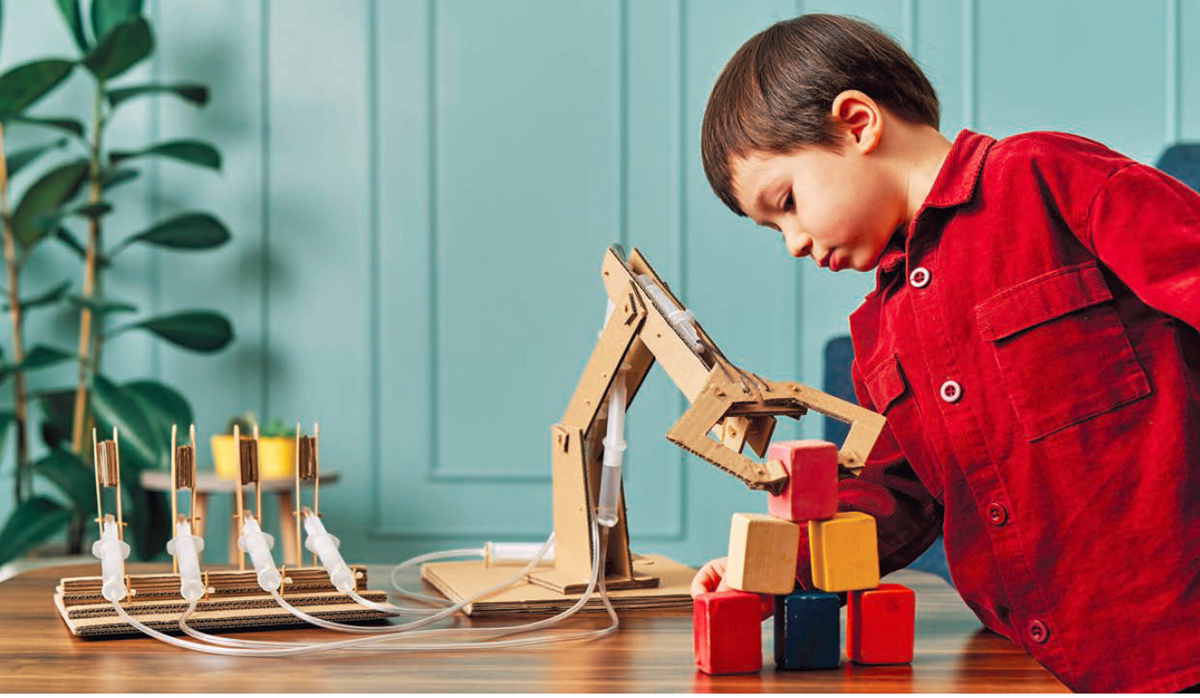
We heard from early childhood educators who said that “Oh, four- and five-year-old children are too young to learn math and science.” But we know that’s entirely untrue, and that early childhood experiences in the area of math and science really provide the foundation for later learning.
—Jessica Whittaker, associate professor, director of Birth to Eight Initiatives, University of Virginia3
Children of preschool and elementary age can think in ways that go beyond the immediate and concrete. They can connect ideas and think conceptually. They can generate explanations and communicate their reasoning. This example from a real preschool environment shows the competency of children:
Susan Emmanuel, a preschool teacher, has set out wooden blocks, ramps, and balls for her young learners to play with. Her real purpose is to encourage the children to engage in engineering design. Savannah and Dory have erected a ramp and are ready to test it. Dory carefully releases a wooden ball down the ramp. The students (and Ms. Emmanuel) watch closely as the ball slips off the side of the ramp and rolls away.
Dory: That did not work.
Ms. Emmanuel: Well, what can you do to make your ball stay on the ramp?
Dory: We need to block the side and build a wall to keep the ball on the ramp.
The two children construct a barrier that’s “just high enough to protect the ramp, but not so high that it will topple over.” They release the ball, which rolls
___________________
3 Interview, Feb. 11, 2022.
straight down the ramp, through a tunnel, and across the finish line they have fashioned.
Savannah: Ah! That is better. We solved the problem!4
As children grow older, they can communicate their reasoning and learn from others. They can collect and analyze data and can make remarkable models to represent their ideas. They can develop explanations of how or why something happens. They can consider actions based on their fairness and impact.
Virginia Stott,5 a kindergarten teacher who uses the phenomenon-based curriculum described in Chapter 1, is impressed with the quality of her students’ discussion after they have completed an investigation:
They model it, and then we discuss what worked, why it worked, or why it didn’t work. So, the investigations allow for very—I feel like for five-year-olds—very in-depth conversations.
Asset-based instruction
Children come to school with an inclination for investigation and many other assets that can help them learn and do science and engineering. To fully recognize and bring out the brilliance of children, you may need to change your perspective and teaching strategies to take an asset-based approach to instruction. Asset-based instruction involves listening to and observing children to determine what they bring to the table. Children’s talk and actions reveal what they know and don’t yet understand, how they are thinking about a problem, and what ideas they have that you can build on. This emphasis on listening for and noticing students’ ideas is different from the traditional priorities of covering a lot of science content, making sure children do what’s expected, and praising “right answers” only. The traditional approach doesn’t leave much time to discern what children already know and can do, how they are thinking, and how you draw on their initial brilliance to help them learn and grow.
Teachers who take an asset-based perspective look for and honor a wide range of proficiencies in children, such as innovative problem solving, unique scientific observations, persistence through a task, and insightful inferences. They take note of and reward behaviors like expressions of curiosity, risk-taking, tolerance for ambiguity, and the use of strategies to improve focus. Not only can this help you to
___________________
4 Gold, Z. S., Elicker, J., & Beaulieu, B. A. (2020). Learning engineering through block play. Young Children, 75(2), 24–29. The excerpt uses different teacher and student pseudonyms than the original article.
5 Interview, Feb. 4, 2022.
expand what counts as science or engineering, but this also supports a more equitable classroom where all children can develop identities as people who do science and engineering.
A caring classroom culture
Creating a caring classroom environment is an essential part of asset-based instruction. In a caring classroom, every child is celebrated as a capable knower, doer, and communicator. Children feel safe sharing their ideas and taking risks. You can foster this type of environment through actions like these:
- Noticing and welcoming all children’s contributions;
- Recognizing and valuing children’s diverse experiences, ideas, ways of engaging, and means of expressing their understanding;
- Making children feel safe to participate fully in the classroom;
- Ensuring that children feel they belong to a community and see their work as important to others;
- Designing collaborative activities so that children learn with and from each other;
- Leveraging children’s social, cultural, and linguistic resources as foundational for learning;
- Establishing classroom norms that emphasize respectful relationships among children and between children and the teacher; and
- Building relationships with children, families, and communities.
In a caring environment, children’s social-emotional needs are met along with their academic needs. You can draw on children’s emotional dimensions to support learning and understand that for some children, particularly those from marginalized communities, there are emotional risks in engaging in certain activities. For example, an engineering design task that requires students to “work through failure” can be risky for children who have received negative feedback or punishment for making mistakes.
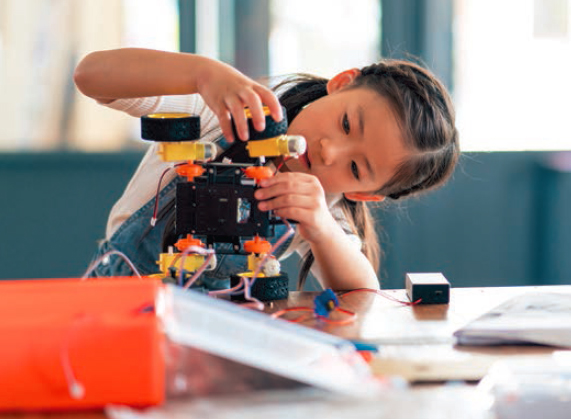
Instruction that brings out the brilliance of children can be fun, even liberating, for both students and teachers, as illustrated by fifth-grade teacher Delia Harewood.6 In her science classes, Ms. Harewood has developed a range of unique strategies to create a positive and nurturing environment, build relationships, and spotlight each child’s strengths. For example, once a week on “Thankful Thursdays,” each student randomly picks another child’s name from a cup and writes a note to that child commending them for something positive they did academically. “They have to pay attention because they can get anybody in their classroom, and they have to write a positive comment,” says Harewood.
Chapter 5 lays out additional strategies for establishing a collaborative classroom environment.
In sum, educators can bring out children’s assets and leverage them to develop children’s ideas, practices, and motivation to learn science and engineering. As a starting point, you might examine how your own assumptions about children’s competencies shape your teaching and how you might change your instruction to take a more asset-based approach.
Where does learning happen?
Children learn about science and engineering in many different contexts before they enter school, and they continue to learn in multiple contexts outside of school. Anywhere can be a place for learning, anyone can facilitate learning, and any experience can be a learning occasion. Children are learning all the time, in both planned and serendipitous ways.
Children learn by interacting with nature and human-made systems. Contexts for learning can range from a neighborhood playground to a science museum with state-of-the art, interactive simulations; from a classroom to a forest; and from grandma’s kitchen to a safe view of a construction site.
The family context
These contexts encompass more than physical places. Children learn by interacting with people, as discussed later in this chapter, so that contexts for learning include social and cultural groups. The learning that happens in these social and cultural group settings will tend to use the language(s) that are spoken by these communities. As children grow older, their contexts for learning become more numerous and complex and often overlap.
___________________
6 Interview, Jan. 3, 2022.
The family—including parents, siblings, extended family, and others acting in parental roles—is the first context in which children start to learn. In addition to providing learning experiences at home, families connect children with other contexts for learning science and engineering, whether through examining cracks in the sidewalk to finding biodiverse ecosystems, discussing how food appears in the grocery store, or tracing where trash goes after it disappears from our homes.
Learning in nature for schools and families
Educators in preschool through grade 5 can improve instruction by helping students make connections across contexts and leveraging what each of these contexts has to offer. An example of this type of instruction comes from a project that takes science education outdoors for children in pre-kindergarten through grade 5. Developed by university faculty working with educators, families, and community partners, the project includes an instructional model and materials7 that emphasize equity and learning relationships among schools, families, and cultural communities.
The instructional model is organized around coherent “storylines” consisting of units that build sequentially on one another. There are storylines for teachers to use at school and in outdoor natural settings and a companion set of storylines for families and children to use at home and in their own outdoor investigations. (The family materials are available in English, Spanish, and simplified Chinese.)
In both the school and family storylines, students notice and wonder about things they see on outdoor “wondering walks.” After conducting their initial wondering, children identify “what should we do” questions about science issues that matter in their communities. These “should we” questions engage children in researching and deliberating about issues with ethical implications for the environment and society, such as Should we remove invasive species from our parks? These “should we” questions prompt the need for new knowledge, and classrooms develop investigations that will help them answer such queries using evidence. Students, with support from their teacher, develop and investigate questions and use scientific practices such as collecting data and creating models. The storylines also encourage children to make connections to their personal experiences, family and community knowledge, and cultural practices.
In the following case, pay attention to how Ms. Hopper, the teacher, uses students’ questions and interests arising from outdoor investigations to connect science learning in school with family, social, and cultural contexts for learning.
___________________
7 Available at http://learninginplaces.org/
You might be wondering how you can employ this type of learning experience within the curricular materials supplied by your district. Ms. Hopper did not need to involve families in considering and discussing the central question, the investigation launch, and the initial investigation planning. She could have posed the central question to the students only and assigned the handout as homework to be done by students on their own. Instead, she turned the conventions of homework into a more expansive opportunity when she asked students to use the handout to discuss at home what they were going to be talking about anyway in class the next day. The discussion in class the next day didn’t hinge on family involvement but was certainly enhanced by it.
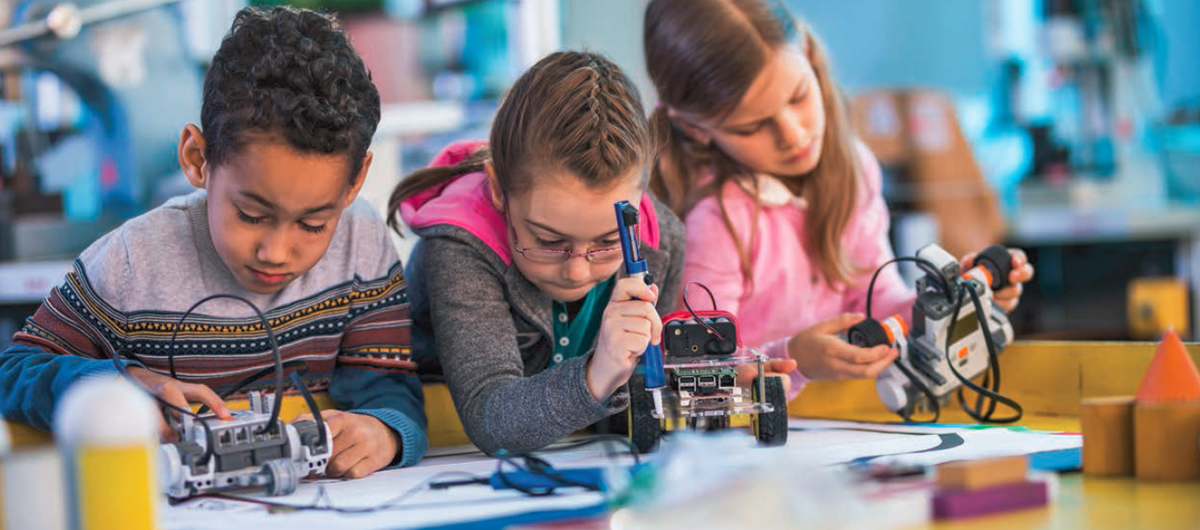
Kids have their lived experiences that they don’t shed when they walk into a classroom. When you don’t connect their learning with those lived experiences, then you make part of them invisible.
—Carrie Tzou, professor at the University of Washington Bothell and director of the Goodlad Institute for Education Renewal9
If no families had taken up the question, the class could have continued as planned, through small group discussions to develop an investigation idea.
Within the materials provided by your district, can you look for ways to invite families into the learning already happening in your classroom? Can you frame the central investigative question of your unit in a way that enables families to conceptualize it and generate ideas to support learning? Encouraging students to explore aspects of the unit in the context of their lives outside of school deepens their learning, boosts excitement, and allows students to test out their ideas before bringing them into class.
How awareness of multiple contexts can help with instruction
Different contexts offer different mixtures of situations, people, and resources to support learning. Children’s experiences within these contexts not only build their knowledge and competencies, but also shape how they make sense of the world. What a child knows and can do is the sum of everything that child has experienced and learned across multiple contexts. From the child’s perspective, it matters little where the ideas came from or in what order.
Why is it important for you as a teacher to pay attention to other contexts for learning?
- These contexts are a rich source of knowledge, experiences, languages, ideas, and practices that children bring with them to school. By recognizing and
___________________
9 Anderson, J. (2020, December 3). What it means to learn science (No. 369) [Audio podcast episode]. In Harvard EdCast. Harvard Graduate School of Education. https://www.gse.harvard.edu/ideas/edcast/20/12/what-it-means-learn-science
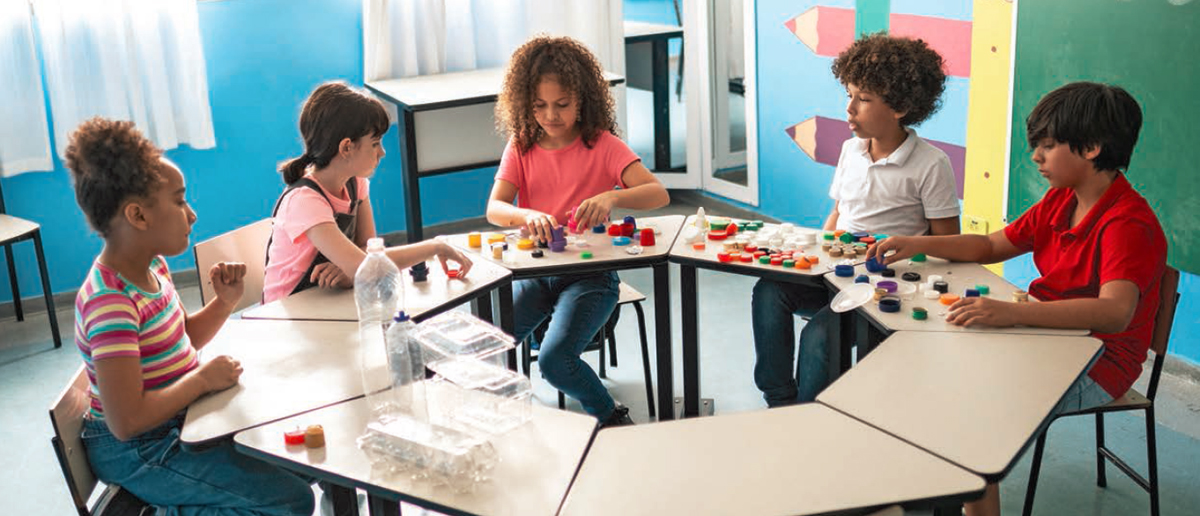
One strategy for being culturally responsive is just be open to learning about what kids are bringing into the classroom. So, understanding not just language, but also practices at home—What is important to you at home? What are things that you do as a family outside school? And letting parents connect and say what’s important to them about their kids, and what do they love about their kids.
—Eva Bravo-Hollis, second-grade teacher in an urban district in the Pacific Northwest10
- leveraging what children have learned and are learning in other contexts, you can improve classroom instruction.
- The things children learn and do in other contexts may be different from what they experience in school. This exposure to other contexts not only broadens and multiplies where and what children can learn but can also enrich classroom learning. For example, a diversity of experiences from other contexts can expose peers to new ideas and make for more stimulating science discussions.
- When you appreciate, honor, and connect with families and other social contexts, you can better relate to children and understand how they learn. This opens up more ways for you to reach children from all backgrounds and more partners to work with.
- You can take advantage of other learning environments to expand on what children learn in school. This might be done through a partnership with an informal learning environment, a field trip, an invitation for an expert to come to your class, or more casual means, such as making children and parents aware of a community site, like an urban garden.
How is learning a social and cultural process?
Children learn primarily from and with other people. They learn by interacting with teachers, classmates, caregivers, family members, friends, and countless other social contacts. In many ways, the social nature of learning corresponds with the collab-
___________________
10 Interview, Jan. 20, 2022.
orative nature of science and engineering. Even when children learn from books and other educational materials, this is a social process because students are interacting with ideas, tools, and resources that have been developed by collectives of people.
Children’s learning is also shaped by the practices, behaviors, and beliefs of the cultural groups they belong to and participate in. Cultural groups may influence how children observe, explore, relate to others, and come to understand things. That doesn’t mean culture is static—cultural practices evolve in response to social, political, and geographic change.
For children from historically marginalized backgrounds, assumptions based on culture have often meant negative stereotyping and silencing. Because students learn when they explain in ways that make sense to them, effective instruction uses the asset-based frame discussed earlier. This benefits individual learners by affirming the value of their cultural ways of knowing and expressing ideas, recognizing their contributions, and reinforcing their identity as doers of science. Everyone in the classroom also benefits from having access to a broad range of experiences, diverse ideas, and resources for learning.
At the same time, viewing learning as a cultural process doesn’t imply that you should make quick and easy assumptions about learners based on the one or more cultural groups to which they belong. Children participate in multiple cultural groups, and none of these groups is homogenous. It is possible to incorporate culturally derived ways of learning into instruction while also acknowledging that children vary in how they approach and absorb these cultural group experiences.
The following example describes how Native American families participating in a science education program in an urban forest preserve use Indigenous ways of knowing to help children learn about the natural world and their place in it.
___________________
11 Based on Marin, A. (2019). Seeing together: The ecological knowledge of Indigenous families in Chicago urban forest walks. In I. M. García-Sánchez & M. F. Orellana (Eds.), Language and cultural practices in communities and schools (pp. 41–58). Routledge; and Marin, A., & Bang, M. (2018). “Look it, this is how you know:” Family forest walks as a context for knowledge-building about the natural world. Cognition and Instruction, 36(2), 89–118. https://doi.org/10.1080/07370008.2018.1429443
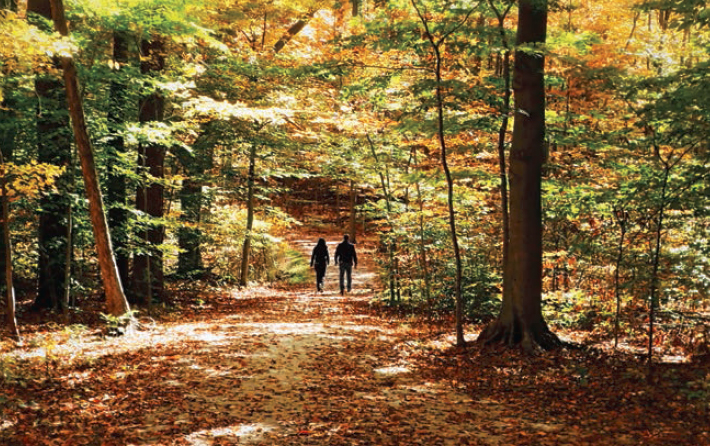
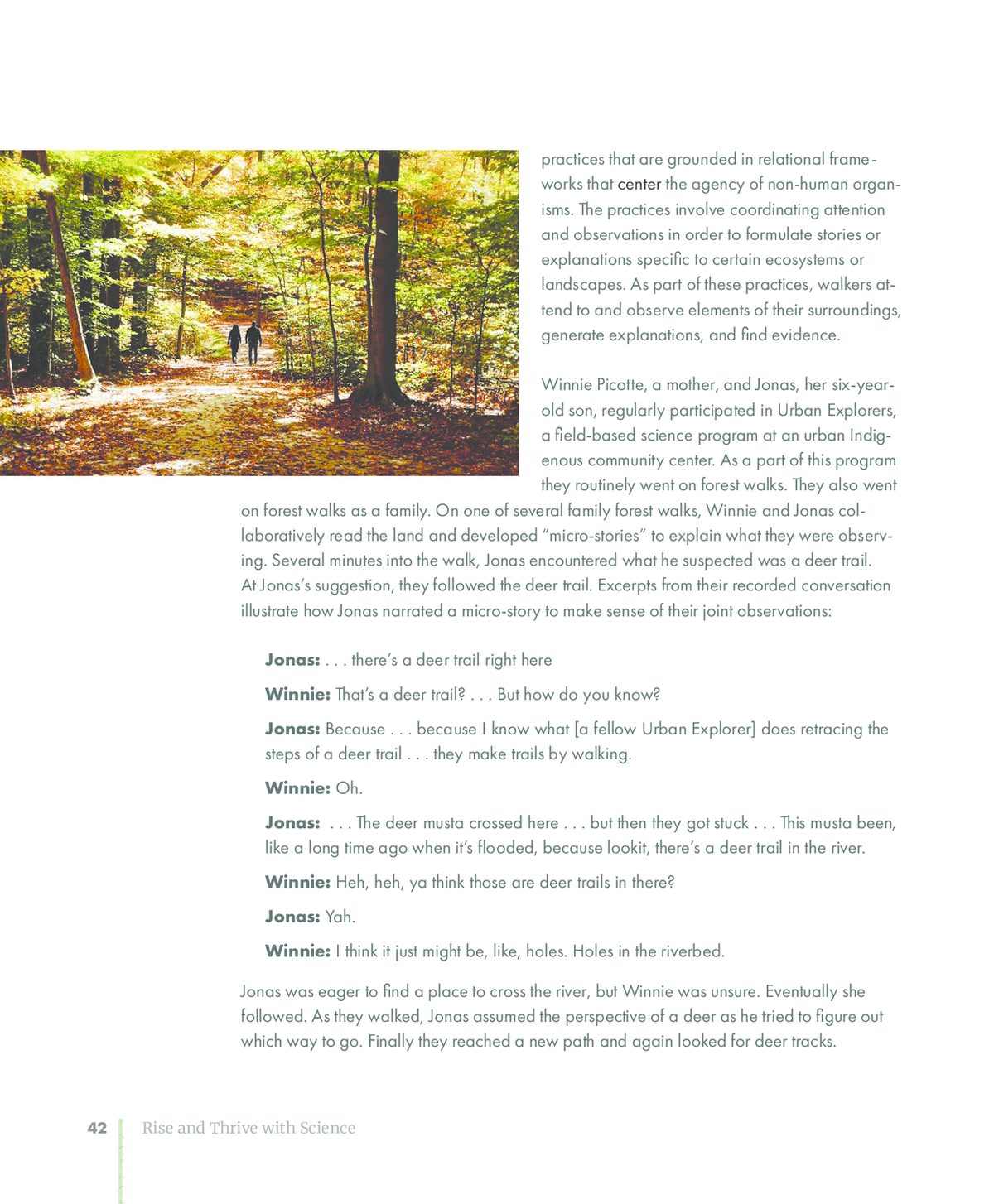
practices that are grounded in relational frameworks that center the agency of non-human organisms. The practices involve coordinating attention and observations in order to formulate stories or explanations specific to certain ecosystems or landscapes. As part of these practices, walkers attend to and observe elements of their surroundings, generate explanations, and find evidence.
Winnie Picotte, a mother, and Jonas, her six-year-old son, regularly participated in Urban Explorers, a field-based science program at an urban Indigenous community center. As a part of this program they routinely went on forest walks. They also went on forest walks as a family. On one of several family forest walks, Winnie and Jonas collaboratively read the land and developed “micro-stories” to explain what they were observing. Several minutes into the walk, Jonas encountered what he suspected was a deer trail. At Jonas’s suggestion, they followed the deer trail. Excerpts from their recorded conversation illustrate how Jonas narrated a micro-story to make sense of their joint observations:
Jonas: . . . there’s a deer trail right here
Winnie: That’s a deer trail? . . . But how do you know?
Jonas: Because . . . because I know what [a fellow Urban Explorer] does retracing the steps of a deer trail . . . they make trails by walking.
Winnie: Oh.
Jonas: . . . The deer musta crossed here . . . but then they got stuck . . . This musta been, like a long time ago when it’s flooded, because lookit, there’s a deer trail in the river.
Winnie: Heh, heh, ya think those are deer trails in there?
Jonas: Yah.
Winnie: I think it just might be, like, holes. Holes in the riverbed.
Jonas was eager to find a place to cross the river, but Winnie was unsure. Eventually she followed. As they walked, Jonas assumed the perspective of a deer as he tried to figure out which way to go. Finally they reached a new path and again looked for deer tracks.
Through their moment-by-moment interactions, Winnie and Jonas built knowledge collaboratively. As they sought to interpret what they saw, they remembered important places they had seen on previous walks and compared the past (when a particular area was flooded) with the present. They used body movements, questions, and micro-stories to make their thinking visible and coordinate their observations. At times they imagined how other living beings may have behaved and the actions they may have taken as they developed explanations. They didn’t always agree but they listened to each other’s alternative explanations. The six-year-old Jonas made astute observations, such as the comment about the wet dirt.
The activities of walking, observing, gesturing, questioning, creating micro-stories, and thinking across time and space are more powerful in combination. They represent additional and important approaches for bringing science to life, connecting with culture, and making meaning. While these practices have roots in Indigenous ways of knowing, they are not limited to Indigenous communities, and could be adapted for classroom and field-based learning.
Instructional implications of the social and cultural nature of learning
These findings about learning as a social and cultural process show why it’s important to organize your classroom to create opportunities for students to interact with and learn from each other. All of us learn by conversing and working with other people, and classroom peers are no exception. When students discuss and work together in small or large groups, they become aware of different ideas, learn from each other, and jointly construct knowledge. The creation of a positive, caring learning environment is one step toward acknowledging the social dimensions of learning and encouraging collaborative and supportive relationships among students.
Instruction that considers the cultural dimensions of learning can be enriching for all children. It signals to individual children that you value their experiences and gives them relevant ways to contribute and learn. It also invites a vibrant mix of ideas that energizes discussion, challenges ways of thinking, and encourages the growth of knowledge for everyone in the class. In your science and engineering instruction, you can leverage social and cultural resources by learning more about the cultures and family knowledge of your students and involving families in demonstrating and sharing their knowledge and practices.
We all bring our own perceptions of learning—and often our implicit biases—into this work. To effectively leverage student assets, take some time to reflect on how you communicate and assign competence to students and their ideas.
The critical role of identity in learning
Children are continually trying to figure out who they are and how they fit into different social contexts. This process, which contributes to identity formation, plays a central role in children’s learning. Like learning, it is shaped by children’s social and cultural environments. How and what children learn is related to how they see themselves and who they want to become. Learning is enhanced when children see themselves as people who can learn, know, and do science and engineering.
Children’s identities in relationship to science and engineering are influenced by their social and cultural contexts. They are also shaped by children’s previous opportunities to engage in science and engineering practices, their experiences in school, and other factors.
You may have heard a child say, “I’m not good at science”—the same child who yesterday watered a class plant “to help it get bigger.” Even some children who do well in science in school say they “don’t like it” or aren’t interested in “becoming a scientist.” They may not see themselves as “science people.” These children may not yet know what constitutes science and engineering or may be influenced by damaging stereotypes about who does science. They may not understand how science and engineering are infused in their everyday lives and are not just the domains of people in STEM careers working in labs.
Children may need various kinds of support and reinforcement to begin to recognize themselves as learners, knowers, and doers of science and engineering. You can nurture this recognition by providing instruction that appreciates student’s ideas and allows them to explore questions that matter to them. This type of instruction signals that being good at science consists of much more than knowing facts and scientific terms. As part of this process, you might examine your own sense of identity
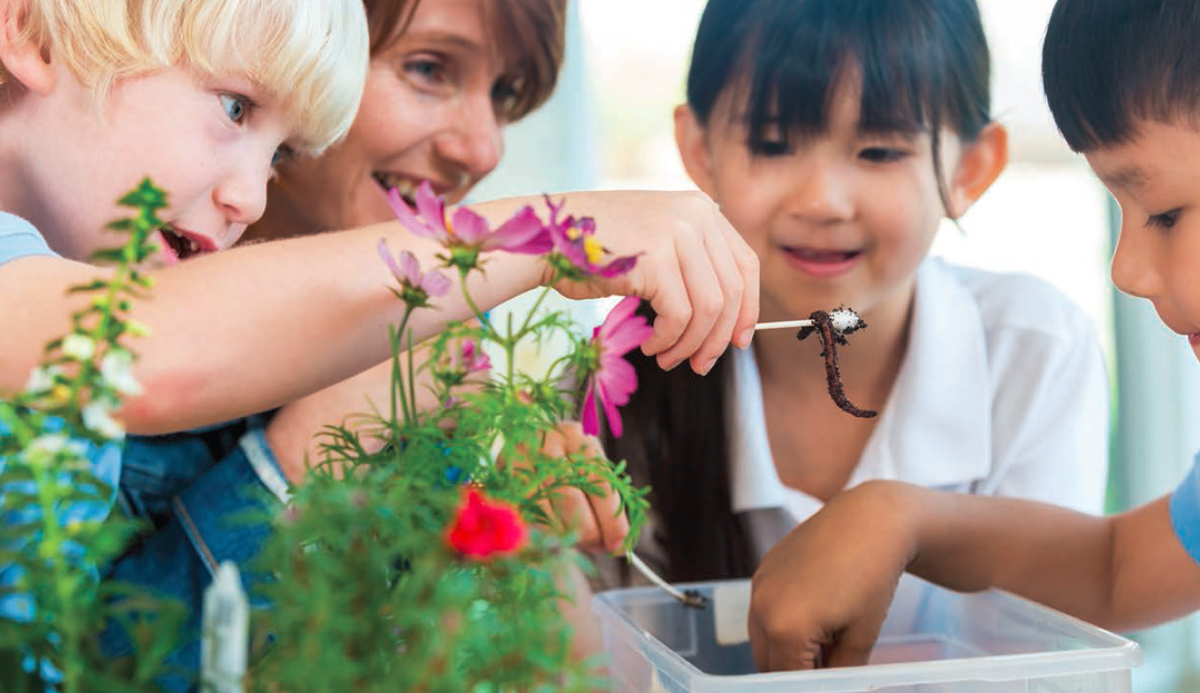
A lot of our work now is really just focused on trying to open up what science looks like and help kids to see themselves as scientists. Kids often have a limited view of what counts as science and who does science. And we’re trying to help them realize that science is all around them. They’re often already doing science, and they don’t even realize it.
—Katherine McNeill, professor of science education, Boston College12
in relation to science and engineering—Do I see myself as competent in these disciplines? Have I sought to develop a positive identity as a teacher and learner in these subjects?—and how it has affected your teaching.
You can also provide sensitive support by recognizing and reinforcing a wider range of scientific behaviors. For example, when a curious child on a nature walk kicks at the dirt to better expose a colorful rock and shouts excitedly about their discovery, this is a mode of investigating. If a teacher interprets this behavior as disruptive and chastises the child, it can squelch the child’s further engagement. But if the teacher commends the child for their explorations and observations and channels his enthusiasm into a meaningful discussion, then the child may see themselves as a budding scientist.
How can a commitment to equity and justice bring out the brilliance of all children?
While instruction anchored in investigation and design holds promise for bringing out the brilliance of all children, it doesn’t automatically advance equity. Teachers must still be proactive and mindful to counteract damaging views about social and
___________________
12 Interview, Mar. 14, 2022.
academic status assigned by peers or society. These ideas can also be perpetuated through curriculum and professional development. As a teacher, you have an essential role in creating a safe intellectual space for every student to learn and develop in the classroom. Some groups of students have been historically marginalized in science and engineering, by race and ethnicity, language background, gender, disabilities, and learning differences. Rather than seeking to “fix” children’s deficits, effective instruction appreciates and builds on the assets of children from these groups, their families, and their communities, while also recognizing and attending to their needs.
A commitment to equity is fundamentally about doing what’s best for every child. As a preschool or elementary educator, you care about children. You recognize that all children, and society as a whole, are stronger when children grow up to be active thinkers and scientifically literate problem solvers.
There are so many things that can be done to advance equity that it can seem overwhelming. To help educators consider these issues in a more manageable way, the National Academies’ Brilliance and Strengths report organized approaches for addressing equity and justice into four categories. These approaches are arranged along a spectrum from the basic actions of removing barriers to access to the more proactive work of redressing injustices. Approaches 1 and 2 focus more on equity, while approaches 3 and 4 move toward justice.
This doesn’t mean, however, that you need to implement these approaches in any particular order or that actions under the fourth approach are always more difficult than those under the second, for example. You can do them in any order and any combination; when these approaches are used together, they have a synergistic effect.
The four approaches are listed below, with an example under each of an action that you could take to implement that approach. These examples can help you set up instruction in which attention to equity is intrinsic, rather than something bolted onto an existing lesson or learning objective.
-
Increase opportunity and access to high-quality science and engineering learning and instruction. Ensure access to high-quality science and engineering instruction, facilitated by well-prepared teachers, through instructional practices, classroom norms, instructional materials, and supplemental experiences.
Example: You see science “achievement gaps” as “opportunity gaps.” You draw on children’s cultural and language resources to give them broader ways to access science learning.
- Emphasize increased achievement, representation, and identification with science and engineering. Improve learners’ achievement in school science and
-
engineering by generating interest and fostering connections to science and engineering disciplines. Attend to the affective aspects of learning, such as motivation and belonging, to support students as they explore their identities as learners and scientists in the classroom.
Example: You use materials that include representations of scientists and engineers, and of children doing science and engineering, that cover a broad range of racial/ethnic backgrounds and people with disabilities. You connect science and engineering instruction with children’s interests and identities. You position all children as scientists and engineers working together to explain phenomena and design solutions.
-
Expand what constitutes science and engineering. Examine and reframe who does science and what counts as science so that students have access to a wide range of resources. Make the most of different ways of understanding the natural and designed world, not only to support more children’s learning and aid in the formation of an identity as one who can do science and engineering, but also to bolster science and engineering as disciplines.
Example: You learn to recognize and respond to the rich ways in which children make sense of the world, even if they don’t reflect fully formed science ideas. You become attuned to the various ways in which children express their understanding, even if they don’t look and sound like the norms and language of science and engineering that you’re accustomed to.
-
See science and engineering as part of justice movements. Position students as powerful change makers within their communities by examining the relationship between science, equity, and justice. Start by prioritizing social projects that address communities’ needs and goals, and then find a way for students to engage in science and engineering practices to advance those projects.
Example: You have children investigate how communities of color experience disparate effects of environmental pollution. You encourage children to talk to family members about local community development decisions and how they affect the full range of people, animals, and plants in the community.
A real classroom unit from Michigan shows how issues of environmental justice related to the quality of water in a community can be a focus of science investigation and learning.
___________________
13 This example is taken from Davis, N. R., & Schaeffer, J. (2019) Troubling troubled waters in elementary science education: Politics, ethics & Black children’s conceptions of water [justice] in the era of Flint. Cognition and Instruction, 37(3), 367–389. https://doi.org/10.1080/07370008.2019.1624548
14 Interview, Feb. 3, 2022.
15 Interview, Feb. 3, 2022.
The Water Is Life example shows how a serious community issue can be a springboard for students to investigate a problem, learn about the relevant core science ideas, and use their growing understanding to take actions related to human justice. Children had already expressed concern about local water shut-offs and water contamination in another community, and the teacher used their interest to motivate them to learn about the science of water and social studies issues of local decision making and citizens’ ways to influence policy. Students participated in a variety of activities that incorporated different modes of learning and that built on their family and community knowledge. They came to see that science knowledge can influence human decisions and be a tool for justice.
If you’d like to try something similar to the approach described in the example but think it’s not possible because you have to use a certain set of instructional materials, consider where those materials might provide openings for you to make the connections to community issues. While the example describes a focused year-long study arc in a project-based learning classroom—a scale that may not be easily available to you—you can look for ways that fit your prescribed curriculum to leverage science and engineering practices and knowledge as tools toward building a more just society. Read through your next unit and consider how you can repackage some of the lessons. Look for the learning outcomes, essential questions, and investigations presented in the unit. Could any of these activities be connected to or contextualized within a real-world problem or event?
Valuing all students and establishing classroom norms
At the core, many of the actions you can take as a teacher to advance equity are about seeing, listening to, and valuing what students have to offer. There’s a power in the messages that you transmit to students, even unspoken ones. If children interpret a teacher’s actions to mean that only certain ways of expressing ideas are acceptable or that they will be misjudged if they give a “wrong” answer, they may choose to dis-
engage. They may also choose not to take risks that are necessary for developing creative explanations or solutions.
A study of elementary school students16 asked three Black boys and three girls—two Black, one White—who were working in teams on an engineering design challenge to rate themselves in engineering on a scale of 1–10. The self-assessments of the Black students reflected how well they felt they maintained “appropriate behavior” during engineering class. The assignment did not enumerate what defined “appropriate behavior,” but left it open to interpretation by the students, as in these examples:
Clarice: [I rate myself as] ten, because I’m a good student. I’m a good listener, I follow instructions, and I do what I’m supposed to do. And that’s it.
Kevin: Seven to eight because sometimes I can be off task and sometimes I can—sometimes I have my moments, like paying attention for the whole class and doing good.
These findings suggest that some children may feel vulnerable if they take a risk in putting forward ideas, critiquing another student’s ideas, or negotiating teamwork. You can mitigate these effects by establishing a classroom environment that actively invites children to share ideas, learn from mistakes, and express themselves in their own ways and words, and that values everyone’s contributions.
Translating these findings about learning into instruction
The findings summarized in this chapter describe pedagogy that is based on a robust body of evidence of how children learn. They reveal what you can do as an educator to capitalize on what students already know and can do related to science and engineering. Instruction is more meaningful when it draws on children’s assets.
Moreover, these findings remind us that science and engineering really are everywhere. Children learn these subjects in myriad contexts and through rich social and cultural processes. Many opportunities exist to bring that learning into your classroom and connect with the knowledge and experiences children gain in other contexts. In a similar vein, you can move students into different contexts outside the classroom to enhance learning. Advancing equity and justice is achievable and starts
___________________
16 Wright, C. G., Wendell, K. B., & Paugh, P. P. (2018). “Just put it together to make no commotion:” Re-imagining urban elementary students’ participation in engineering design practices. International Journal of Education in Mathematics, Science and Technology, 6(3), 285–301. https://doi.org/10.18404/ijemst.428192. The excerpt uses different student pseudonyms than the original article.
with valuing each child’s strengths, actively designing instruction that’s attentive to children’s differences, and creating new science learning environments that work toward minimizing injustices. The chapters that follow explain how you can accomplish these goals.