Antarctic Science: Why U.S. Leadership and Investments Matter (2022)
Chapter: U.S. Science and Policy Leadership in the Antarctic
U.S. Science and Policy Leadership in the Antarctic
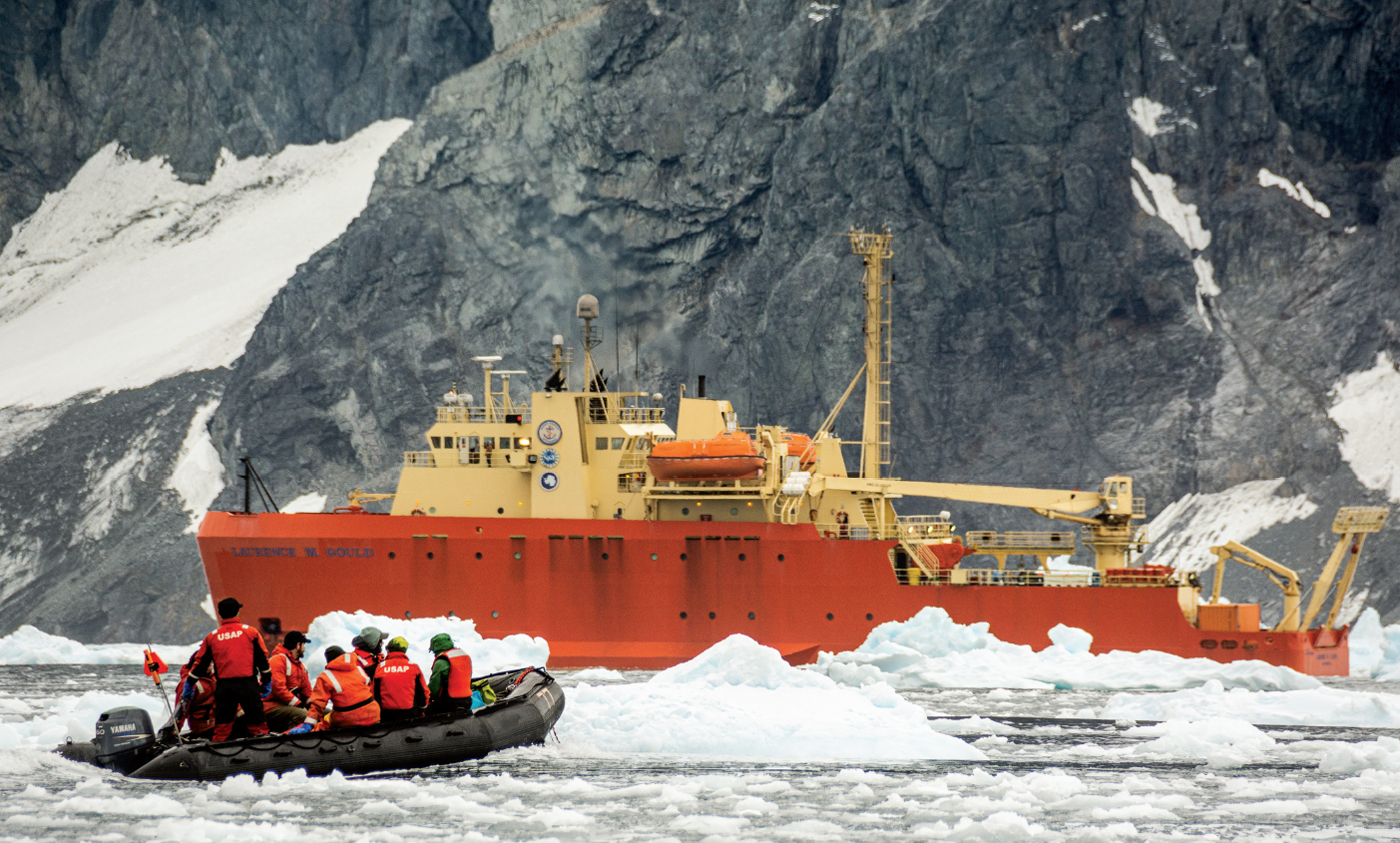
The United States has for many decades been a global leader in Antarctic and Southern Ocean research. Our nation invests more than any other country in support of Antarctic science, sends the most scientists from any nation, and operates the continent’s largest research station as well as the only station at the South Pole. Many of the most visionary and ambitious research endeavors in Antarctica over the past 60 years have been spearheaded and funded by the U.S. scientific community.
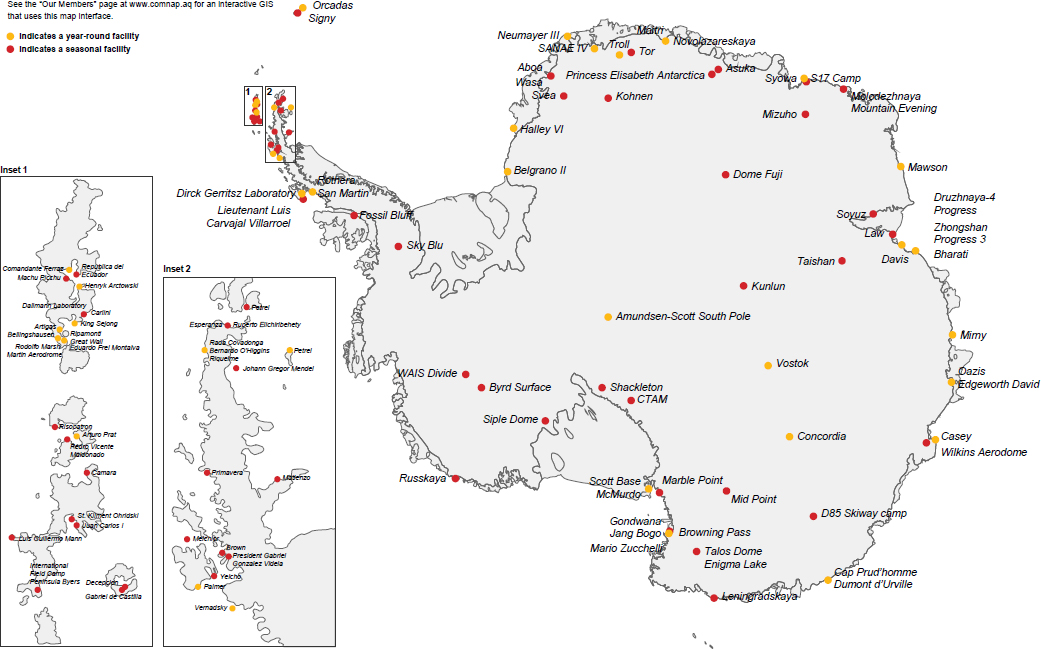
Antarctica is the world’s only continent designated just for scientific exploration. At present, roughly 30 countries have research facilities in the Antarctic, and 54 nations participate in governing the activities conducted there, as signatories to the Antarctic Treaty. International collaboration has been crucial to advancing scientific investigation in Antarctica and establishing the infrastructure to enable this work.
The U.S. Antarctic Program
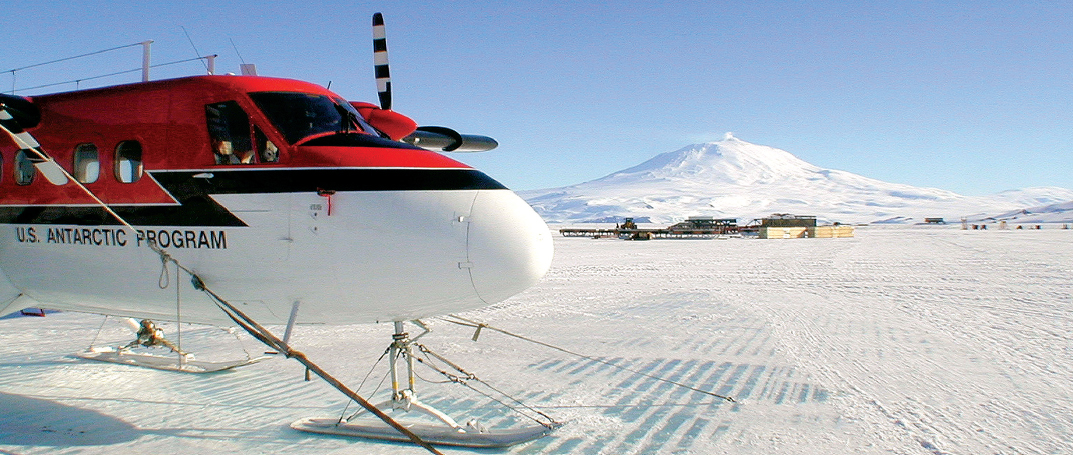
The U.S. Antarctic Program (USAP),18 managed by the NSF Office of Polar Programs, supports Antarctic research and related logistics both on the continent and aboard ships in the Southern Ocean. The USAP serves the nation’s goals of advancing science, supporting the Antarctic Treaty, and fostering cooperative research with other nations. USAP also helps ensure adherence to the U.S. Antarctic Conservation Act,19 which protects Antarctic plants, animals, and habitats; and the U.S. Marine Mammal Act, which further addresses protection of marine life.
The USAP typically deploys about 2,600 people to Antarctica every year to conduct research or to provide support to researchers through the operation and maintenance of the research stations and vessels. Research activities range from large (multi-year, multi-institution) initiatives to small, focused efforts proposed by individual investigators. Some U.S. research activities in Antarctica are supported by other federal agencies including NASA, NOAA, and the U.S. Geological Survey. Most scientific activities are conducted during the Southern Hemisphere summer—roughly October through February—when there is abundant sunlight and comparatively warmer temperatures, although some science is conducted year-round.
SCIENTIFIC ACTIVITIES
NSF’s Office of Polar Programs provides grants to U.S. scientists to study Antarctica. To access these grants, researchers must demonstrate the intellectual merit and broader societal impacts of their work and have plans for openly sharing any data collected and for disseminating the knowledge obtained from this research. All research conducted in and around Antarctica itself is closely vetted to ensure studies are designed to be effective and safe, to have minimal environmental impact, and to be well-aligned with NSF’s scientific goals, which include
- expanding fundamental knowledge of Antarctic systems, biota, and processes;
- improving understanding of interactions among the Antarctic region and global systems; and
- utilizing the unique characteristics of the Antarctic region as a science observing platform.
Among the scientific disciplines encompassed by this broad mandate are astronomy, atmospheric sciences, biology, environmental science, geology and geophysics, glaciology, marine biology, and oceanography.
While the concept of Antarctic research typically brings to mind images of people immersed in icy landscapes, many options exist to do Antarctic research remotely from anywhere in the world. This includes, for example, researchers who are
- developing computer models to better understand key aspects of Antarctic climate, ice dynamics, or ecological systems;
- analyzing existing data resources, which have been collected through ground-based and remote sensing observations (aided by the USAP Data Center, which documents, preserves, and disseminates research results and datasets); and
- conducting laboratory analyses of samples brought back from Antarctica and managed by special repository facilities (e.g., the NSF-supported Polar Rock Repository at The Ohio State University, the Marine and Geology Repository at Oregon State University, and the Ice Core Facility in Denver, Colorado).
- These remote research approaches expand both the opportunities for scientists who cannot undertake lengthy deployments to remote field sites and the scale and speed at which valuable knowledge can be gained.
LOGISTICAL SUPPORT
Working safely in Antarctica and the Southern Ocean is a challenging endeavor. Buildings and vessels must be constructed and maintained under extreme conditions and frequently withstand punishing storms. Communication is hindered by limited connectivity, especially beyond the research bases. Providing food, equipment, transportation, and medical support to thousands of people scattered across vast distances requires complex supply logistics, essential services, and waste disposal systems.
To meet these needs, NSF’s Antarctic Infrastructure and Logistics Section oversees the management and operation of Antarctic research bases, ships, aircraft, and other transport vehicles. This section also manages contracts with the many service providers and support personnel that enable Antarctic research, including, for instance:20
- Incorporated Research Institutions for Seismology (IRIS) for acquisition and management of seismological data;
- UNAVCO for assisting with Earth science–related instrumentation, equipment, and data;
- the Polar Geospatial Center for assisting with mapping and remote sensing projects; and
- the U.S. Ice Drilling Program for integrated planning and execution of ice coring and drilling activities.
NSF also works closely with key military partners, including the New York Air National Guard and the Military Airlift Command, which operate flights to and within the continent.
International Cooperation
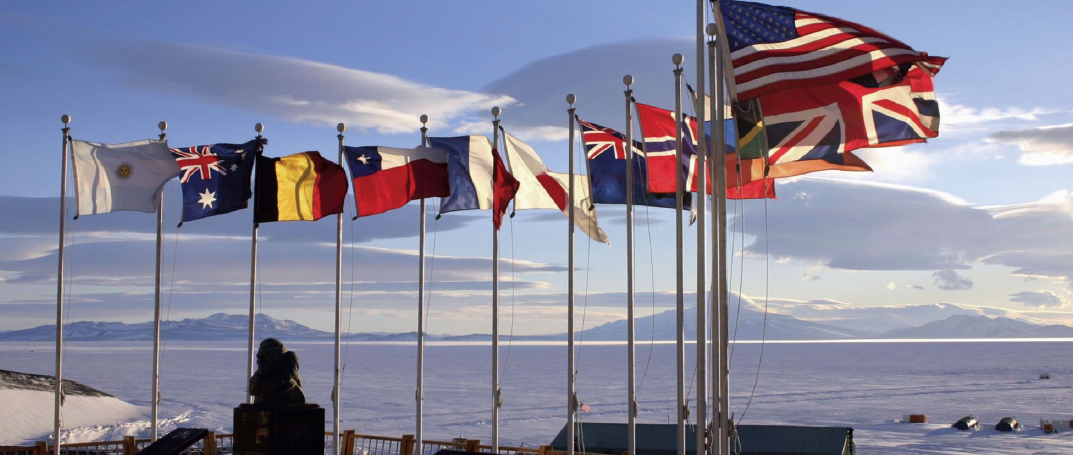
Antarctic science is among the most successful and enduring examples of worldwide cooperation in human history. The governance structures that maintain Antarctica’s role as a scientific preserve for all of humanity rely on strong mutual collaboration among nations. Given the enormous challenges of working in Antarctica, sharing expenses and expertise across countries is crucial to enabling ambitious research programs to advance science.
THE ANTARCTIC TREATY
In 1959, the United States and 11 other countries came together around a common purpose: to enshrine Antarctica as a shared resource for all of humanity. This remarkable display of unity—during the height of the Cold War—has formed the basis for peaceful and productive activities in Antarctica for more than six decades.
In signing the Antarctic Treaty,25 participating nations expressed their recognition that “it is in the interest of all mankind that Antarctica shall continue forever to be used exclusively for peaceful purposes and shall not become the scene or object of international discord.” The Treaty has three main stipulations surrounding the use of Antarctica: no military presence, no commercial mining activities, and no nuclear explosions. In addition, signatories commit to preserve the natural environment and ensure international cooperation in scientific activities conducted on the continent. Today, 54 nations have signed the Antarctic Treaty. In 1991, the Protocol on Environmental Protection was adopted by the Antarctic Treaty Parties. The Protocol and its annexes address human activities in Antarctica and established the Committee for Environmental Protection (CEP).
Antarctica has no official government or leaders, but regulation and guidance of activities is provided by the Antarctic Treaty Consultative Meeting (ATCM). Every year the ATCM and the CEP convene all participating nations to exchange information, consult on needs and priorities, and come to consensus around guidelines for managing activities on the continent and in the ocean below 60 degrees south. The ATCM and the CEP strive to understand and minimize the environmental impacts of both tourism and scientific activities in the Antarctic, with a particular focus on strategies to manage risks related to the introduction of non-native species to Antarctica’s sensitive ecosystems.
Participating nations have established several other bodies within the Antarctic Treaty System to deal with particular areas of focus. Established in 1982, the Commission on the Conservation of Antarctic Marine Living Resources is an ecosystem-based fisheries management organization that regulates targeted fishing, protects related and dependent species, and establishes Marine Protected Areas in the Southern Ocean.

SCIENTIFIC COLLABORATION
Many of the most successful U.S. research endeavors in Antarctica have involved international collaboration. While the NSF has often played a leading role in funding and implementing large-scale research projects, these efforts are strengthened by bringing together ideas, equipment, and personnel from multiple nations. For instance, looking back at some milestones of Antarctic science history:
- In the International Geophysical Year 1957–1958, international collaboration led to the discovery that the Antarctic ice sheet is more than 2 miles thick.
- Pioneering ice core research at Vostok Station, looking back 800,000 years in time, was jointly supported by the United States, Russia, and France, and conducted in collaboration with a European drilling program.
- U.S. researchers collaborated with New Zealand, Italy, and Germany in the Antarctic Dilling project (ANDRILL) to recover cores that demonstrated that the West Antarctic ice sheet has collapsed many times in the past 5 million years.
- During the 2007–2008 International Polar Year, a seven-nation team of scientists led by the United States surveyed the largest unexplored mountain range on the planet and discovered previously unknown processes happening at the base of the Antarctic ice sheet.
Some more recent research efforts—all discussed later in this document—that have involved major international collaboration include: the Polar Earth Observing Network (supported by contributions from 28 nations); the IceCube detector (which involves collaborators from institutions in 12 countries); and the International Thwaites Glacier Collaboration (a joint campaign between the United States and the United Kingdom, with participation by South Korea, Sweden, Germany, and other countries).
International cooperation has also been instrumental in efforts to improve understanding of the Southern Ocean. Scientists from various countries have long enjoyed opportunities to sail aboard each other’s research vessels for exploration of the Antarctic’s waters and islands. At a broader level, the Southern Ocean Observing System provides a framework for coordinating and expanding scientific observations made by multiple countries, providing a coherent and efficient data resource to address key scientific challenges.


