Sharing Research Data to Improve Public Health in Africa: A Workshop Summary (2015)
Chapter: 6 Next Steps: Maximizing the Use of Data to Improve Public Health
6
Next Steps: Maximizing the Use of Data to Improve Public Health
Steven Kern of the Bill & Melinda Gates Foundation moderated the final session. He summarized the highlights of the workshop (see Chapter 1) and, by reframing a slide presented by Kobus Herbst at the start of the workshop (Figure 2-1), illustrated two key perspectives that he commented permeated the discussion:
- Data users and data collectors should work in tandem with one another, providing stability to multiple components of the data-sharing continuum (see Figure 6-1) and
- Consideration of issues related to the data collected, such as confidentiality, avoiding harm, and potential benefits to data subjects, needs to be paramount (see Figure 6-2).
Ideas for Next Steps
In the course of the workshop, several presenters outlined their ideas for next steps needed to facilitate data sharing in Africa, and breakout groups throughout the workshop also shared specific ideas. Many participants expressed support for the benefits from sharing data, but also said that work is needed to ensure that data sharing is enhanced. Kern summarized what he understood to be possible next steps:
- Relationships. The importance of relationships to ensure trust and confidence in the research was raised by many presenters and
-
participants throughout the workshop—relationships with participants, researchers in other institutions, ethical review boards, and the communities in which research takes place. Clarity about the purpose and intended benefit of research is critical to each of these relationships. Community engagement strategies to develop trust and confidence of community members and training for ethical review boards can help build needed relationships.
- Tone. “Researchers and research institutions need to change the tone on data sharing to make it the default assumption of research,” Kern said. Researchers should think of themselves as stewards and custodians of data, rather than owners of data. Changing the tone will require resources and case studies that illustrate the benefits of sharing.
- Capacity and infrastructure. Sharing data requires the availability of quality data. Several participants raised the need for training in data management, curation, and analysis to ensure that quality data are available to be shared. Partnership and collaboration agreements should have capacity built in, either through explicit arrangements (fair contracting) or through “bootstrapping.” African institutions face a major challenge in finding resources to build capacity given the limits on core functions available in typical funding arrangements.
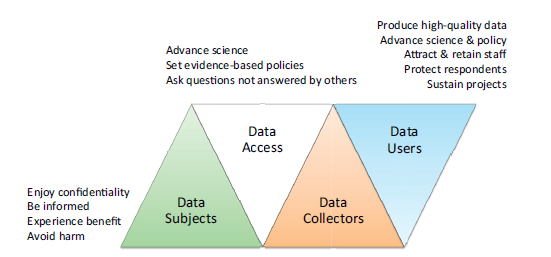
FIGURE 6-1 Data continuum players as equals.
SOURCE: Adapted from Herbst, K. (2002). Wider accessibility to longitudinal datasets: A framework for discussion. In National Research Council, Leveraging Longitudinal Data in Developing Countries: Report of a Workshop (p. 43). Workshop on Leveraging Longitudinal Data in Developing Countries Committee, Committee on Population. V. L. Durrant and J. Menken, Eds. Division of Behavioral and Social Sciences and Education. Washington, DC: The National Academies Press.
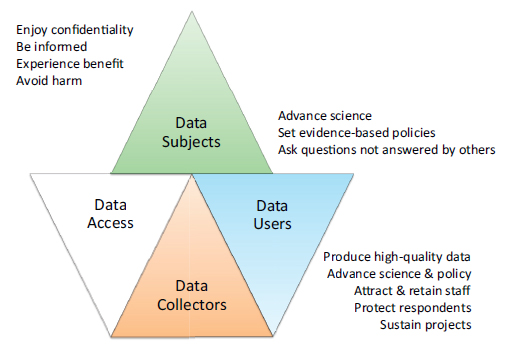
FIGURE 6-2 Data subjects as preeminent concern.
SOURCE: Adapted from Herbst, K. (2002). Wider accessibility to longitudinal datasets: A framework for discussion. In National Research Council, Leveraging Longitudinal Data in Developing Countries: Report of a Workshop (p. 43). Workshop on Leveraging Longitudinal Data in Developing Countries Committee, Committee on Population. V. L. Durrant and J. Menken, Eds. Division of Behavioral and Social Sciences and Education. Washington, DC: The National Academies Press.
- Incentives and recognition for data sharing. The existing system of rewards and recognition for academics does not encourage data sharing. While the potential to improve public health is an incentive, more tangible incentives are needed. Metrics based on data publications, such as those available through Ubiquity Press, could be developed. Researchers should in general be acknowledged and rewarded for producing datasets. The value of research based on shared data needs to be acknowledged to attract young scientists.
- Safety of data and ethical standards for sharing. The need for appropriate confidentiality protections and ethical sharing of data is key. The approach to ensuring confidentiality can be tailored to the type of data and risk of exposure. Models for protecting confidentiality from the social sciences can provide a useful framework.
- Resources and guidelines. Information and examples provided at the workshop illustrated that much is already known about how to address data-sharing issues. At the same time, many participants said that information needs to be more widely shared, and several called for new resources (e.g., centers of excellence) and guidelines or models of good practice for funders and ethics boards, for the ethical use of data.
- A broadened conversation. The conversation needs to be broadened in a sustained way beyond those at the workshop, several presenters suggested. New relationships with groups like the World Medical Association and the West African Organizations for Health might help advance solutions. In support of this issue, David Carr suggested that participants use the workshop summary “as a basis for taking forward discussions with your own communities and stakeholders.”
Future Challenges
Kern concluded with the observation that the future of public health research rests in part on the ability to maximize the use of data through sharing and linking data. Developments such as the explosion of online data via cell phones and the Internet, the emergence of citizen science, and the availability of increasingly complex data such as genomics indicate how the world is changing and present an opportunity to develop new and creative ways for research to respond. Finding solutions to enable regular and effective data sharing in Africa is an opportunity for scientists to be proactive and act at the cutting edge of ethics and science.


