Julia Pollack: Collaborative Ecologies (2024)
Chapter: Julia Pollack: Collaborative Ecologies
|
CULTURAL |
November 6, 2023 - June 7, 2024 |
Julia Pollack
Collaborative Ecologies
Introduction
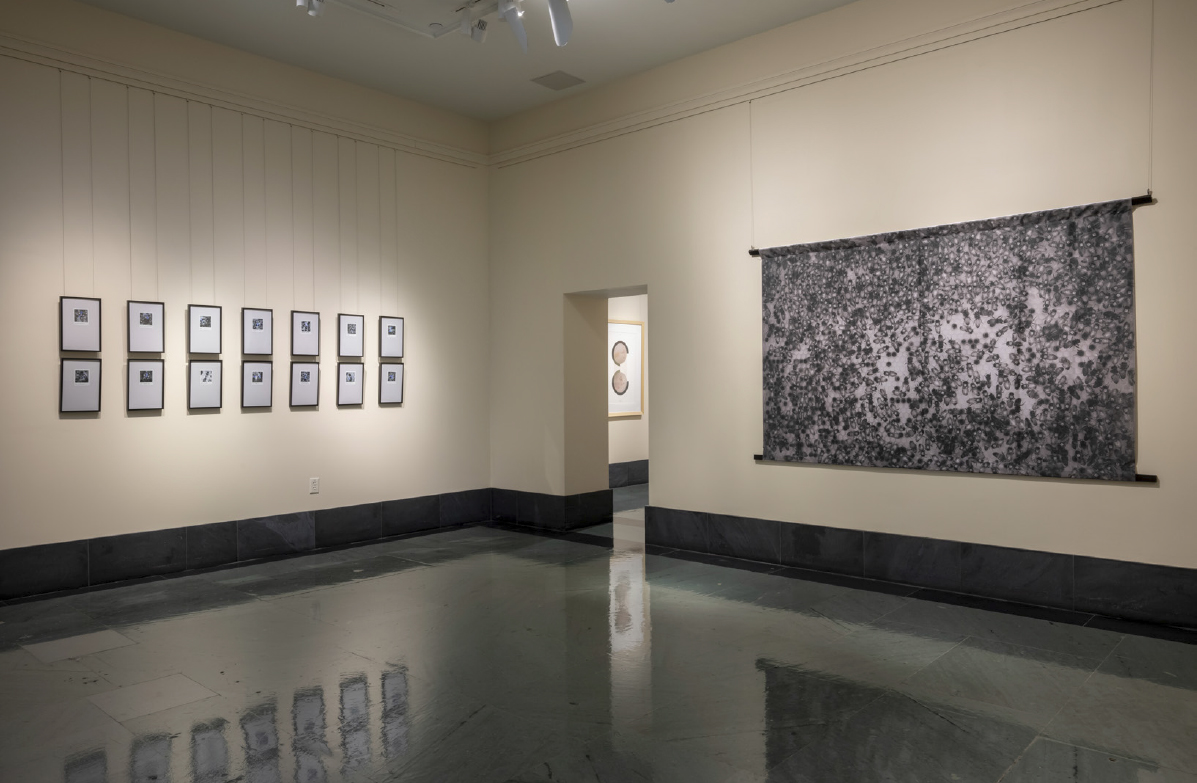
This catalog documents Julia Pollack’s exhibition “Collaborative Ecologies” which features bodies of work focused on honeybee colonies and microbial communities. Pollack, a curator, and creator at the Carl R. Woese Institute for Genomic Biology (IGB) at the University of Illinois Urbana-Champaign, makes art based on her conversations and collaborations with scientists. When Pollack engages in dialogues with researchers at IGB, she immerses herself in their work and then uses that information along with related imagery to build concepts for her artistic interpretations.
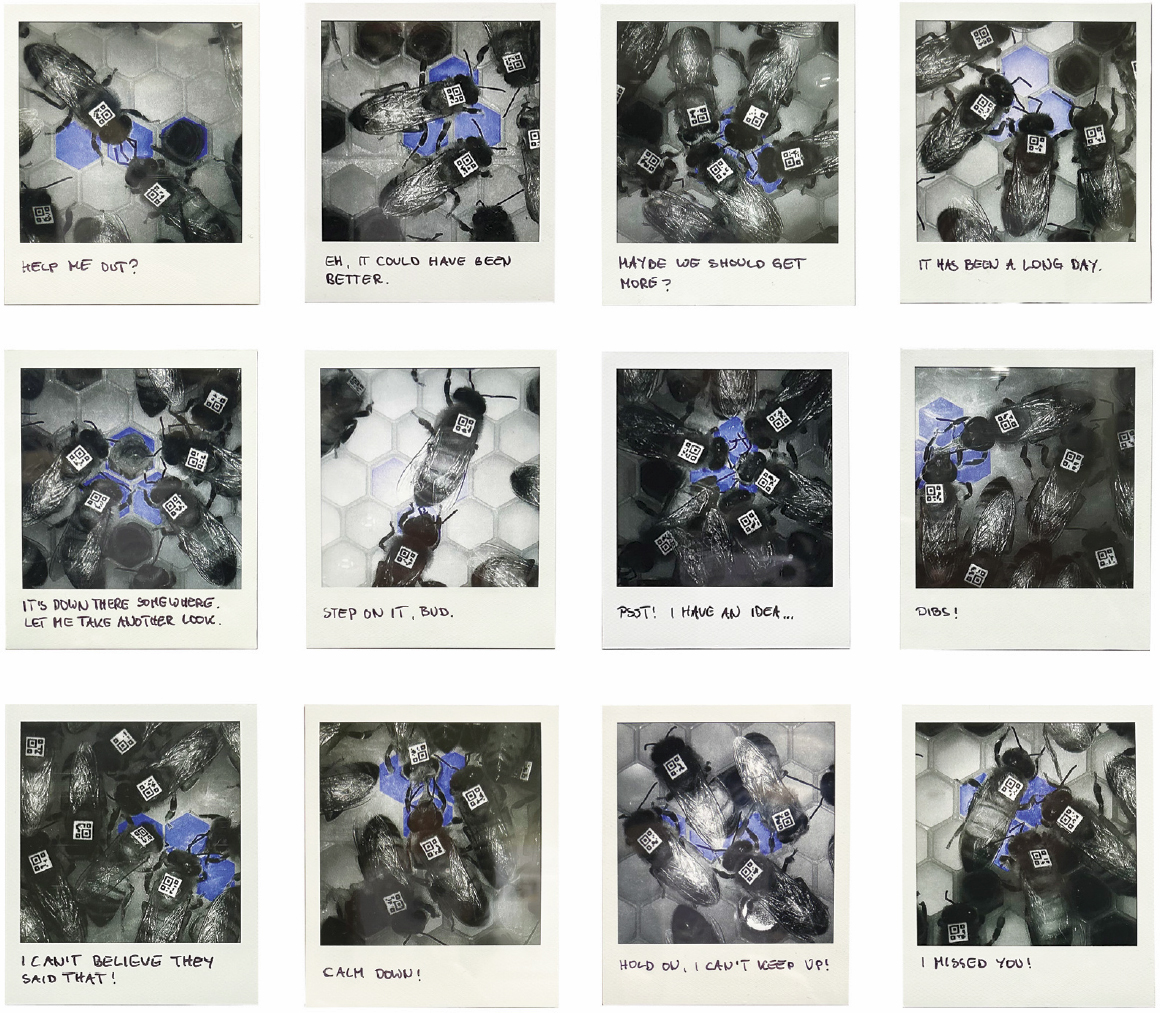
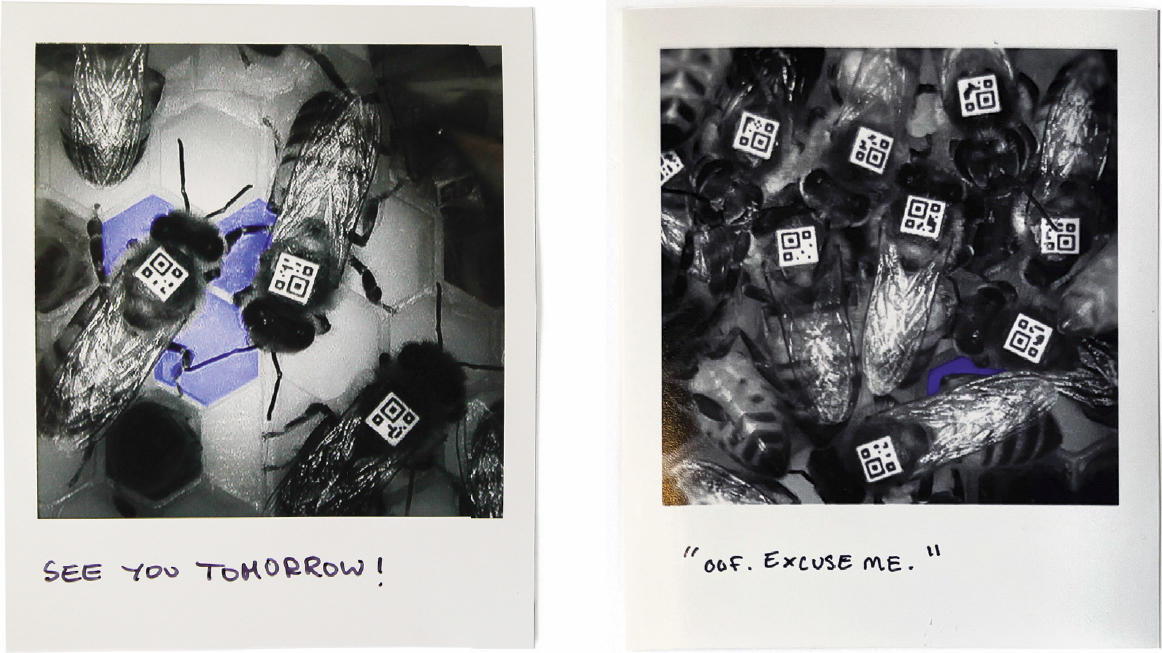
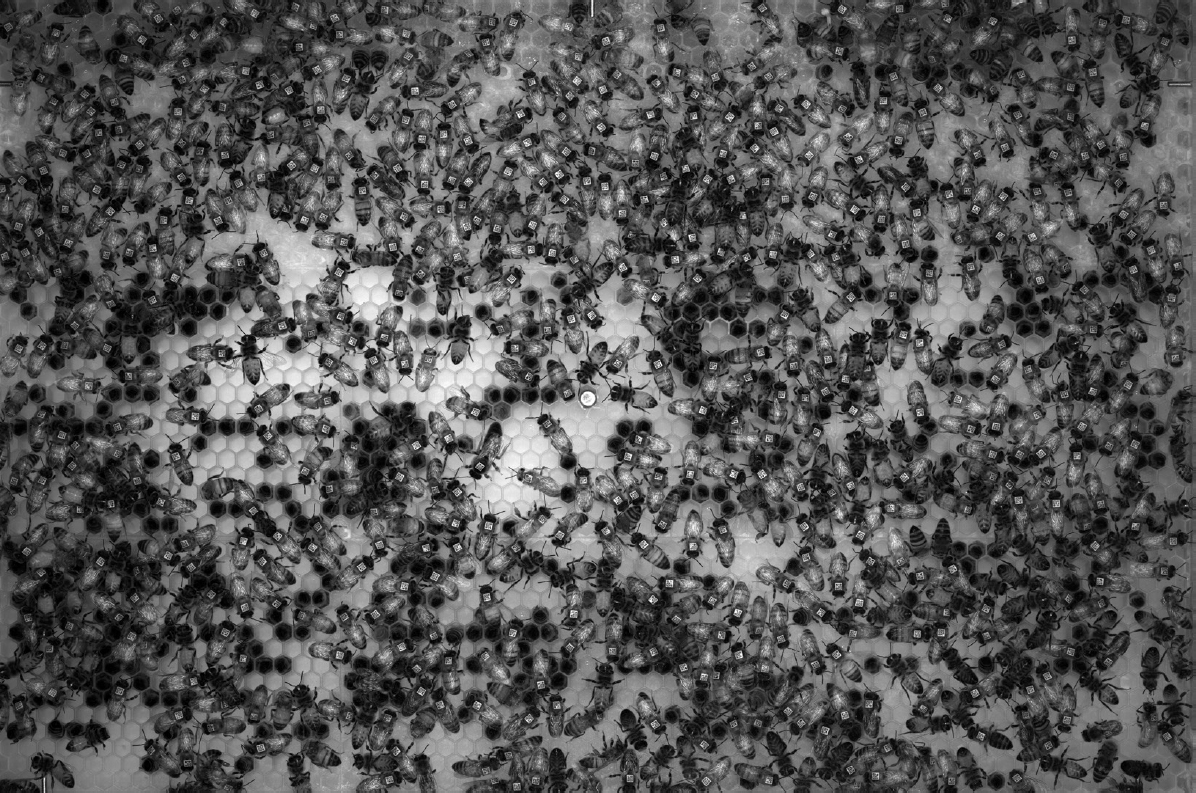
Pollack’s series “Das Leben der Anderen” (The Lives of Others) explores the lives of honeybees, the most important pollinators on the planet. Bee health is seriously threatened by many factors and current research seeks to clarify how honeybees’ social interactions enable their colonies to respond to disease, which may lead to better colony management practices and increased food security. To create this series, Pollack collaborated with German scientist Tim Gernat who studies complex systems and swarm intelligence in bees. Barcode-based honeybee tracking makes it possible to automatically distinguish hundreds of individuals in digital videos and to continuously monitor and record them over long periods to increase our knowledge of bee social networks. As Pollack and Gernat talked, she thought it would be useful to document honeybee’s interactions in photographs. She writes: “Many people have aversion to bees and any swarming insect, but when you observe closely, you can see them feed each other and work together.
The fear melts away when you can see how bees care for each other and the health of the hive.” She hopes the images will bring us closer to bees to recognize our hive tendencies and unexpected similarities.
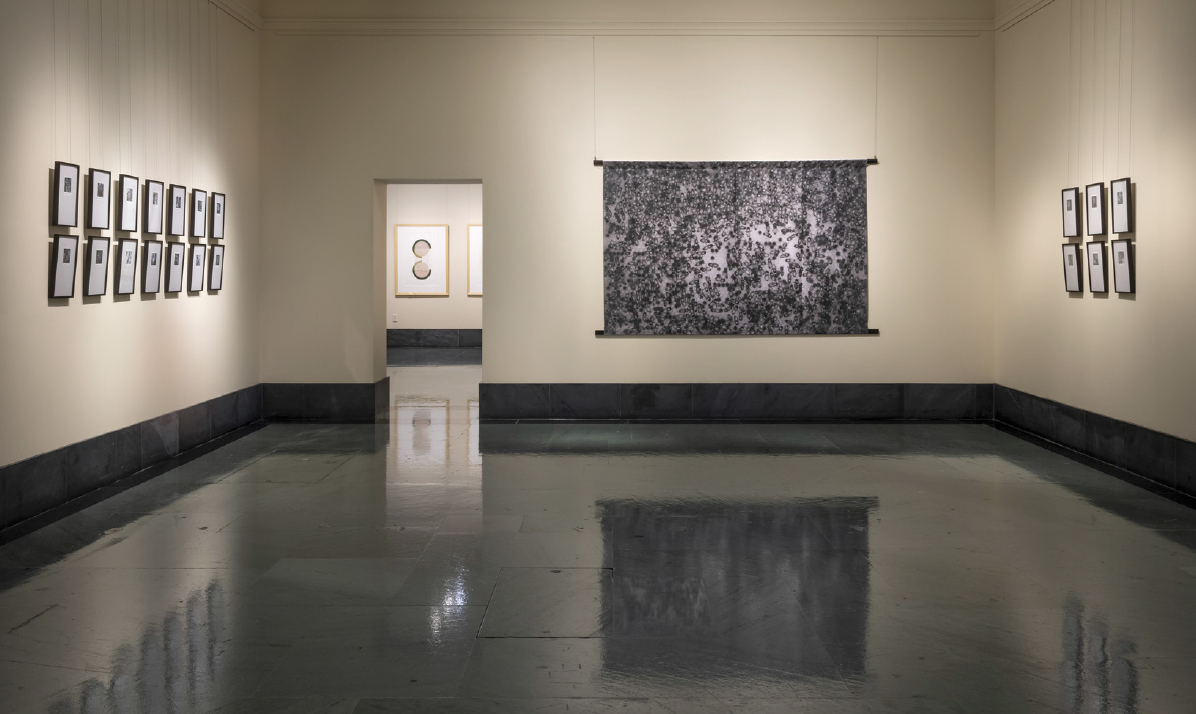
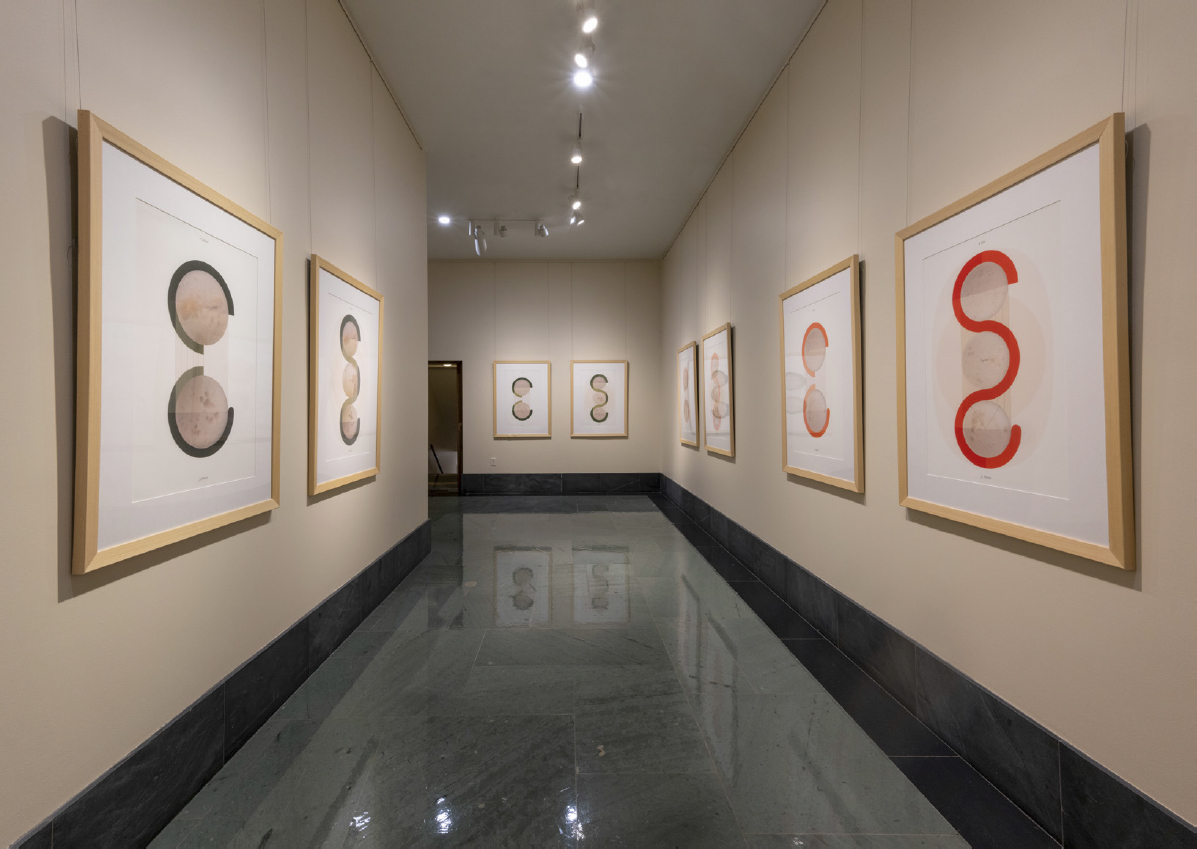
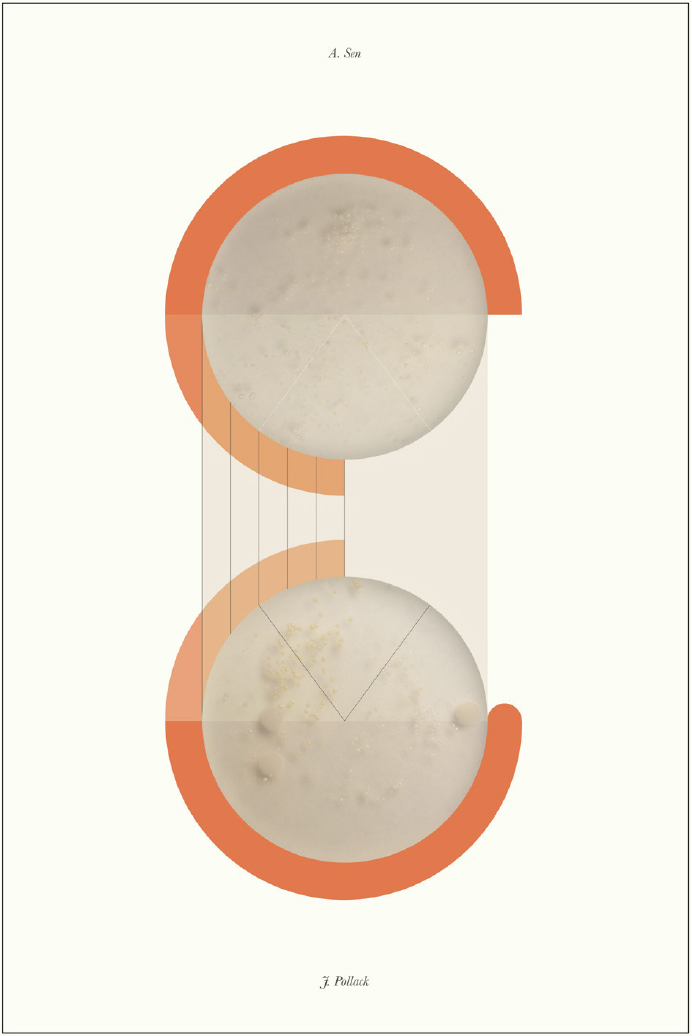
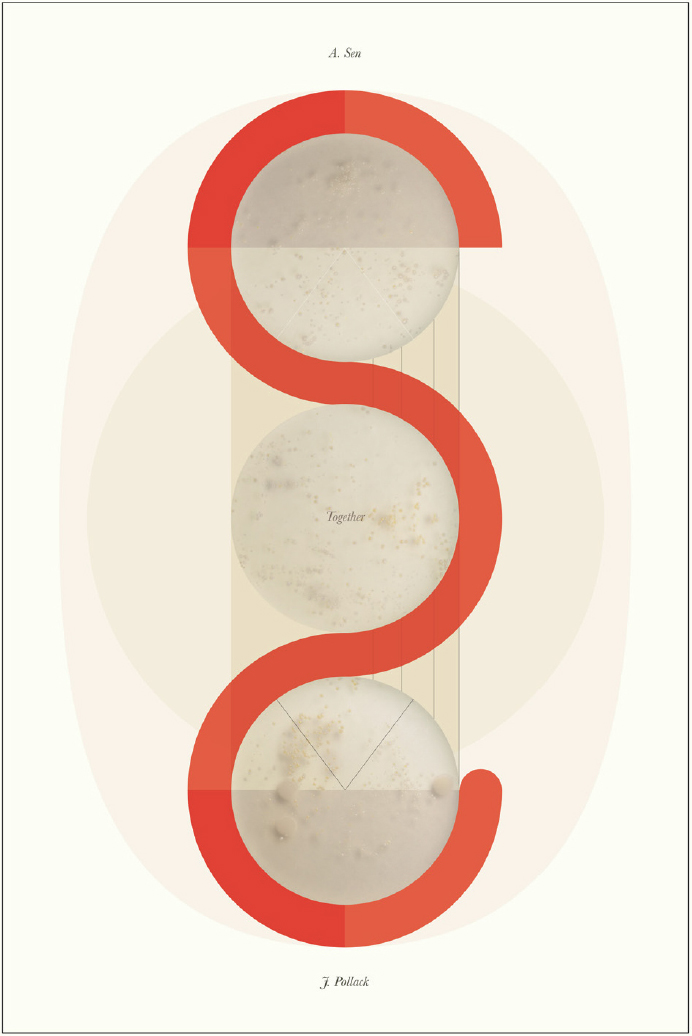
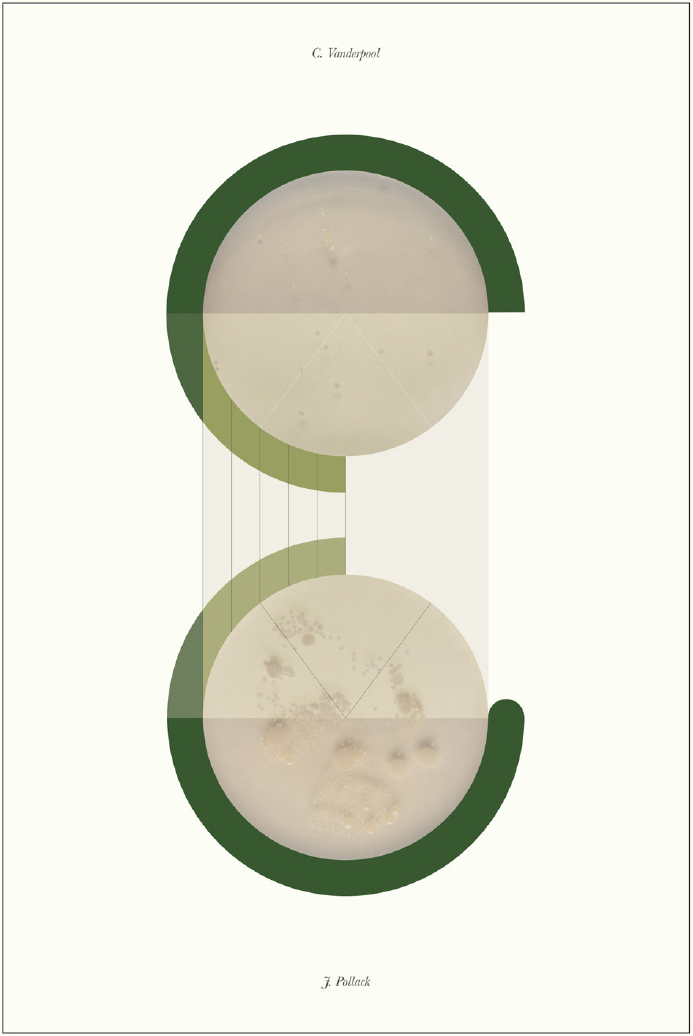
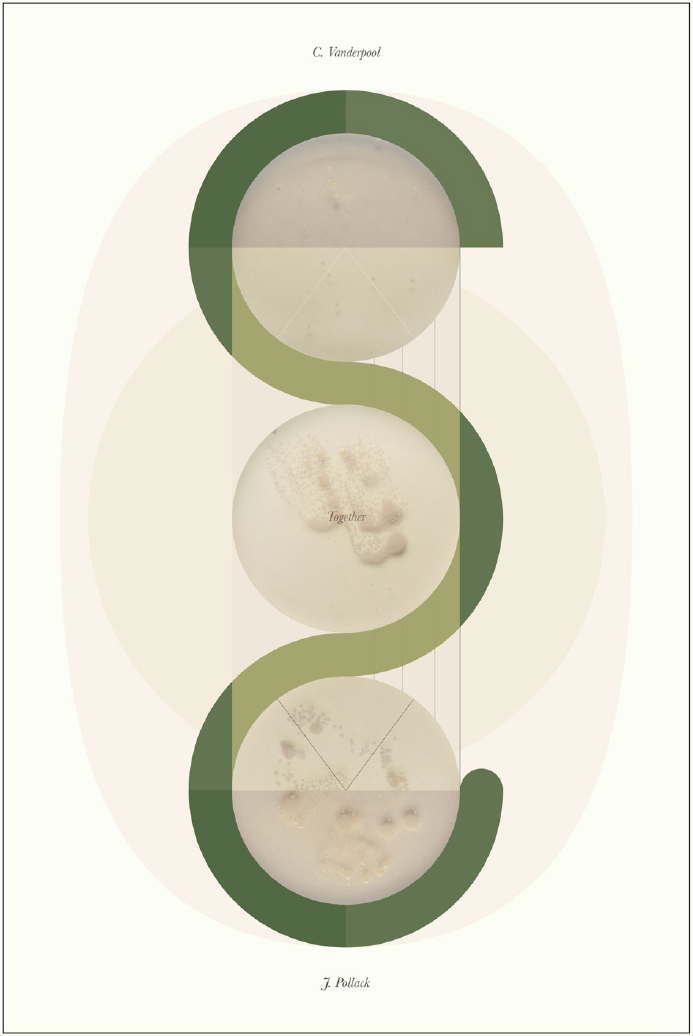
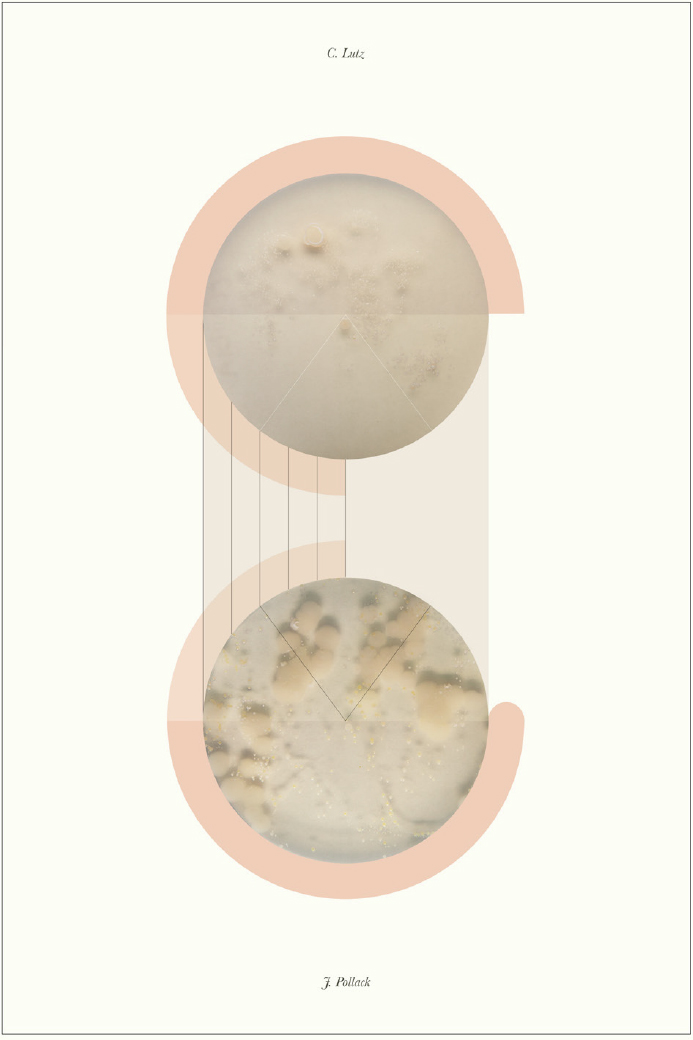
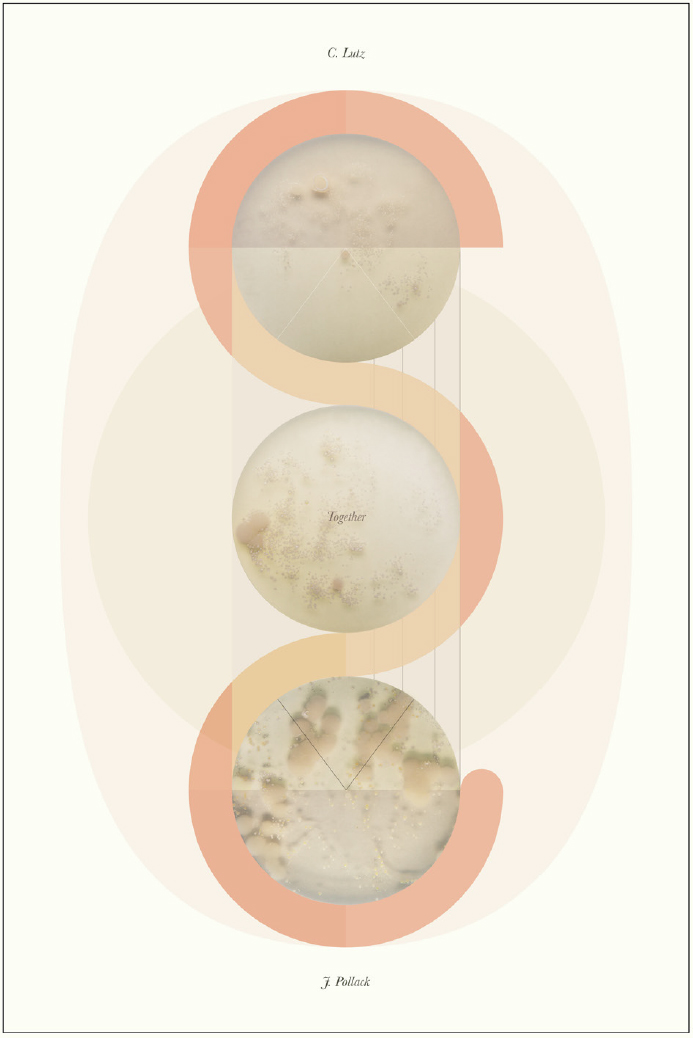
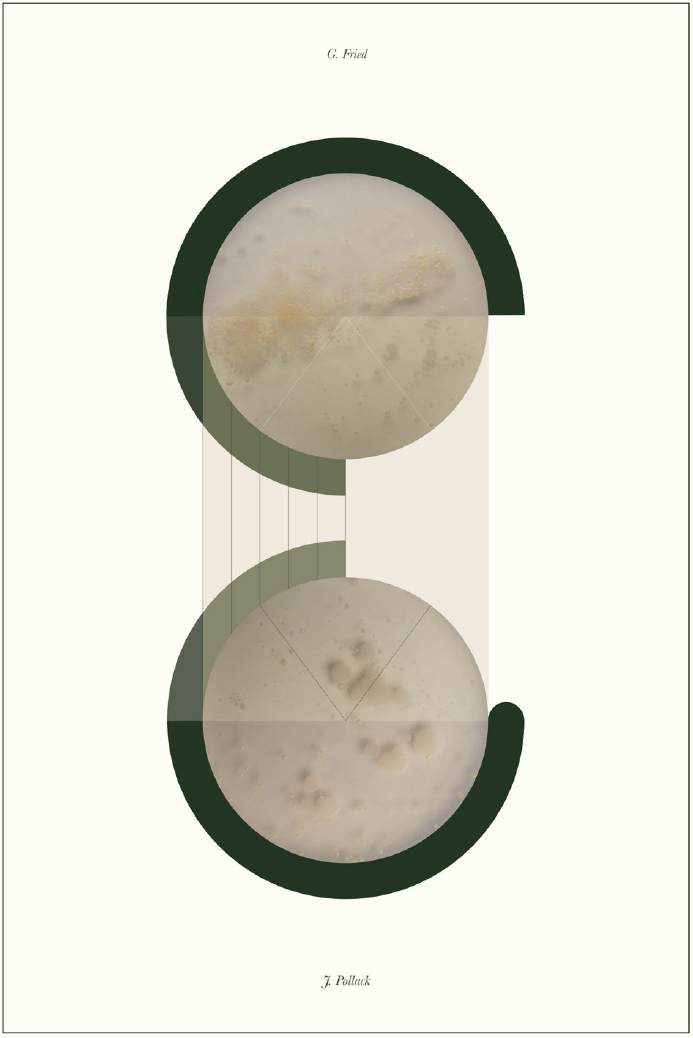
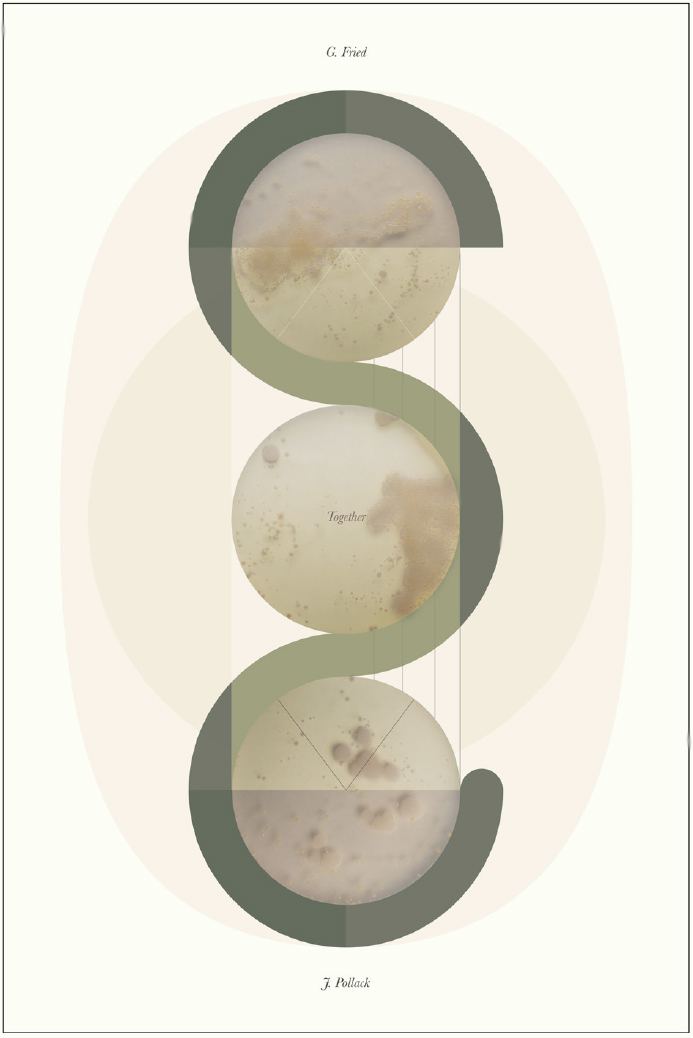
Her series “In Fragments No Longer” is inspired by the microbial world that envelops all living things. When we brush past strangers, share a hug with a friend, or kiss our loved ones, we share millions of microbes. The series is comprised of digital prints depicting Lysogeny broth (LB) plates that hold the personal microbes of Pollack and four collaborators: science writer and microbiologist Ananya Sen, IGB outreach manager Claudia Lutz, IGB director of core microscopy facilities Glenn Fried, and University of Illinois Urbana-Champaign professor of microbiology Cari Vanderpool. In each pair of prints, Pollack and a collaborator imprinted their microbial communities on LB plates, which contain a nutritious jelly that helps bacteria grow— making visible the microbial world that binds us all together with a multitude of invisible connections.
Pollack’s work highlights the power and aesthetics of science imagery while revealing the hidden labor of research and knowledge production. The work in this exhibition is part of the IGB’s Art of Science program, currently in its fourteenth year. It celebrates common ground between science and art and is representative of IGB’s mission to bring science to the community.
This exhibition is organized by Cultural Programs of the National Academy of Sciences.
Using Art to Bridge the Gap Between Science and Society
By Ananya Sen
Science Writer, Carl R. Woese Institute for Genomic Biology
University of Illinois Urbana-Champaign
History abounds with examples of collaborations between artists and scientists. Sometimes the same individual straddles both disciplines—consider Leonardo da Vinci, Anna Atkins, and Santiago Ramón y Cajal—and is celebrated for their work in science and revered for their artistic pursuits. In other instances, two individuals, each dedicated to their craft, come together to create something neither could have accomplished alone. One such example is the “Waking Dream” project, a collaboration between artist Catherine Yass and Mary Morrell, a professor of sleep and respiratory physiology at Imperial College London. Together, they investigated how the process of waking up impacts our bodies and minds. While Morell used a scientific approach examining changes in heart rate and blood pressure, Yass concentrated on the conscious experience. Ultimately, “Waking Dream” probed the boundary between sleep and wakefulness, questioning whether our dreams can intrude into our reality.
To many, science and art appear as disparate pursuits that embody the tension between logic and emotion. Scientists strive to elucidate how the world functions, while artists draw inspiration from their surroundings to question our perception. One could wonder, then, what is the purpose of such a collaboration? Can a coherent medium be constructed at the intersection of these divergent worldviews?
In reality, the journeys of artists and scientists have expansive overlaps. Both invest time and repeated efforts to study their subjects. Upon concluding this process, they synthesize their observations into a narrative, which is then presented to the world for feedback. Most importantly, artists and scientists are no strangers to failure. Despite the challenges encountered in each project, they persist in their quest into the unknown. This shared experience makes them empathetic collaborators.
This unconventional alliance can pave the way for enhancing the accessibility of science. Scientists are often perceived as detached individuals who manipulate nature behind closed doors for questionable purposes. This mistrust can be traced back to several factors: the complexity of scientific concepts, scientists’ inability to effectively communicate their findings to the public, and the misuse of science by those with malicious intent. These issues can be addressed by offering an authentic narrative of what scientific research entails—a messy endeavor driven by an insatiable curiosity about the world.
Over the past decade, the Art of Science program at the Carl R. Woese Institute for Genomic Biology (IGB) has provided such insights. It uses dialogues between artists and scientists as a springboard for the public to engage with research at the University of Illinois Urbana-Champaign. Julia Pollack, the Creative Program Manager at the IGB, has created several exhibits that spotlight the beauty encountered by scientists daily.
Pollack’s work covers a broad spectrum of subjects, including bacteria, plants, honeybees, rock samples, and even storms. The construction of each piece is guided by two primary questions: how to bring the mission of the research to the forefront and how artistic approaches can reveal aspects that technical communication leaves hidden. The resulting image is shaped by what the researcher deems important and
what captivated Pollack when she first learned about the science. Similarly, each piece challenges the viewer to reconsider their prior knowledge and reflect on what they will carry forward after engaging with the art.
The “Collaborative Ecologies” exhibition visually explores two concepts: the interactions among organisms within the same community and between different communities. The first concept, depicted in the series titled “Das Leben der Anderen” (The Lives of Others), offers an intimate glimpse into a honeybee hive. The protective instinct of honeybees inspires researchers to devise innovative methods to observe their hives. One such example is the work of Tim Gernat, an IGB researcher who monitors individual bees in a hive to study their behavior. He constructed an observation hive by sandwiching frames of honeycomb from the hive between sheets of plexiglass in a dark room. Over 24 hours, he took pictures of the bees as they performed their hive duties and communicated with their community members.
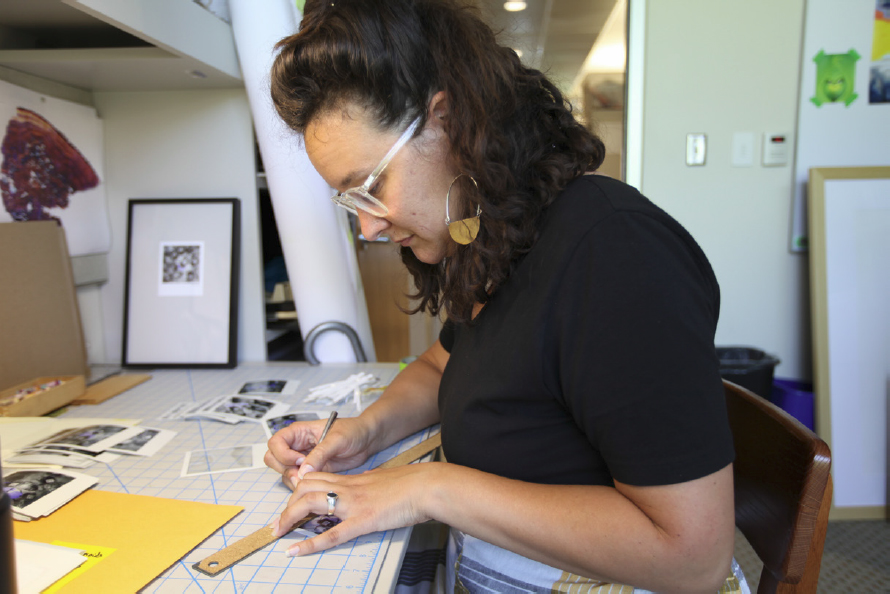
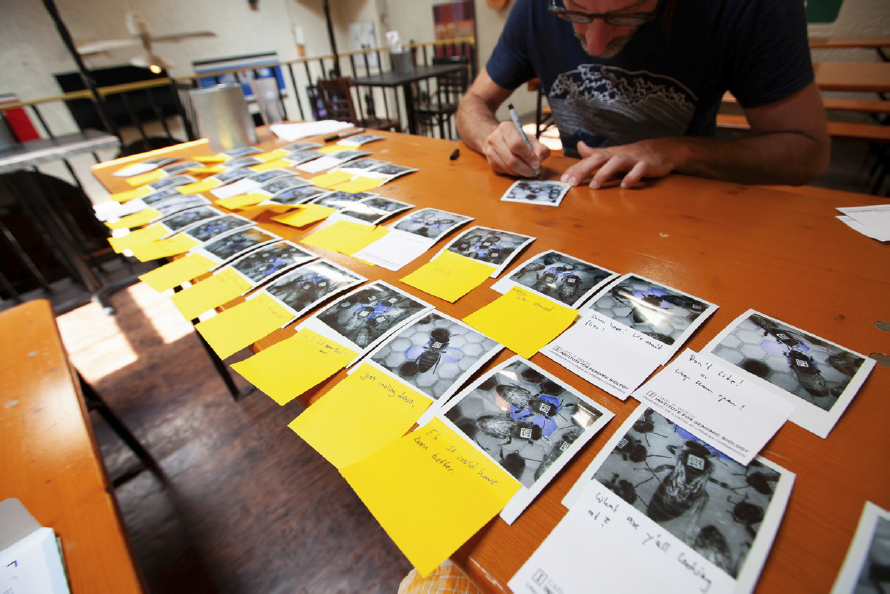
For Pollack, the hive images pulsated with life and energy. She was intrigued by the idea that the bees were comfortable in the darkness, experiencing it through touch and smell. Upon closer examination of the images, the hive transformed from a chaotic swarm into a bustling dance hall. For the artistic interpretation, Pollack drew inspiration from Hanne Darboven’s calendar works and Robert Mapplethorpe’s Polaroid exhibitions. “I attempted to frame these hive interactions as if I were their Polaroid photographer. I carefully picked out moments that I found compelling,” Pollack said.
After several discussions with Gernat, they realized it would be delightful to annotate each photo, just like at a party, and speculate on what the interaction might sound like if bees could speak. Pollack’s favorite memory associated with this piece was an afternoon spent with Gernat and his former lab mate Claudia Lutz, currently the outreach coordinator at the IGB, arranging all the images and attributing voices to the bees. Many of the notes are personifications, but they were crafted with the expertise of Gernat and Lutz, whose scientific work hinges on a detailed understanding of bee behavior. Upon completing their analysis, Gernat carefully transcribed each quote onto the Polaroid-like images.
The second body of work in the exhibition, “In Fragments No Longer,” is an expansion of a 2023 Art of Science piece. The concept originated from an outreach activity conducted by Pollack and me, a research communication coordinator at the IGB. My graduate studies focused on Escherichia coli. The activity centered on creating art from bacteria. Participating high school students were instructed to touch their surroundings and then put their fingers on plates containing a nutrient-rich jelly that promotes bacterial growth. The students were delighted to see the bacterial colonies that developed over a day. They were then provided with a fresh plate and taught how to create drawings using sterile pipette tips as a painting tool and the bacteria as a palette. The activity underscored the fact that we are never truly alone—we are teeming with and surrounded by multitudes of tiny organisms.
The original pair of images for this series features my microbes and Pollack’s. Initially, our microbes were kept separate on two different plates. When Pollack watched the bacteria grow over time, she was struck by the similarities and differences between the two plates. This observation inspired her to create a common plate, where we both imprinted our skin’s bacteria onto the surface. Unsurprisingly, our bacteria appeared to greet each other amicably.
“We often think of ourselves as separate and singular beings, but when you consider the microbial ecology within and on our bodies, the lines between become more fluid,” Pollack said. “As we breathe the same air and touch the same surroundings, we leave trails of our microbial bodies and interact with the microbial ecologies that share
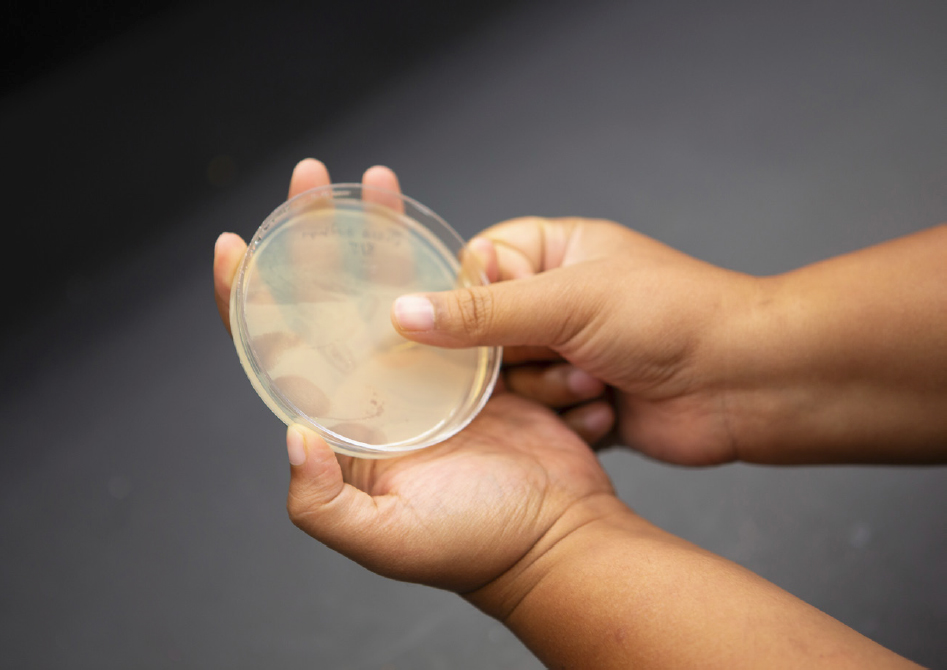
the same spaces as us. Since we cannot see them, our sense of the lives of microbes is limited, but as we enhance our observational ability by inoculating plates and studying our microbiomes, we learn about ourselves and our constant exchange of life with everything around us.”
To underscore this concept, Pollack invited her collaborators to share their microbiomes on plates with her. The series includes contributions from Cari Vanderpool, a microbiology professor at the University of Illinois Urbana-Champaign who studies how bacteria use small RNAs to control their responses to stressful environments; Glenn Fried, the Director of IGB’s Core Facilities, which provides for the institution’s microscopy needs; and Claudia Lutz, who manages IGB’s outreach initiatives aimed at promoting IGB’s scientific endeavors to the community.
Collectively, these pieces reflect the shared conversations and collaborations that are a part of our daily lives. While understanding our communities is crucial, it is equally important to step outside of our comfort zones to gain a comprehensive perspective of our shared world. In the same vein, rather than confining scientists and artists to their respective fields, it is beneficial to remember that interdisciplinary collaborations can bridge the gap between science and society. As da Vinci said, “To develop a complete mind: Study the science of art; study the art of science. Learn how to see. Realize that everything connects to everything else.”