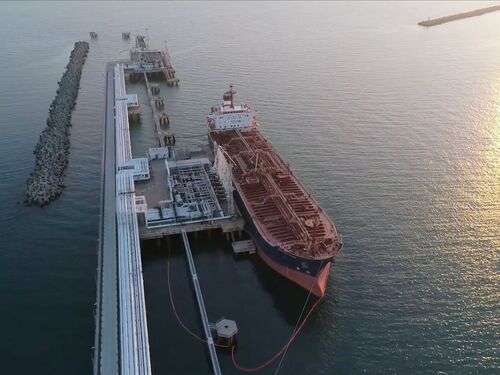
The Gulf of Alaska and the Southern Gulf Coast have been the sites of the two worst oil spills in U.S. history, Exxon Valdez (1989) and Deepwater Horizon (2010), respectively. These spills had devastating impacts – many that persist to this day -- on the environment, human health, the local economy, the seafood industry, and local communities’ way of life. As time passes, there is a critical need to preserve hard won lessons from these spills for both regions as well as other regions that might experience oil spills in the future.
Join us for a wide-ranging discussion with participants of the Gulf-Alaska Knowledge Exchange, a three-workshop series that brought together community members and key stakeholders from Alaska and the Gulf Coast to foster information sharing on topics including the human health effects of oil spills, ecological restoration from oil, post-disaster socioeconomic recovery, community resilience, and the importance of effective community engagement.
Speaker Bios:
Mr. Edwin (ED) Levine
Manager, SS&C, LLC
Edwin “ED” Levine currently operates his own consulting company providing training and crisis response. He retired from NOAA after 33 years with the Emergency Response Division. He has participated locally, nationally, and internationally in hundreds of incidents involving oil spills, chemical releases, and many other various emergency responses including the Exxon Valdez and Deepwater Horizon oil spills. He provided planning and preparedness activities including training and participation on numerous committees at all levels of government, industry, and academia. He is a member of the Executive Committee of the International Spill Control Organization (ISCO). Among his many recognitions Mr. Levine received the NOAA Distinguished Career Award, three USCG Meritorious Team Commendations, and the USCG Commander’s Award for Civilian Service. He received a Master of Science degree from the University of Puerto Rico in Marine Sciences and a Bachelor of Arts degree from Boston University in Coastal Environmental Sciences. Most recently he was the Vice-chair of the National Academies of Sciences, Engineering, and Medicine publication Oil in the Sea IV: Inputs, Fates, and Effects (2022).
Dr. Davin Holen
Coastal Community Resilience Specialist, Alaska Sea Grant
Dr. Davin Holen is a Coastal Community Resilience Specialist for the Alaska Sea Grant Marine Advisory Program and Associate Professor conducting research for the University of Alaska Fairbanks. Davin facilitates workshops and other activities related to coastal resilience addressing monitoring, mitigation, and adaptation to local stressors from climatic and ocean changes. Before joining Alaska Sea Grant Davin spent 15 years at the Alaska Department of Fish and Game conducting social-science research and managing the subsistence program in Southern Alaska. His dissertation, as well as current research and extension efforts, examines societal and economic factors intertwined with climatic and environmental changes influencing subsistence economies important for culture in Alaskan communities. Davin developed and manages the website Adapt Alaska (adaptalaska.org) hosted by Alaska Sea Grant. Since 2015, Davin has been a member of the Prince William Sound Regional Citizens Advisory Council Scientific Advisory Committee and now serves as Chair. Davin led the 2019 National Academies Gulf Research Program-funded workshop in Alaska, Setting Priorities for Health, Social, and Economic Disruptions from Spills in Alaska: Learning from the Past, Preparing for the Future. Davin has spent a career researching the societal impacts of the Exxon Valdez oil spill in Prince William Sound and has published several technical papers on the topic. Davin serves as the Alaska representative on the National Academies Gulf Research Program Gulf Health and Resilience Board.
Ms. Mây Thị Nguyễn
Program Officer, Kataly Foundation
Ms. Mây Thễ Nguyễn is a Program Officer at Kataly Foundation. She has over 15 years of experience in climate and disaster resilience as a community organizer, attorney, and nonprofit leader. She has provided written testimony on the Oil Pollution Act for a US Senate Energy Subcommittee hearing, offered perspective on NBC, NPR, and local Louisiana media, and co-authored a white paper on the BP Oil Spill for the White House Initiative on AAPI. In her community-based work, Mây published a revised second edition environmental law and policy advocacy guide, taught an undergraduate program, and trained over a thousand impacted people and local elected leaders to protect the environment. She received UCLA School of Public Policy’s Rishwain Social Justice Entrepreneurship Award for her transformative organizing work with Black, Indigenous, and Immigrant fishing communities to win recognition and damages for traditional fishing practices. Mây earned a JD with a certificate in Public Interest Law and Policy from UCLA School of Law, a BA in Political Science from Amherst College, and a MA in International Economics and Southeast Asia Studies from Johns Hopkins University, School of Advanced International Studies.
Ms. Frances (Fran) Ulmer
Associate, Arctic Initiative, Harvard Kennedy School, Belfer Center for Science and International Affairs
Ms. Frances Ulmer is an associate fellow at Harvard’s Belfer Center. She has served in a variety of capacities, including: Chancellor of the University of Alaska Anchorage, Alaska’s Lieutenant Governor, state legislator, mayor of Juneau Alaska, professor, lawyer, research director, special advisor to the State Department on the Arctic, Chair of the U.S. Arctic Research Commission and a member of the BP Deep Water Horizon Oil Spill Commission. She has undergraduate and law degrees from the University of Wisconsin, and has been a visiting professor at Stanford, and at Harvard’s Institute of Politics. She has previous NAS volunteer service and she has lectured internationally on Arctic issues from Antarctica to the North Pole. Ms. Ulmer served on the Exxon Valdez Oil Spill Special Legislative Committee 1989-1990.
Dr. Collin P. Ward
Associate Scientist, Woods Hole Oceanographic Institution
Dr. Collin P. Ward is an Associate Scientist in the Department of Marine Chemistry & Geochemistry at the Woods Hole Oceanographic Institution. His research characterizes how and how fast sunlight and microbes alter the physical and chemical properties of organic carbon in aquatic ecosystems. He works on a wide range of organic carbon types, including natural organic matter, crude oil, and plastics. His study sites span fresh and saline surface waters from the Alaskan Arctic to the Gulf of Mexico. He was a chair of the Gulf of Mexico Research Initiative Synthesis and Legacy effort, with a focus on oil fate and weathering at the sea surface and on shorelines. He received the 2024 James J. Morgan Environmental Science & Technology Early Career Award from the American Chemical Society. He earned a BS and MS in Environmental Sciences from The Ohio State University, and a PhD in Earth and Environmental Sciences from the University of Michigan.