In progress
Regional focus
North America
Topics
Climate Conversations: Pathways to Action is a regular virtual event series that aims to convene high-level, cross-cutting, nonpartisan conversations about issues relevant to action on climate change.
News and updates
Elevating Intersections of Air Pollution in India: Climate Crossroads at RamFest 2025
Program News
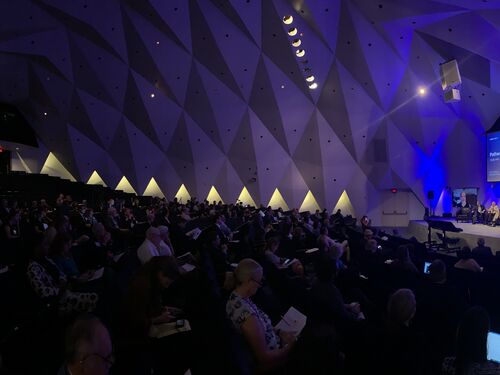
In September, Climate Crossroads traveled to Scripps Institution of Oceanography for RamFest 2025, a symposium celebrating the illustrious career of Veerabhadran Ramanathan, a visionary in climate science and action and member of the National Academy of Sciences. The 1.5-day event brought together a diverse group of experts, including international scientists, policymakers, students, and artists for inspiring discussions on climate science and actionable solutions.
Exploring How to Power AI Sustainably
Feature Story
As the demand for artificial intelligence surges in everything from business to science to art, the power-intensive data centers needed to run AI tools and applications are straining the nation’s aging electricity infrastructure. A recent webinar examined AI’s growing appetite for electricity and possible solutions for powering it sustainably.
Description
Climate Conversations: Pathways to Action webinars and hybrid events feature conversations between experts, stakeholders, and communicators from across science, engineering, and medicine. The webinars build on, but aren't limited to, recent Academies reports, and focus on critical and timely topics to inform the rapidly changing science-to-action landscape.
Disclaimer: The views expressed in each conversation are those of the participants and do not necessarily represent the National Academies of Sciences, Engineering, and Medicine.
Contributors
Sponsors
Internal Funding
Staff
Amanda Purcell
Lead
Amy Mitsumori
Lead
Nikita Uberoi
Lead
Lauren Kalinosky
Lead
Major units and sub-units
Organizational Initiatives
Lead
Climate Crossroads
Lead
More like this
Discover
Events
Right Now & Next Up
Stay in the loop with can’t-miss sessions, live events, and activities happening over the next two days.
NAS Building Guided Tours Available!
Participate in a one-hour guided tour of the historic National Academy of Sciences building, highlighting its distinctive architecture, renowned artwork, and the intersection of art, science, and culture.